
Understanding the Chemistry: What Is In Soldering Flux?
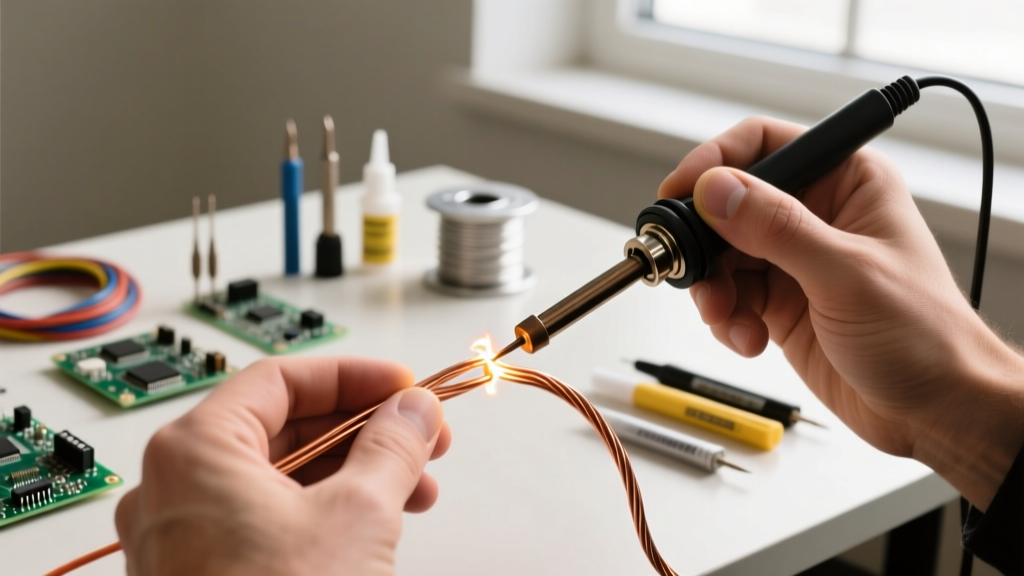
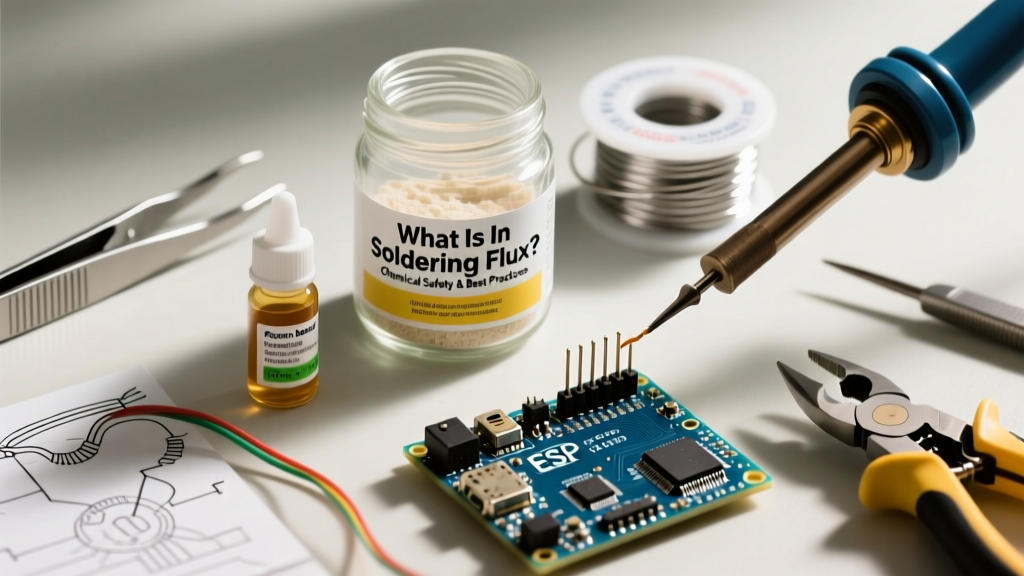
When electronics engineers, technicians, and DIY makers ask, what is in soldering flux, they are usually trying to understand both how it achieves reliable metallurgical bonds and what health risks it poses. Flux is not a single chemical; it is a complex, engineered mixture designed to dissolve metal oxides, prevent re-oxidation during heating, and reduce the surface tension of molten solder. However, the thermal decomposition of these chemicals at the soldering iron tip (typically 350°C to 400°C) generates volatile organic compounds (VOCs) and particulate matter that demand strict safety protocols.
As of 2026, the transition to lead-free alloys like SAC305 (Sn96.5/Ag3.0/Cu0.5) has forced manufacturers to formulate fluxes with higher thermal stability. This means modern fluxes contain more aggressive activators and higher-boiling-point solvents, making fume extraction and personal protective equipment (PPE) more critical than ever.
Chemical Composition Breakdown by Flux Type
The exact formulation varies depending on the application, but all soldering fluxes contain three primary components: a vehicle (base resin), solvents, and activators. Below is a detailed matrix of what you are actually melting onto your printed circuit boards (PCBs).
| Flux Category | Primary Vehicle (Resin) | Activator Chemistry | Common Solvents | IPC J-STD-004B Designation |
|---|---|---|---|---|
| Rosin (R, RMA, RA) | Natural Colophony (Abietic Acid) | Halide salts, Organic amines | Isopropanol (IPA), Ethanol | ROSIN |
| Water-Soluble (OA) | Water-soluble synthetic resins | Organic Acids (Lactic, Citric, Succinic) | Deionized Water, Glycol Ethers | ORGANIC ACID (OA) |
| No-Clean | Synthetic resins, Modified rosins | Weak Dicarboxylic acids, Trace halides | Glycol Ethers, Aliphatic Hydrocarbons | SYNTHETIC / RESIN |
The Role of Activators: The Hidden Hazard
Activators are the chemicals that actually 'do the work' by chemically reducing copper oxides at high temperatures. In Rosin Mildly Activated (RMA) and Rosin Activated (RA) fluxes, these activators often include halide salts like diethylammonium chloride. While highly effective for wetting, halides are corrosive. If left on a PCB in a high-humidity environment, they can cause Electrochemical Migration (ECM), leading to catastrophic short circuits via dendrite growth. Furthermore, when vaporized, halide-laden fumes are highly irritating to the respiratory tract.
Health Hazards and Toxicity Profiles
The primary safety concern when investigating what is in soldering flux is not the solder alloy itself, but the aerosolized flux fumes. The UK Health and Safety Executive (HSE) explicitly classifies colophony (rosin) fumes as a known respiratory sensitizer.
Occupational Asthma and Colophony
Prolonged inhalation of vaporized abietic acid (the main component of natural rosin) can lead to occupational asthma. This is an immunological response; once a technician becomes sensitized, even microscopic exposure to rosin fumes can trigger severe asthmatic attacks, chronic bronchitis, and allergic contact dermatitis. Sensitization is often permanent, meaning affected individuals must completely abandon electronics assembly work.
Solvent Exposure and VOCs
Liquid fluxes and solder pastes rely on solvents to maintain viscosity. Glycol ethers, commonly found in no-clean and water-soluble pastes, can cause central nervous system depression, headaches, and liver strain upon chronic inhalation. Isopropanol (IPA), while generally safer, is highly flammable and can cause mucosal irritation when vaporized by a 380°C iron tip.
2026 Safety Alert: With the widespread adoption of high-reliability automotive and aerospace electronics, the use of water-soluble (OA) fluxes has surged. OA fluxes generate highly acidic fumes during reflow and hand soldering. Standard carbon filters are often insufficient for neutralizing these organic acid vapors; multi-stage HEPA and specialized chemical gas filtration is mandatory.
IPC Standards for Flux Selection and Safety
Professional facilities must adhere to the IPC standards development guidelines, specifically IPC J-STD-004B (Requirements for Soldering Fluxes) and IPC J-STD-001H (Requirements for Soldered Electrical and Electronic Assemblies). These standards dictate not only the reliability of the flux residue but also the safety classifications for commercial and aerospace applications.
- SIR Testing (Surface Insulation Resistance): IPC mandates that flux residues must not drop the board's insulation resistance below 100 Megohms after 7 days at 85°C and 85% relative humidity. This ensures the chemical activators will not cause latent short circuits.
- Corrosivity Testing: Fluxes are tested on copper mirrors. If the flux eats through the copper mirror within 24 hours, it is classified as highly corrosive and requires mandatory post-soldering cleaning.
Best Practices: Fume Extraction and PPE
Knowing what is in soldering flux is only half the battle; mitigating exposure is where professional labs separate themselves from hobbyist setups. Relying on an open window or a basic desk fan is a violation of OSHA Hazard Communication best practices for chemical handling.
Upgrading Fume Extraction Systems
A standard benchtop fan with a thin carbon pad (like the classic Hakko FA-400, priced around $65) captures large particulate matter but does virtually nothing to stop VOCs and rosin vapors. For proper safety in 2026, you need a localized exhaust ventilation (LEV) system with multi-stage filtration:
- Pre-filter (HEPA): Captures solid rosin particulates and microscopic solder splatter.
- Main Filter (Activated Carbon/Chemical): A deep-bed activated carbon matrix (minimum 5 lbs of carbon) is required to adsorb VOCs, glycol ethers, and acidic activator gases.
- Source Capture Nozzles: The extraction arm must be positioned within 2 to 4 inches of the solder joint. Air velocity drops exponentially with distance; a nozzle 12 inches away captures less than 10% of the generated fumes.
Personal Protective Equipment (PPE)
When engineering controls (like LEV systems) are not feasible, or when working with highly aggressive water-soluble fluxes in confined spaces, PPE is mandatory:
- Respiratory Protection: A half-face respirator like the 3M 6200 equipped with 3M 6006 Multi-Gas/Acid Gas cartridges (approx. $45). Standard N95 masks only block particulates and offer zero protection against toxic chemical vapors.
- Dermal Protection: Uncured solder paste and liquid flux can cause contact dermatitis. Use 4-mil to 5-mil Nitrile gloves. Latex gloves are easily degraded by IPA and glycol ethers.
- Eye Protection: ANSI Z87.1 safety glasses are required to protect against molten solder splatter, which can trap liquid flux against the cornea.
Troubleshooting Flux-Related Safety and Quality Failures
Improper handling of flux chemicals leads to both safety incidents and catastrophic board failures. Here are common edge cases encountered in modern PCB assembly:
Failure Mode: White Corrosive Residue
Symptom: A chalky white residue appears around the solder joints 24 hours after hand soldering with water-soluble flux.
Cause: Water-soluble fluxes contain aggressive organic acids. If not cleaned properly, the acids react with ambient moisture and the tin/lead or SAC alloy, forming corrosive metal salts.
Solution: Clean the PCB using saponified deionized (DI) water heated to 60°C within 2 hours of soldering. A simple cold-water rinse is insufficient to dissolve the thixotropic agents in the flux.
Failure Mode: Dendrite Growth Under BGA Components
Symptom: Intermittent short circuits in high-impedance analog circuits or under Ball Grid Array (BGA) packages.
Cause: Using a 'no-clean' flux in a high-humidity environment without realizing that 'no-clean' does not mean 'chemically inert.' Under BGA components, the flux residue cannot be easily inspected and can trap moisture, activating trace halides.
Solution: For high-reliability or outdoor deployments, treat all flux as 'must-clean' and utilize an automated selective soldering washing system, or specify a zero-halide, high-SIR no-clean paste validated to IPC-TM-650 standards.
Frequently Asked Questions (FAQ)
Can soldering flux cause long-term respiratory damage?
Yes. Chronic inhalation of colophony (rosin) fumes can lead to occupational asthma, a permanent sensitization. Once developed, the immune system will react violently to even trace amounts of rosin dust or vapor. This is why source-capture HEPA/Carbon extraction is non-negotiable in professional environments.
Is 'no-clean' flux safe to touch with bare hands?
While the fully cured, polymerized residue of a high-quality no-clean flux is generally safe to touch, the uncured liquid or paste contains glycol ethers and mild acids that can cause contact dermatitis. Furthermore, the oils and salts from bare human hands are far more corrosive to a PCB than the no-clean flux itself. Always wear nitrile gloves when handling bare boards.
Does lead-free solder flux contain lead?
No. The flux itself is entirely lead-free. However, the confusion arises because lead-free soldering requires higher temperatures (often 350°C+ at the tip). These elevated temperatures cause the flux to thermally degrade faster, producing more visible smoke and a higher concentration of VOCs than traditional 63/37 tin-lead soldering. Therefore, lead-free soldering actually demands stricter fume extraction protocols.