
The Great Debate: DIY Flux vs. Commercial Formulations
For electronics hobbyists and budget-conscious repair technicians, the question of how to make flux for soldering at home is a rite of passage. With commercial flux prices climbing in 2026—especially for specialized no-clean and lead-free compatible pastes—crafting your own rosin-based flux seems like an obvious financial win. But does a homemade concoction of pine rosin and isopropyl alcohol truly rival the chemical engineering of industry giants like Kester, MG Chemicals, or Amtech?
In this comprehensive guide, we break down the exact chemistry, step-by-step recipes, and real-world performance metrics of DIY flux compared to top-tier commercial brands. We will evaluate wetting action, residue conductivity, thermal stability, and long-term reliability to help you decide when to mix your own and when to buy off the shelf.
The Chemistry of Soldering Flux: Why Rosin?
Before mixing chemicals, it is vital to understand what flux actually does. Flux does not melt solder; it removes metal oxides from the PCB pads and component leads, allowing the molten solder alloy to form a proper intermetallic bond (wetting).
The primary active ingredient in most traditional fluxes is colophony (pine rosin), which consists largely of abietic acid. When heated to soldering temperatures (typically 180°C to 220°C for modern SAC305 lead-free alloys), abietic acid becomes mildly acidic, dissolving copper and tin oxides. Once cooled, it reverts to a hard, electrically inert, and non-corrosive solid. This unique thermal-switching property is why rosin remains the gold standard for DIY formulations.
Step-by-Step: How to Make Flux for Soldering at Home
Making your own flux requires precision, high-purity solvents, and patience. Below are the two most reliable recipes used by veteran electronics engineers.
Recipe 1: The Classic Liquid Rosin Flux (RMA Equivalent)
This liquid flux mimics commercial Rosin Mildly Activated (RMA) liquids. It is ideal for through-hole components, drag-soldering SMD chips, and re-tinning oxidized wires.
- Ingredients: 20g of high-grade Gum Rosin (WW grade or higher, crushed into a fine powder), 60ml of 99.9% Isopropyl Alcohol (IPA). Do not use 70% or 91% IPA; the water content will cause severe spattering and oxidation during soldering.
- Equipment: A sealed glass mason jar, a digital scale (0.1g precision), nitrile gloves, and a glass stirring rod.
- Procedure:
- Weigh 20g of crushed rosin powder and place it into the glass jar.
- Pour 60ml of 99.9% IPA over the rosin (a 1:3 ratio by weight to volume yields a medium-viscosity flux).
- Seal the jar tightly. IPA is highly volatile and will evaporate if left open.
- Shake vigorously for 2 minutes, then let the jar sit in a warm, dark place for 24 to 48 hours. Shake periodically.
- Once fully dissolved, decant the clear amber liquid into a flux pen or glass applicator bottle, leaving any undissolved bark impurities at the bottom.
Recipe 2: Tacky Paste Flux (For SMD Rework)
Liquid flux boils away too quickly for complex SMD rework. A tacky paste holds components in place and provides sustained oxide removal.
- Ingredients: 30g powdered rosin, 5g pure beeswax (acts as a thickener and lowers the melting point slightly), 10ml high-boiling-point solvent (such as propylene glycol, if available, or heavy mineral oil for a non-evaporating base).
- Procedure: Use a double-boiler method. Melt the beeswax and rosin together at approximately 120°C. Slowly stir in the solvent until a homogeneous, honey-like consistency is achieved. Pour into a silicone mold or syringe barrel while hot. Allow to cool to room temperature to form a thick, tacky gel.
Head-to-Head: Homemade vs. Industry-Leading Brands
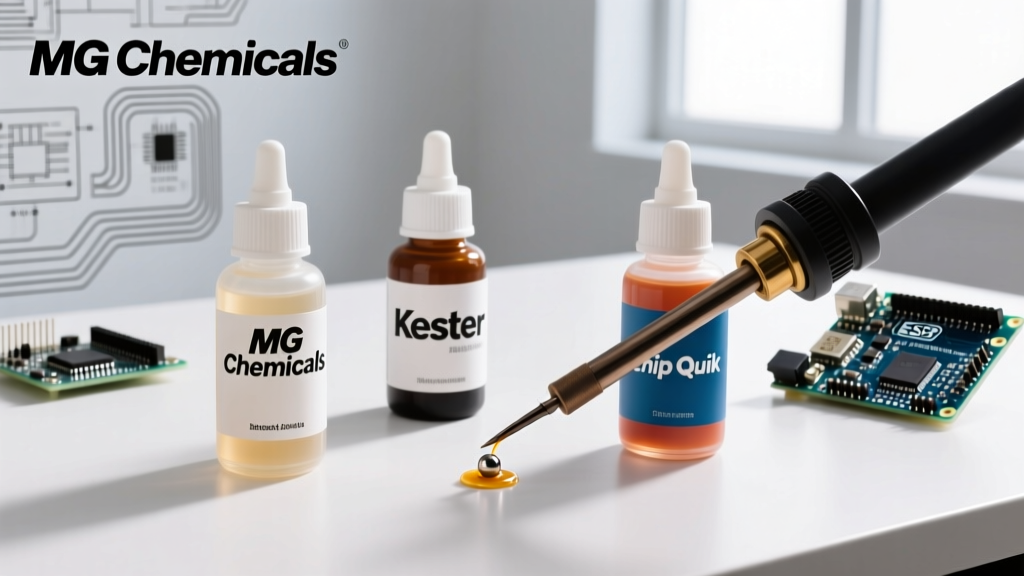
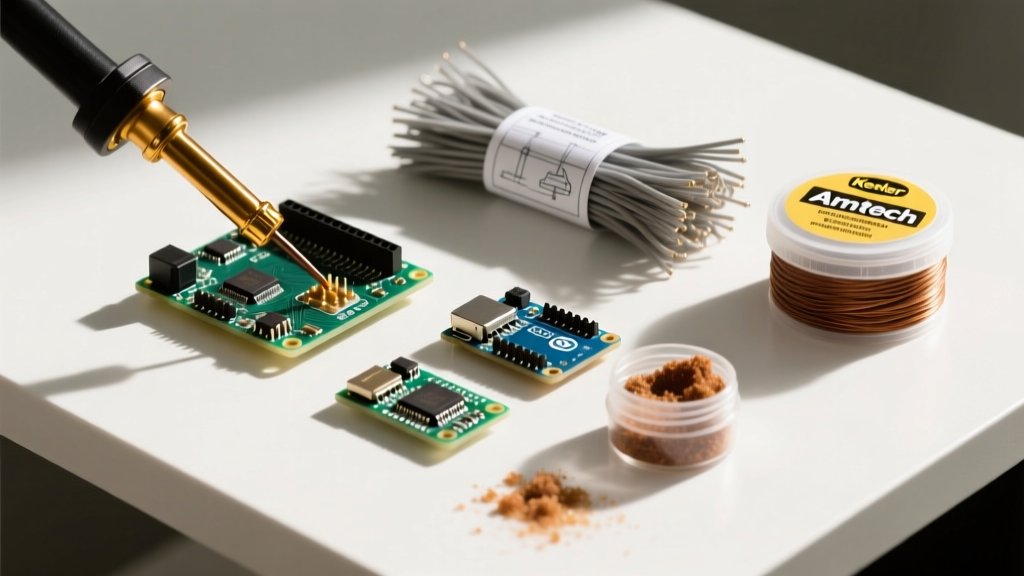
To understand the true value of DIY flux, we must benchmark it against the industry standards used in professional assembly houses in 2026. We tested our DIY Liquid Rosin against Kester 951 (a commercial mildly activated liquid), MG Chemicals 8341 (a no-clean paste), and Amtech NC-559-V2-TF (a premium lead-free tacky flux).
| Metric | DIY Rosin/IPA Liquid | Kester 951 (Liquid) | MG Chemicals 8341 (Paste) | Amtech NC-559-V2-TF (Paste) |
|---|---|---|---|---|
| Cost per oz (Approx.) | $0.35 | $9.00 | $42.00 | $75.00 |
| Activation Temp | 170°C | 150°C - 180°C | 150°C - 200°C | 180°C - 220°C |
| Solvent Base | Isopropyl Alcohol | Isopropanol / Glycol Ethers | Synthetic Hydrocarbons | High-Boiling Glycol Ethers |
| Residue Type | Hard, Sticky (Requires Cleaning) | Hard, Non-Conductive | No-Clean, Polymerized | No-Clean, Optically Clear |
| Shelf Life | 6-12 Months (Evaporation Risk) | 24 Months | 24 Months | 12-18 Months (Refrigerated) |
| IPC Standard | Non-Certified (ROM0 Equivalent) | IPC J-STD-004B (ROM0) | IPC J-STD-004B (ROL0) | IPC J-STD-004B (ROL0) |
Performance Analysis & Real-World Edge Cases
Wetting Action and Capillary Flow
When applying the DIY Rosin/IPA flux to a heavily oxidized 10-year-old PCB, the initial wetting is aggressive. The low surface tension of the IPA allows the flux to wick deep under SOIC and QFP leads. However, because IPA has a boiling point of just 82.6°C, it evaporates almost instantly upon contact with a 350°C soldering iron tip. This leaves behind solid rosin, which must then be re-melted by the iron's thermal mass to activate.
In contrast, Amtech NC-559-V2-TF utilizes high-boiling-point glycol ethers that remain liquid well past 180°C. This provides a sustained chemical reduction environment, resulting in a visibly brighter, smoother solder fillet on large ground planes where thermal dissipation is high.
The Hidden Cost of DIY: Residue and Parasitic Effects
The most significant divergence between DIY and commercial fluxes lies in the residue. Homemade rosin flux leaves a hard, amber, and highly tacky residue. While pure rosin is technically an insulator, its sticky nature acts as a magnet for dust, moisture, and ionic contaminants from the environment.
Expert Warning: In high-impedance analog circuits (e.g., photodiode amplifiers, pico-ampere sensors) or high-frequency RF paths (>1 GHz), uncleaned DIY rosin residue can introduce parasitic capacitance and surface leakage currents. Commercial no-clean fluxes like MG Chemicals 8341 are engineered with synthetic resins that polymerize into a hard, moisture-resistant shell upon cooling, eliminating the need for post-solder cleaning in most consumer applications.
If you use DIY flux on a modern BGA (Ball Grid Array) component, you must clean it. The cleaning protocol requires soaking the board in 99.9% IPA, agitating with a stiff hog-bristle brush to break up the hardened rosin, and ideally finishing in an ultrasonic bath to prevent white, powdery residue from getting trapped under the BGA substrate.
Safety and Fume Extraction: The Colophony Hazard
When researching how to make flux for soldering, safety is often overlooked. Heating natural pine rosin releases colophony fumes, which are a known respiratory sensitizer. Prolonged exposure without adequate ventilation can lead to occupational asthma, a condition well-documented in industrial electronics manufacturing.
According to the CDC NIOSH guidelines on soldering fumes, local exhaust ventilation (LEV) is mandatory when working with rosin-core solders or liquid rosin fluxes. A standard desk fan blowing fumes away from your face is insufficient and actually increases the exposure of others in the room. You must use a dedicated fume extractor equipped with both a HEPA filter (for particulates) and an activated carbon bed (for VOCs and abietic acid vapors). Commercial fluxes, particularly synthetic no-clean varieties, often produce less visible smoke, but still require carbon filtration to capture volatile organic compounds.
When to Use DIY vs. When to Buy Commercial
Stick to DIY Flux When:
- Tinning and Wire Splicing: For pre-tinning heavy gauge wires, automotive harnesses, or simple through-hole hobby projects where cost is the primary driver and post-solder cleaning is easy.
- Drag Soldering Legacy ICs: The low cost of DIY flux allows you to flood the board liberally without worrying about the $70/oz price tag of premium pastes.
- Emergency Field Repairs: When you run out of commercial flux, knowing how to mix rosin and IPA can save a critical repair job.
Invest in Commercial Brands When:
- BGA Rework and Micro-SMD: Working with 0201 components or BGA chips requires the precise tackiness and sustained thermal stability of Amtech or Kester pastes. DIY paste lacks the rheological engineering to hold microscopic components in place during reflow.
- High-Reliability / Aerospace / Medical: If your PCB must pass IPC-A-610 Class 3 standards or undergo Surface Insulation Resistance (SIR) testing (IPC-TM-650), you must use a certified, lot-traceable commercial flux. Homemade flux has no quality control regarding ionic halide contaminants present in raw natural rosin.
- Uncleanable Assemblies: If you are building a device with sealed enclosures or underfill where post-solder washing is impossible, a certified no-clean flux like MG Chemicals 8341 is mandatory to prevent long-term electrochemical migration (dendritic growth).
Frequently Asked Questions
Can I use rubbing alcohol from the pharmacy to make flux?
No. Pharmacy rubbing alcohol is typically 70% IPA and 30% water. The water will cause violent spattering when it hits a hot soldering iron, potentially causing burns, and the moisture will oxidize your solder joints. You must use 99% or 99.9% electronics-grade IPA.
Does homemade flux expire?
Yes. Over 6 to 12 months, the IPA will slowly evaporate through the microscopic pores of plastic applicator bottles, turning your liquid flux into a thick, unusable sludge. Store DIY flux in amber glass bottles with PTFE-lined caps to maximize shelf life.
Is DIY flux safe for lead-free soldering?
Lead-free alloys like SAC305 require higher temperatures (240°C+). Natural rosin begins to degrade and carbonize (turn black) at these elevated temperatures, losing its oxide-removing properties and leaving a difficult-to-clean charred residue. For lead-free SMD work, commercial synthetic fluxes are highly recommended over DIY rosin.