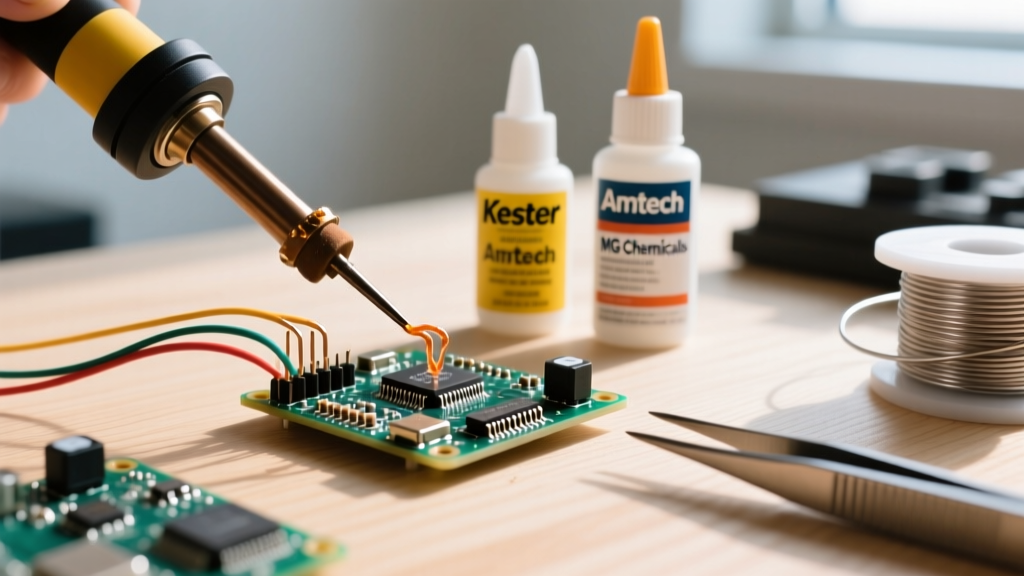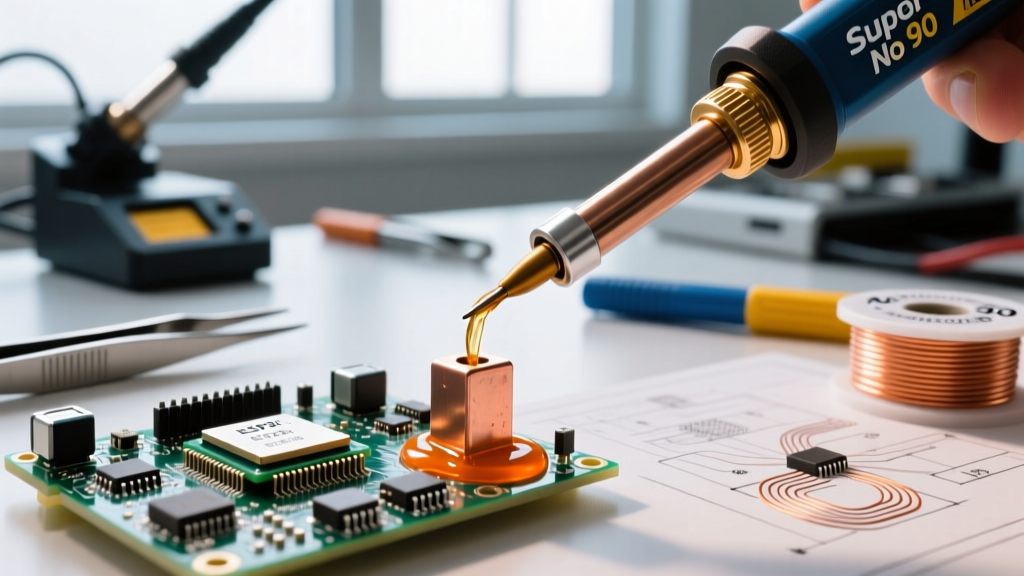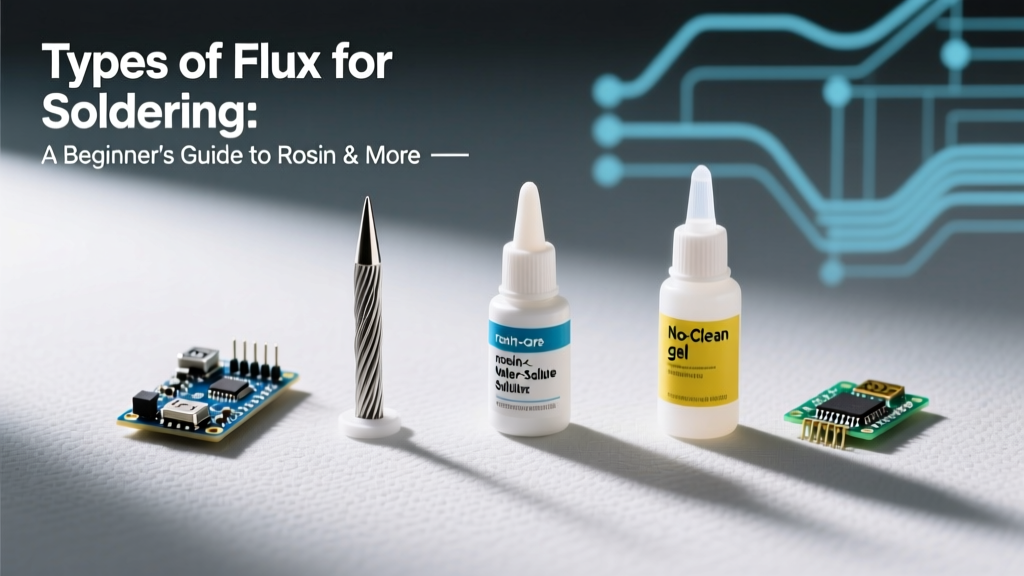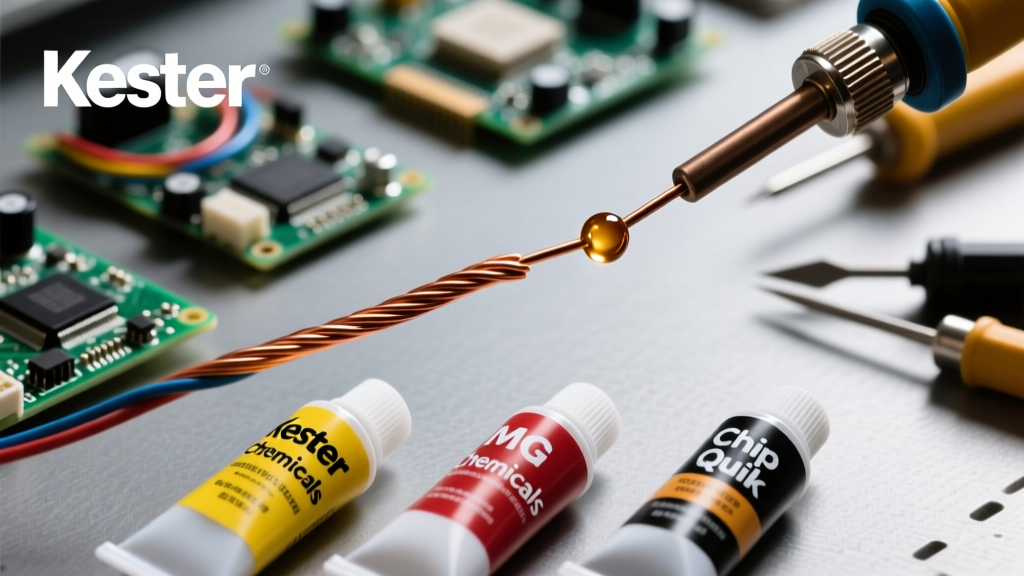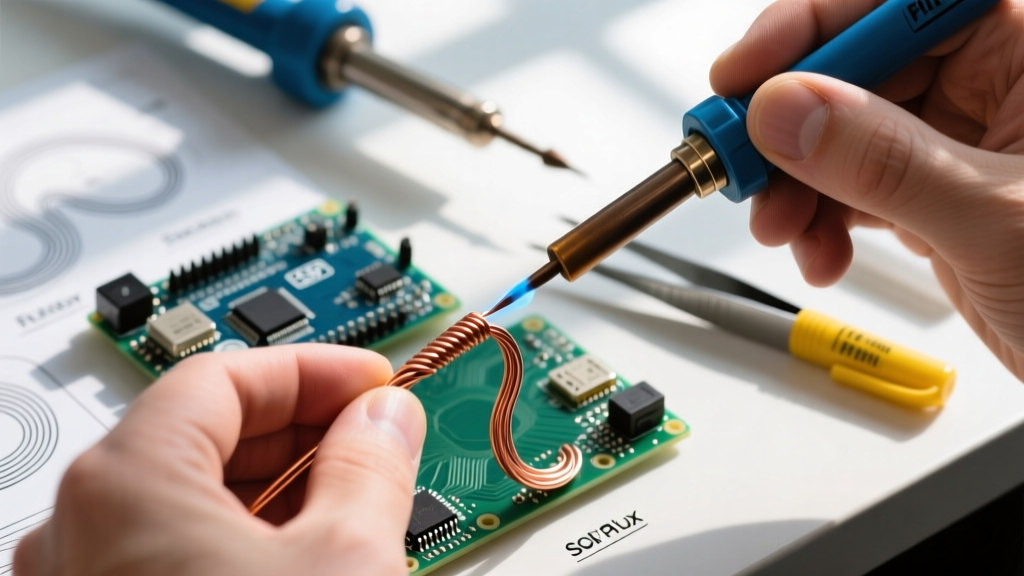

The Chemical Reality: What Is Flux in Soldering?
At its core, flux is a chemical reducing agent designed to strip metal oxides from copper pads and component leads, allowing molten solder to form a reliable intermetallic bond. But from a safety and occupational health perspective, the answer to 'what is flux in soldering' is far more complex. When subjected to the 250°C to 350°C temperatures required for modern lead-free alloys like SAC305, flux does not merely melt; it volatilizes, decomposes, and aerosolizes into a complex plume of particulate matter and volatile organic compounds (VOCs).
Understanding the exact chemistry of your consumables is the first line of defense in electronics manufacturing and DIY prototyping. The three primary flux chemistries each present distinct safety profiles, activation thresholds, and handling requirements.
| Flux Type | Base Chemistry | Activation Temp Range | Primary Safety & Handling Hazard |
|---|---|---|---|
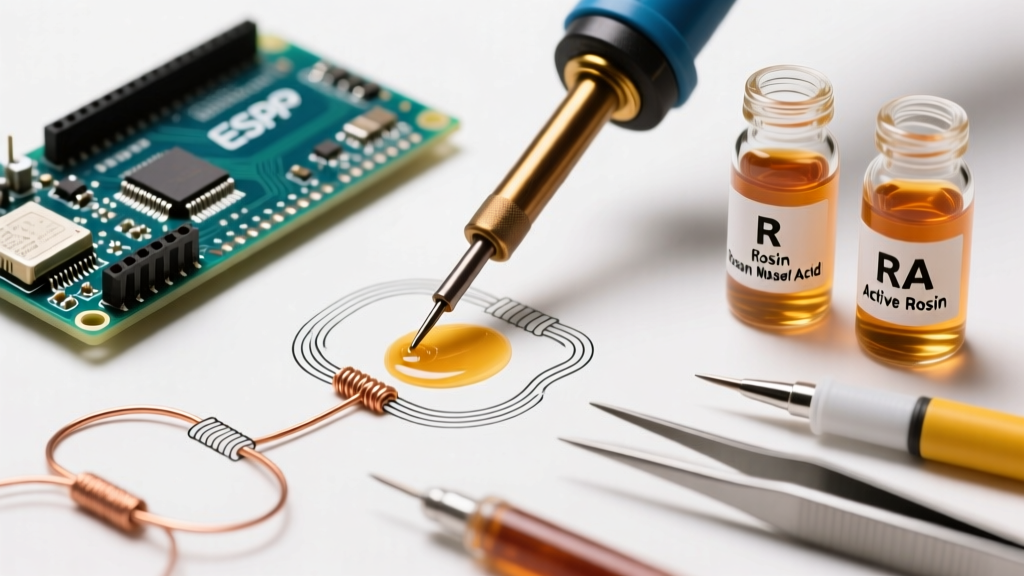
| Rosin (R, RMA, RA) | Colophony (Abietic Acid) + Halide Activators | 150°C - 220°C | Respiratory sensitization (Colophony Asthma); severe fume toxicity. |
| Water-Soluble (OA) | Organic Acids (Lactic, Citric, Stearic) | 180°C - 250°C | Highly corrosive residues; severe contact dermatitis risk. |
| No-Clean | Synthetic Resins + Weak Organic Acids | 200°C - 280°C | Lower fume volume, but VOCs and isocyanates can still trigger sensitization. |
The Hidden Danger: Colophony Asthma and Fume Toxicity
The most significant health risk associated with rosin-based flux is occupational asthma, clinically referred to as colophony asthma. Abietic acid, the primary component of pine rosin, is a potent respiratory sensitizer. When inhaled, it can trigger an immune response. The critical danger of sensitization is that it is cumulative and irreversible. Once a technician becomes sensitized, exposure to even trace amounts of rosin fume (measured in parts per billion) can trigger severe asthmatic attacks, chronic bronchitis, and permanent lung damage.
Occupational Health Warning: According to the UK Health and Safety Executive (HSE), colophony is one of the leading causes of occupational asthma in industrial settings. The HSE strictly mandates that rosin flux fume must never be allowed to enter the operator's breathing zone, and reliance on general room ventilation is considered a critical safety failure.
Furthermore, the flux plume contains fine particulate matter (PM2.5) coated in unreacted acids and aldehydes. While lead-free solder eliminates the risk of lead vapor (which requires temperatures far exceeding standard soldering irons), the flux carrier poses the immediate toxicological threat. The American Conference of Governmental Industrial Hygienists (ACGIH) sets strict Threshold Limit Values (TLV) for rosin core solder fume, capping exposure to prevent long-term respiratory degradation.
Engineering Controls: Fume Extraction Specifications
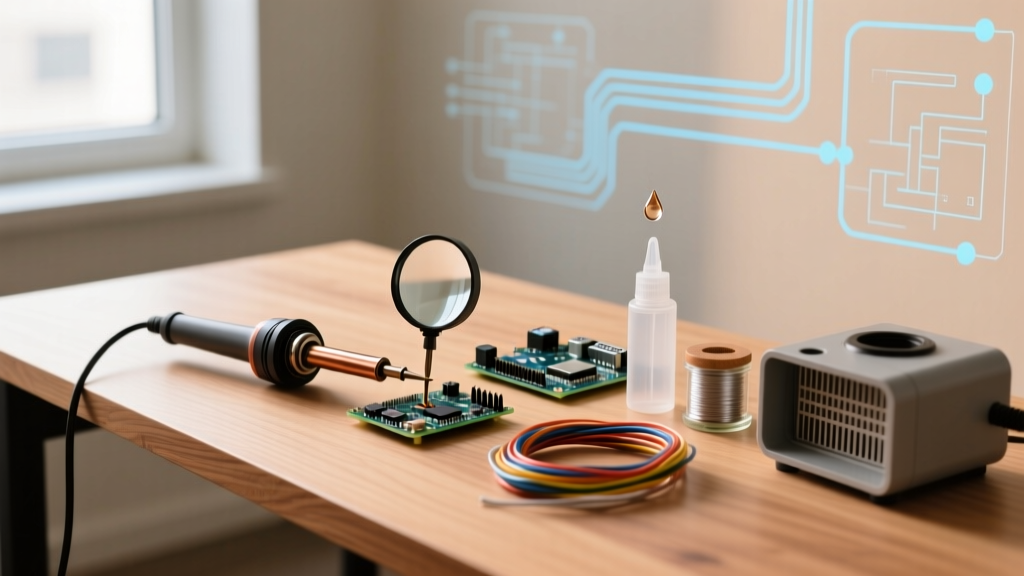
Answering 'what is flux in soldering' safely requires acknowledging that a standard desk fan blowing fumes across the room is not just inadequate; it is a safety violation. Proper engineering controls require source capture systems that pull the plume away from the breathing zone before it can disperse.
1. Capture Velocity and Placement
For effective capture, the extraction hood or nozzle must be positioned within 1 to 2 inches of the solder joint. The system must generate a minimum capture velocity of 100 feet per minute (fpm) at the source. If the nozzle is moved just 6 inches away, the capture velocity drops exponentially, allowing the thermal updraft of the iron to carry the fumes past the hood and into the operator's face.
2. Filtration Media Requirements
A compliant fume extractor must utilize a multi-stage filtration system:
- Stage 1 (Pre-filter): Captures large particulates and molten solder splatter to protect downstream filters.
- Stage 2 (HEPA Filter): Must be rated H13 or H14 to capture 99.97% of particulate matter down to 0.3 microns, trapping the solid flux residues and metallic dust.
- Stage 3 (Activated Carbon): A deep-bed activated carbon matrix (minimum 2 lbs of carbon for benchtop units) is required to adsorb VOCs, aldehydes, and acidic gases that pass through the HEPA filter.
2026 Equipment Market Overview
For hobbyists and light DIY use, benchtop units like the Hakko FA-400 (priced around $75 in 2026) offer basic carbon/HEPA combo filtration, but require the nozzle to be within 1 inch of the joint. For professional labs and continuous production, industrial extractors like the Weller WFE 2DX or Metcal MX-1000 series (ranging from $1,100 to $1,800) provide brushless motor suction, deep-bed carbon filtration, and auto-sensing flow adjustment, ensuring OSHA and Cornell University EH&S compliance for multi-hour shifts.
Dermal Hazards and PPE Protocols
While fume inhalation is the primary respiratory threat, direct skin contact with flux—particularly water-soluble (OA) and heavily activated rosin (RA) variants—presents a severe dermal hazard. The organic acids and halide activators designed to eat through copper oxide will readily attack the lipid barrier of human skin, leading to contact dermatitis, chemical burns, and secondary infections.
Glove Selection and Solvent Safety
Standard latex gloves are insufficient; they degrade rapidly when exposed to the alcohols and glycol ethers present in liquid flux pens and paste. You must use nitrile gloves with a minimum thickness of 5 mil. If you are handling liquid flux or cleaning boards with aerosolized removers like MG Chemicals 413B or Techspray Flux Remover, upgrade to 8-mil extended-cuff nitrile to prevent capillary wicking of the solvent down your wrist.
Furthermore, never use bare hands to handle freshly soldered boards. The residual heat can open the pores of your skin, accelerating the absorption of uncured flux activators. Always use ESD-safe tweezers or wait for the board to drop below 40°C before manual inspection.
Step-by-Step Safe Soldering Workflow
Implementing best practices requires a disciplined workflow. Follow this sequence to minimize thermal degradation of the flux and limit fume generation:
- Prep and PPE: Don 5-mil nitrile gloves and safety glasses (to protect against molten solder splatter from flux boiling). Power on the fume extractor and verify airflow at the nozzle.
- Temperature Profiling: Set your iron to the minimum effective temperature. For SAC305 lead-free wire, 320°C to 340°C is optimal. Exceeding 380°C causes the flux to boil violently, creating excessive micro-splatter and accelerating the thermal breakdown of the rosin into more toxic byproducts.
- Tinning and Application: Apply solder wire to the joint, not the iron tip. Applying flux-cored wire directly to the iron tip instantly vaporizes the core, creating a massive, uncontrolled plume of fume before the heat even reaches the pad.
- Source Capture Alignment: Keep the extraction nozzle between the joint and your face. The plume naturally rises due to convection; position the hood to intercept this thermal column.
- Post-Solder Cleaning: If using water-soluble flux, rinse the PCB with deionized water within 30 minutes. If using no-clean, inspect for dendritic growth risks in high-humidity environments and clean with an isopropyl alcohol (IPA) bath if necessary.
FAQ: Flux Safety and Troubleshooting
Is no-clean flux completely safe to breathe?
No. 'No-clean' refers to the electrical reliability of the residue left on the board, not the toxicity of the fume. No-clean fluxes still contain synthetic resins and solvents that volatilize when heated. While the particulate load may be lower than traditional rosin, the VOCs can still cause respiratory irritation and sensitization over prolonged exposure. Always use source extraction.
Why does my flux spit and splatter?
Spattering occurs when the volatile solvents inside the flux core boil too rapidly. This is usually caused by an iron temperature that is too high, or by applying the flux-cored wire directly to the bare iron tip instead of the heated pad. Lower your temperature by 10°C to 15°C and apply the wire to the thermal mass of the joint to allow the flux to activate smoothly rather than explode.
How often should I replace my fume extractor filters?
HEPA and carbon filters do not last forever. In a professional environment running 4 hours a day, the carbon bed typically saturates within 3 to 6 months. Once saturated, the carbon will begin off-gassing trapped VOCs back into the room. Most modern 2026 extractors feature digital pressure sensors that alert you when the HEPA filter is clogged or the carbon bed is exhausted. Never rely solely on your sense of smell; by the time you can smell the rosin, the carbon filter has already failed.