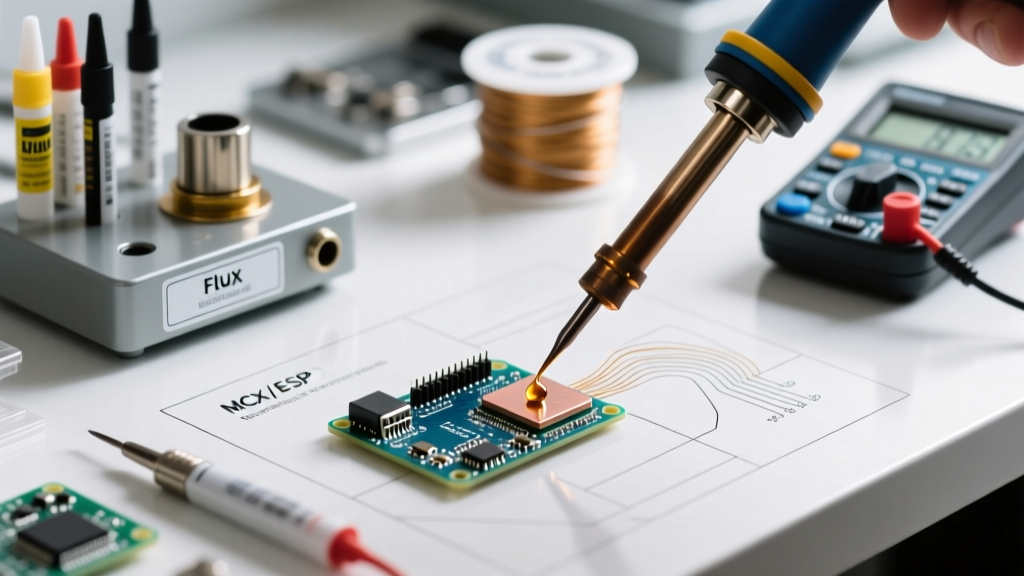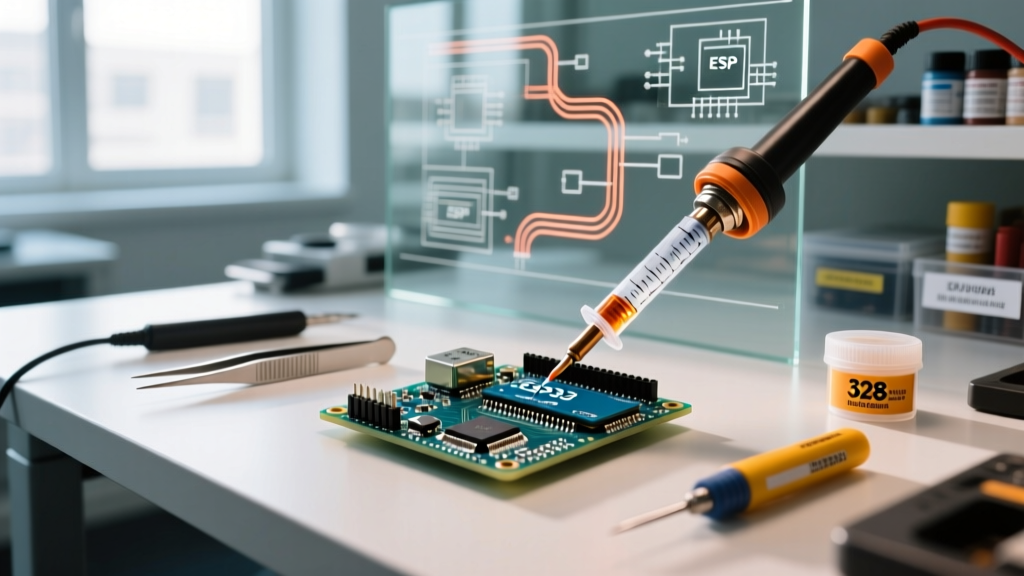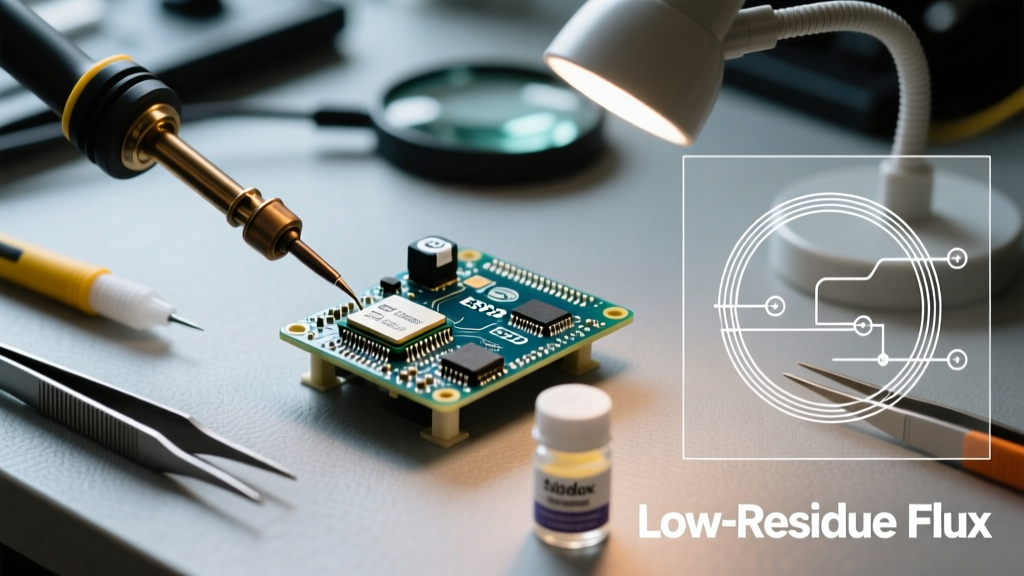

The Hidden Economics of Soldering Flux Usage
In both high-volume electronics manufacturing and precision DIY prototyping, flux is frequently treated as a negligible line item. A bottle of liquid flux or a syringe of tack paste represents a tiny fraction of the total bill of materials (BOM). However, treating flux as an afterthought is a critical financial error. Improper soldering flux usage triggers a cascade of hidden costs that routinely eclipse the price of the consumable itself. These hidden multipliers include accelerated tip degradation, expensive post-soldering cleaning processes, and catastrophic rework rates driven by cold joints or electrochemical migration (ECM).
As of 2026, with the average hourly rate for a certified IPC rework technician ranging between $65 and $110 depending on the region, the financial penalty for a single soldering defect caused by poor flux management can wipe out the profit margin of an entire production batch. This cost analysis breaks down the direct and indirect expenses associated with different flux types, application methods, and cleaning protocols, providing a data-driven framework to optimize your consumable spend.
Direct Material Costs: Comparing Flux Types
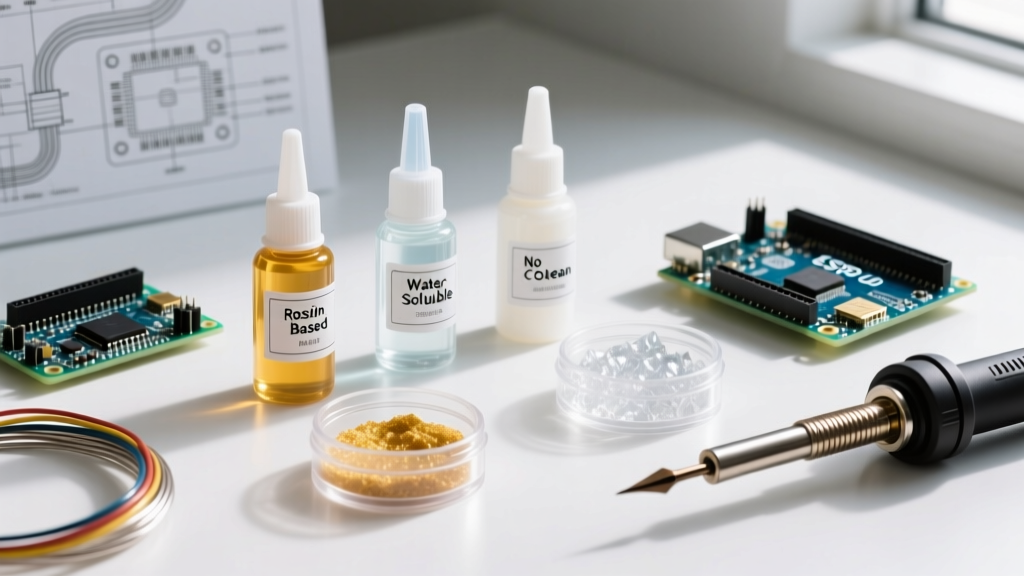
The sticker price of flux varies wildly based on its chemical composition, activation temperature, and form factor. To understand the baseline material costs, we must look at the price per gram and the typical yield of the most common industry-standard formulations. The following matrix reflects current 2026 supply chain pricing for premium, IPC-compliant consumables.
| Flux Classification | Brand / Model | Form Factor | Est. Price (2026) | Cost per Gram |
|---|---|---|---|---|
| No-Clean Liquid (ROL0) | Kester 245 | 10 oz (295g) Bottle | $38.00 | $0.12 / g |
| Rosin Paste (RO1) | MG Chemicals 8341 | 100g Jar | $24.50 | $0.24 / g |
| Tack No-Clean (ROL0) | Amtech NC-559-V2 | 10cc Syringe | $28.00 | $2.15 / g |
| Water-Soluble (OR0) | Indium FL-200 | 10 oz (295g) Bottle | $45.00 | $0.15 / g |
While liquid no-clean fluxes like Kester 245 offer the lowest cost per gram, they are not universally applicable. Tack fluxes, despite costing nearly 18 times more per gram, are essential for BGA reballing and drag-soldering fine-pitch QFPs where component stability and precise localized activation are required. The key to cost optimization is not simply buying the cheapest flux, but matching the flux chemistry to the specific thermal and mechanical demands of the PCB assembly.
The True Cost of Application Extremes
The most significant financial leaks in soldering flux usage occur at the extremes of application: using too little or using too much. Both scenarios violate the workmanship requirements outlined in the IPC-A-610 and IPC-J-STD-004 standards, leading to distinct but equally expensive failure modes.
Under-Application: The Rework Penalty
Insufficient flux fails to remove metal oxides from the component leads and PCB pads before the solder alloy reaches its liquidus temperature. This results in poor wetting, de-wetting, and the dreaded "cold joint."
- Direct Cost: A cold joint on a simple 0805 resistor requires 3 minutes of rework. At $75/hour, this adds $3.75 in labor to a component that costs $0.01.
- Catastrophic Cost: Insufficient flux under a 256-ball BGA leads to head-in-pillow (HiP) defects or non-wetted open bumps. Diagnosing this requires X-ray inspection ($150+ per board), and reworking the BGA risks thermal damage to the PCB laminate, potentially scrapping a $500+ assembly.
Over-Application: The Corrosion and Cleaning Trap
Conversely, flooding the board with excess flux creates a different set of liabilities. Even "no-clean" fluxes contain activators (like adipic or succinic acid) that must be fully consumed by heat. If you apply too much flux, the thermal mass of the excess liquid prevents the activators from reaching their decomposition temperature.
Expert Insight: Unactivated flux residues are hygroscopic. In high-humidity environments, excess ROL0 (No-Clean) residue will absorb moisture from the air, lowering the surface insulation resistance (SIR) of the PCB and creating dendritic shorts between fine-pitch traces over a 6-to-12-month period. The warranty return cost of a field failure dwarfs any time saved during assembly.
Dispensing Methods and Material Waste
How you apply the flux is just as critical to your bottom line as what you apply. Inefficient dispensing methods silently drain your consumable budget through evaporation, over-puddling, and expired shelf-life waste.
- Flux Pens (40% Waste): While convenient for quick DIY repairs, flux pens suffer from severe tip drying and solvent evaporation. A $12 pen often yields only 60% of its theoretical volume before the felt tip clogs or the solvent evaporates, rendering the remaining flux inactive.
- Squeeze Bottles with Needle Tips (25% Waste): Standard manual squeeze bottles rely on operator pressure control. This inevitably leads to "flux puddling" around DIP pins and through-hole vias. The excess flux must either be cleaned (adding labor) or left to risk cosmetic QA rejection.
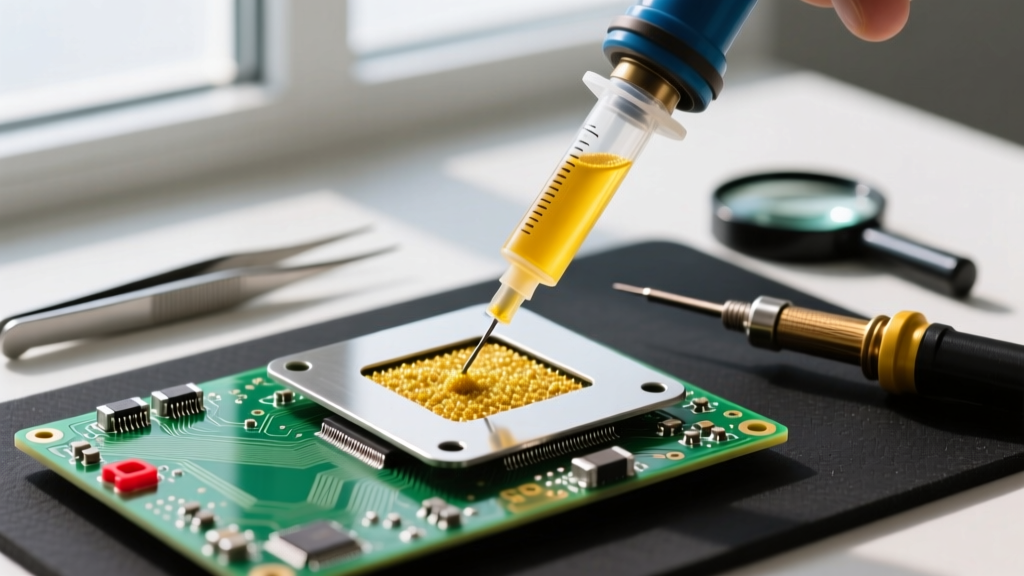
- Pneumatic Syringe Dispensers (5% Waste): For production environments, investing $350 in a pneumatic dispensing controller (like those from EFD or Fisnar) pays for itself within weeks. By programming exact pulse times (e.g., 0.15 seconds at 4 PSI), operators apply micro-droplets of tack flux with surgical precision, reducing material consumption by up to 70% compared to manual syringe plunging.
Post-Soldering Cleaning: The Biggest Variable
If your soldering flux usage dictates a post-soldering cleaning step, your cost per board increases exponentially. Cleaning is rarely just about the chemical solvent; it is about the labor, equipment depreciation, and disposal fees.
Consider the cost profile of cleaning water-soluble (OR0) flux residues versus bypassing cleaning with a properly applied no-clean (ROL0) flux:
Water-Soluble Cleaning Protocol
- Saponifier & DI Water: $0.35 per board in chemical and deionized water consumption.
- Ultrasonic/Batch Washer: $0.20 per board in equipment depreciation and electricity.
- Drying Phase: $0.15 per board in thermal baking time to prevent trapped moisture.
- Total Added Cost: ~$0.70 per board, plus 45 minutes of batch processing time.
No-Clean Bypass Protocol
By strictly controlling soldering flux usage to ensure complete thermal activation, you can safely bypass the cleaning phase. According to data published by MG Chemicals technical bulletins, properly activated ROL0 fluxes leave a benign, glass-like residue that passes IPC SIR testing without washing. The cost per board for cleaning drops to $0.00, and throughput increases dramatically.
Note: If cosmetic cleanliness is required for customer-facing PCBs, a light misting of 99.9% Isopropyl Alcohol (IPA) and a lint-free wipe costs roughly $0.08 per board in labor and solvent—still an 88% savings over aqueous washing.
Actionable Framework for Optimizing Flux Spend
To transition from reactive consumable purchasing to strategic flux management, implement this four-step optimization protocol in your workshop or production line.
Step 1: Audit Current Consumption and Waste
Weigh your flux bottles or syringes at the start and end of a standard 40-hour work week. Calculate the exact grams used per board. If you are using more than 0.5 grams of liquid flux per standard 4x4 inch consumer PCB, you are likely over-applying.
Step 2: Match Chemistry to the IPC Standard
Do not use aggressive water-soluble (OR0) fluxes for standard consumer electronics where cleaning is an unwanted expense. Standardize on ROL0 (No-Clean) for 90% of your applications. Reserve OR0 strictly for high-reliability medical or aerospace boards where bare copper cleanliness is mandated, and budget for the mandatory aqueous cleaning phase.
Step 3: Automate and Calibrate Dispensing
Retire manual squeeze bottles for surface-mount work. Transition to pneumatic dispensers for paste fluxes, and use precision micro-pumps for liquid fluxes. Calibrate the dispensing pressure and time weekly to account for changes in ambient temperature and solvent viscosity.
Step 4: Implement Thermal Profiling
Flux is only as good as its thermal profile. Use a thermocouple profiler (like a KIC or Datapaq system) to ensure your reflow oven or pre-heater is providing the necessary soak time (typically 60-90 seconds at 150°C) to allow the flux solvents to evaporate and the activators to clean the oxides before the solder melts. Proper thermal profiling ensures that the flux you paid for actually does its job, eliminating the need for double-pass soldering and subsequent rework.
Conclusion
Optimizing soldering flux usage is not about finding the cheapest chemical on the market; it is about minimizing the total cost of assembly. By understanding the direct material costs, eliminating dispensing waste, and avoiding the massive financial penalties of rework and post-soldering cleaning, you can transform flux from a hidden expense into a lever for operational efficiency. In 2026, where margins in electronics assembly are tighter than ever, mastering the economics of your consumables is just as important as mastering the soldering iron itself.