
The Core Question: What Is Flux Soldering?
At its metallurgical core, what is flux soldering? It is the chemical and thermal process of using a fluxing agent to strip metal oxides from copper pads and component leads, prevent re-oxidation during heating, and lower the surface tension of molten solder to ensure proper wetting. Without flux, modern electronics assembly would be impossible; the solder would simply ball up and refuse to form an intermetallic compound (IMC) with the base metal.
However, from a manufacturing and prototyping perspective, flux is not just a chemical enabler—it is a major line item in your bill of materials (BOM) and a primary driver of post-assembly labor costs. In 2026, with the industry heavily standardized around higher-temperature lead-free alloys like SAC305 (Sn96.5/Ag3.0/Cu0.5), flux chemistries must be more aggressive and thermally stable than ever. This shifts the cost analysis from simply looking at the price per ounce of the chemical to evaluating the total cost of ownership, including cleaning, reliability testing, and field failure rates.
The True Cost of Flux: Beyond the Syringe Price
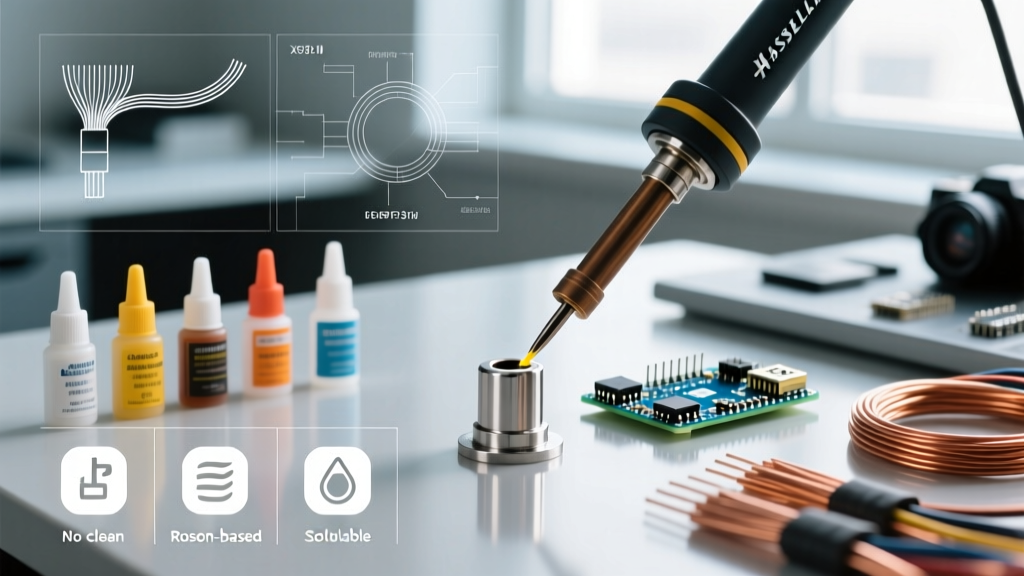
When engineers ask what is flux soldering in a production context, they are often really asking about the economics of flux selection. The upfront cost of the flux material is usually the smallest fraction of its total financial impact. To understand the real cost, we must break down the three primary flux categories: Rosin (R/ROM), No-Clean (NC), and Water-Soluble (WS).
2026 Flux Chemistry Cost Matrix
| Flux Type | Example Product (Market Standard) | Material Cost | Required Post-Solder Process | Estimated Process Cost (Per Board) |
|---|---|---|---|---|
| Rosin (Mildly Activated) | Kester 186 Liquid Flux | ~$0.02 / mL | Isopropyl Alcohol (IPA) wipe or wash | $0.15 - $0.45 (Labor + IPA) |
| No-Clean (Synthetic) | MG Chemicals 8341 Liquid | ~$0.15 / mL | None (Visual inspection only) | $0.00 (Material only) |
| Water-Soluble (Organic Acid) | Kester 331 or Alpha WS-820 | ~$0.08 / mL | DI Water Ultrasonic/Batch Wash | $0.85 - $2.50 (Water, power, disposal) |
| Tack / Syringe Paste | Amtech TACFlux 020 (30g) | ~$0.83 / gram | None (Targeted application) | $0.05 (High precision, low waste) |
Note: Costs reflect low-to-medium volume prototyping and small-batch manufacturing environments typical of independent engineering labs in 2026.
Hidden Costs: The 'No-Clean' Illusion and SIR Testing
A common misconception is that 'no-clean' flux eliminates downstream costs entirely. While it eliminates the physical washing step, it introduces hidden reliability costs. No-clean fluxes leave behind a transparent, hard resin residue designed to encapsulate active ionic compounds. If the thermal profile during reflow or hand soldering is insufficient, the flux does not fully activate and polymerize. This leaves active halides or organic acids exposed on the printed circuit board (PCB).
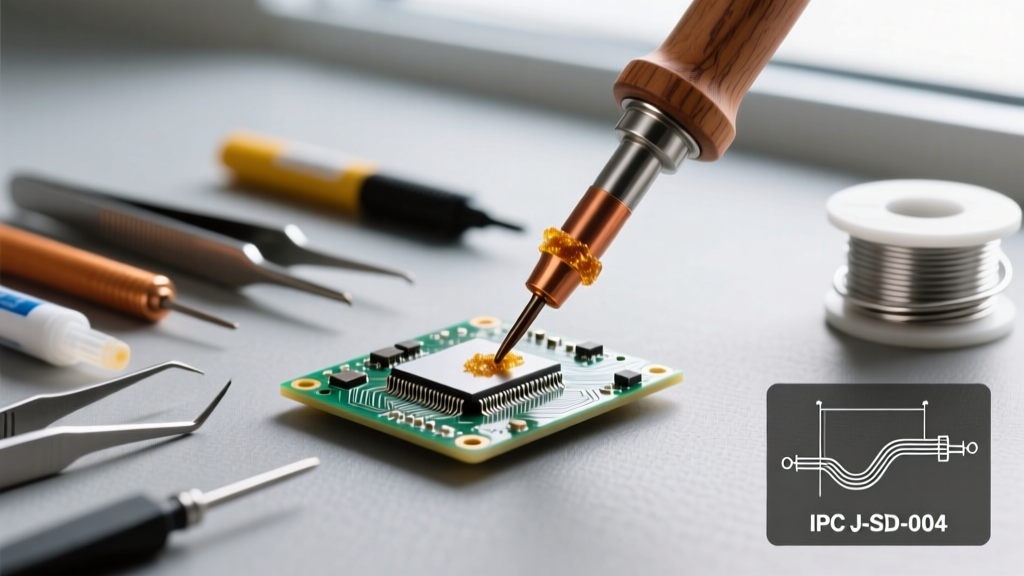
Expert Insight: According to IPC standards, specifically the J-STD-004 specification for soldering fluxes, no-clean residues must pass rigorous Surface Insulation Resistance (SIR) testing. If you are manufacturing medical or aerospace electronics, the cost of performing IPC-TM-650 SIR testing on your no-clean assemblies can add $150 to $300 per batch in third-party lab fees, entirely negating the savings from skipping the wash step.
Furthermore, no-clean residues can interfere with automated optical inspection (AOI) and bed-of-nails in-circuit testing (ICT). The hardened resin can cause false-positive AOI reads or prevent test probes from making reliable contact, leading to costly diagnostic rework loops.
Water-Soluble Economics: The Price of Purity
Water-soluble (WS) fluxes contain highly active organic acids that provide exceptional wetting, making them ideal for heavily oxidized boards or difficult-to-solder surfaces like bare copper or nickel. However, WS fluxes must be cleaned. Leaving WS residue on a PCB will inevitably lead to Electrochemical Migration (ECM) and dendritic growth, causing catastrophic short circuits in humid environments.
The Hidden Costs of the Wash Station
The cost of cleaning WS flux goes far beyond the water bill. To properly clean WS flux to meet NASA and high-reliability workmanship standards, you must use Deionized (DI) or distilled water. Tap water contains ions that will contaminate the board and defeat the purpose of the wash.
- DI Water Generation: A lab-grade DI water system requires resin cartridge replacements every 3-6 months, costing roughly $120 per cartridge.
- Effluent Disposal: The wastewater from cleaning WS flux is now contaminated with heavy metals (from the solder) and organic acids. In many municipalities, you cannot legally dump this down the drain. Hazardous waste disposal services charge by the gallon, adding significant overhead to your operational budget.
- Drying Time: WS washed boards must be baked or air-knifed to prevent water entrapment under BGAs. This adds 15-30 minutes of thermal cycling time per batch, consuming oven capacity and electricity.
Failure Mode Cost Analysis: When Cheap Flux Destroys Expensive PCBs
To truly understand what is flux soldering from a financial perspective, we must look at the cost of failure. Using expired, improperly stored, or overly cheap flux leads to specific, costly failure modes:
- Corrosion of Fine-Pitch Components: Cheap, highly halogenated rosin fluxes can corrode the thin copper traces under 0.4mm pitch QFNs. A $2,000 prototype motherboard scrapped due to trace corrosion represents a massive negative ROI on a $10 bottle of discount flux.
- Solder Beading and Splatter: Low-quality liquid fluxes often contain solvents with low boiling points. When exposed to a 350°C soldering iron tip, the solvent violently boils, causing microscopic solder splatter. These stray solder balls can lodge under BGA packages, causing latent shorts that only manifest in the field. A single field return for a commercial IoT device can cost upwards of $150 in shipping, diagnostics, and replacement.
- Charred Residue: Fluxes lacking adequate thermal stabilizers will carbonize (turn black) during the extended dwell times required for large ground-plane connections. This charred residue is highly conductive and notoriously difficult to clean, often requiring aggressive scraping that damages the PCB solder mask.
Application Formats: Pens vs. Syringes vs. Liquid Bottles
The physical delivery mechanism of the flux drastically alters the cost-per-use. Major chemical manufacturers offer flux in various formats, each with distinct economic profiles:
1. Flux Pens (The False Economy)
Flux pens seem cheap ($6 to $10 each), but they are notorious for drying out if the cap is not sealed perfectly, or for flooding the board if the internal valve fails. The waste factor on flux pens is exceptionally high. For low-volume hobbyists, they are convenient; for a production lab, they are a financial leak.
2. Syringe Dispensing (The Precision Standard)
Thixotropic tack fluxes in 30g or 50g syringes (like Amtech or Indium formulations) cost more upfront ($25 to $60 per syringe). However, when paired with a pneumatic dispenser or careful manual application using a 21-gauge blunt needle, you deposit exactly 0.05g of flux exactly where it is needed. The waste is near zero, and the shelf life (when refrigerated) easily extends through a 2-year production run.
3. Liquid Bottles with Brush Applicators
For general through-hole and large SMD rework, 100mL to 1L bottles of liquid no-clean or rosin flux offer the lowest cost per milliliter. Using a dedicated acid brush or a swab allows for controlled application, though it requires the labor cost of manual brushing and subsequent localized cleaning.
Expert Verdict: Optimizing Your Flux Budget in 2026
Answering 'what is flux soldering' requires acknowledging that flux is an insurance policy for your metallurgical joints. To optimize your budget, align your flux chemistry with your production volume and reliability requirements:
- For Hobbyists and One-Off Prototypes: Use high-quality No-Clean Syringe Flux (e.g., MG Chemicals or Chip Quik). The $25 upfront cost is offset by zero cleaning requirements and excellent shelf life. Do not buy bulk liquid; it will expire before you use it.
- For Low-Volume Production (10 to 500 boards): Standardize on a Mildly Activated Rosin (RMA) or high-reliability No-Clean liquid. Budget for a localized IPA brushing station. The material cost is pennies per board, and the manual cleaning labor is absorbed into the standard assembly time.
- For High-Volume / High-Reliability (Medical, Auto, Aerospace): Utilize Water-Soluble Flux paired with an automated inline aqueous batch washer. While the capital expenditure for the washer and DI water system is high ($5,000+), the per-unit cost drops to fractions of a cent at scale, and it guarantees the ionic cleanliness required for mission-critical deployments.
Ultimately, the cheapest flux on the market is almost always the most expensive choice in the long run. Invest in chemically stable, documented fluxes from reputable manufacturers, store them according to datasheet specifications, and treat your flux selection as a critical engineering decision rather than an afterthought.