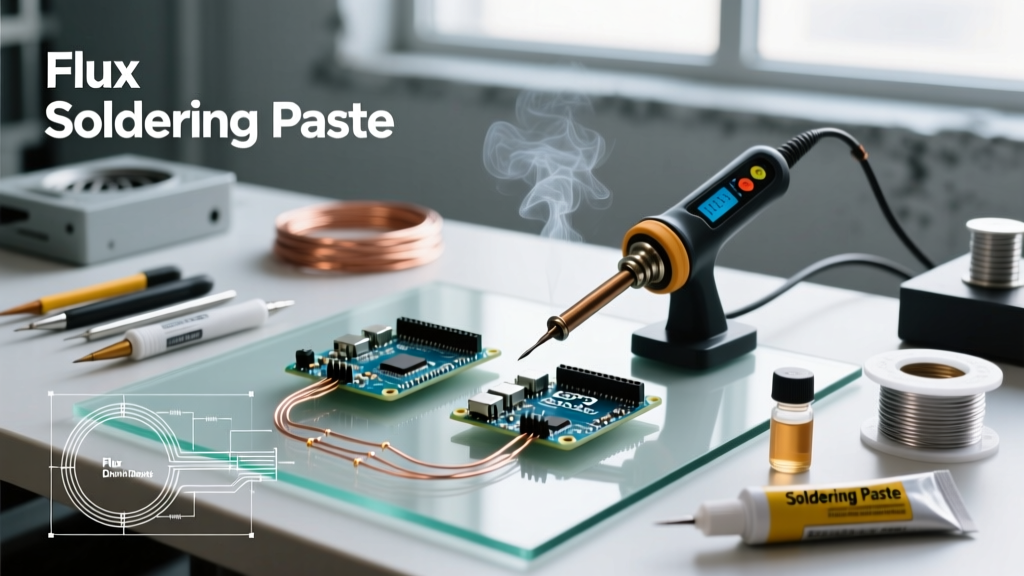

The Core Confusion: Flux vs Soldering Paste
When navigating the electronics workbench, the distinction between liquid/gel flux and solder paste is a frequent point of confusion for both hobbyists and junior technicians. Understanding the flux vs soldering paste debate is not just a matter of application technique; it is fundamentally a matter of chemical safety, thermal management, and long-term PCB reliability. While both contain chemical activators designed to strip oxidation from copper pads, their physical composition, hazard profiles, and handling requirements are vastly different.
Flux is a chemical cleaning agent—available in liquid, gel, or solid rosin core forms—used to prepare surfaces for soldering. Solder paste, conversely, is a complex thixotropic mixture consisting of microscopic spheres of solder alloy (such as SAC305) suspended in a sticky flux vehicle. Using the wrong material for a specific rework task, or failing to respect the safety protocols associated with each, can lead to catastrophic board failure, toxic exposure, or irreversible component damage.
Chemical Breakdown: What Are You Actually Handling?
Standalone Flux (Liquid, Gel, and Pen)
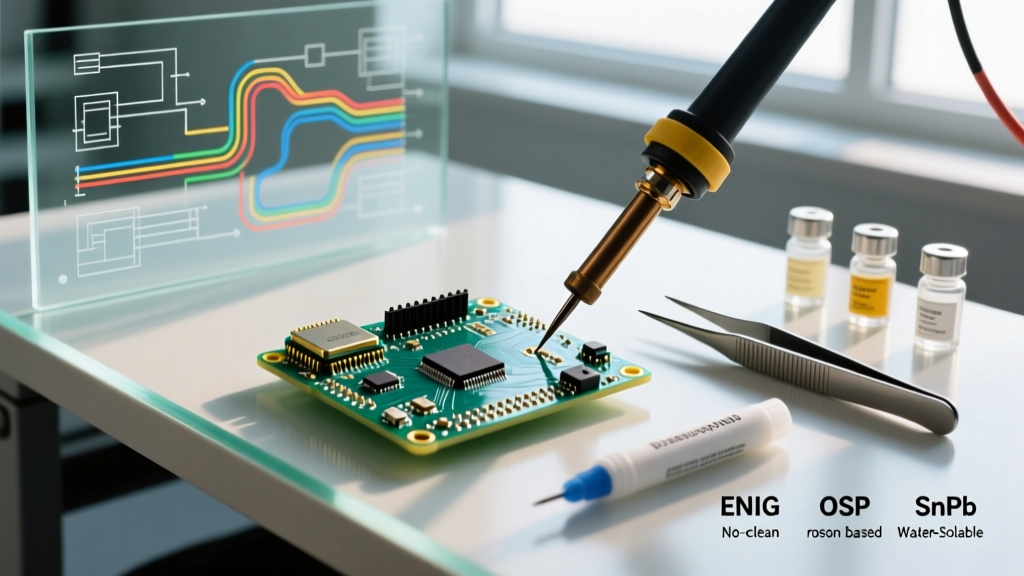
Standalone fluxes are categorized by their chemical base and activity level, typically governed by the IPC J-STD-004 standard. The most common types include:
- Rosin (R, RMA, RA): Derived from pine sap (colophony). Activated rosin (RA) contains mild acids to clean heavy oxidation but requires post-soldering cleaning.
- No-Clean (NC): Formulated with synthetic resins that leave a minimal, non-conductive, and non-corrosive residue. Examples include Kester 245 (approx. $18 per ounce), widely used in automated wave and selective soldering.
- Water-Soluble (Organic Acid - OA): Highly aggressive activators that provide pristine wetting but must be cleaned with deionized (DI) water immediately after reflow to prevent dendritic growth and electrochemical migration.
Solder Paste (Powder + Flux Vehicle)
Solder paste is engineered for surface mount technology (SMT) reflow and hot-air rework. The flux vehicle in solder paste is heavily modified with rheological additives (thixotropic agents) to give it a 'tacky' consistency, holding components in place before melting. The solder powder is graded by mesh size:
- Type 3: 25-45 microns. Standard for larger SMD components (e.g., SOIC, QFP).
- Type 4: 20-38 microns. The 2026 industry standard for fine-pitch components (0.4mm to 0.5mm pitch BGA and QFN).
- Type 5 & 6: Sub-20 microns. Reserved for ultra-fine pitch micro-BGAs and advanced semiconductor packaging.
Health & Safety Protocols: Fumes, Skin, and Ventilation
The most critical divergence in the flux vs soldering paste comparison lies in occupational health and safety. Heating these compounds releases volatile organic compounds (VOCs) and particulate matter that require strict management.
CRITICAL SAFETY WARNING: Rosin-based flux fumes (colophony) are a proven respiratory sensitizer. Repeated exposure can trigger occupational asthma, which is often irreversible. According to the UK Health and Safety Executive (HSE), soldering fume is a recognized occupational carcinogen and asthmagen, mandating the use of Local Exhaust Ventilation (LEV) at the source.
Hazard Comparison Matrix
| Hazard Factor | Standalone Flux (Liquid/Gel) | Solder Paste (SAC305 / Leaded) |
|---|---|---|
| Fume Toxicity | High (VOCs, Rosin/Colophony, Aldehydes) | Moderate (Flux vehicle burns off before alloy melts) |
| Heavy Metal Exposure | None (unless applied over leaded pads) | High Risk (Ingestion hazard via hand-to-mouth contact) |
| Skin Irritation | Moderate to High (Solvents like IPA strip skin oils) | Low (Gloves required primarily to prevent ingestion) |
| Splatter/Thermal Risk | High (Liquid boils and spits when touched by a 350°C iron) | Low (Paste melts gradually; less violent boiling) |
To mitigate these risks, Stanford University's Environmental Health & Safety (EHS) guidelines dictate that all soldering operations must utilize localized fume extractors equipped with HEPA and activated carbon filters. Furthermore, technicians handling solder paste must wear nitrile gloves, not only to protect the paste from skin oils but to prevent the accidental ingestion of lead or heavy metal alloys like SAC305.
Storage and Shelf Life: Preventing Chemical Degradation
Mishandling the storage of these consumables is a leading cause of soldering defects like 'solder balling' and 'tombstoning'.
Standalone Flux Storage
Most liquid and gel fluxes (like MG Chemicals 8341 Tacky Flux) are stable at room temperature (15°C to 25°C). They typically boast a shelf life of 12 to 24 months. However, solvent-based liquid fluxes must be kept tightly sealed to prevent the evaporation of the carrier solvent (usually isopropyl alcohol or glycol ethers), which turns the flux into a useless, crystallized sludge.
Solder Paste Refrigeration and 'Tack Life'
Solder paste is a living chemical system. The flux vehicle slowly reacts with the solder powder's surface oxidation even at room temperature. Therefore, unopened solder paste (such as Chip Quik SMD291AX, approx. $26 for a 35g syringe) must be stored in a dedicated refrigerator between 0°C and 10°C.
- Cold Storage: Maintains a shelf life of 6 to 12 months.
- Acclimatization: Before opening, the syringe must sit at room temperature for at least 2 to 4 hours. Opening a cold syringe causes atmospheric moisture to condense inside, leading to violent steam explosions (solder spatter) during reflow.
- Tack Life: Once dispensed, the paste's 'tack life' (its ability to hold a component) is usually 8 to 12 hours. If left on the bench longer, the flux dries out, resulting in components shifting during hot-air rework.
Application Best Practices: Iron vs. Hot Air
The physical state of the flux dictates the thermal tool you should use. Applying the wrong heat source is a primary cause of PCB pad delamination.
When to Use Standalone Flux
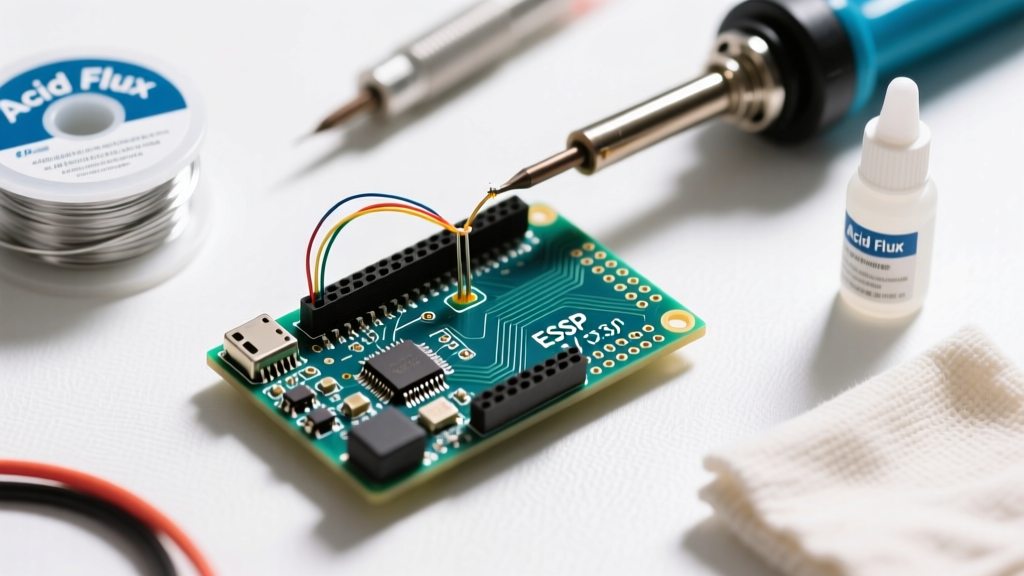
Standalone flux is the mandatory companion for hand soldering with a soldering iron and solder wire. It is also used for drag-soldering QFP chips and preparing oxidized pads for SMD rework.
- Best Practice: Apply a thin, even layer of gel flux to the pads. Do not flood the board; excess flux traps heat and creates a thermal barrier, requiring you to dwell the iron longer, which risks lifting the copper pad.
- Failure Mode: Using liquid flux with a hot air gun. The high-velocity air will blow the liquid flux across the board, contaminating nearby connectors and causing localized boiling that splatters hot chemicals onto the operator's skin.
When to Use Solder Paste
Solder paste is engineered for reflow ovens, hot plates, and hot-air rework stations. It is rarely used with a traditional soldering iron because the iron tip will scrape the microscopic solder spheres away before they can coalesce, leaving a messy, oxidized lump on the pad.
- Best Practice: Dispense paste using a pneumatic syringe or a fine-pitch stencil. Apply hot air in a circular motion, keeping the nozzle 1-2 cm above the board. Watch for the 'shine'—the exact moment the flux activates and the solder powder collapses into a liquid, reflective pool.
- Failure Mode: Heating the paste too rapidly. If the temperature ramps up faster than 3°C per second, the volatile solvents in the flux vehicle boil violently, ejecting microscopic spheres of solder across the board (a defect known as 'solder balling').
Post-Soldering Cleaning and Reliability
The National Institute for Occupational Safety and Health (NIOSH) emphasizes that proper cleanup of chemical residues is vital for both worker safety and electronic reliability. The cleaning protocol depends entirely on the chemistry you selected.
Cleaning No-Clean Flux
Despite the name, no-clean flux residues can interfere with automated optical inspection (AOI) and prevent the proper adhesion of conformal coatings. If cleaning is required, no-clean residues are notoriously difficult to remove because they polymerize (harden) when exposed to reflow temperatures. You must use a specialized saponifier or a high-grade flux remover (e.g., Kyzen E5611) rather than standard 99% Isopropyl Alcohol (IPA), which merely smears the hardened resin across the board.
Cleaning Water-Soluble Flux and Paste
Water-soluble chemistries are highly corrosive. If you use a water-soluble solder paste for a BGA rework, the board must be washed in a heated DI water ultrasonic or spray-in-air system within 2 to 4 hours of reflow. Leaving water-soluble residue overnight will almost certainly result in dendritic shorts and catastrophic failure when the board is powered on in a humid environment.
Summary: Choosing the Right Chemistry
Ultimately, resolving the flux vs soldering paste dilemma requires matching the chemistry to your thermal process. Use solder paste for SMT stencil printing and hot-air reflow, respecting strict refrigeration and acclimatization protocols to prevent moisture-induced spatter. Use standalone flux for iron-based hand soldering, drag soldering, and wire tinning, ensuring aggressive LEV fume extraction to protect against colophony-induced respiratory damage. By treating these consumables as distinct chemical systems rather than interchangeable goops, you ensure both the longevity of your PCB assemblies and the safety of your workshop environment.