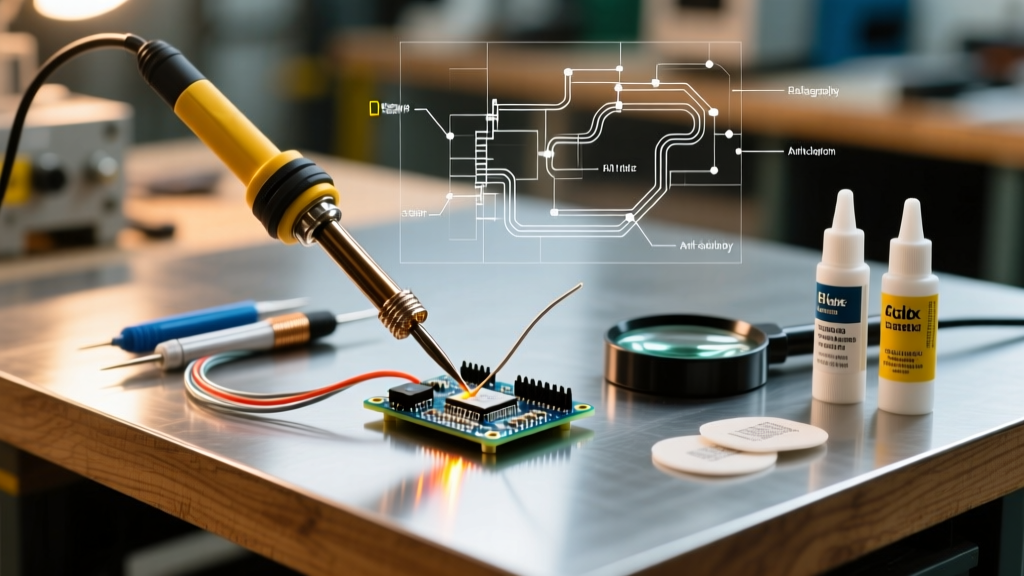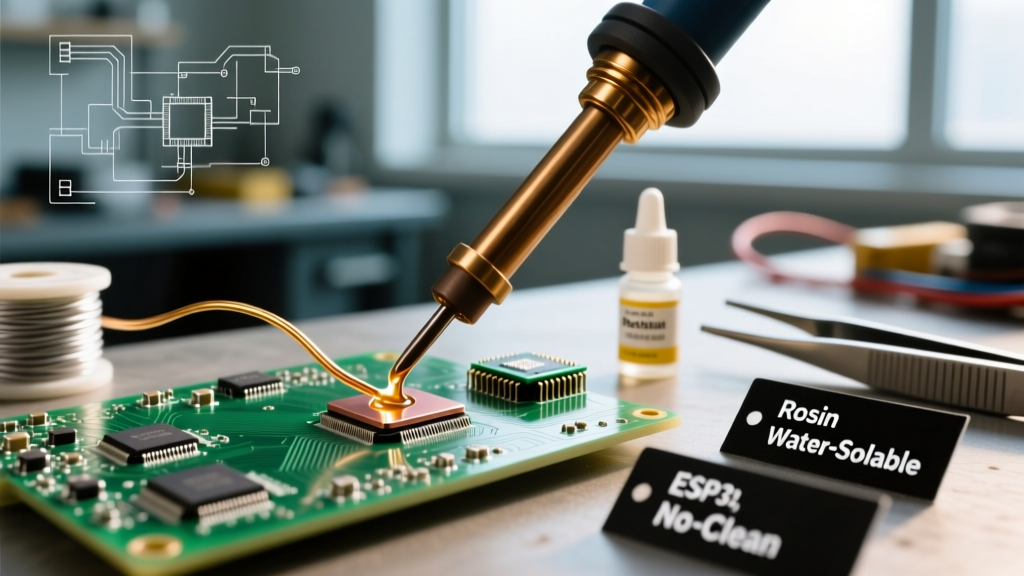

The Metallurgical Challenge: Why Brass Demands Specialized Flux
Soldering brass is notoriously unforgiving compared to pure copper or tin-plated surfaces. Brass is primarily an alloy of copper and zinc, and it is the zinc content that creates severe wetting challenges. When subjected to the localized high heat of a soldering iron or torch, zinc rapidly oxidizes and can even vaporize (outgas) if temperatures spike near 900°C. This outgassing creates microscopic porosity in the solder joint and forms a stubborn zinc oxide layer that standard mildly activated rosin (RMA) fluxes simply cannot penetrate.
Furthermore, common brass alloys like C36000 (Free-Machining Brass) contain up to 3.5% lead to improve machinability. While excellent for CNC turning, this lead content exacerbates hot shortness and requires highly active chemical fluxes to achieve a reliable metallurgical bond. According to the Copper Development Association, selecting the correct chemical activator is the single most critical variable in joining copper-zinc alloys. In this comprehensive brand comparison, we evaluate the top flux formulations on the market to determine the best flux for soldering brass across structural, plumbing, and electrical applications.
Brand Showdown: Top Formulations for Brass Soldering
Not all fluxes are created equal. The market is segmented by base chemistry: zinc chloride liquids, heavy acid pastes, and specialized rosin blends. Below, we dissect the four industry-standard products used by HVAC technicians, marine fabricators, and electronics engineers.
1. Superior Flux #30 (Heavy-Duty Zinc Chloride Paste)
Superior Flux #30 is a highly aggressive, zinc-chloride-based paste designed specifically for difficult-to-solder metals, including stainless steel and heavily oxidized brass. Because it is a thick paste, it excels in vertical or overhead applications where liquid fluxes would run off the joint before activation.
- Best For: Structural brass joints, marine hardware, and thick C36000 free-machining brass.
- Activation Temperature: Begins reacting at 180°C (356°F), peaking at 260°C (500°F).
- Price Range: ~$18.00 per 2oz jar.
- Drawback: Highly corrosive residue. It must be neutralized and cleaned immediately with a baking soda solution post-soldering to prevent galvanic corrosion.
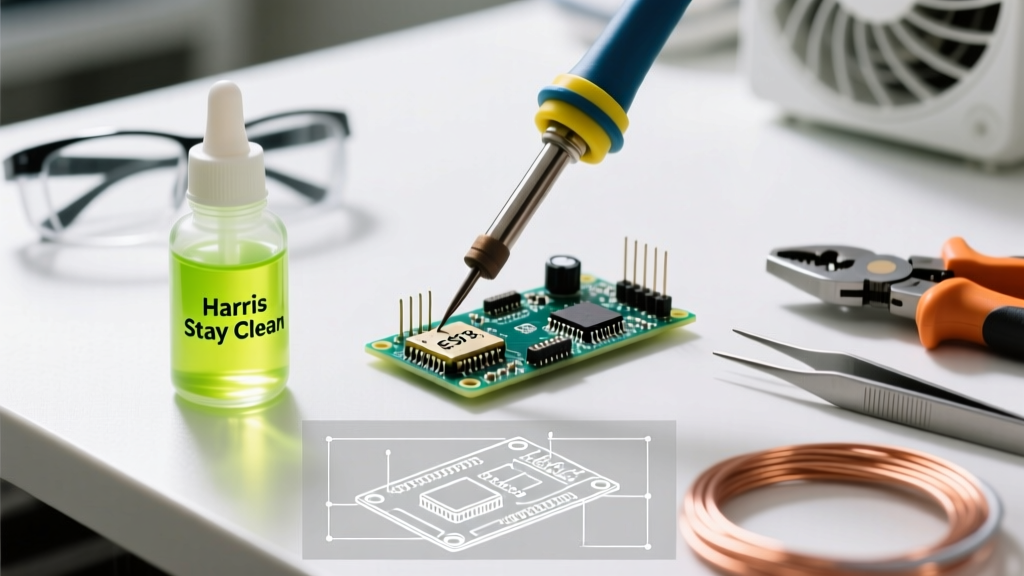
2. Harris Stay-Clean Liquid Flux (Zinc Chloride Liquid)
Harris Stay-Clean is a staple in the HVAC and plumbing industries. Its low-viscosity liquid state allows it to wick deep into capillary joints via surface tension before the heat is even applied. When soldering brass service valves or compression fittings, this capillary action ensures the flux is exactly where the solder needs to flow.
- Best For: Plumbing brass, HVAC service valves, and tight capillary fittings.
- Activation Temperature: 175°C to 315°C (347°F to 600°F).
- Price Range: ~$14.00 per 4oz bottle.
- Drawback: Prone to running and pooling on flat surfaces; requires careful heat management to prevent boiling the flux away before the solder melts.
3. La-Co Brite Flux (Mild Acid Paste for Thin Brass)
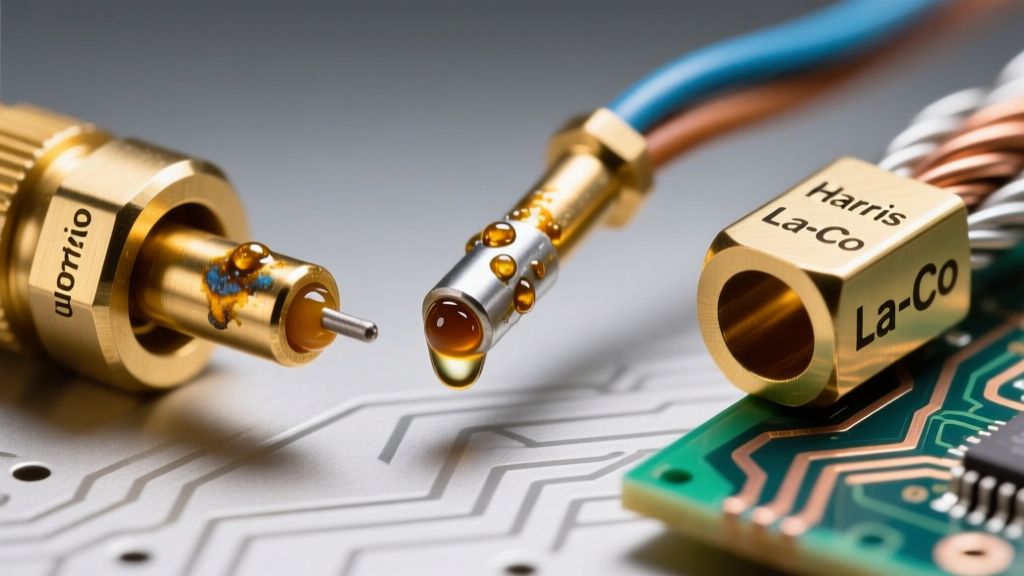
La-Co Brite Flux utilizes a milder organic acid and ammonium chloride blend rather than pure zinc chloride. This makes it significantly less aggressive, which is ideal for thin-gauge brass sheets (like C260 Cartridge Brass) used in model making, jewelry, and architectural detailing where excessive chemical etching could compromise the base metal's structural integrity.
- Best For: Thin brass sheets, decorative brasswork, and RC car components.
- Activation Temperature: 150°C to 250°C (302°F to 482°F).
- Price Range: ~$10.00 per 4oz tub.
- Drawback: Lacks the chemical punch required to break through heavy mill scale or oxidized plumbing brass.
4. Kester 186 RMA (For Electrical/Light Gauge Brass)
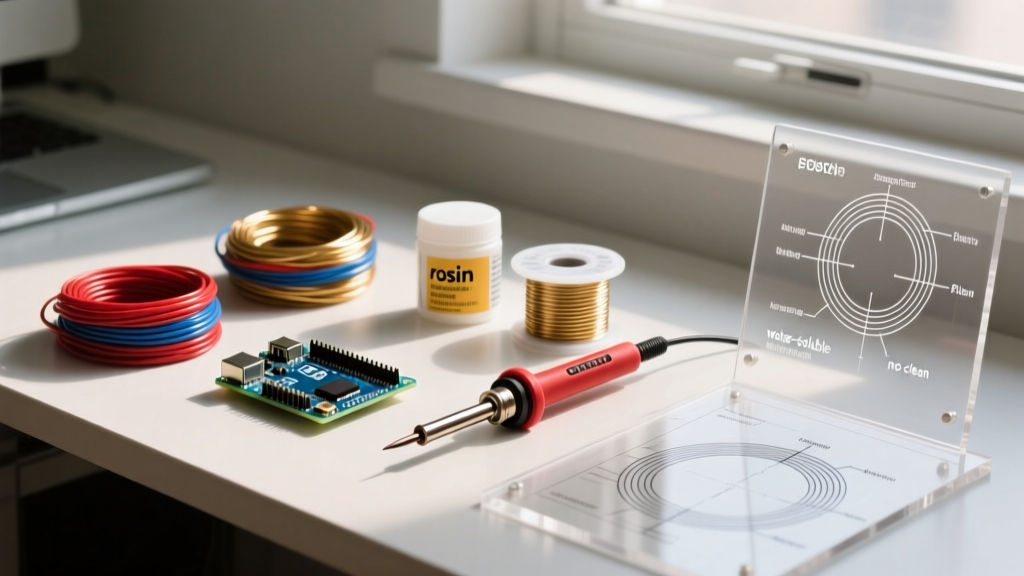
Kester 186 is a Rosin Mildly Activated (RMA) flux. Do not use this on plumbing or structural brass. However, if you are soldering thin brass electrical terminals, RF shielding cans, or brass rivets on a PCB, chloride-based fluxes will cause catastrophic long-term dendritic growth and short circuits. Kester 186 provides just enough activator to clean light tarnish on electrical brass without compromising dielectric properties.
- Best For: Electrical brass terminals, RF shielding, and PCB-mounted brass contacts.
- Activation Temperature: 180°C to 220°C (356°F to 428°F).
- Price Range: ~$14.00 per 2oz tube.
- Drawback: Completely ineffective on mechanical/plumbing brass alloys with high zinc/lead content.
Expert Insight: The American Welding Society consistently warns against using standard soft-solder rosin fluxes on copper-zinc alloys for load-bearing joints. The zinc oxide layer requires halogen-based activators (like chlorides) to dissolve the oxide and allow the tin-lead or tin-silver solder to form an intermetallic compound (IMC) with the underlying copper matrix.
Comparative Matrix: Performance & Application Data
| Brand / Product | Base Chemistry | Ideal Brass Alloy | Residue Corrosivity | Cleanup Requirement |
|---|---|---|---|---|
| Superior #30 Paste | Zinc Chloride (Heavy) | C36000 (Free-Machining) | Highly Corrosive | Hot water + Baking Soda |
| Harris Stay-Clean | Zinc Chloride (Liquid) | C37700 (Forging Brass) | Highly Corrosive | Hot water + Wire Brush |
| La-Co Brite Flux | Ammonium Chloride | C26000 (Cartridge Brass) | Moderately Corrosive | Warm soapy water |
| Kester 186 RMA | Mildly Activated Rosin | Electrical Brass / Terminals | Non-Corrosive | Isopropyl Alcohol (99%) |
Step-by-Step Application Protocol for Thick Brass Joints
Brass acts as a massive heat sink. If you apply heat directly to the flux, it will boil off and leave a burnt, ineffective crust before the brass reaches soldering temperature. Follow this professional protocol for structural brass joints using Superior #30 or Harris Stay-Clean:
- Mechanical Preparation: Abrade the brass joint using a Scotch-Brite pad or brass wire brush. Never use steel wool or standard sandpaper, as embedded silica and iron particles will cause galvanic corrosion and inhibit wetting.
- Flux Application: Apply a generous, even coat of your chosen chloride flux to both mating surfaces. Assemble the joint while the flux is still wet.
- Shadow Heating: Apply your torch or high-wattage iron (minimum 100W for thick brass) to the metal adjacent to the joint, not directly on the flux. Allow thermal conduction to heat the joint evenly to roughly 220°C (428°F).
- Solder Introduction: Touch your solder wire (Sn60/Pb40 or lead-free Sn96/Ag4) to the opposite side of the joint. When the flux bubbles and turns slightly translucent, capillary action will draw the solder through the joint.
- Immediate Neutralization: Once the joint solidifies, immediately apply a wet rag soaked in a baking soda and water solution. The alkaline baking soda neutralizes the acidic zinc chloride, stopping the chemical etching process.
Troubleshooting Common Brass Soldering Failures
- The 'Blackening' Effect: If the brass turns black and the solder balls up and rolls off, you have overheated the joint. The zinc has oxidized into a refractory layer that the flux cannot penetrate. Fix: Let the part cool, re-abrade with a wire brush, and use a lower-temperature heat source with a broader flame profile.
- Spongy or Porous Joints: This occurs when the zinc in the brass vaporizes and becomes trapped in the cooling solder. Fix: You are using too much localized heat (like a pinpoint oxy-acetylene flame). Switch to a softer air-acetylene flame or a broader iron tip to heat the mass gently.
- White Crust Formation (Post-Solder): If you see a white, powdery crust forming hours after soldering, you failed to neutralize the zinc chloride flux. Fix: Scrub the joint with a stiff brush and a 5% baking soda solution, then rinse with distilled water.
Frequently Asked Questions
Can I use standard plumbing paste flux on brass electrical connectors?
Absolutely not. Plumbing fluxes contain highly active zinc or ammonium chlorides. If left on an electrical brass connector, the residue will absorb atmospheric moisture, become conductive, and cause severe dendritic short circuits or rapid galvanic corrosion of the copper traces.
What is the best solder alloy to pair with these fluxes for brass?
For structural and plumbing brass, a Tin/Silver alloy like Stay-Brite (96% Tin, 4% Silver) is highly recommended. It offers a higher tensile strength and a slightly higher melting point (221°C) than standard Sn63/Pb37, which is crucial for brass fittings that may experience thermal cycling in HVAC or automotive environments.