
The Reality of Soldering Flux Substitutes in Electronics
When you are midway through a complex PCB rework session or repairing a vintage amplifier and realize your flux pen is bone dry, panic sets in. A quick internet search for a soldering flux substitute yields dozens of dangerous life hacks suggesting everything from petroleum jelly to lemon juice. As a senior electronics technician, I must be blunt: applying the wrong household chemical to a printed circuit board will not just fail to wet the joint. It will cause catastrophic dendritic growth, galvanic corrosion, and permanent board failure.
However, you can manufacture a highly effective, IPC-compliant DIY flux substitute at home using raw materials that cost pennies per ounce. This tutorial breaks down the chemistry of why common household substitutes fail, and provides a precise, step-by-step guide to formulating your own liquid rosin flux.
The Chemistry: Why Household Substitutes Destroy PCBs
To understand why a substitute works or fails, you must understand the role of flux. Solder does not bond to copper; it bonds to the clean metal beneath the copper oxide layer. Flux contains activators (usually mild organic acids) that dissolve this oxide layer at soldering temperatures (typically 220°C to 260°C), allowing the tin-lead or SAC305 alloy to metallurgically wet the pad.
The Household Hack Failure Matrix
Below is a technical breakdown of popular internet myths regarding emergency flux alternatives and their exact failure modes on electronics.
| Proposed Substitute | Chemical Composition | Failure Mode on PCBs | Verdict |
|---|---|---|---|
| Petroleum Jelly | Long-chain alkanes (hydrocarbons) | Boils and carbonizes at 200°C+, leaving a hard, insulating black crust that prevents solder wetting. | NEVER USE |
| Lemon Juice / Vinegar | Dilute Citric / Acetic Acid | Highly corrosive. Leaves ionic residue that causes rapid electrochemical migration (dendrites) under DC bias, shorting adjacent traces. | NEVER USE |
| Crushed Aspirin | Acetylsalicylic acid | Activates too late, produces toxic, acrid fumes, and leaves a highly acidic, hygroscopic residue that eats through thin copper traces. | NEVER USE |
| Pine Sap (Raw Tree Sap) | Colophony, turpentine, dirt, insects | Contains the right base (rosin) but impurities cause uneven boiling, spattering, and unpredictable activation temperatures. | RISKY |
The Only Viable DIY Soldering Flux Substitute: Liquid Rosin
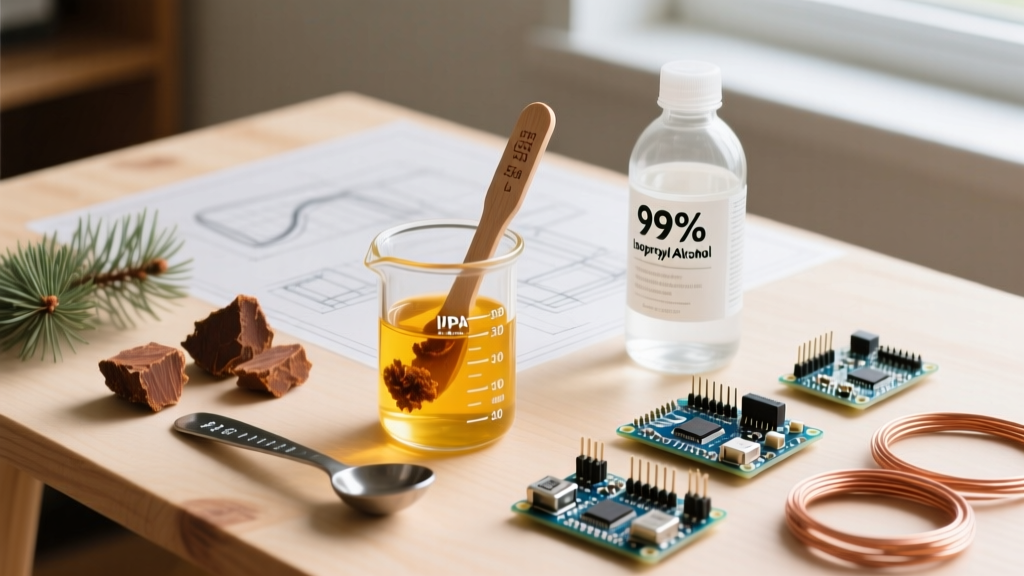
If you need a true soldering flux substitute for electronic PCBs, you must recreate RMA (Rosin Mildly Activated) or pure Rosin (R) flux. The base of 90% of commercial electronic fluxes is colophony (pine rosin), a solid form of resin obtained from pines. By dissolving purified colophony in a high-purity solvent, you can create a liquid flux that performs identically to commercial brands like Kester or MG Chemicals.
Materials & Sourcing
- Purified Gum Rosin (Colophony): Available in 4oz to 1lb blocks from musical instrument suppliers (used for violin bows) or welding supply stores. Cost: ~$8 to $12 per 4oz block. Ensure it is purified gum rosin, not raw tree sap.
- 99% Isopropyl Alcohol (IPA): Do not use 70% rubbing alcohol. The 30% water content will cause violent spattering when the iron touches the flux and lead to poor wetting. Cost: ~$15 to $20 per gallon.
- Crushing Tools: A dedicated mortar and pestle, or a heavy-duty ziplock bag and brass mallet.
- Glass or HDPE Storage Bottle: Rosin can degrade certain cheap plastics over time.
Step-by-Step Formulation Guide
- Pulverize the Rosin: Place your purified rosin chunks into a heavy-duty bag and crush them into a fine powder. The finer the powder, the faster it will dissolve. Aim for a consistency similar to coarse sand.
- Measure by Weight, Not Volume: For a standard liquid flux pen consistency, use a ratio of 15% rosin to 85% IPA by weight. For a thicker, tacky paste flux (ideal for SMD rework), increase the rosin to 35% to 40% by weight.
- Mix and Agitate: Add the rosin powder to your glass bottle, then pour in the 99% IPA. Seal tightly and shake vigorously for 2 minutes.
- The Dissolution Phase: Let the mixture sit for 4 to 6 hours, shaking it occasionally. The rosin will fully dissolve, turning the IPA into a clear, amber-colored liquid.
- Filter (Optional but Recommended): If using lower-grade rosin, pour the liquid through a standard coffee filter to remove any microscopic bark or dust impurities.
Expert Tip: If your DIY flux leaves a residue that is too brittle after cooling, add 2 to 3 drops of glycerin per 100ml of flux. This acts as a plasticizer, preventing the rosin residue from flaking off the board during thermal cycling.
Heavy-Duty Substitutes for Non-Electronic Applications
What if you are not working on a PCB? If you are soldering thick 10 AWG silicone wires for an RC car, or repairing a copper plumbing joint, the rules change. In these heavy-thermal-mass scenarios, electronic flux burns off before the joint reaches temperature.
Plumbing and Heavy Wire Alternatives
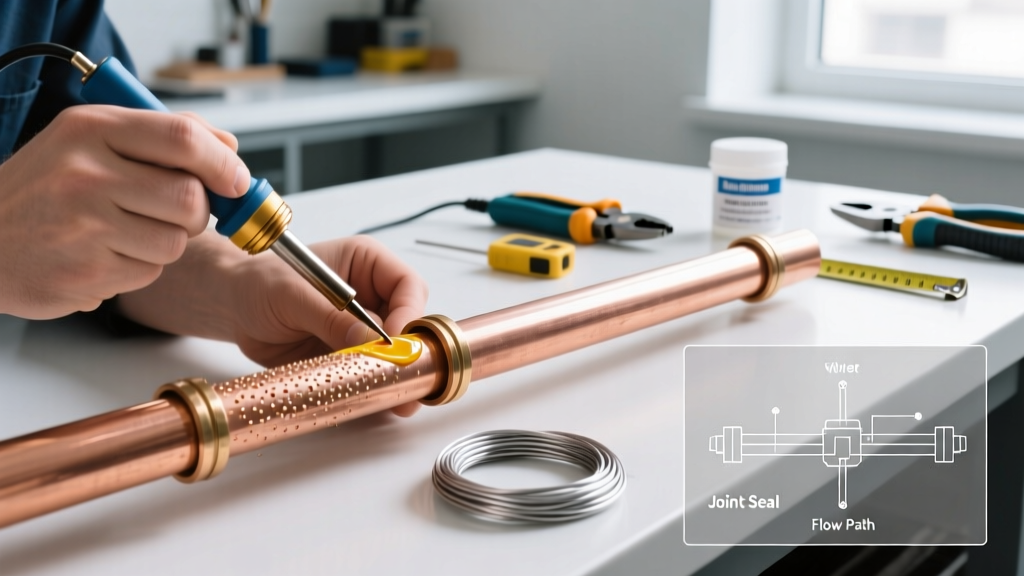
- Citric Acid Paste (for Copper Pipes): While lethal to PCBs, a thick paste of citric acid powder and a few drops of water is an excellent, environmentally friendly substitute for traditional tinning flux on copper plumbing. It aggressively strips heavy oxidation from thick copper pipes.
- Petroleum Jelly (for Thick Wire Tinning): When tinning massive 8 AWG battery cables, the thermal mass keeps the iron tip temperature low initially. A dab of petroleum jelly can act as a temporary heat-transfer medium and mild oxygen barrier. However, you must clean the wire with brake cleaner before inserting it into a connector, as the carbonized jelly will increase contact resistance.
Health, Safety, and Fume Extraction
Working with colophony-based flux substitutes requires strict adherence to safety protocols. When heated above 200°C, rosin fumes release aliphatic aldehydes and abietic acid vapors. According to the UK Health and Safety Executive (HSE), colophony fumes are a known respiratory sensitizer and a leading cause of occupational asthma in electronics manufacturing.
Mandatory Safety Steps:
- Always use an activated carbon fume extractor positioned within 6 inches of the solder joint.
- Wear nitrile gloves when handling your DIY liquid flux; 99% IPA strips the skin's natural oils, allowing rosin acids to penetrate and cause contact dermatitis.
- Store your IPA-based flux away from UV light and heat sources, as the solvent is highly flammable with a flash point of 12°C (53°F).
Frequently Asked Questions (FAQ)
Can I use hand sanitizer as a flux substitute?
No. Hand sanitizers contain water, glycerin, and carbomer thickeners. The water will cause dangerous solder spattering (popcorning), and the carbomer will carbonize into a hard, insulating black sludge that ruins the solder joint and is nearly impossible to clean off a PCB.
Does my DIY rosin flux expire?
Homogeneous liquid rosin flux does not chemically expire, but the IPA solvent will slowly evaporate through the microscopic pores of plastic bottles over 12 to 18 months. If your flux becomes too thick, simply add a few milliliters of fresh 99% IPA and shake to restore the original viscosity.
Do I need to clean DIY rosin flux off the board?
Pure rosin (Type R) residue is technically non-corrosive and non-conductive, meaning it can be left on the board safely according to IPC-A-610 standards. However, from an aesthetic and troubleshooting perspective, it is best practice to clean it off using a fiberglass scratch pen or an ultrasonic cleaner with a dedicated PCB washing solution to prevent it from trapping moisture and dust over time.