
The Chemistry and Purpose of Rosin Core Solder
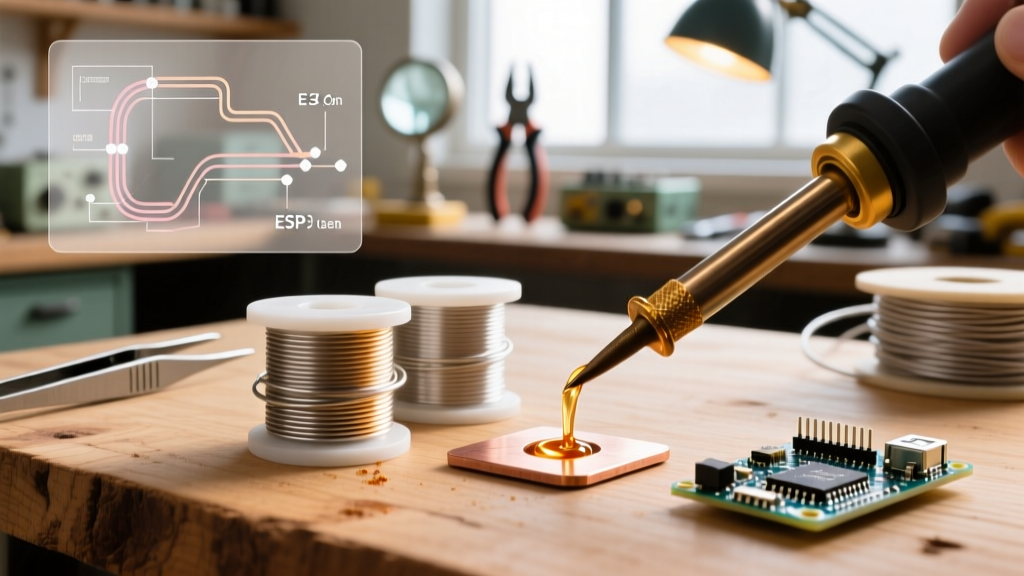
When selecting consumables for electronics assembly, the choice of flux is just as critical as the alloy itself. Soldering rosin core wire remains a cornerstone of both professional rework and high-end DIY electronics. Derived from pine tree sap, rosin (abietic acid) is naturally non-conductive and non-corrosive at room temperature. However, when heated to its activation threshold (typically around 150°C to 170°C), it becomes mildly acidic, effectively dissolving copper oxides and allowing the molten solder to wet the joint.
Despite the rise of no-clean fluxes in automated SMT (Surface Mount Technology) manufacturing, rosin core wire holds distinct advantages in specific manual soldering scenarios. Understanding the IPC-J-STD-004B classifications—specifically ROL0 (Rosin, Low activity, no halides) and ROM1 (Rosin, Moderate activity, with halides)—is essential for preventing long-term reliability failures like electrochemical migration.
Application Matrix: Rosin Core vs. No-Clean vs. Water-Soluble
To determine if soldering rosin core is the right choice for your project, compare its characteristics against modern alternatives. The following matrix outlines the ideal use cases based on residue conductivity and cleaning requirements.
| Flux Type | Activity Level | Residue Conductivity | Cleaning Required? | Best Application Scenario |
|---|---|---|---|---|
| Rosin Core (RMA/RA) | Moderate to High | Low (if cleaned) | Yes (Highly Recommended) | Vintage audio, thick gauge wiring, general through-hole |
| No-Clean | Low | Very Low | No (Optional) | High-density SMD, consumer electronics, rapid prototyping |
| Water-Soluble (OA) | Very High | High (Corrosive) | Mandatory (Immediate) | Heavily oxidized boards, plumbing, industrial terminals |
3 Ideal Applications for Soldering Rosin Core Wire
While no-clean flux dominates modern automated assembly lines, manual soldering with rosin core wire excels in scenarios requiring superior wetting, high thermal mass, or specific electrical properties.
1. Vintage Audio and High-Impedance Guitar Pedals
In high-impedance audio circuits, such as vacuum tube amplifiers and boutique guitar effects pedals, parasitic capacitance and microphonic noise can degrade signal integrity. No-clean flux residues, while technically non-conductive, can sometimes exhibit slight dielectric properties that interact with ultra-sensitive analog nodes. Using a high-quality soldering rosin core (specifically RMA - Rosin Mildly Activated) and subsequently cleaning the board with a dedicated saponifier ensures a pristine, residue-free joint that preserves the original tonal characteristics of the circuit.
2. High-Vibration FPV Drone and RC Wiring
First-Person View (FPV) drones require soldering thick 12AWG to 8AWG silicone wires to ESC (Electronic Speed Controller) pads. These joints possess massive thermal mass, making it difficult for standard no-clean fluxes to maintain activity long enough for proper wetting. A rosin core wire with a 3.3% flux core percentage provides the aggressive, sustained chemical cleaning needed to penetrate the thick copper strands and create a vibration-resistant, barrel-shaped fillet.
3. General Through-Hole Prototyping and Rework
For hobbyists and engineers working on through-hole perfboards or repairing legacy PCBs, oxidation on component leads is a constant battle. Rosin core solder provides an immediate, visible flush of flux the moment the iron touches the wire, offering superior visual feedback and faster wetting times compared to the slower-activating synthetic resins found in many no-clean wires.
Decoding Flux Core Percentages: 1.1% vs. 2.2% vs. 3.3%
One of the most overlooked specifications when buying solder wire is the internal flux percentage. Choosing the wrong ratio can lead to either dry joints or excessive, difficult-to-clean splatter.
- 1.1% to 1.5% Core: Designed for fine-pitch SMD work and delicate PCB traces. Produces minimal smoke and leaves very little residue. Best used with precision micro-soldering irons.
- 2.2% Core (Standard): The industry standard for general through-hole components and standard gauge wires (22AWG - 18AWG). Offers the perfect balance between wetting power and residue management.
- 3.3%+ Core (Heavy Duty): Reserved for heavily oxidized pads, thick power wires, and ground planes. Expect significant flux spatter and mandatory post-solder cleaning.
2026 Buyer’s Guide: Top Rosin Core Alloys & Pricing
Market pricing for solder alloys has stabilized in 2026 following the supply chain fluctuations of previous years. Here are the top-tier rosin core wires currently recommended for professional and serious DIY use:
Expert Pick: Kester 44 (Sn63/Pb37) remains the undisputed champion for manual through-hole and audio work. Its eutectic nature (melting at exactly 183°C) prevents the 'plastic' or 'disturbed' joint phase common in non-eutectic alloys.
- Kester 44 (Sn63/Pb37) 0.031" / 2.2% Core: Priced at approximately $38 to $45 per 1lb spool. Ideal for standard PCB work and audio electronics.
- Alpha Metals Sn63/Pb37 RA (Rosin Activated): Priced around $42 per 1lb spool. Features halide activators for stubborn, oxidized vintage boards.
- Multicore Pro Power SAC305 (Lead-Free) 0.020" / 2.2% Core: Priced between $55 and $65 per 1lb spool. Required for RoHS-compliant commercial repairs. Requires higher iron temperatures (340°C+).
Post-Soldering Cleaning Protocols and Failure Modes
A common misconception is that rosin flux is entirely 'safe' to leave on a board. While pure, unactivated rosin is benign, the activators (halides or organic acids) mixed into RMA and RA fluxes can cause severe electrochemical migration (dendritic growth) if left in high-humidity environments. According to high-reliability guidelines published by the NASA Electronic Parts and Packaging (NEPP) program, flux residues must be thoroughly removed to prevent catastrophic short circuits in mission-critical hardware.
The Isopropyl Alcohol (IPA) Trap
Many DIYers rely on 99% Isopropyl Alcohol and a cotton swab to clean rosin residue. While IPA dissolves the rosin, it often fails to dissolve the ionic halide activators. Instead, it smears the activators across the PCB surface, creating a thin, invisible conductive film. For a proper clean, use a dedicated saponifier or a specialized flux remover like Techspray PWR-4, followed by an IPA rinse and a lint-free wipe.
When to Avoid Soldering Rosin Core
Despite its versatility, rosin core is not a universal solution. Avoid using it in the following scenarios:
- High-Density BGA and 0201 SMD Rework: The high volume of flux in a standard 2.2% rosin core wire will flood microscopic pads, causing bridging. Use liquid no-clean tacky flux and solder paste instead.
- Optical Sensors and Laser Diodes: Rosin spatter can coat sensitive optical lenses or laser apertures, permanently degrading performance. Use low-splatter no-clean alloys or vapor-phase soldering.
- High-Frequency RF Circuits (Above 5GHz): Trapped rosin residues can alter the dielectric constant of the substrate, causing impedance mismatches and signal reflection. Strict cleaning or specialized low-loss no-clean fluxes are mandatory here.
Summary
Choosing the right soldering rosin core wire requires matching the flux activity and core percentage to your specific thermal and electrical requirements. While no-clean fluxes offer convenience for modern SMD assembly, rosin core remains unmatched for heavy-gauge wiring, high-impedance audio circuits, and oxidized legacy rework. By selecting the correct alloy, monitoring your flux core percentage, and adhering to strict post-solder cleaning protocols, you ensure joints that are both mechanically robust and electrically flawless.
For further reading on industry-standard flux classifications and reliability testing, refer to the IPC-J-STD-004 Requirements for Soldering Fluxes or explore the fundamental chemistry detailed in Electronics Notes.