
The Metallurgical Reality: What Is Flux for Soldering?
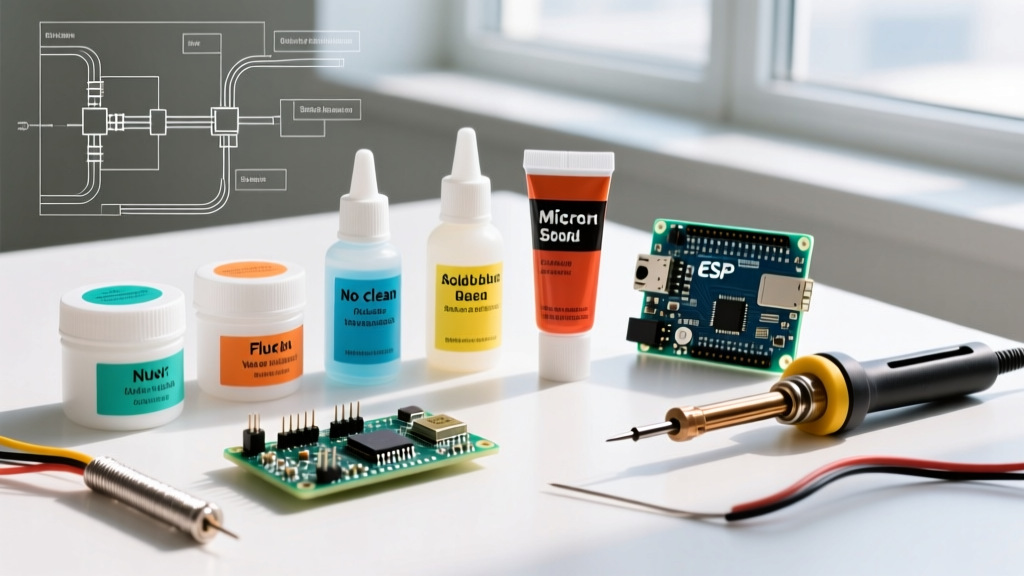
When engineers and hobbyists ask, what is flux for soldering, the simplest answer is that it is a chemical cleaning agent. However, from a metallurgical perspective, flux is a vital reducing agent designed to strip metal oxides from copper pads and component leads, lower the surface tension of molten solder, and prevent re-oxidation during the thermal cycle. Without it, solder will ball up and refuse to wet the joint, resulting in catastrophic cold joints and high-resistance connections.
When copper is exposed to air, it rapidly forms copper oxide (CuO and Cu2O) layers. Molten tin-lead or SAC305 (lead-free) alloys cannot bond to these oxidized surfaces. Flux contains active chemicals—like abietic acid in rosin or organic acids in water-soluble variants—that react with these oxides at elevated temperatures (typically between 150°C and 220°C), converting them into metallic salts that dissolve into the molten solder or float to the surface as slag.
Because different applications demand vastly different thermal profiles, electrical environments, and cleaning capabilities, there is no universal flux. Selecting the wrong chemistry can lead to dendritic growth, corroded traces, or destroyed components. Below is an application-specific breakdown of the exact flux formulations you should be using in 2026.
Application-Specific Flux Recommendations
1. Precision SMD, BGA Rework, and Micro-Electronics
The Recommendation: No-Clean, Rosin-Based Tacky Flux (e.g., Amtech NC-559-V2-TF or Kester 951).
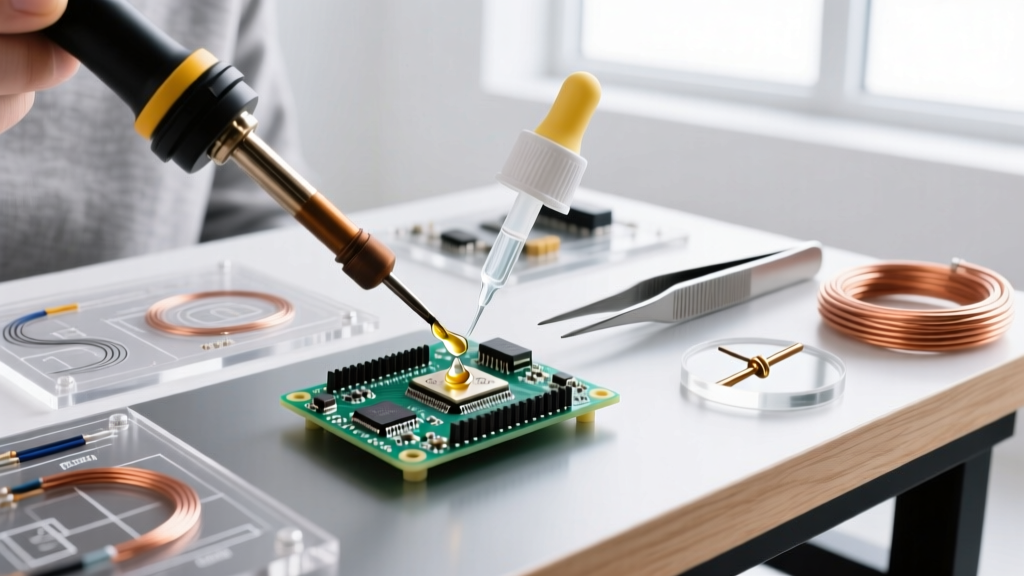
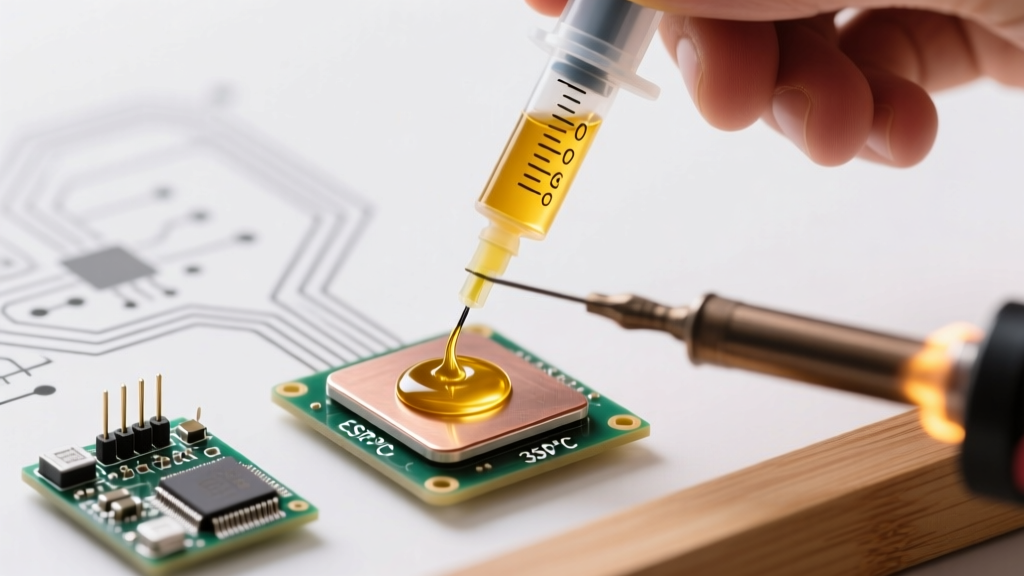
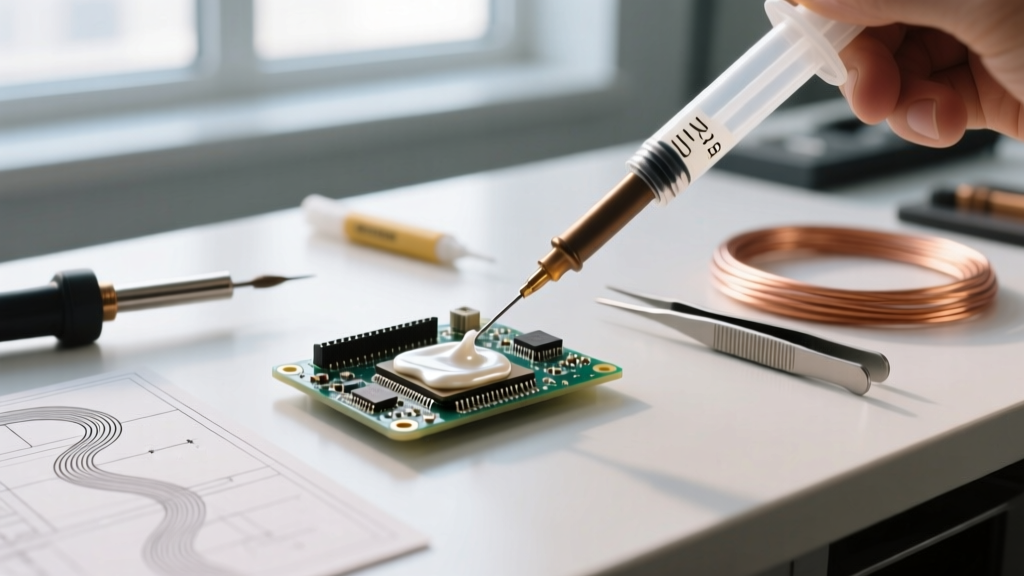
For surface-mount device (SMD) assembly, QFN grounding pads, and BGA reballing, you need a flux with high thixotropy (tackiness). This physical property acts as a temporary adhesive, holding microscopic 0201 or 01005 components in place before the solder melts. No-clean rosin fluxes are derived from pine tree sap (colophony) and are engineered so that their post-soldering residue is non-conductive, non-corrosive, and benign.
- Pricing & Availability: Premium no-clean syringes like Amtech NC-559 cost approximately $35 to $45 per 10cc syringe. Liquid pens (Kester 951) run about $8 to $12.
- Cleaning Protocol: Technically optional. However, for high-impedance RF circuits or high-voltage applications, the residue should be removed using 99.9% Isopropyl Alcohol (IPA) and a lint-free swab to prevent parasitic capacitance.
- Thermal Edge Case: No-clean fluxes burn off and lose their protective properties if exposed to iron temperatures exceeding 380°C for more than 3 seconds. Use a 320°C to 350°C profile with a high-thermal-mass tip (like a bevel or chisel) to transfer heat rapidly without scorching the rosin.
2. Through-Hole, Aerospace, and High-Reliability Wiring
The Recommendation: Water-Soluble Organic Acid (OA) Flux (e.g., MG Chemicals 8341 or Kester 331).
When soldering heavy-gauge wire, large through-hole capacitors, or aerospace connectors where a flawless, shiny fillet is mandatory, water-soluble fluxes are the gold standard. They contain aggressive organic acids (like lactic or stearic acid) that strip heavy oxidation instantly, allowing solder to flow into deep barrel vias and wire strands via capillary action.
Critical Warning: Water-soluble flux residue is highly acidic and hygroscopic (absorbs moisture from the air). If left on a PCB, it will cause rapid electromigration—forming microscopic conductive dendrites between traces that eventually cause short circuits. According to the IPC J-STD-004B standard, OA fluxes must be thoroughly cleaned post-soldering.
- Pricing: Roughly $15 to $25 for a 100ml bottle of liquid or paste.
- Cleaning Protocol: You cannot clean OA flux with just IPA; it merely smears the acids around. You must use heated Deionized (DI) water (around 60°C) and a stiff brush, followed by a DI water rinse and compressed air drying. Refer to MG Chemicals technical guidelines for exact dilution and washing times.
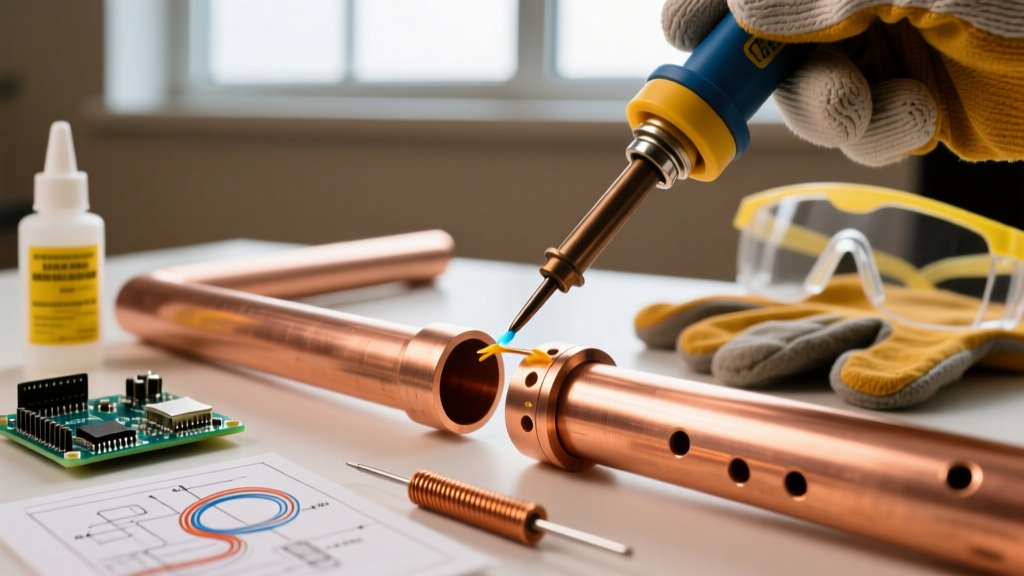
3. Automotive, Plumbing, and Stained Glass
The Recommendation: Inorganic Acid (IA) / Zinc Chloride Paste (e.g., Rubyfluid or Stay-Clean).
If you are soldering copper pipes, automotive battery terminals, or lead came for stained glass, electronic fluxes will fail. These materials possess thick, stubborn oxidation layers and act as massive heat sinks. Inorganic acid fluxes contain zinc chloride or ammonium chloride, which aggressively etch the metal surface to allow lead-tin or silver-bearing solders to wet the joint.
- Pricing: $8 to $15 per tin or brush-cap bottle.
- The Golden Rule: NEVER use acid-core solder or zinc chloride flux on printed circuit boards or electronic wires. The chloride ions will continuously corrode the copper traces long after the joint is made, leading to inevitable green verdigris and open-circuit failures.
Flux Selection Matrix: Chemistry & Application
| Flux Category | IPC Designation | Base Material | Typical Activator | Cleaning Required? | Best Use Case |
|---|---|---|---|---|---|
| No-Clean (NC) | ROL0 / ROL1 | Synthetic or Natural Rosin | Trace Halides / Organic | No (Optional for aesthetics) | SMD, BGA, Micro-electronics |
| Rosin Mildly Activated (RMA) | ROM1 | Colophony (Pine Rosin) | Mild Organic Acids | Recommended | General hobbyist PCB, wire tinning |
| Water-Soluble (OA) | ORH1 / ORL0 | Water / Glycol | Lactic, Citric, or Stearic Acid | Yes (Mandatory with DI Water) | Through-hole, heavy wire, aerospace |
| Inorganic Acid (IA) | Not IPC Rated | Petroleum / Water | Zinc Chloride, Ammonium Chloride | Yes (Neutralize & Wash) | Plumbing, stained glass, auto terminals |
Critical Failure Modes & Troubleshooting
Even when you select the correct flux, improper technique can render it useless. Here are the most common flux-related failure modes encountered in the field:
Flux Spitting and Solder Balling
The Problem: When applying liquid or paste flux to a hot joint, tiny spheres of solder explode outward, landing on adjacent traces and causing micro-shorts.
The Root Cause: Solvents and moisture trapped inside the flux formulation instantly vaporize when hit with a 350°C+ iron, causing a micro-explosion.
The Fix: Apply the flux before introducing the heat source. Allow the flux to settle and coat the joint. If using a hot air rework station, utilize a low-temperature preheat phase (90°C to 120°C) to gently evaporate the volatile solvents before ramping up to the solder's liquidus temperature.
Charred Residue and Pad Lifting
The Problem: The flux turns black, crusty, and impossible to clean, while the solder refuses to flow, eventually causing the copper pad to delaminate from the FR4 fiberglass substrate.
The Root Cause: Thermal degradation. As documented in Kester's metallurgical data sheets, rosin-based fluxes begin to carbonize and lose their reducing capabilities when exposed to temperatures above 380°C for extended periods. The operator is likely using a pencil tip with insufficient thermal mass, forcing them to dwell on the pad for 5+ seconds.
The Fix: Switch to a wider chisel or bevel tip to maximize surface area contact. Lower the iron temperature to 320°C (for leaded) or 350°C (for SAC305 lead-free). The joint should reach liquidus and flow within 2 to 3 seconds maximum. If it takes longer, add more fresh flux to replenish the burned-off activators.
Dull, Grainy Joints in Water-Soluble Applications
The Problem: A water-soluble flux joint looks crystalline and dull rather than bright and shiny, mimicking a cold joint.
The Root Cause: Disturbance during the phase-change cooling period, or an excessive volume of OA flux that trapped heat and altered the cooling curve.
The Fix: Ensure the wire or component lead is held completely still until the solder transitions from a plastic (pasty) state to a solid state. Use only a micro-drop of flux; more flux does not equal better flow—it just creates a thermal barrier that must be boiled off.
Summary: Matching the Chemistry to the Task
Understanding what is flux for soldering requires moving beyond the generic 'cleaning agent' definition and recognizing it as a highly specialized chemical tool. For delicate 0402 resistors and QFN chips, rely on the benign, tacky nature of No-Clean Rosin. For heavy-duty through-hole power supplies and aerospace wiring where capillary action is king, use Water-Soluble OA and commit to the mandatory DI water cleaning process. Finally, reserve the highly corrosive Inorganic Acid fluxes strictly for plumbing, automotive, and non-electronic metalwork. By aligning your flux chemistry with your specific application, you guarantee long-term reliability, optimal wetting, and pristine joint integrity.