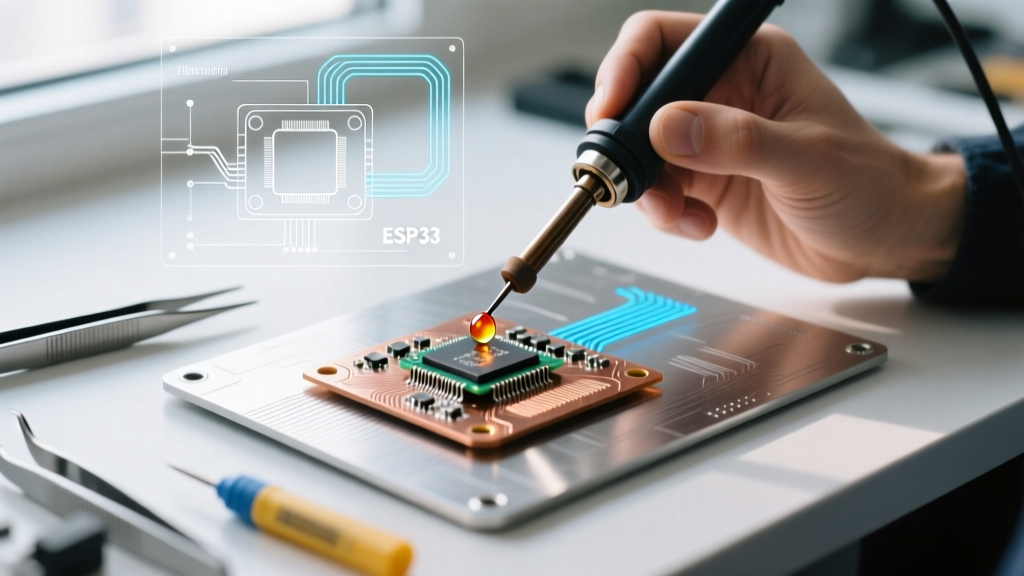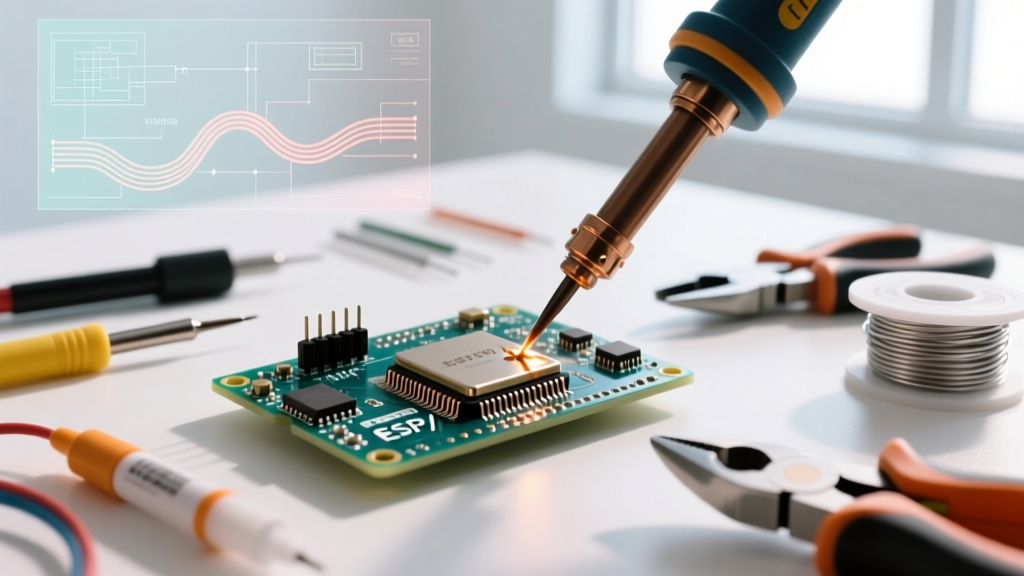

The Core Chemistry: Why Solder Won't Stick Without Flux
When beginners ask, "what is the purpose of soldering flux?", the standard answer is usually that it cleans the metal. While technically true, this vastly oversimplifies the complex metallurgical and chemical reactions required to form a reliable electrical joint. As an expert in electronics assembly, I define flux not merely as a cleaner, but as a chemical facilitator for intermetallic compound (IMC) formation.
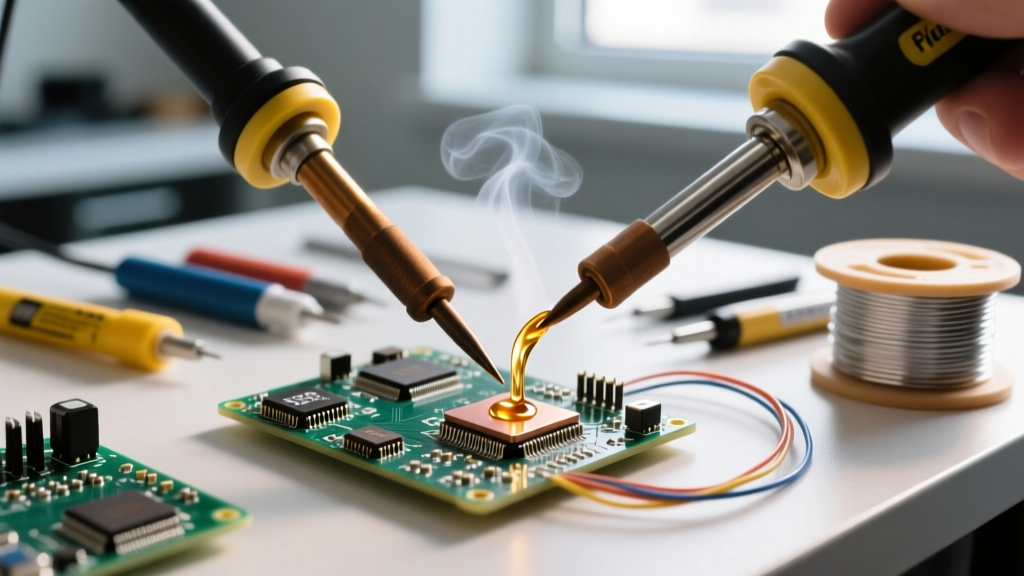
At room temperature, copper pads and component leads instantly form a microscopic layer of copper oxide (CuO) and copper(I) oxide (Cu2O) when exposed to ambient air. Molten solder—whether traditional Sn63/Pb37 eutectic or lead-free SAC305—has a naturally high surface tension. If applied directly to oxidized copper, the solder will ball up and reject the surface, a phenomenon known as dewetting. Flux intervenes through a three-stage thermal and chemical process:
- Oxide Dissolution: The primary active ingredient in rosin flux is abietic acid (C19H29COOH). When heated above 170°C, abietic acid reacts with copper oxide to form copper abietate, a metallic soap that dissolves into the liquid flux, exposing bare, reactive copper.
- Surface Tension Reduction: By removing the oxide barrier and chemically altering the surface energy, flux drastically lowers the surface tension of the molten solder, allowing it to flow (wet) across the pad via capillary action.
- IMC Catalysis: Once bare copper is exposed, tin atoms from the solder diffuse into the copper lattice, forming the critical Cu6Sn5 and Cu3Sn intermetallic layers. Without flux, this metallurgical bond cannot occur.
Expert Insight: A perfect solder joint relies on an IMC layer thickness between 1.0 and 2.5 micrometers. Insufficient flux activity results in incomplete wetting and a weak mechanical bond, while excessive heat combined with aggressive flux can cause the IMC layer to grow too thick, making the joint brittle and prone to thermal shock failure.
IPC J-STD-004B: Decoding Flux Classifications
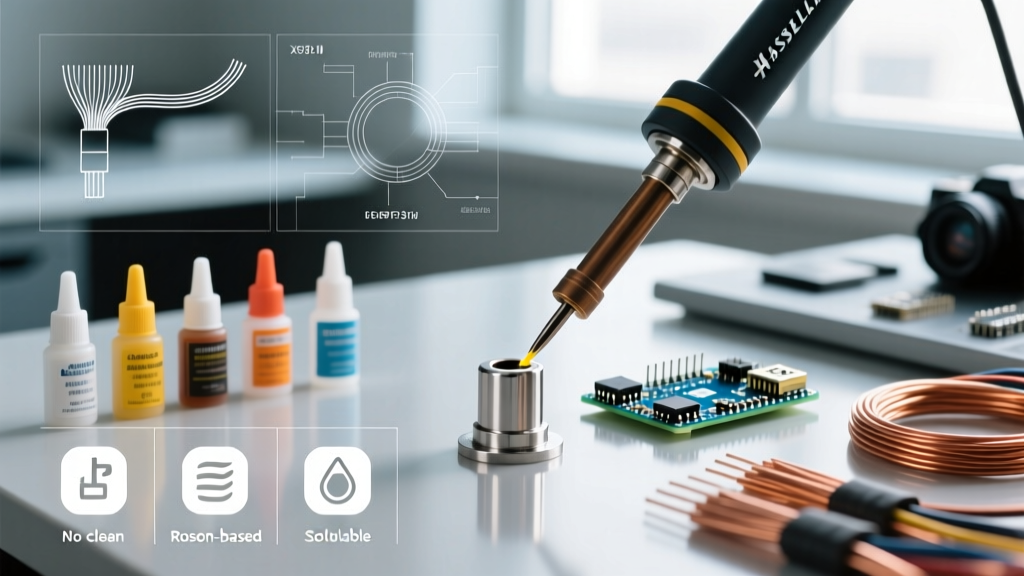
To select the right flux, you must understand the IPC J-STD-004B standard, which categorizes flux by material type, activity level, and halide content. Relying on generic "rosin" or "no-clean" labels is insufficient for high-reliability prototyping or production.
| Material Type | Code | Activity Level | Halide Content | Best Application |
|---|---|---|---|---|
| Rosin | RO | L, M, H | 0 (None) or 1 (Present) | General DIY, through-hole, consumer electronics |
| Resin | RE | L, M, H | 0 or 1 | Conformal coating environments, harsh environments |
| Organic | OR | L, M, H | 0 or 1 | Wave soldering, heavily oxidized boards (requires wash) |
| Inorganic | IN | L, M, H | 0 or 1 | Plumbing, heavy industrial (Never use on PCBs) |
The activity level (Low, Medium, High) dictates how aggressively the flux attacks oxides. Low-activity (L) fluxes are safe for lightly oxidized boards and leave benign residues, while High-activity (H) fluxes contain aggressive halides (chlorides/bromides) that will corrode traces if not thoroughly cleaned.
Expert Recommendations: Matching Flux to Your Application
Selecting the correct flux chemistry is just as critical as setting your soldering iron to the correct thermal profile. Here are my top-tier recommendations based on specific assembly scenarios in 2026.
1. Through-Hole & General Prototyping: Mildly Activated Rosin (RMA)
For hand-soldering standard through-hole components and larger SMDs (1206, 0805), a rosin-core wire solder is mandatory. My benchmark recommendation is Kester 44 (Sn63/Pb37 or SAC305). Kester 44 uses a mildly activated (MA) rosin flux that strikes the perfect balance between wetting speed and residue safety.
- Thermal Profile: The rosin matrix melts at ~172°C, but the chemical activators do not fully engage until the iron tip transfers heat to the pad, reaching 210°C–240°C.
- Cost: Approximately $35–$45 for a 1lb spool (0.031" diameter).
- Expert Tip: Never use liquid RMA flux from a squeeze bottle for hand soldering unless you are drag-soldering IC pins. The alcohol carrier boils violently at 78°C, causing micro-splatter that can push flux under BGA packages where it cannot be cleaned.
2. Fine-Pitch SMD & Reflow: No-Clean (ROL0/ROL1)
When working with 0402, 0201, or fine-pitch QFN components, liquid flux can cause "tombstoning"—where uneven surface tension pulls the component upright during reflow. For these, use a high-quality no-clean solder paste like Indium NC-257 or MG Chemicals 8341.
- Chemistry: These use synthetic resins and highly volatile organic acids that completely decompose during the reflow peak (235°C–245°C for SAC305).
- Residue: The resulting residue is a hard, transparent, electrically inert polymer that encapsulates any unreacted acids, preventing moisture ingress.
- Warning: No-clean fluxes are highly sensitive to moisture. If your paste has absorbed ambient humidity, the rapid expansion of water vapor during reflow will cause solder balling and micro-bridging between 0.4mm pitch pins.
3. High-Reliability & Automotive: Water-Soluble (OA)
For aerospace, medical, or automotive ECUs where zero ionic contamination is tolerated, water-soluble organic acid (OA) fluxes are required. Products like Alpha Clean Core or Kester 331 offer superior wetting on heavily oxidized or OSP-finished boards.
- The Catch: Water-soluble flux residues are highly conductive and corrosive. According to the NASA Electronic Parts and Packaging (NEPP) Program workmanship standards, boards soldered with OA flux must be cleaned with heated deionized (DI) water (minimum 60°C) within 2 to 4 hours of assembly.
- Failure Mode: If left overnight, the glycol-based carriers absorb ambient moisture, and the organic acids will rapidly etch thin copper traces, leading to open circuits.
Critical Failure Modes: When Flux Causes Damage
Understanding the purpose of soldering flux also means understanding what happens when it is misused. The most insidious failure mode in modern electronics is Electrochemical Migration (ECM).
ECM occurs when flux residues (specifically from OR or high-activity RO fluxes) are left on a board in a high-humidity environment. When a DC voltage bias is applied across the contaminated pads, the moisture dissolves the ionic residues, creating a weak electrolyte. Through electrolysis, metal ions (usually silver or tin) migrate from the anode to the cathode, forming microscopic metallic trees called dendrites.
These dendrites grow unseen beneath components until they bridge the gap between two pads, causing a dead short. This is why industry technical resources heavily emphasize matching the flux activity level to your cleaning capabilities. If you cannot wash the board with DI water or saponifiers, you must strictly use ROL0 (Rosin, Low activity, Zero halides) no-clean fluxes.
Frequently Asked Questions (FAQ)
Can I use plumbing flux for electronics?
Absolutely not. Plumbing fluxes are typically Inorganic (IN) acid fluxes containing zinc chloride or hydrochloric acid. While they clean copper pipes beautifully, they are far too aggressive for PCBs. The acid will eat through thin copper traces, destroy via barrels, and the residues are impossible to fully neutralize, guaranteeing long-term board destruction.
Why does my flux turn black and burn?
Flux turning black indicates thermal degradation. Rosin and synthetic resins carbonize when exposed to temperatures exceeding 350°C for prolonged periods. This usually happens when an operator uses an excessively high iron temperature (e.g., 450°C) or holds the iron on the joint for more than 3-4 seconds. Carbonized flux acts as an insulator, preventing heat transfer and resulting in a classic "cold joint."
Is additional liquid flux necessary when using rosin-core solder wire?
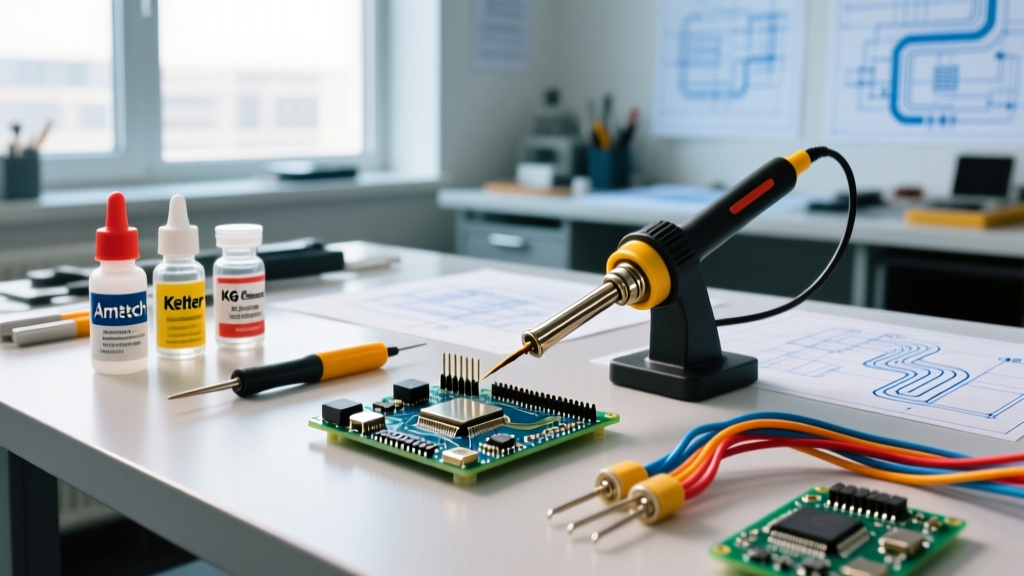
For 90% of standard hand-soldering tasks, the 2% to 3% flux core inside the wire is perfectly sufficient. However, if you are soldering large ground planes that act as massive heat sinks, the flux inside the wire may exhaust (burn off) before the pad reaches the solder's liquidus temperature. In these specific edge cases, applying a small amount of external gel flux (like Amtech NC-559-V2-TF) to the pad before applying the wire ensures the oxide layer remains reduced throughout the extended heating cycle.