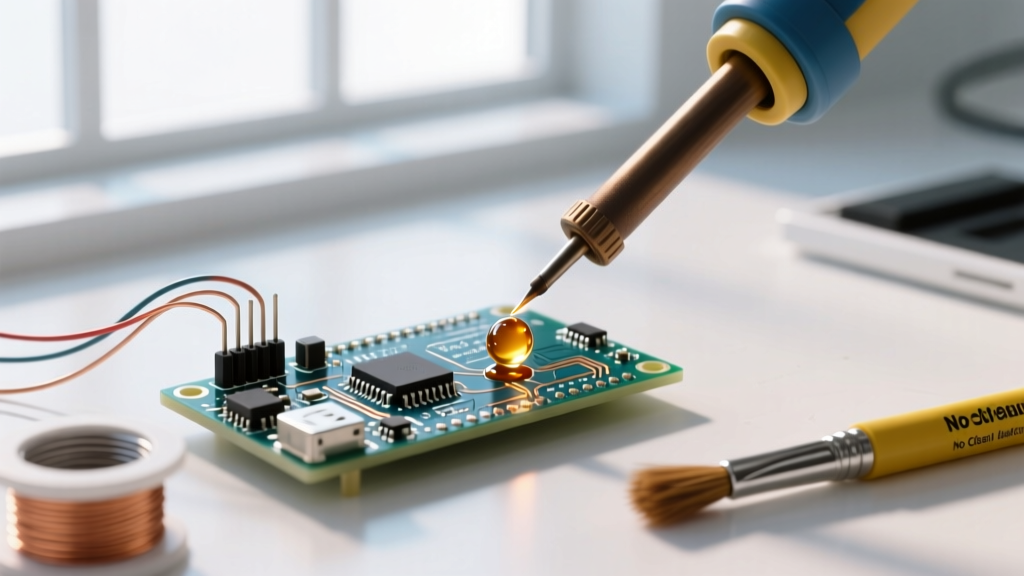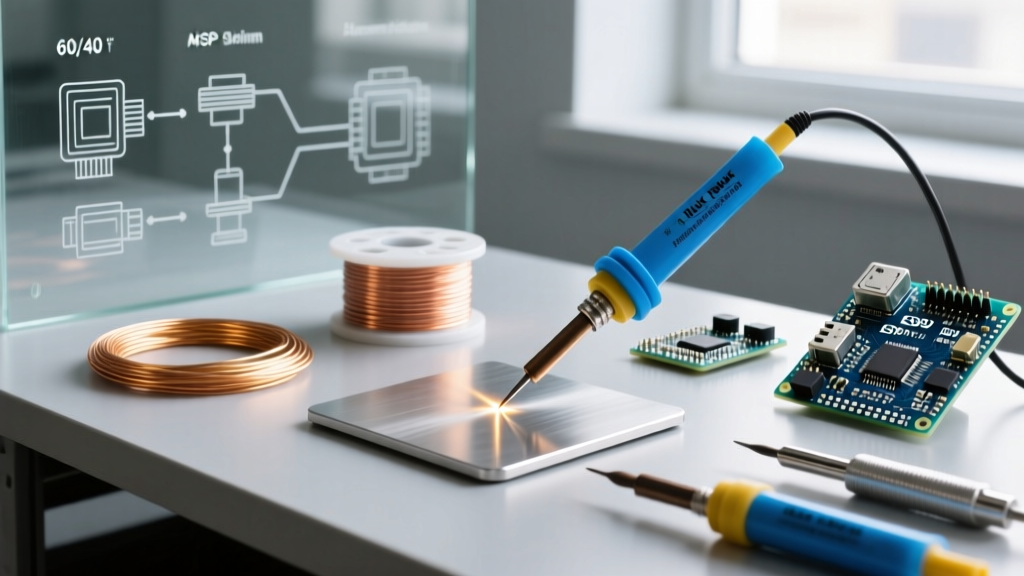

The Metallurgical Barrier: Why Standard Fluxes Fail on Aluminum
Soldering aluminum is widely considered one of the most frustrating challenges in electronics and DIY fabrication. The root cause is not the solder itself, but the instant formation of aluminum oxide (alumina) when the bare metal is exposed to air. While pure aluminum melts at roughly 660°C (1220°F), its oxide layer melts at a staggering 2072°C (3762°F). Standard rosin-based (RMA) or mild organic acid (OA) fluxes used for copper and PCB work activate between 150°C and 250°C—far too low to dissolve or disrupt this ceramic-like oxide shield.
To achieve true metallurgical wetting, you must select a highly specialized flux for aluminum soldering that utilizes aggressive halogen-based chemistries. These fluxes chemically etch the oxide layer at soldering temperatures, allowing the filler metal to bond directly with the base aluminum. However, not all aluminum alloys react the same way to these aggressive chemicals. This compatibility guide will help you match the correct flux chemistry, solder alloy, and thermal profile to your specific aluminum grade.
Core Flux Chemistries: Matching the Right Formula
The market for aluminum-specific fluxes is dominated by two primary chemical families: Zinc Chloride and Fluoride-based compounds. Choosing the wrong chemistry for your specific alloy will result in poor wetting, excessive pitting, or catastrophic galvanic corrosion down the line.
| Flux Chemistry | Active Ingredients | Target Alloys | Corrosivity | Post-Solder Cleanup |
|---|---|---|---|---|
| Zinc Chloride (ZnCl2) | Zinc chloride, Ammonium chloride, Water | 1xxx, 3xxx series (Pure & Manganese) | High | Mandatory: Hot water + 5% Baking Soda neutralization |
| Fluoride-Based | Ammonium bifluoride, Fluoroboric acid | 5xxx, 6xxx series (Magnesium & Silicon) | Extreme | Mandatory: Alkaline detergent + Deionized water rinse |
| Organic Amine Blends | Hydroxylamine, mild organic acids | Aluminum-to-Copper transitions | Moderate | Required: Isopropyl Alcohol (IPA) + Water wash |
Product Spotlight: Industry Standards
- Superior Flux #530: A classic zinc-chloride liquid flux (~$15 for 2 oz). Excellent for 1100 and 3003 alloys. It fumes heavily when heated and requires strict ventilation.
- Alusol Paste Flux: A fluoride-based paste (~$28 for 1 oz) designed specifically for stubborn 5000 and 6000 series alloys. It stays in place better on vertical joints.
- La-Co 12014 Aluminum Solder Paste: A pre-mixed solder paste (~$18 for 1 oz tube) containing a mild amine-fluoride flux. Best for small electrical connections on lower-grade aluminum.
Alloy-Specific Compatibility Matrix
According to the Aluminum Association, aluminum alloys are categorized by their primary alloying elements. The presence of magnesium, silicon, and zinc drastically alters solderability. Here is how to approach the most common series:
1xxx Series (e.g., 1100) - Excellent Solderability
Containing 99%+ pure aluminum, the 1xxx series forms a relatively thin and uniform oxide layer. Zinc chloride fluxes easily penetrate this barrier. You can use standard Tin-Silver (Sn-Ag) or Tin-Zinc (Sn-Zn) solder wires with a high-wattage iron (80W+).
3xxx Series (e.g., 3003) - Good Solderability
Alloyed with manganese, 3003 is widely used in heat sinks and enclosures. It responds well to both zinc chloride and mild fluoride fluxes. Because manganese increases the melting point slightly, ensure your soldering iron tip is preheated to at least 350°C (662°F) to prevent thermal stalling.
5xxx Series (e.g., 5052) - Poor Solderability
The addition of magnesium creates a complex, multi-layered oxide (magnesium oxide mixed with aluminum oxide). Standard chloride fluxes will fail here. You must use an aggressive fluoride-based flux. Furthermore, mechanical abrasion underneath the flux pool is often required to achieve wetting.
6xxx Series (e.g., 6061) - Very Difficult
6061 is the darling of CNC machining and structural DIY projects, but it is notoriously hostile to soldering. The silicon and magnesium content create a thick, refractory oxide layer. The American Welding Society generally recommends brazing over soldering for 6xxx structural joints. If you must solder, use a specialized fluoroboric acid flux and a Sn-Zn (Tin-Zinc) filler metal, which offers better galvanic compatibility with the silicon-rich matrix.
7xxx Series (e.g., 7075) - Unsolderable
Alloyed with zinc, 7075 is virtually impossible to solder reliably using conventional chemical fluxes. The zinc in the alloy causes the base metal to melt or degrade before the solder can wet the surface. Avoid soldering 7xxx series entirely; use mechanical fasteners or conductive epoxies instead.
Step-by-Step Execution Protocol
Even with the correct flux for aluminum soldering, poor technique will yield cold, brittle joints. Follow this exact sequence for reliable results:
- Mechanical Preparation: Degrease the joint with acetone. Use a stainless steel wire brush to score the surface. Do not use a brass or carbon steel brush, as embedded particles will cause severe galvanic corrosion later.
- Flux Application: Apply a generous layer of your chosen flux immediately after brushing. The flux acts as a temporary barrier against re-oxidation.
- Thermal Profiling: Apply heat using a soldering iron with a massive thermal reserve (e.g., a Weller WXP120 with a chisel tip) or a micro-torch. Heat the base metal, not the flux. Wait for the flux to bubble and turn slightly amber (typically 250°C - 300°C).
- Sub-Surface Abrasion (The Secret Step): While the flux is molten and the base metal is hot, use the tip of your iron or a dedicated titanium pick to physically scratch the aluminum surface through the liquid flux pool. This breaks the micro-oxide layer that the chemicals couldn't fully dissolve.
- Filler Introduction: Feed your Sn-Zn or Sn-Ag solder wire into the scratched area. It should flash and wet instantly. If it balls up, the oxide layer is still intact—repeat step 4.
Post-Solder Corrosion and Cleaning Protocols
Critical Warning: The halogen-based fluxes required for aluminum are highly corrosive. If left on the joint, they will absorb atmospheric moisture and literally eat through the aluminum over a period of weeks, resulting in a white, powdery aluminum hydroxide residue and eventual joint failure.
Cleaning must occur within 30 minutes of the joint cooling. Because aluminum is amphoteric (reacts to both strong acids and strong bases), you cannot use harsh alkaline cleaners or acidic neutralizers.
- For Chloride Fluxes: Submerge or scrub the joint in a 5% Sodium Bicarbonate (baking soda) and distilled water solution. The mild alkalinity neutralizes the hydrochloric acid byproducts. Rinse thoroughly with Deionized (DI) water to prevent water-spotting.
- For Fluoride Fluxes: Use a specialized alkaline detergent formulated for aerospace aluminum (such as Turco Liquid Aluminbright), diluted to 2%. Follow with a hot DI water rinse.
Expert Troubleshooting: Edge Cases and Failure Modes
Failure Mode 1: Solder Refuses to Wet (Balls Up)
Diagnosis: The oxide layer was not fully breached, or the base metal temperature is too low. Aluminum acts as a massive heat sink. If you are using a standard 40W electronics iron, the aluminum will pull the heat away faster than the iron can replenish it, dropping the localized temperature below the solder's liquidus point.
Solution: Upgrade to an 80W+ station. Pre-heat the entire aluminum workpiece on a hotplate to 100°C (212°F) before applying the iron. This reduces the thermal delta and keeps the flux active longer.
Failure Mode 2: Base Metal Pitting and Discoloration
Diagnosis: Overheating the flux. Fluoride and chloride fluxes become hyper-aggressive and begin etching the base aluminum if held above 400°C (752°F) for more than a few seconds.
Solution: Use a temperature-controlled station set to 350°C. Apply heat in 3-second bursts. If the flux turns black and crusty, it is burned out and chemically dead. Clean the joint entirely and start over with fresh flux.
Failure Mode 3: Joint Cracks Under Thermal Cycling
Diagnosis: Coefficient of Thermal Expansion (CTE) mismatch. If you used a standard Tin-Lead (Sn-Pb) or high-Tin solder on a large aluminum plane, the differing expansion rates will shear the joint during heating/cooling cycles.
Solution: Always use a Tin-Zinc (Sn-Zn) alloy for large surface area joints. The zinc content lowers the CTE of the solder, bridging the gap between the filler and the aluminum substrate. According to technical data from Indium Corporation, Sn-Zn alloys also provide superior galvanic corrosion resistance when mated with aluminum compared to pure tin or tin-silver alloys.
Final Verdict
Successfully soldering aluminum requires abandoning the habits used for copper and brass. By respecting the metallurgy, selecting the precise flux for aluminum soldering based on your alloy series, and enforcing strict post-solder cleaning protocols, you can create joints that are both electrically conductive and mechanically robust. Always prioritize ventilation when working with halogen-based fluxes, and never skip the mechanical sub-surface abrasion step.