
The Core Chemistry: What Is Soldering Flux Made Of?
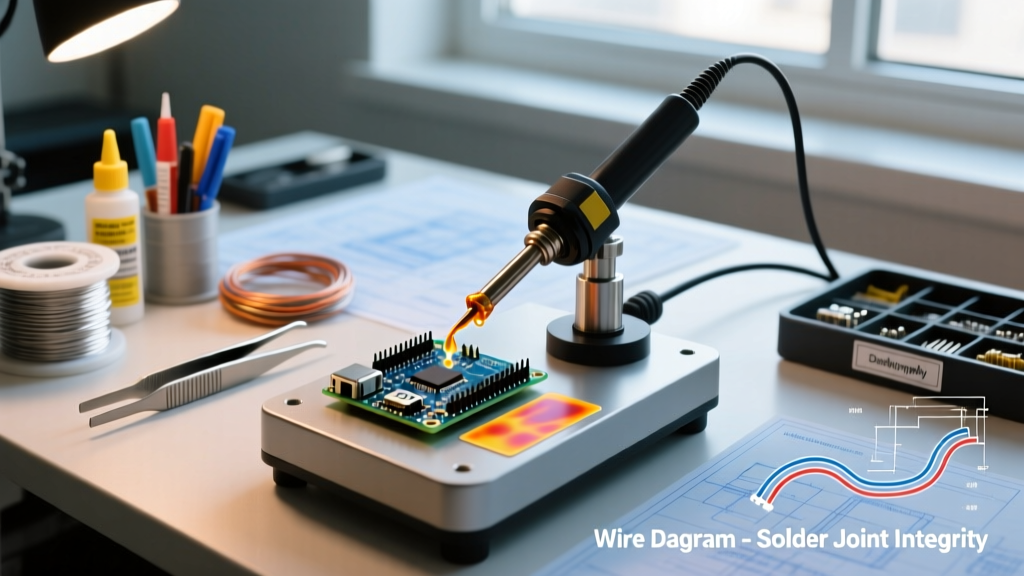
When electronics engineers and DIYers ask, "what is soldering flux made of?", they are usually trying to solve a wetting issue or a post-assembly reliability failure. At its core, soldering flux is a complex chemical mixture designed to reduce surface tension, dissolve metal oxides, and prevent re-oxidation during the thermal profiling of a solder joint. However, the exact chemical composition dictates whether a flux will safely coexist with your specific PCB substrate, component density, and operating environment.
As of 2026, the electronics manufacturing industry categorizes flux compositions into three primary chemical families: Rosin (RO), Organic Acid (OR), and Synthetic Resin/No-Clean (RE). Each family utilizes a different base material, solvent carrier, and activator package. Understanding these ingredients is the first step in our compatibility guide to ensuring your solder joints survive thermal cycling, humidity, and high-frequency RF interference.
Flux Composition vs. PCB Substrate Compatibility Matrix
Before diving into the molecular breakdown, review this compatibility matrix to match the flux chemistry to your specific application. Selecting the wrong base material can lead to catastrophic field failures, from electrochemical migration to dielectric breakdown.
| Flux Type (IPC J-STD-004B) | Primary Chemical Base | Typical Solid Content | Compatible Substrates & Scenarios | Incompatible / Edge Cases |
|---|---|---|---|---|
| Rosin (R, RMA, RA) | Abietic & Pimaric Acids (Pine Sap Derivative) | 15% - 35% | Through-hole, heavy-gauge wiring, hobbyist prototyping, high-reliability aerospace (if cleaned). | Fine-pitch BGA/QFN (traps residue), unsealed potentiometers. |
| Water-Soluble (OR) | Lactic, Citric, & Glycolic Acids | 10% - 25% | High-volume wave soldering, heavily oxidized legacy components, bare copper busbars. | Any assembly that cannot undergo immediate aqueous washing; high-impedance analog circuits. |
| No-Clean (RE) | Synthetic Resins & Halogen-Free Activators | 2% - 8% | SMT reflow, fine-pitch microelectronics, medical devices, consumer electronics. | High-voltage power supplies (risk of arcing), RF/microwave circuits (parasitic capacitance). |
Deep Dive: Rosin-Based Fluxes (R, RMA, RA)
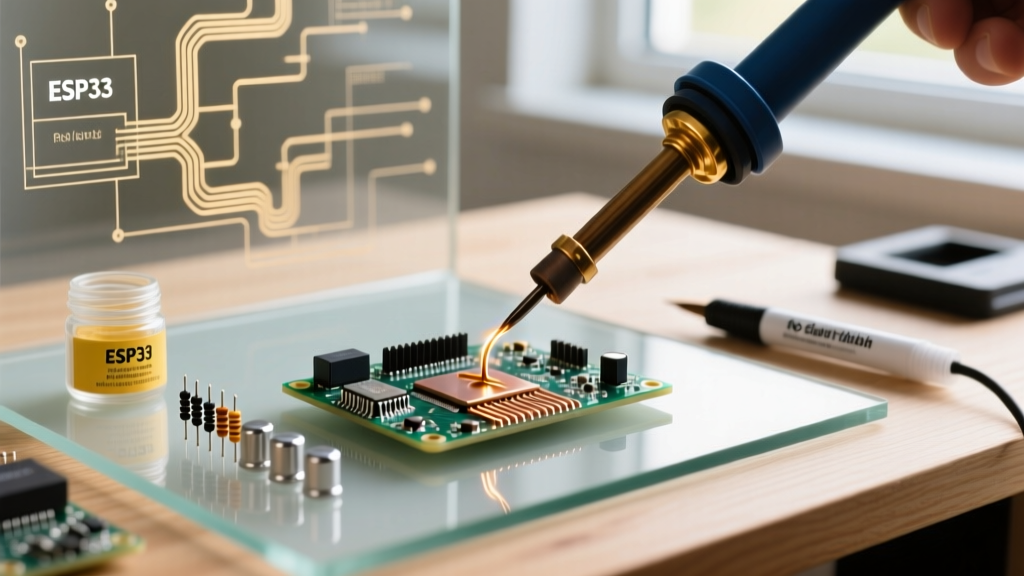
Rosin flux is derived from the distilled sap of pine trees. The active ingredient is primarily abietic acid, supported by pimaric and isopimaric acids. When heated to soldering temperatures (typically 220°C to 260°C), abietic acid becomes mildly reactive, dissolving copper oxide to allow the molten solder alloy to wet the pad. Upon cooling, the rosin reverts to a hard, glass-like, electrically inert solid that encapsulates the joint.
Classification and Activation
- R (Rosin): Pure rosin with no added activators. Extremely safe but weak. Used almost exclusively in military/aerospace where post-solder cleaning is guaranteed.
- RMA (Rosin Mildly Activated): Contains mild organic activators. The industry workhorse for decades. A prime example is Kester 186, which in 2026 retails for approximately $18 to $24 per 100ml bottle. It leaves a sticky amber residue that is benign but attracts dust.
- RA (Rosin Activated): Contains aggressive halide activators (chlorides or bromides). Excellent for heavily oxidized pads, but the residue is highly corrosive and must be cleaned with an IPA or specialized solvent wash.
Expert Insight: Never use RA flux on surface-mount PCBs with bottom-terminated components (like QFNs or BGAs). The activated rosin residue will wick under the component body via capillary action, where it is impossible to clean, leading to long-term galvanic corrosion.
Water-Soluble (Organic Acid) Fluxes: High-Activity Chemistry
If you are wondering what is soldering flux made of when it comes to plumbing or heavy industrial electronics, the answer is usually Organic Acid (OA). Instead of pine rosin, OA fluxes utilize a blend of lactic acid, citric acid, glycolic acid, and adipic acid dissolved in water or high-boiling-point glycol solvents.
The Cleaning Mandate and Dendrite Risks
OA fluxes are incredibly aggressive. They strip oxidation almost instantly, making them ideal for automated wave soldering machines processing legacy, oxidized through-hole boards. However, the chemical trade-off is severe. The residue left behind is highly hygroscopic (water-absorbing) and conductive.
According to the NASA Workmanship Standards for soldered electrical connections, any water-soluble flux residue must be removed via heated deionized (DI) water washing within 4 to 8 hours of assembly. If left on the board, the combination of moisture, flux residue, and DC voltage bias will trigger electromigration. This causes metallic dendrites—microscopic, fern-like crystalline structures of tin and copper—to grow across the PCB surface, eventually bridging adjacent traces and causing dead shorts.
No-Clean Fluxes: The Synthetic Resin Revolution
The modern SMT (Surface Mount Technology) industry relies almost entirely on No-Clean fluxes. To meet the demands of ultra-fine-pitch components (0.3mm pitch and smaller), formulators abandoned natural rosin in favor of synthetic resins (like hydrogenated hydrocarbon resins) and halogen-free organic activators.
The 2% to 8% Solid Content Advantage
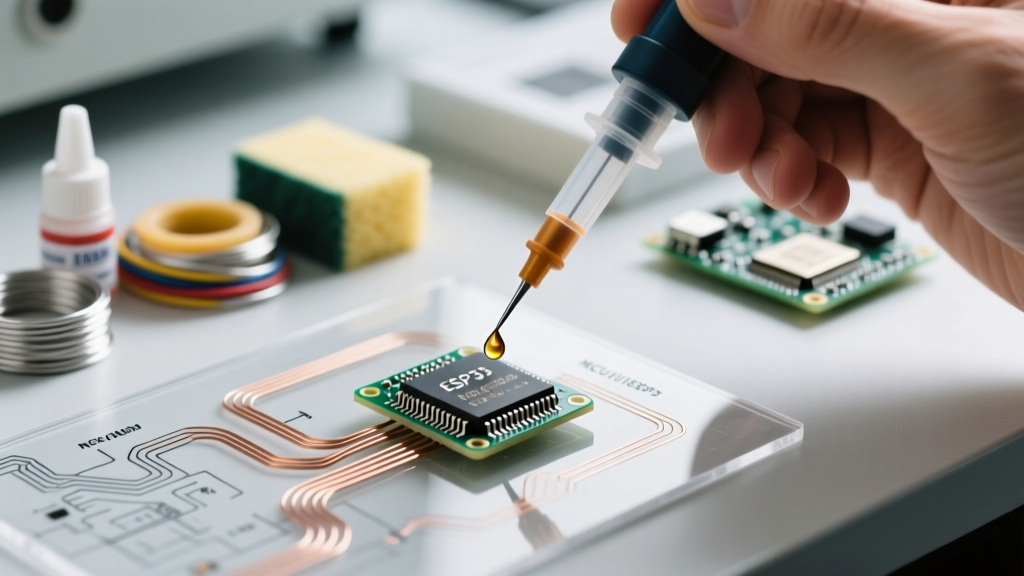
What is soldering flux made of in a no-clean formulation? Mostly solvent. A typical no-clean liquid flux, such as MG Chemicals 8341 ($14 per 100ml), contains up to 95% volatile solvents (like isopropanol and glycol ethers) and only 2% to 8% active solids. In solder paste form, like the premium Amtech NC-559-V2-TF (currently priced around $42 for a 10g syringe in 2026), the flux is suspended in a thick rheological vehicle that prevents solder balling during reflow.
Because the solid content is so low, the residue left behind is microscopic, transparent, and designed to be left on the board without cleaning. However, "no-clean" does not mean "clean-optional in all scenarios."
When No-Clean Fails: RF and High-Voltage Incompatibility
- Parasitic Capacitance in RF Circuits: In high-frequency microwave or 5G/6GHz Wi-Fi modules, even the microscopic dielectric residue of a no-clean flux can alter the impedance of a microstrip transmission line, causing signal attenuation or phase shift.
- Outgassing Under Conformal Coating: If you apply an acrylic or urethane conformal coating over uncured no-clean flux residue, the trapped solvents will outgas during thermal cycling. This creates microscopic blisters beneath the coating, destroying the moisture barrier and leading to delamination.
Activators and Solvents: The Hidden Compatibility Killers
The base resin gets all the attention, but the activators and solvents are what actually dictate chemical compatibility. The IPC standards body rigorously tests these via Surface Insulation Resistance (SIR) testing to classify fluxes (e.g., ROL0, ROL1, ORH1).
Halide vs. Halogen-Free Activators
- Halide Activators (Chlorides/Bromides): These are ionic salts that provide explosive wetting power on tarnished pads. However, they are classified as L1 (High Reliability Risk) in modern IPC testing. They are strictly incompatible with medical, automotive (ADAS), and aerospace electronics.
- Halogen-Free Activators: Modern no-clean fluxes use complex organic amines and carboxylic acids that decompose into inert, non-ionic compounds when exposed to reflow temperatures. They are safer but require stricter control of the reflow oven's thermal profile; if the peak temperature is too low, the activators won't fully decompose, leaving corrosive residues behind.
Solvent Carriers
Liquid fluxes rely on solvents to deliver the chemistry to the joint. Isopropyl Alcohol (IPA) is common in hobbyist pens but evaporates too quickly for complex SMT work. Professional formulations use Diethylene glycol monobutyl ether or similar glycol ethers, which boast higher boiling points, ensuring the flux remains active throughout a prolonged 90-second preheat and reflow cycle.
Troubleshooting Flux Residue Failures in the Field
Even when you select the correct chemistry, improper handling can lead to field failures. Here is a diagnostic framework for flux-related issues:
- White Chalky Residue: Often seen after cleaning rosin flux with IPA. This is not a new chemical; it is simply the rosin reacting with moisture in the alcohol or the air, forming a white precipitate. Fix: Use a dedicated saponified aqueous cleaner or a specialized rosin solvent like Techspray Ecoline.
- Electrochemical Migration (Shorts): If a board fails after a few weeks in a humid environment, test the residue with a pH meter. If it is highly acidic, you likely used an OR (Water-Soluble) flux and skipped the DI water wash, or your no-clean flux did not reach the necessary 245°C peak temperature to deactivate the organic acids.
- Solder Splatter/Balling: If using a liquid flux, the solvent may be boiling violently upon iron contact. Fix: Apply the flux and allow the solvent carrier 5 to 10 seconds to flash off before applying the thermal mass of the soldering iron.
Summary: Matching Chemistry to Application
Understanding what is soldering flux made of is the cornerstone of reliable electronics assembly. For heavy-duty, hand-soldered through-hole prototypes, a mildly activated rosin like Kester 186 remains unmatched for wetting and joint encapsulation. For high-volume, heavily oxidized boards, water-soluble organic acids provide the necessary thermal punch, provided you have the infrastructure for immediate aqueous cleaning. Finally, for 95% of modern SMT and fine-pitch BGA assemblies, a high-quality, halogen-free synthetic no-clean flux like Amtech NC-559 is the only chemically compatible choice to ensure long-term surface insulation resistance without the risk of post-assembly cleaning damage.
Always consult the manufacturer's Technical Data Sheet (TDS) and verify the IPC J-STD-004B classification (aim for ROL0 or REL0 for high-reliability no-clean applications) before introducing a new flux chemistry to your production line or workbench.