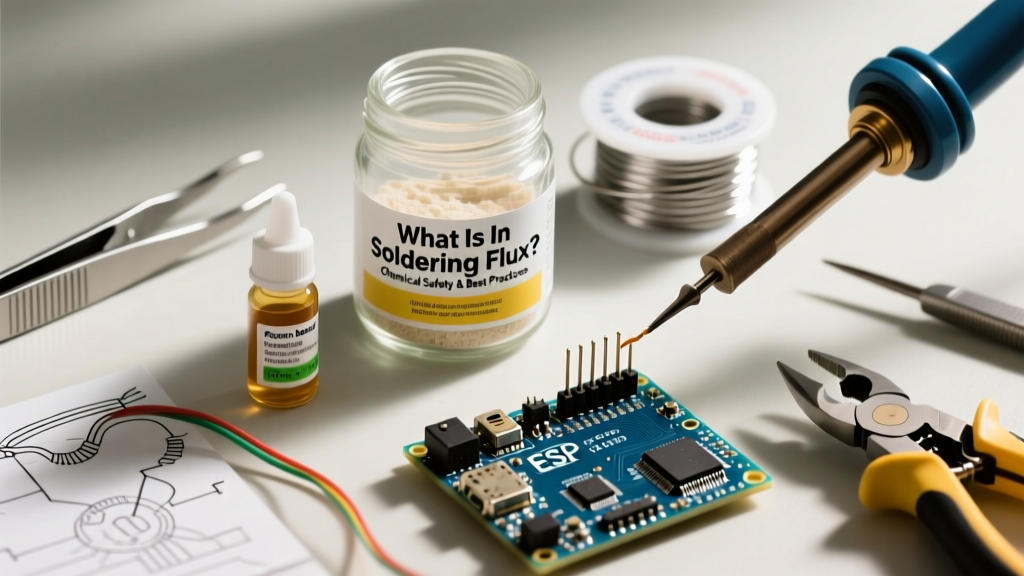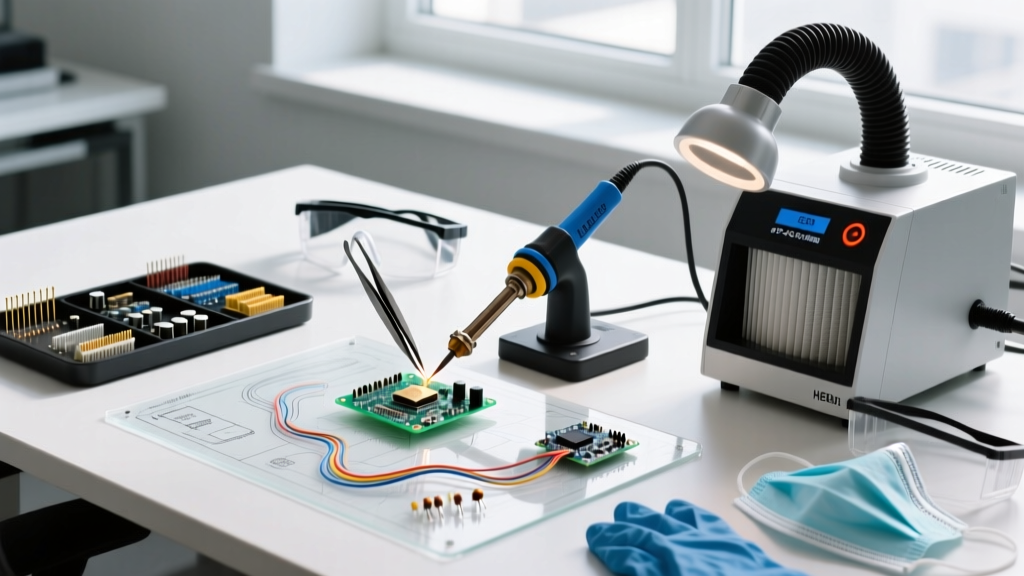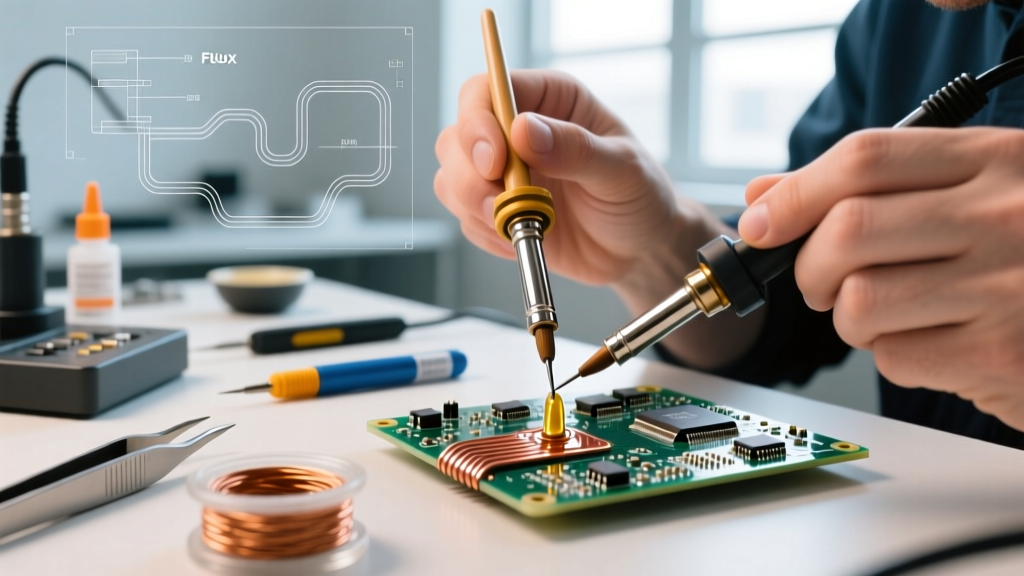

The Role of Flux: Beyond Just 'Sticky Stuff'
When electronics engineers and hobbyists ask how to use flux in soldering, the answer is never one-size-fits-all. Flux is a chemical reducing agent designed to strip metal oxides from surfaces, lower the surface tension of molten solder, and prevent re-oxidation during the heating process. However, the technique, chemistry, and cleanup requirements change drastically depending on whether you are assembling through-hole PCBs, reworking microscopic SMDs, or terminating heavy-gauge high-current wiring.
According to the IPC J-STD-004 standard, fluxes are classified by base material (Rosin, Resin, Organic, Inorganic) and activity level (0 for low, 1 for high). Using the wrong flux for your specific application is the leading cause of cold joints, latent corrosion, and high-impedance leakage failures. This guide breaks down exactly how to apply flux across three distinct electronic applications, complete with 2026 product recommendations and thermal profiles.
Application 1: Through-Hole PCB Assembly (THT)
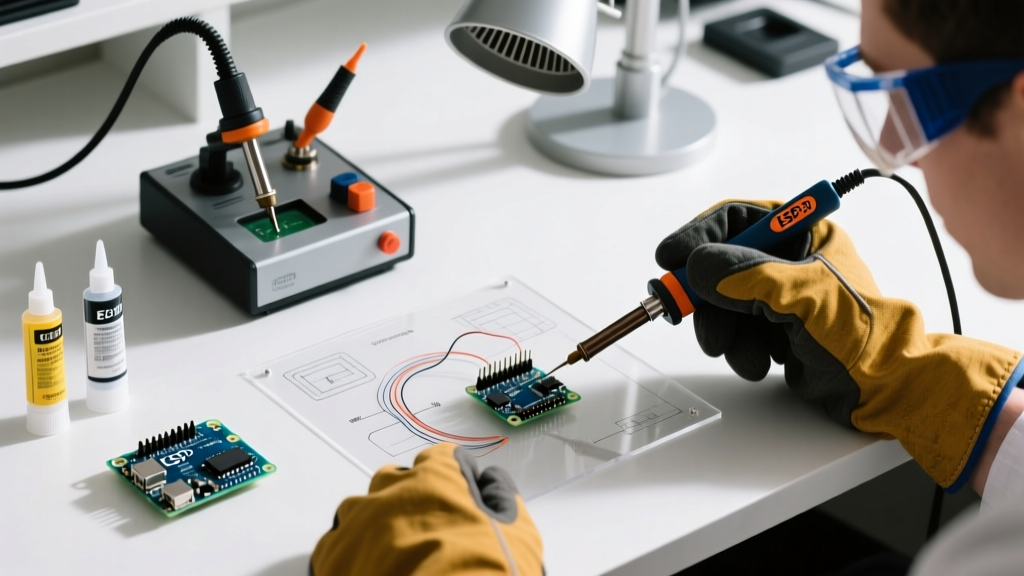
Through-hole technology (THT) involves inserting component leads through plated vias. The thermal mass of the board and the component lead requires a flux that can survive a 2 to 3-second dwell time without carbonizing.
Recommended Chemistry & Products
- Chemistry: Rosin Mildly Activated (RMA) or No-Clean (ROL0 / ROL1).
- Top Pick: Kester 245 No-Clean Flux (approx. $18 for a 2oz pen) or MG Chemicals 8341 No-Clean Flux Pen.
- Why: These fluxes leave a benign, non-conductive residue that is safe to leave on standard digital circuits.
Step-by-Step Technique
- Prep: Set your soldering station to 350°C (662°F) using a standard 1.6mm chisel tip.
- Apply: Draw the flux pen across the target pad and component lead. Do not flood the board; a thin, even coat is sufficient.
- Heat: Touch the iron to the intersection of the pad and the lead simultaneously. Hold for 1.5 seconds.
- Feed: Introduce 63/37 (eutectic) or Sn60/Pb40 solder wire to the joint, not the iron tip. The flux will activate, bubble slightly, and pull the solder into the via via capillary action.
- Withdraw: Remove the solder, then the iron, in a swift, fluid motion.
Application 2: Surface Mount Devices (SMD) & Rework
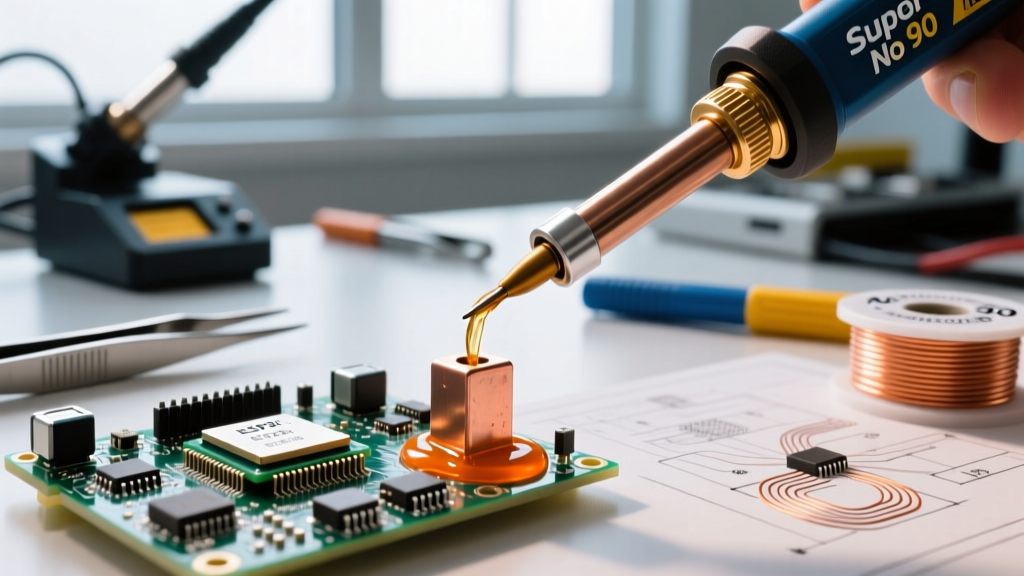
SMD soldering relies heavily on surface tension to keep components aligned. Here, liquid flux pens are useless; you need a high-viscosity 'tacky' flux that acts as a temporary adhesive while providing chemical cleaning.
Recommended Chemistry & Products
- Chemistry: No-Clean Tacky Flux (Gel/Syringe format).
- Top Pick: Amtech NC-559-V2-TF (approx. $28 for a 10cc syringe) or Chip Quik SMD291AX.
- Why: Amtech's formulation is engineered for fine-pitch ICs, preventing solder bridging between pins spaced as tightly as 0.5mm.
Step-by-Step Technique
- Dispense: Using a 22-gauge blunt needle, apply a 0.5mm continuous bead of tacky flux across the PCB pads.
- Placement: Set the SMD component into the flux. The viscosity will hold the part perfectly in place.
- Reflow/Drag: For drag soldering, use a 3.0mm hoof or mini-wave tip at 320°C. Apply a small amount of solder to the tip and drag it across the pins. The flux's high surface tension will automatically separate the solder into individual joints.
- Wick (if needed): If a bridge occurs, apply a second dab of flux, place a 2.0mm desoldering wick over the bridge, and press gently with a flat tip at 380°C. The flux will reactivate and wick away the excess.
Application 3: Heavy-Gauge Wiring & High-Current Lugs
Soldering 10 AWG or thicker wires to large copper lugs requires massive thermal energy. Standard rosin fluxes will burn off long before the copper reaches the 220°C required to melt the solder, resulting in a dry, grainy joint.
Recommended Chemistry & Products
- Chemistry: Water-Soluble (Organic Acid / OA) or highly activated Rosin (RA).
- Top Pick: Superior Flux #30 Water-Soluble Paste (approx. $15 for a 4oz jar) or Harris Stay-Clean Liquid Flux.
- Why: OA fluxes contain aggressive organic acids that strip heavy oxidation instantly, even under high thermal loads.
Step-by-Step Technique
- Mechanical Prep: Sand the wire strands and the inside of the lug with 400-grit abrasive to remove bulk tarnish.
- Apply & Pre-Tin: Coat the bare wire and the lug interior with the water-soluble flux. Using a high-wattage iron (100W+) or a micro-torch, heat the wire and feed solder until the strands are fully wicked and silver-colored.
- Mate: Insert the pre-tinned wire into the pre-tinned lug.
- Final Heat: Apply heat to the outside of the lug until the internal solder re-melts and fuses the two masses together.
Critical Warning: Never use plumbing acid flux (Zinc Chloride) on electrical connections. While it works wonders on copper pipes, it will cause catastrophic galvanic corrosion and destroy PCB traces within weeks. Always stick to electronics-grade OA or RA fluxes.
Flux Selection Matrix (2026 Market Overview)
| Application | Recommended Type | Specific Product Example | Approx. Cost | Cleaning Required? |
|---|---|---|---|---|
| Standard THT PCBs | No-Clean (ROL0) | Kester 245 Flux Pen | $18 / 2oz | No (unless high-impedance) |
| Fine-Pitch SMD | Tacky Gel (ROL1) | Amtech NC-559-V2-TF | $28 / 10cc | Optional (aesthetic) |
| Heavy Wire / Lugs | Water-Soluble (OA) | Superior Flux #30 | $15 / 4oz | YES (Mandatory) |
| RF / Analog Audio | RMA (Rosin Mild) | Chip Quik RMA Flux | $12 / 10ml | Yes (to prevent parasitic capacitance) |
Critical Failure Modes & Troubleshooting
Understanding how to use flux in soldering also means knowing how flux causes failures when misapplied.
1. Flux Burn-Off and Carbonization
If your soldering iron is set too high (e.g., 420°C for standard Sn63/Pb37) or you dwell for more than 4 seconds, the flux activators will burn off. You will see black, crusty residue. The solder will ball up and refuse to wet the pad. Fix: Lower the temperature to 350°C, clean the tip with damp brass wool, and re-apply fresh flux before attempting the joint again.
2. Dendrite Growth in High-Impedance Circuits
'No-Clean' is a misleading industry term. While the residue is non-corrosive on standard 5V digital logic, it can become slightly conductive under high humidity in high-impedance analog circuits (e.g., >1MΩ sensor lines or piezoelectric pickups). This causes leakage currents and signal noise. Fix: Always clean no-clean flux off RF, analog, or high-voltage boards using a specialized solvent like Techspray 1671 or Kyzen E5611, followed by a 99% Isopropyl Alcohol (IPA) rinse.
3. The Water-Soluble Trap
A common mistake is cleaning water-soluble flux (like Superior #30) with Isopropyl Alcohol. IPA does not dissolve organic acids; it merely smears them across the board, accelerating corrosion. As detailed in the NASA Workmanship Manual for Soldered Electrical Connections, water-soluble fluxes must be cleaned using heated (60°C) distilled or deionized water, followed by a thorough bake-out to remove trapped moisture from under components.
Summary: Match the Chemistry to the Thermal Mass
Mastering how to use flux in soldering requires treating it as a precise chemical tool rather than an afterthought. For delicate SMDs, rely on the surface tension of tacky gels like Amtech. For standard through-hole work, trust the forgiving nature of Kester no-clean pens. And when tackling heavy-gauge wiring, unleash the aggressive power of water-soluble pastes—but always follow up with rigorous, solvent-appropriate cleaning. By aligning your flux chemistry with your specific thermal and electrical requirements, you will eliminate cold joints and ensure long-term reliability in every build.
For further reading on advanced soldering metallurgy and flux formulations, technical resources from manufacturers like Indium Corporation provide excellent deep-dives into the chemical engineering behind modern electronics assembly.