
The Hidden Risks of Soldering Paste Use in SMT and DIY
Solder paste is a complex, thixotropic mixture of microscopic metal alloy spheres suspended in a tacky flux medium. While it is the undisputed backbone of Surface Mount Technology (SMT) and fine-pitch DIY electronics assembly, its semi-liquid state introduces unique occupational hazards. Unlike solid solder wire, paste presents a vastly increased surface area for oxidation, elevating the risks of dermal absorption, accidental ingestion, and toxic fume inhalation during the reflow process.
Mastering safe soldering paste use requires more than just a steady hand; it demands strict adherence to chemical handling protocols, precise thermal management, and rigorous environmental controls. This guide outlines the critical safety frameworks and best practices required to protect your health and ensure defect-free PCB assemblies.
Understanding the Chemical and Physical Hazards
Before opening a jar of solder paste, technicians must understand the specific hazards associated with its two primary components: the metal alloy and the flux vehicle.
Flux Chemistry and Fume Exposure
When heated during reflow, the flux vehicle undergoes rapid thermal decomposition. Rosin-based (colophony) fluxes are known respiratory sensitizers. Prolonged inhalation of colophony fumes can lead to occupational asthma, a condition highlighted by the UK Health and Safety Executive (HSE). Water-soluble pastes, while easier to clean, often emit higher levels of Volatile Organic Compounds (VOCs) and corrosive vapors that can irritate the mucous membranes.
Heavy Metal Risks and Ingestion Pathways
While the industry has largely transitioned to lead-free alloys like SAC305 (Sn96.5/Ag3.0/Cu0.5), many prototyping and aerospace applications still rely on tin-lead (Sn63Pb37) pastes. Lead is a cumulative toxicant. Because paste is applied via syringes or stencils, the risk of hand-to-mouth transfer is significantly higher than when handling solid wire. Strict hygiene protocols are non-negotiable, as outlined by OSHA's Lead Safety Standards.
Expert Insight: Never use latex gloves when handling solder paste or stencil cleaners. The solvents in fluxes and cleaning agents (like Zestron Vigor or Kyzen E5611) can rapidly degrade latex, pushing chemicals directly into your skin. Always use 4-mil to 6-mil nitrile gloves.
Comparative Safety Matrix: Solder Paste Types
Selecting the right paste involves balancing assembly requirements with safety and environmental profiles. Below is a breakdown of the three primary flux chemistries used in modern soldering paste use.
| Flux Category | Typical Alloy | VOC Emissions | Cleaning Solvent | Primary Health Risk | Avg. Cost (500g Jar) |
|---|---|---|---|---|---|
| No-Clean | SAC305 | Low | None (Optional) | Mild Respiratory Irritant | $45 - $65 |
| Water-Soluble (OA) | Sn63Pb37 | High | Deionized Water | Corrosive Residue / Eye Irritant | $35 - $50 |
| Rosin Mildly Activated (RMA) | SAC305 | Medium | Isopropyl Alcohol | Sensitizer (Occupational Asthma) | $50 - $75 |
Step-by-Step Safe Handling and Application Workflow
Proper handling prevents both health hazards and catastrophic assembly failures like tombstoning or solder balling. Follow this strict workflow for every batch.
Step 1: Cold Storage Retrieval
Solder paste must be stored in a dedicated refrigerator between 0°C and 10°C (32°F - 50°F) to prevent the flux from reacting with the metal powder, which causes graining and loss of tackiness. Keep paste away from food items to prevent cross-contamination.
Step 2: Thermal Equilibration (The 4-Hour Rule)
Critical Failure Point: Never open a cold jar of solder paste. If exposed to room air while cold, atmospheric moisture will condense into the paste. During reflow, this trapped water turns to steam, causing micro-explosions that result in severe solder balling and bridging. Allow the sealed jar to acclimatize at room temperature (20°C - 25°C) for a minimum of 2 to 4 hours before breaking the seal.
Step 3: Stencil Printing and Dispensing
When using a stencil, ensure the squeegee angle is set to 45°-60° with appropriate pressure (typically 1-2 lbs per inch of blade). For syringe dispensing, use pneumatic dispensers with a digital timer rather than manual thumb pressure to avoid repetitive strain injuries and ensure consistent deposition volumes.
Step 4: Safe Reflow and Fume Capture
As the PCB enters the reflow zone (peaking around 245°C for lead-free), massive amounts of flux vaporize. Source-capture fume extraction is mandatory. Desk fans merely blow toxic colophony around the room; you must use an extractor equipped with both a HEPA filter (for particulates) and an activated carbon bed (for VOCs and gases).
Step 5: Post-Assembly Cleanup
If using water-soluble or RMA pastes, clean the PCB and stencils immediately. Dried flux becomes highly corrosive and difficult to remove, requiring harsher chemicals that increase operator exposure. Use automated stencil cleaning systems or ultrasonic baths with appropriate saponifiers, keeping your hands out of the chemical bath.
Ventilation and PPE Requirements
To maintain a safe environment for soldering paste use, your workspace must be equipped with the following Personal Protective Equipment (PPE) and engineering controls:
- Respiratory Protection: For high-volume SMT lines or poorly ventilated DIY spaces, use a half-mask respirator with P100 particulate filters and organic vapor cartridges (e.g., 3M 60926).
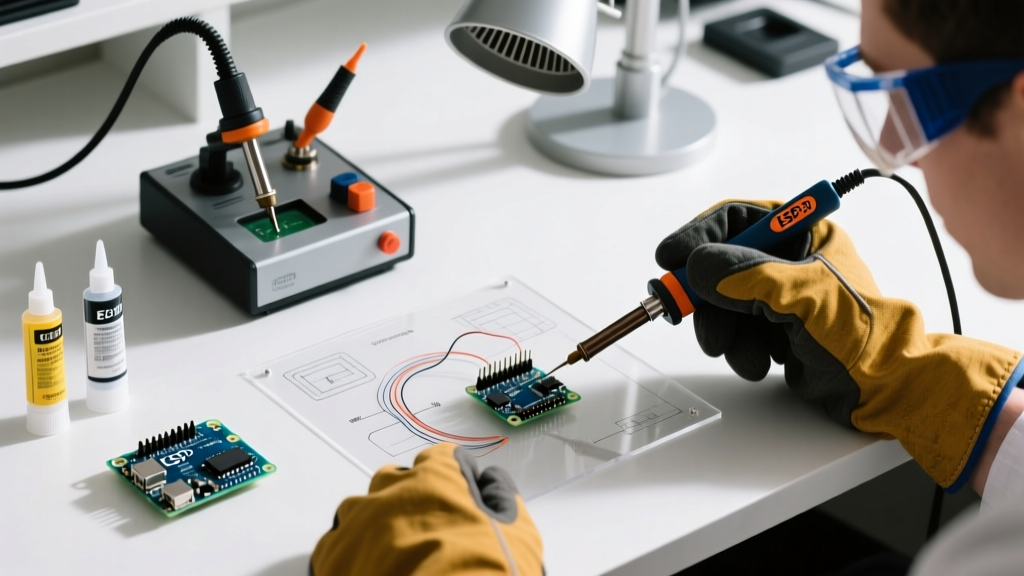
- Dermal Protection: Powder-free, 6-mil nitrile gloves. Change gloves immediately if torn or after handling leaded pastes before touching any personal items.
- Eye Protection: ANSI Z87.1 rated safety glasses with side shields to protect against flux splatter during reflow or ultrasonic cleaning.
- Local Exhaust Ventilation (LEV): Articulated fume extraction arms (like those from Metcal or Okuma) positioned within 6 inches of the reflow oven exhaust or manual rework station.
Frequently Asked Questions (FAQ)
Can I safely use solder paste past its expiration date?
Using expired paste (typically 6 months from manufacture) is not recommended. The flux vehicle degrades, losing its ability to remove oxides, which leads to cold solder joints and voiding. From a safety perspective, degraded flux can separate, causing unpredictable splattering and excessive fuming when heated. Dispose of expired paste according to local hazardous waste regulations.
How do I properly dispose of leaded solder paste waste?
Leaded solder paste, including cleaning rags and waste water from stencil cleaning, is classified as hazardous waste due to its lead content. It must not be thrown in standard trash or poured down the drain. Collect all waste in sealed, labeled containers and hand them over to a certified hazardous waste disposal facility, adhering to EPA guidelines for lead waste management.
Is 'No-Clean' flux completely safe to breathe?
No. While 'No-Clean' fluxes leave a benign, non-conductive residue on the PCB, the fumes generated during the liquidus phase still contain mild irritants and VOCs. Prolonged exposure in unventilated areas can still cause headaches and respiratory discomfort. Always use local exhaust ventilation, regardless of the flux chemistry.