
The False Economy of Dry Soldering
When building prototypes or running small-batch PCB assemblies, a common question among junior technicians and hobbyists is: what happens if you don't use flux when soldering? The temptation to skip flux usually stems from a desire to save time, reduce material costs, or avoid the post-soldering cleaning process. However, from a strict cost-analysis perspective, omitting flux is one of the most expensive mistakes you can make in electronics manufacturing.
In the 2026 electronics market, where custom 4-layer FR4 PCBs and high-density BGA components carry significant premiums, the financial fallout of a single failed solder joint dwarfs the cost of the flux itself. This comprehensive cost analysis breaks down the micro-economics of a solder joint, the physical failure modes of 'dry' soldering, and the true financial impact of rework and scrap.
The Micro-Economics of a Solder Joint
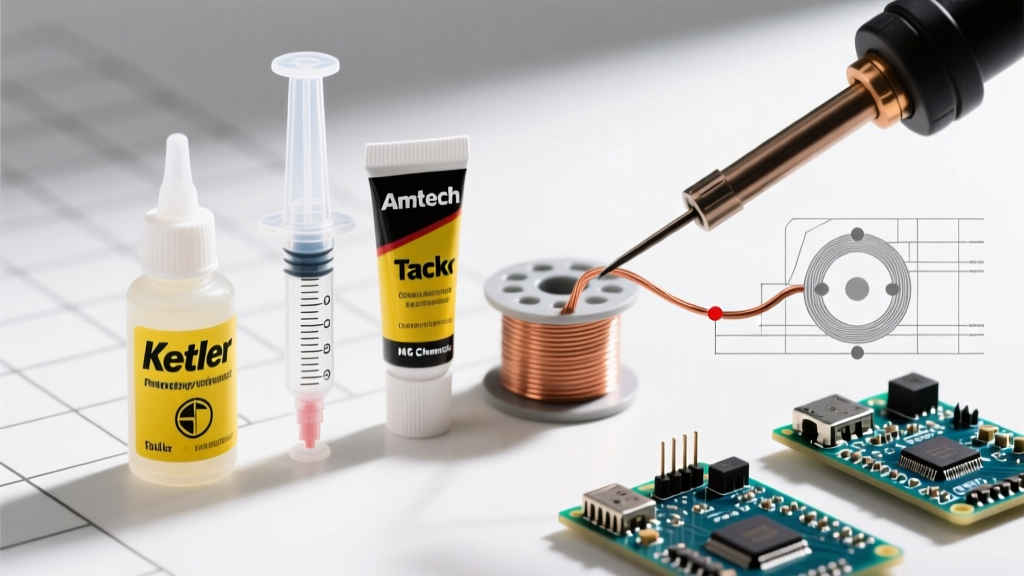
To understand the cost of skipping flux, we must first quantify the cost of using it. Let's look at a premium, industry-standard no-clean tacky flux like Amtech NC-550-V2-TF or Kester 245. As of early 2026, a 10-gram syringe of high-reliability no-clean flux retails for approximately $28.00.
- Cost per gram: $2.80
- Average flux per 0805 SMD pad: ~0.01 grams
- Flux cost per joint: $0.028 (less than three cents)
For a complex motherboard with 2,000 solder joints, the total flux material cost is roughly $56.00. When amortized across the board's total BOM (Bill of Materials) and assembly cost, the flux accounts for a fraction of a percent of the total expense. Skipping flux to save $56.00 on a batch run is a classic example of stepping over dollars to pick up pennies.
Physical Failure Modes of Soldering Without Flux
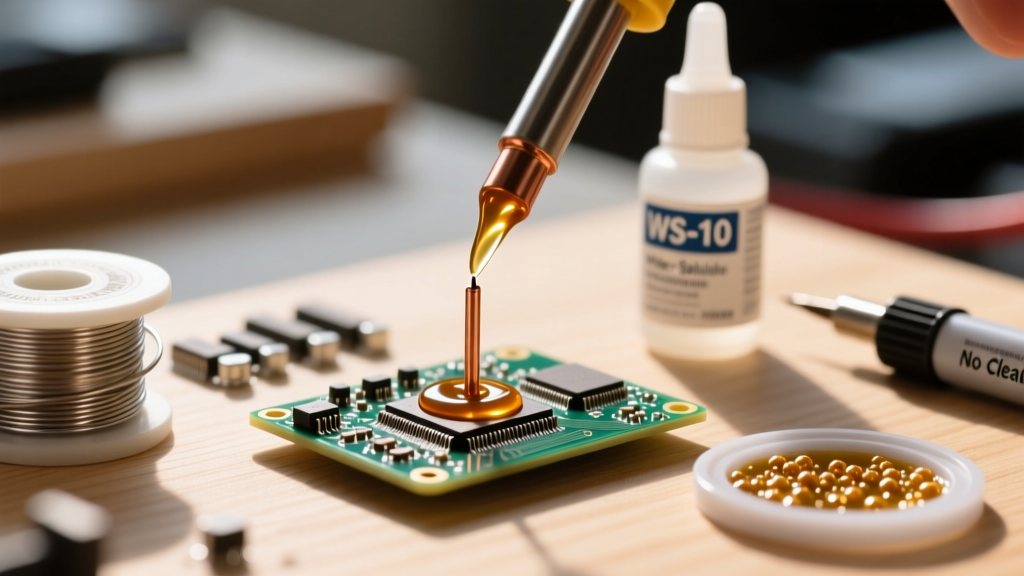
Flux is not merely a sticky adhesive to hold components in place; it is a vital chemical reducing agent. According to guidelines published by NASA's Electronic Parts and Packaging (NEPP) Program, the primary role of flux is to remove metallic oxides from the copper pads and component leads, allowing the molten solder alloy to form a proper intermetallic copper-tin (Cu6Sn5) bond.
When you solder without flux, several catastrophic failure modes occur:
1. Dewetting and Non-Wetting
Without flux to strip away the microscopic layer of copper oxide that forms on PCB pads within hours of exposure to air, the molten solder will ball up and refuse to spread. This 'non-wetting' results in a joint that rests on top of the pad rather than bonding to it, leading to immediate open circuits.
2. Cold Joints and Micro-Fissures
Dry soldering requires the iron to dwell on the joint significantly longer to burn through oxidation via sheer thermal energy. This prolonged heat exposure degrades the flux core inside your solder wire (if using rosin-core wire) before it can act, resulting in a dull, grainy 'cold joint.' These joints are highly susceptible to thermal cycling cracks and mechanical vibration failures.
3. Tombstoning on SMD Passives
When reflowing surface-mount components without a uniform flux application, uneven surface tension and localized oxidation cause one pad to wet faster than the other. The surface tension of the molten solder on the wetted pad pulls the component upright, a defect known as 'tombstoning.' This guarantees a 100% failure rate for that component, requiring manual rework.
2026 Cost Analysis Matrix: 500-Board Production Run
To illustrate the financial impact, let's model a 500-board production run of a mixed-technology IoT controller featuring 0402 passives and a QFN-32 microcontroller. We compare a 'Flux-Assisted' assembly process against a 'Dry/No-Flux' process where operators attempt to rely solely on the minimal flux core inside cheap 63/37 solder wire.
| Metric | Flux-Assisted Process | Dry Soldering (No Extra Flux) |
|---|---|---|
| First Pass Yield (FPY) | 98.5% | 62.0% |
| Defective Boards | 8 boards | 190 boards |
| Avg. Rework Time per Board | 4 minutes | 22 minutes (pad damage/scraping) |
| Scrapped PCBs (Unrepairable) | 2 boards ($40 total) | 45 boards ($900 total) |
| Flux Material Cost | $112.00 (20g syringes) | $0.00 |
| Total Rework Labor Cost (@ $45/hr) | $24.00 | $3,135.00 |
| Total Financial Loss | $176.00 | $4,035.00 |
Note: Labor rates reflect the 2026 average for skilled PCBA rework technicians in North America. Scrap costs assume a $20 bare-board fabrication and stencil cost.
The Hidden Costs of Rework and Equipment Depreciation
The matrix above highlights direct labor and scrap, but the hidden costs of dry soldering extend to equipment wear and secondary damage. When a technician attempts to fix a non-wetted, oxidized joint without adding fresh liquid or tacky flux, they inevitably apply excessive heat and mechanical force.
"Attempting to rework an oxidized pad without supplemental flux is the leading cause of PCB pad delamination and lifted annular rings. Once a pad lifts, the board transitions from a $5 rework to a $500 scrap." — IPC J-STD-001 Requirements for Soldered Electrical and Electronic Assemblies training guidelines.
Furthermore, excessive dwell times to force dry solder to wet a pad will destroy the internal heating elements of your soldering iron tips. A premium T18 or K-type tip costs between $8 and $15. Running an iron at 420°C to compensate for a lack of chemical flux activity will oxidize and pit the iron plating, reducing tip lifespan by up to 70%. Replacing tips and heating elements adds hundreds of dollars in annual consumable costs to your lab's overhead.
Flux Selection ROI: Matching Chemistry to Budget
Not all fluxes are created equal, and selecting the right type is crucial for optimizing your cost-per-joint while maintaining reliability standards recognized by the IPC (Association Connecting Electronics Industries).
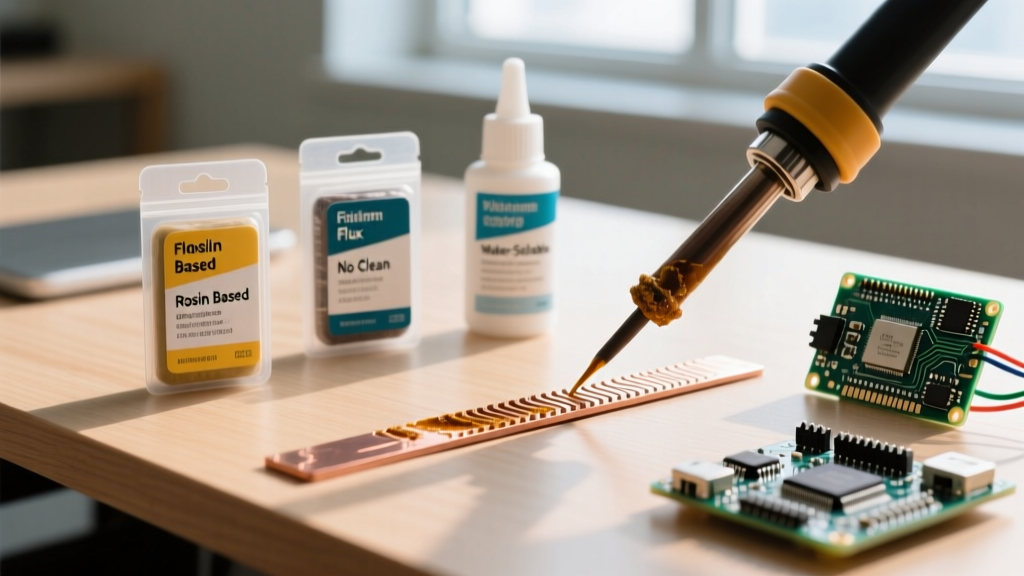
Rosin Mildly Activated (RMA)
- Cost: Low ($12 - $18 per 100ml bottle)
- Best For: Through-hole components, heavy-gauge wire tinning.
- Hidden Cost: Requires post-soldering cleaning with isopropyl alcohol (IPA) or specialized solvents to prevent long-term corrosion and to allow for conformal coating. The labor and solvent cost often negates the cheap upfront price.
No-Clean (NC)
- Cost: Moderate ($25 - $35 per 10g syringe)
- Best For: SMD rework, BGA reballing, QFN stenciling.
- Hidden Cost: Leaves a clear, hard residue that is cosmetically unappealing but electrically inert. Offers the highest overall ROI for modern PCBA because it entirely eliminates the washing and drying steps.
Water-Soluble (Organic Acid)
- Cost: Moderate to High ($30+ per jar)
- Best For: Heavily oxidized vintage boards, thick copper planes.
- Hidden Cost: Highly corrosive. Must be cleaned with heated deionized water immediately after soldering. If left on the board, it will eat through copper traces within weeks, leading to catastrophic field failures and warranty claims.
Actionable Framework: When is it Acceptable to Skip Flux?
From a strict engineering and financial standpoint, the answer is never. However, there are edge cases where supplemental flux application is minimized:
- Pre-Fluxed Magnet Wire: Some modern polyurethane-coated magnet wires are designed to melt and flux simultaneously when touched by a 400°C iron. Adding extra rosin flux here is redundant and creates unnecessary mess.
- Automated Selective Soldering: In high-volume 2026 manufacturing, selective soldering machines use precise micro-drop jetting of liquid flux directly onto the through-hole leads milliseconds before the solder wave hits. Manual application is skipped, but flux is still fundamentally present.
Expert Verdict
If you are asking what happens if you don't use flux when soldering, the physical answer is oxidation, non-wetting, and structurally compromised intermetallic bonds. The financial answer is a massive, unjustifiable increase in rework labor, scrapped materials, and damaged equipment.
Investing in high-quality flux from reputable manufacturers like Kester, MG Chemicals, or Amtech is not an optional luxury; it is a mandatory insurance policy for your PCB assemblies. By spending three cents per joint on no-clean flux, you protect the dollars you have invested in your components, your bare boards, and most importantly, your time.