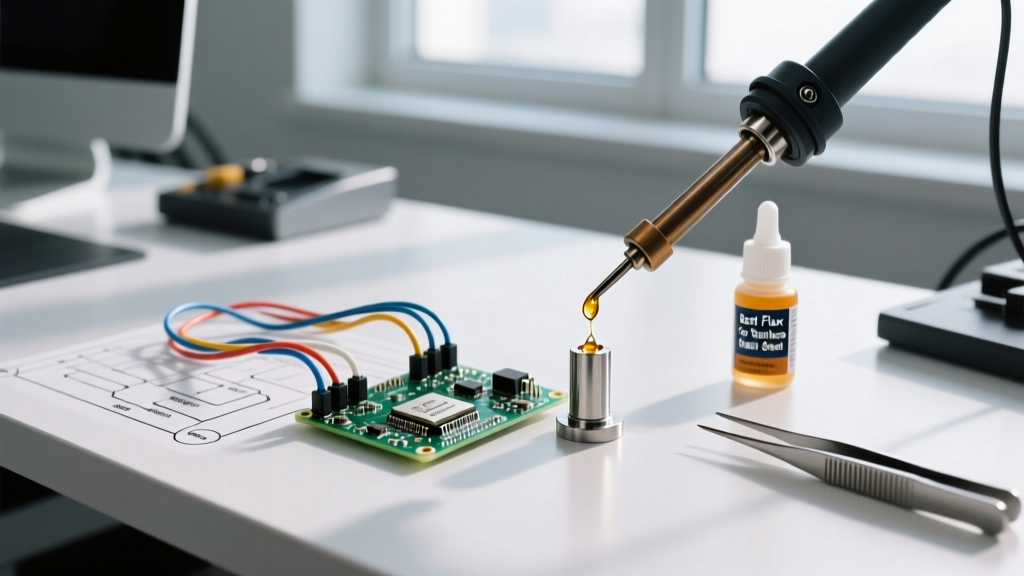

Why Make DIY Flux for Soldering?
For beginners stepping into the world of electronics, soldering flux is often treated as an afterthought. However, flux is the unsung hero of a reliable solder joint. It chemically removes oxidation from copper pads and component leads, allowing molten solder to wet the surfaces and form a strong intermetallic bond. While commercial fluxes are readily available, learning how to create DIY flux for soldering is a valuable skill. It provides a cost-effective, customizable, and emergency-ready solution for hobbyists working on through-hole components, basic wire splicing, and large-pad surface mount devices.
Making your own flux is not just about saving money; it is about understanding the chemistry of soldering. By controlling the ratio of rosin to solvent, you can tailor the viscosity of your flux to match your specific application, whether you need a thin liquid for capillary action or a thick paste for holding SMD components in place. In this comprehensive beginner guide, we will break down the exact chemistry, safety protocols, and step-by-step recipes required to mix professional-grade DIY rosin flux in your home workshop.
The Chemistry of DIY Flux: Rosin and Solvents
To understand how to make flux, you must first understand what it is made of. According to the IPC J-STD-004 standard, which classifies soldering fluxes, the most common and safest category for DIY and general electronics is Type RO (Rosin). Rosin, also known as colophony, is a solid form of resin obtained from pines and some other plants. It contains abietic acid, which becomes mildly acidic and highly active when heated to soldering temperatures (typically between 150°C and 200°C), effectively dissolving copper oxide.
Choosing the Right Rosin
Not all rosin is created equal. For electronics, you must use pure, unadulterated pine rosin. Avoid violin bow rosin or baseball rosin, as these often contain magnesium carbonate, silica, or other grip-enhancing additives that will leave non-conductive, abrasive residues on your printed circuit boards (PCBs). Look for WW (Water White) grade or X grade gum rosin, which is widely available from chemical suppliers or online marketplaces for approximately $15 to $20 per pound. This single pound is enough to make gallons of liquid flux.
Selecting the Proper Solvent
Rosin is a solid at room temperature and requires a solvent to become usable. The gold standard for DIY flux is Isopropyl Alcohol (IPA). However, the purity of the IPA is the single most critical factor in your recipe.
- 99% or higher (ACS Reagent Grade) IPA: This is mandatory. It evaporates cleanly and leaves no residue.
- 91% or 70% IPA: Never use these for soldering flux. The remaining 9% to 30% is water. When water hits a 350°C soldering iron, it instantly vaporizes, causing violent spattering (solder balls) and leaving a stubborn, white, crusty residue of hydrated rosin that looks like corrosion.
Safety Warning: Both 99% IPA and the resulting liquid flux are highly flammable. Always mix your DIY flux in a well-ventilated area away from open flames, sparks, or active soldering irons. Consult the SparkFun Soldering Safety Guidelines for proper workshop ventilation and fire safety protocols when handling volatile solvents.
The Master Recipe: Step-by-Step Mixing Guide
Creating a standard liquid flux is a straightforward process of dissolution. Because rosin is highly soluble in high-purity IPA, no heating is strictly required, though it can speed up the process. Follow these exact steps for a reliable, repeatable batch.
Ingredients and Tools
- WW Grade Pine Rosin (solid chunks)
- 99%+ Isopropyl Alcohol (IPA)
- A digital kitchen scale (accurate to 1 gram)
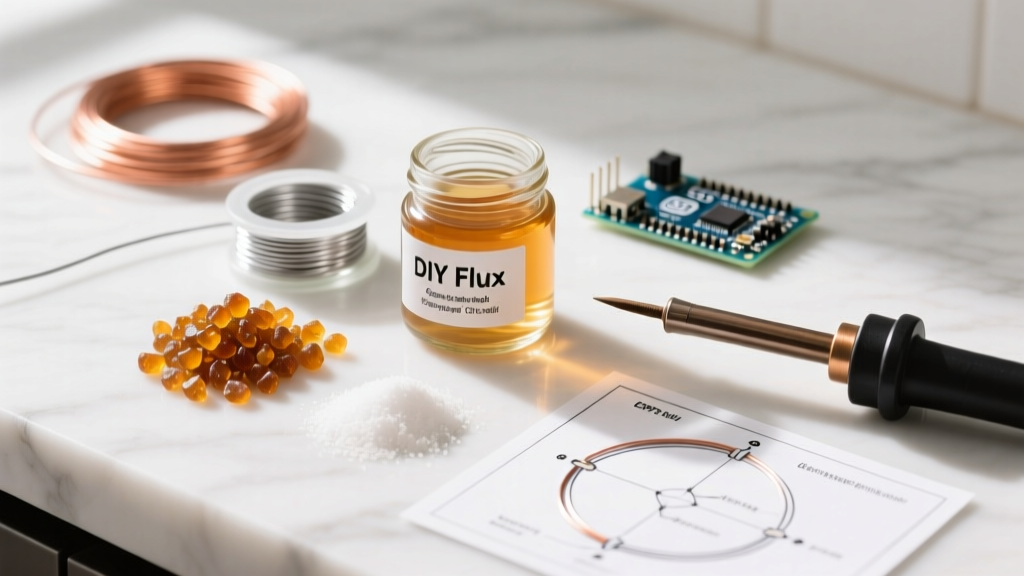
- A glass mason jar with a tight-sealing metal or PTFE-lined lid (avoid cheap plastics that IPA can degrade)
- A mortar and pestle, or a heavy-duty ziplock bag and hammer
The 1:2 Liquid Flux Ratio
For a standard liquid flux that flows easily from a brush or syringe, use a ratio of 1 part rosin to 2 parts IPA by weight (e.g., 30 grams of rosin to 60 grams of IPA).
- Crush the Rosin: Place your solid rosin chunks into a heavy bag and crush them into a fine powder. The smaller the particles (aim for under 3mm), the faster they will dissolve. A fine powder can dissolve in hours, while large chunks may take weeks.
- Weigh the Ingredients: Place your glass jar on the scale and tare it to zero. Add 30 grams of crushed rosin.
- Add the Solvent: Pour 60 grams of 99% IPA into the jar over the rosin.
- Seal and Agitate: Close the lid tightly and shake vigorously for 60 seconds.
- Steep: Let the mixture sit at room temperature. Shake it once every few hours. Within 12 to 24 hours, the rosin will completely dissolve, yielding a clear, amber-colored liquid.
Flux Viscosity Matrix: Customizing Your Mix
One of the greatest advantages of DIY flux for soldering is the ability to adjust the viscosity on the fly. By altering the rosin-to-solvent ratio, you can create different physical forms of flux to suit specific soldering techniques. Refer to the matrix below to select the right consistency for your project.
| Flux Type | Rosin to IPA Ratio (by weight) | Viscosity / Consistency | Best Application |
|---|---|---|---|
| Thin Liquid | 1:3 or 1:4 | Water-like, high capillary action | Flushing under SMD ICs, tanning stranded wires, drag soldering fine-pitch components. |
| Standard Liquid | 1:2 | Syrup-like, coats well | General through-hole soldering, basic wire splicing, applying with a horsehair brush. |
| Tacky Paste | 1:1 or 2:1 | Honey-like, highly viscous | Sticking SMD components to pads before reflow, heavy oxidation removal on large ground planes. |
| Solid Core | 100% Rosin (Melted) | Solid at room temp, liquid when heated | Dipping iron tips, pre-tinning heavily oxidized chassis lugs or thick battery tabs. |
Application Techniques for Beginners
Knowing how to make the flux is only half the battle; applying it correctly is what ensures a high-quality, shiny solder joint. For liquid DIY flux, transfer your mixture into small, airtight glass bottles with brush caps or blunt-tip syringes.
Apply the flux before the soldering iron touches the joint. The heat from the iron will cause the IPA to evaporate rapidly (it boils at 82°C), leaving behind a concentrated layer of active rosin right as the solder melts at 183°C (for Sn63/Pb37 alloy). If you apply flux after the solder is already melted, the rapid boiling of the solvent will blow the molten solder off the pad, creating dangerous solder bridges and shorts.
Troubleshooting Common DIY Flux Failure Modes
Even with a precise recipe, environmental factors and improper storage can degrade your homemade flux. Here is how to diagnose and fix common issues:
- White, Chalky Residue on the PCB: This is almost always caused by using IPA with a purity lower than 99%. The water content hydrates the rosin upon heating. Fix: Discard the batch, clean your boards with fresh 99% IPA and a stiff brush, and remix using ACS reagent-grade solvent.
- Flux Dries Out in the Bottle: IPA is highly volatile. If your flux turns into a solid puck of rosin in the container, your lid seal is failing. Fix: Add a few drops of fresh 99% IPA to reconstitute it, and transfer to a bottle with a PTFE (Teflon) lined cap.
- Poor Wetting on Oxidized Pads: Pure rosin flux (classified as ROL0 - Rosin, Low activity, 0 halides) is mildly active. It will not eat through heavy, dark green corrosion or old nickel plating. Fix: Mechanically clean the pad with fiberglass scratch pen or fine sandpaper first, then apply your DIY flux.
When to Skip DIY and Buy Commercial Flux
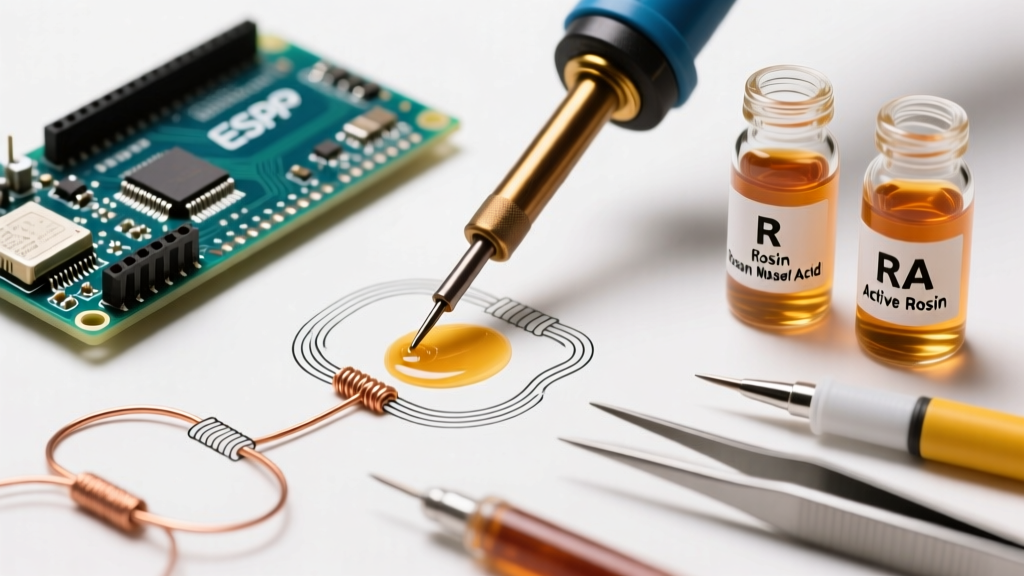
While DIY rosin flux is excellent for 90% of hobbyist and prototyping tasks, it has limitations. Because it lacks synthetic organic acid activators and halides found in commercial RA (Rosin Activated) or water-soluble fluxes, it struggles with heavily oxidized surfaces. Furthermore, for high-reliability aerospace, medical devices, or ultra-fine-pitch BGA (Ball Grid Array) rework, you should always rely on precisely formulated, IPC-certified commercial no-clean or water-washable fluxes. Commercial fluxes undergo rigorous testing for Surface Insulation Resistance (SIR) and electromigration, ensuring long-term reliability in harsh environments that a simple kitchen-mixed rosin solution cannot guarantee.
However, for learning the fundamentals of soldering, repairing vintage audio equipment, building DIY guitar pedals, or assembling basic Arduino shields, your homemade WW rosin and 99% IPA mixture will perform beautifully, safely, and at a fraction of the cost of retail brands.