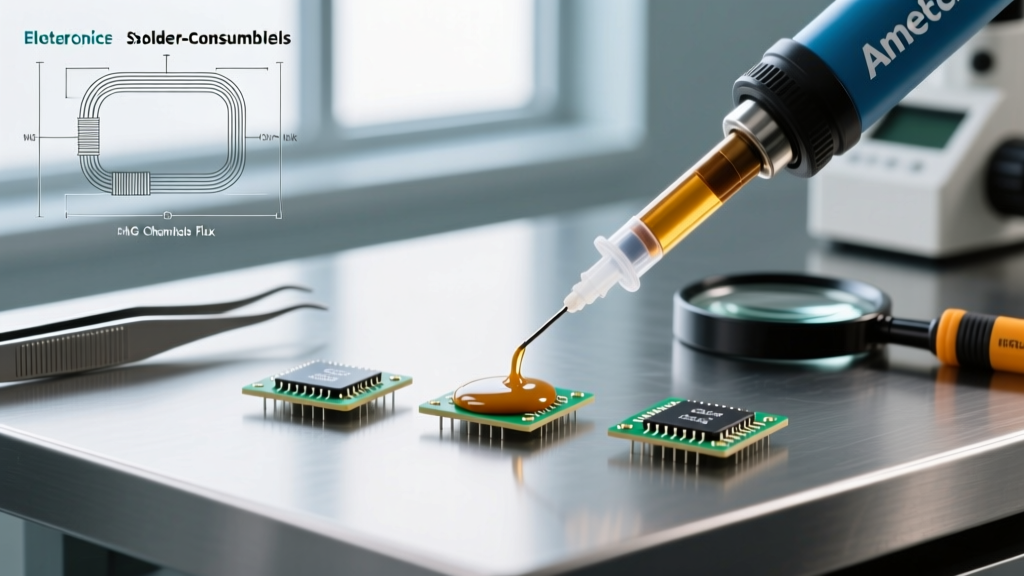

When transitioning from through-hole to surface-mount device (SMD) rework, mastering how to use soldering paste flux is the single most critical skill you can develop. Often referred to as 'tacky flux,' paste flux provides both the chemical cleaning action required for metallurgical bonding and the physical tackiness needed to hold microscopic components in place before reflow.
However, not all paste fluxes are created equal. In this guide, we break down the exact application techniques while pitting three industry titans against each other: Amtech, Chip Quik, and MG Chemicals.
Critical Clarification: Paste Flux vs. Solder Paste
Before opening a syringe, we must eliminate a pervasive industry confusion. Paste flux (tacky flux) contains zero metal alloys; it is purely a viscous chemical activator and rosin/resin base. Solder paste, conversely, is a mixture of paste flux and microscopic solder spheres (e.g., SAC305) used for stencil printing and full-board reflow. This guide focuses strictly on paste flux used for manual soldering, drag soldering, and hot-air rework.
The Brand Matrix: Amtech vs. Chip Quik vs. MG Chemicals
Selecting the right syringe depends on your specific rework environment, component pitch, and cleaning capabilities. Below is a technical comparison of the top three no-clean paste fluxes dominating the DIY and professional rework spaces.
| Specification | Amtech NC-559-V2-TF | Chip Quik SMD291AX | MG Chemicals 8341 |
|---|---|---|---|
| Chemistry Base | Synthetic Rosin (No-Clean) | Rosin (No-Clean) | Modified Rosin (No-Clean) |
| Viscosity | High (Tackier) | Medium (Smoother) | Medium-High |
| Activation Temp | 150°C - 180°C | 130°C - 150°C | 140°C - 170°C |
| Typical Cost (10cc/10g) | $19.00 - $23.00 | $12.00 - $15.00 | $14.00 - $17.00 |
| Ideal Application | BGA rework, aerospace, 0201s | General SMD, drag soldering | QFNs, mixed-assembly rework |
Deep Dive: Brand Performance Characteristics
Amtech NC-559-V2-TF is the gold standard for high-reliability work. Its higher viscosity means it holds 0201 and 01005 components firmly in place, resisting displacement from tweezers or minor air currents. However, its stiffness requires more thumb pressure on manual plungers, which can lead to accidental over-dispensing if you are not careful. According to the Chip Quik SMD291AX technical datasheet, lower viscosity fluxes like SMD291AX flow more readily under components via capillary action, making them superior for drag-soldering dense SOP or QFP pins.
MG Chemicals 8341 sits in the middle. It features a halide-free activator system that leaves a highly transparent, hard residue. This is crucial if you are performing optical inspection or using automated optical inspection (AOI) cameras post-rework, as the residue does not smear or obscure joint visibility.
Step-by-Step: How to Use Soldering Paste Flux for SMD Rework
Applying paste flux is a tactile skill. Follow this precise workflow to ensure optimal wetting and prevent thermal damage to your PCB pads.
Phase 1: Preparation and Dispensing
- Surface Decontamination: Scrub the target pads with 99.9% Isopropyl Alcohol (IPA) and a lint-free swab. Any finger oils will cause the paste flux to dewet and ball up.
- Needle Selection: Attach a 22-gauge (pink) Luer-lock needle for standard 0603/0805 work. Switch to a 25-gauge (red) or 27-gauge (clear) needle for 0402 or 0201 components to prevent over-application.
- The 'Pea' Rule: Dispense a volume roughly half the size of the component footprint. When the iron touches the flux, it will liquefy and expand outward via capillary action. Over-dispensing leads to flux trapping under IC bodies.
Phase 2: Thermal Activation and Soldering
- Tack and Place: Use the tackiness of the unactivated flux to set your SMD component. The flux acts as a temporary adhesive.
- Iron Temperature Profile: Set your soldering station to 340°C - 360°C (644°F - 680°F) for leaded SAC305 or Sn63/Pb37 wire. If using a K-tip or micro-pencil, ensure the tip is tinned before touching the flux.
- Activation Observation: Watch the flux as heat transfers. It will transition from opaque/tacky to clear and liquid. This indicates the activators have boiled off the oxides. Do not introduce solder wire until the flux turns clear.
- Feed and Withdraw: Feed your solder wire (0.3mm or 0.5mm diameter) to the pad/lead junction, not the iron tip. Allow the flux to pull the molten alloy into the fillet.
Failure Modes and Edge Cases in Paste Flux Application
Even experienced technicians encounter anomalies when using syringe fluxes. Here is how to diagnose and correct the most common failure modes.
- Flux Splattering and 'Popping': If your flux violently pops and throws hot droplets across the PCB, the syringe has absorbed ambient moisture. Paste fluxes are mildly hygroscopic. Fix: Store syringes upright in a dedicated desiccator or refrigerate them (allowing them to reach room temperature for 2 hours before use to prevent condensation).
- Solder Bridging on Fine-Pitch QFPs: While liquid flux is usually blamed for bridging, excessive paste flux can also cause it if the residue carbonizes and traps molten solder between 0.5mm pitch leads. Fix: Reduce dispense volume by 40% and use a drag-soldering technique with a gull-wing tip, relying on the iron's geometry to break surface tension.
- Grainy or Dull Joints (Cold Solder): If the joint looks crystalline, the flux activated, but the thermal mass of the pad was not sufficient to melt the solder wire's core. The flux burned off before the alloy reflowed. Fix: Increase iron dwell time by 0.5 seconds or switch to a chisel/bevel tip to maximize thermal transfer surface area.
Syringe Storage and Shelf Life Degradation
A frequently overlooked aspect of learning how to use soldering paste flux is managing the chemical shelf life. Unlike liquid rosin fluxes that can last for decades, paste fluxes contain complex thixotropic agents and volatile solvents that degrade if mishandled.
- Temperature Excursions: Leaving a syringe on a workbench under direct sunlight or near a preheater will cause the solvents to evaporate. The flux will turn into a hardened, unusable puck. Always store syringes vertically in a cool, dark environment (ideally between 10°C and 25°C).
- Plunger Contamination: Never use your mouth or unregulated compressed air to push the plunger. Moisture from breath or oil from shop compressors will contaminate the flux, leading to severe spattering during thermal activation. Always use precision manual plungers or regulated pneumatic dispensers set to 10-15 PSI.
- Needle Clogging: If you leave a needle attached to the syringe between uses, the flux inside the micro-bore will dry out, creating a solid blockage. Always cap the syringe with its original Luer-lock cap and discard used needles.
Residue Management and Cleaning Protocols
Expert Insight: 'No-clean' does not mean 'no-corrosion-forever.' Under high-humidity operating environments, unactivated no-clean flux residues can absorb moisture and form dendritic shorts over months or years. Always evaluate your operating environment against NASA-STD-8739.3 workmanship requirements for high-reliability assemblies.
If your project requires cleaning (e.g., conformal coating application or high-impedance analog circuits), the brand you choose dictates your cleaning chemistry:
- Amtech & Chip Quik: Require aggressive saponifiers or high-agitation ultrasonic baths with 99% IPA. A simple wipe will merely smear the hardened rosin across the board.
- MG Chemicals 8341: Formulated for easier solubility. According to the MG Chemicals Flux Guide, standard 99% IPA applied with a stiff hog-bristle brush is usually sufficient to dissolve and lift the residue without ultrasonic assistance.
Final Verdict: Which Paste Flux Should You Buy?
If you are performing micro-BGA rework or handling ultra-fine 0201 passives where component displacement is a primary risk, invest in the Amtech NC-559-V2-TF. Its superior tack justifies the $20+ price point. For general DIY, hobbyist drone repair, and drag-soldering SOIC chips, the Chip Quik SMD291AX offers the best balance of capillary flow, ease of dispensing, and budget-friendly pricing. Choose MG Chemicals 8341 if your workflow demands frequent manual cleaning without specialized ultrasonic equipment.