
The Core Chemistry: What Is the Purpose of Flux in Soldering?
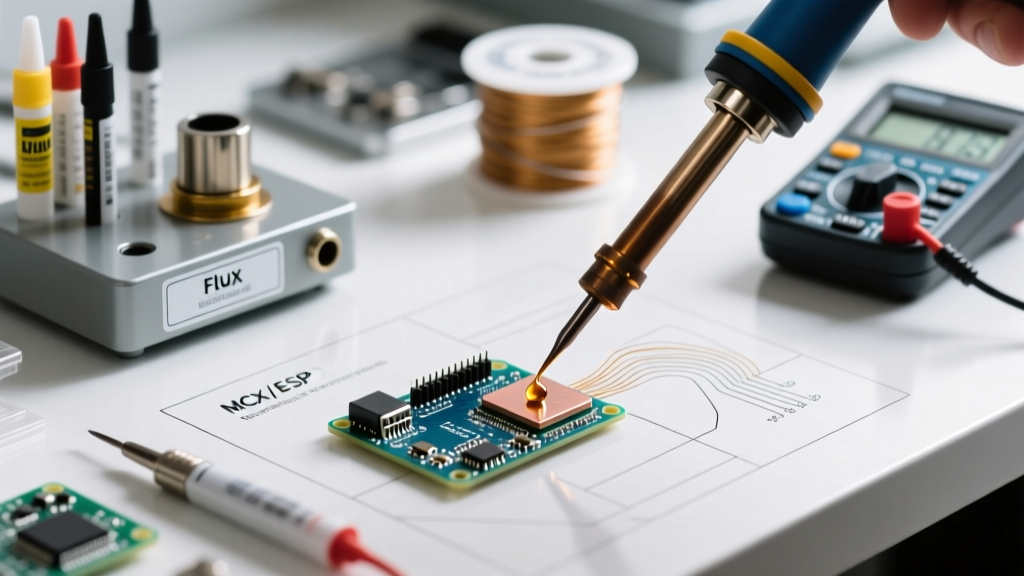
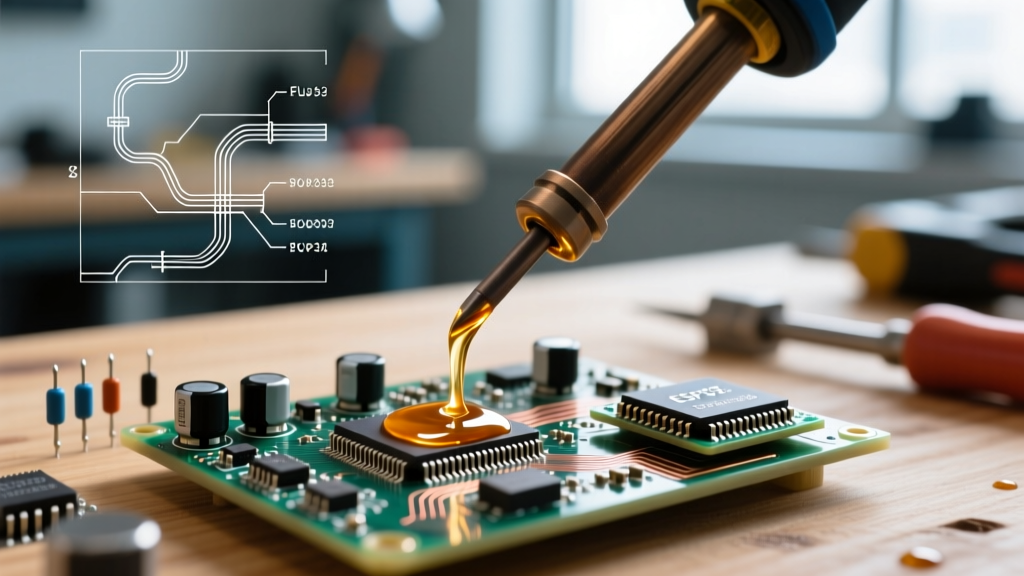
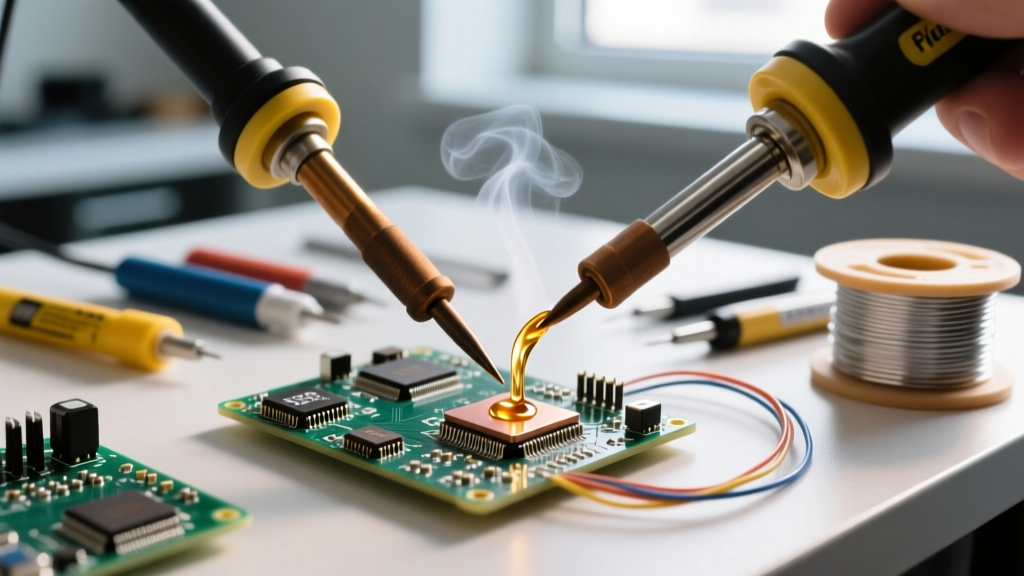
At its most fundamental level, the purpose of flux in soldering is to act as a chemical cleaning agent and a physical wetting facilitator. When copper pads and component leads are exposed to air, they rapidly form a microscopically thin layer of copper oxide (CuO and Cu2O). Molten solder cannot bond to oxidized metal; it will simply ball up and roll off, resulting in a catastrophic mechanical and electrical failure. Flux dissolves these oxides, exposing the pristine base metal while simultaneously lowering the surface tension of the molten solder alloy, allowing it to flow and create a robust intermetallic compound (IMC) layer.
The Golden Rule of Soldering: Solder does not stick to dirt, oil, or oxidation. Flux is the chemical bridge that makes the metallurgical bond possible. Without it, even the highest quality soldering iron and premium solder wire will yield unusable joints.
The Three Chemical Pillars of Flux Activity
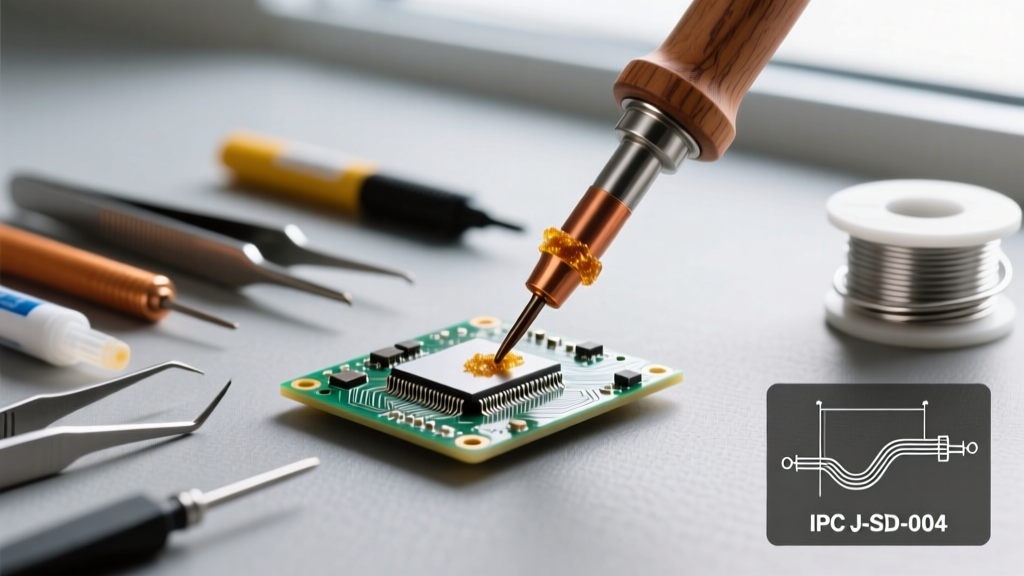
To understand how to select the right flux for your workbench, you must understand its chemical anatomy. Modern electronics fluxes, governed by the IPC J-STD-004 standard, rely on three primary components:
- Activators (The Cleaners): These are the active chemicals (like abietic acid in rosin or stronger organic acids in water-soluble fluxes) that react with metal oxides. They remain largely dormant at room temperature but become highly aggressive when heated to their activation threshold, typically between 150°C and 180°C.
- Base / Resin (The Shield): Usually derived from pine tree sap (rosin) or synthetic resins. Once the activators clean the metal, the molten rosin flows over the exposed surface, creating a temporary physical barrier that prevents oxygen in the air from re-oxidizing the pad before the solder flows over it.
- Solvents / Carriers (The Delivery System): These keep the activators and resins in a usable liquid or paste state at room temperature. In solder wire, the solvent is the heat itself melting the rosin core. In liquid flux pens, it is typically an isopropyl alcohol (IPA) base that flashes off upon contact with the iron.
Application-Specific Flux Recommendations
There is no universal flux. The 'best' flux depends entirely on your specific application, component density, and post-soldering cleaning capabilities. Below are targeted recommendations for the most common electrical and electronics scenarios.
1. Fine-Pitch SMD & BGA Rework (No-Clean & Tack Fluxes)
When working with 0402 passive components, QFNs, or Ball Grid Arrays (BGAs), capillary action and precise wetting are critical. You need a high-viscosity 'tack' flux that holds components in place while providing sustained activation throughout the prolonged heating profile of a hot air rework station.
- Top Recommendation: Amtech NC-550-V2-TF or Kester Tacky Flux.
- Why it works: These no-clean gel fluxes feature a synthetic resin base that doesn't splatter under hot air and leaves behind a clear, high-resistivity residue that is safe to leave on the board.
- Cost & Sizing: Expect to pay between $45 and $60 for a 10cc syringe. Always store in a cool, dark place to prevent the solvents from evaporating and altering the viscosity.
2. General Through-Hole & DIY Prototyping (Rosin Core)
For hand-soldering through-hole components, terminal blocks, and standard DIP ICs, a high-quality rosin-core solder wire is usually sufficient. However, adding supplemental liquid flux dramatically improves joint aesthetics and reduces the time the iron needs to dwell on the pad, protecting sensitive components from thermal damage.
- Top Recommendation: Kester 951 Thin Liquid No-Clean Flux (applied via pen or brush) paired with Sn63/Pb37 or SAC305 rosin-core wire.
- Why it works: Kester 951 is an industry-standard ROL0 (Rosin, Low-activation, 0-halides) flux. It flows instantly into through-hole barrels via capillary action, ensuring a perfect 360-degree fillet on the opposite side of the PCB.
- Cost & Sizing: Approximately $15 to $20 for a 2oz flux pen.
3. High-Reliability, Automotive & Aerospace (Water-Soluble / OA)
In environments where a board will be subjected to extreme humidity, vibration, or high voltage, any residual flux left behind could cause leakage currents or electrochemical migration. Here, you must use highly active Organic Acid (OA) water-soluble fluxes, followed by rigorous cleaning.
- Top Recommendation: MG Chemicals 8341 Water-Soluble Paste or Alpha Metals water-soluble liquid fluxes.
- Why it works: These fluxes contain aggressive organic acids that strip heavy oxidation from large ground planes and thick automotive wiring. They are classified as ORH1 (Organic, High-activation) and must be cleaned.
- Cost & Sizing: Around $20 to $25 for a 10g syringe. (For more on extreme-environment fluxes, refer to the MG Chemicals Flux Guide).
Comparative Matrix: Matching Flux to Your Workbench
| Flux Type | IPC Classification | Activation Temp | Cleaning Required? | Best Application |
|---|---|---|---|---|
| Rosin (R / RMA) | ROL0 / ROL1 | 150°C - 170°C | Optional (for aesthetics) | General hobbyist, through-hole, vintage audio repair |
| No-Clean (NC) | ROL0 / REL0 | 160°C - 180°C | No (residue is inert) | SMD rework, BGA, high-density multi-layer PCBs |
| Water-Soluble (OA) | ORL1 / ORH1 | 180°C - 220°C | Yes (Mandatory) | Automotive wiring, aerospace, heavy ground planes |
| Acid Flux (Zinc Chloride) | N/A (Non-Electronics) | 250°C+ | Yes (Highly Corrosive) | Plumbing, stained glass, sheet metal (NEVER use on PCBs) |
Critical Failure Modes: What Happens When You Skip Flux?
Skipping supplemental flux, or relying on old, expired solder wire where the internal rosin core has dried out, leads to distinct and destructive failure modes:
- Tombstoning (SMD): Without flux to evenly lower surface tension on both pads of a small capacitor, one side wets faster than the other. The surface tension of the molten solder on the wet side pulls the component upright, leaving it standing like a tombstone.
- Cold Joints & Dewetting: The solder forms a dull, grainy, convex blob rather than a smooth, concave fillet. This occurs because the solder oxidized mid-flow, creating a high-resistance mechanical joint that will eventually crack under thermal cycling.
- Dendritic Growth (Electromigration): If you use a high-activity flux but fail to clean it, the acidic residues absorb ambient moisture. When voltage is applied, metal ions migrate between traces, forming microscopic metallic 'trees' (dendrites) that eventually bridge the gap and cause a dead short.
Post-Soldering Cleaning Protocols
When your application dictates that flux must be removed (such as with water-soluble fluxes or conformal coating preparation), a simple wipe with a rag is insufficient. You must chemically dissolve and physically displace the residue.
- Chemical Dissolution: For rosin and no-clean residues, use a high-purity (99%+) Isopropyl Alcohol (IPA) or a dedicated PCB wash like Kester's specialized solvents. For water-soluble OA fluxes, use hot deionized (DI) water, optionally mixed with a saponifier.
- Agitation: Use an ESD-safe hog-hair brush to gently agitate the solvent under the components. Flux trapped under tight-clearance QFNs will wick back out as the solvent evaporates if not physically scrubbed.
- Displacement & Drying: Rinse with fresh solvent or DI water, then immediately dry with compressed air or a low-heat convection oven (60°C for 30 minutes) to prevent water from becoming trapped under IC packages.
Understanding what the purpose of flux in soldering is goes beyond simply making the solder stick; it is about controlling the chemical environment of the joint to ensure long-term electrical reliability. By matching your flux chemistry to your specific application, you eliminate guesswork and elevate your builds from amateur prototypes to professional-grade assemblies.