
The Great Workbench Confusion: Soldering Paste vs Flux
When you first transition from basic through-hole soldering to surface-mount technology (SMT) or advanced rework, you will inevitably encounter two distinct consumables: solder paste and standalone flux. To the untrained eye, both come in syringes, both look like sticky gels, and both are essential for making electrical connections. However, confusing the two is one of the most common—and destructive—mistakes a beginner can make.
This guide cuts through the jargon to explain the fundamental differences between soldering paste and flux, detailing exactly when to use each, the specific chemistry involved, and the real-world failure modes you need to avoid in 2026.
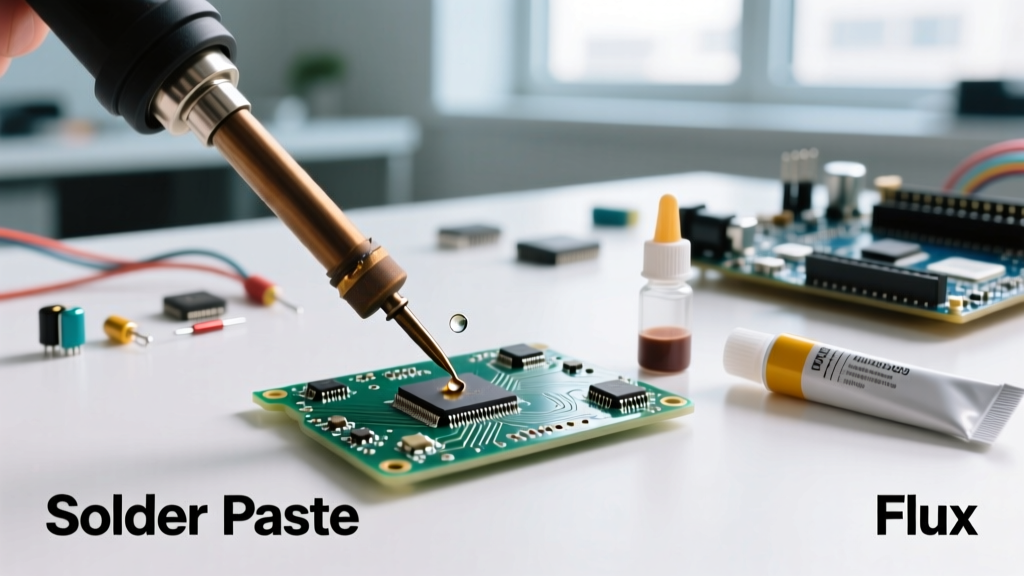
The Golden Rule: Solder paste is a complete soldering system (metal powder + flux). Standalone flux is purely a chemical cleaning agent (no metal). You cannot create a solder joint using only standalone flux.
Core Differences: At a Glance
Before diving into the chemistry, let us establish a clear baseline. The table below contrasts the physical properties and primary applications of both consumables.
| Feature | Solder Paste | Liquid / Gel Flux |
|---|---|---|
| Composition | Microscopic solder alloy spheres suspended in a flux vehicle (typically 88-90% metal by weight). | Resins (rosin or synthetic), activators, and solvents. Contains 0% metal. |
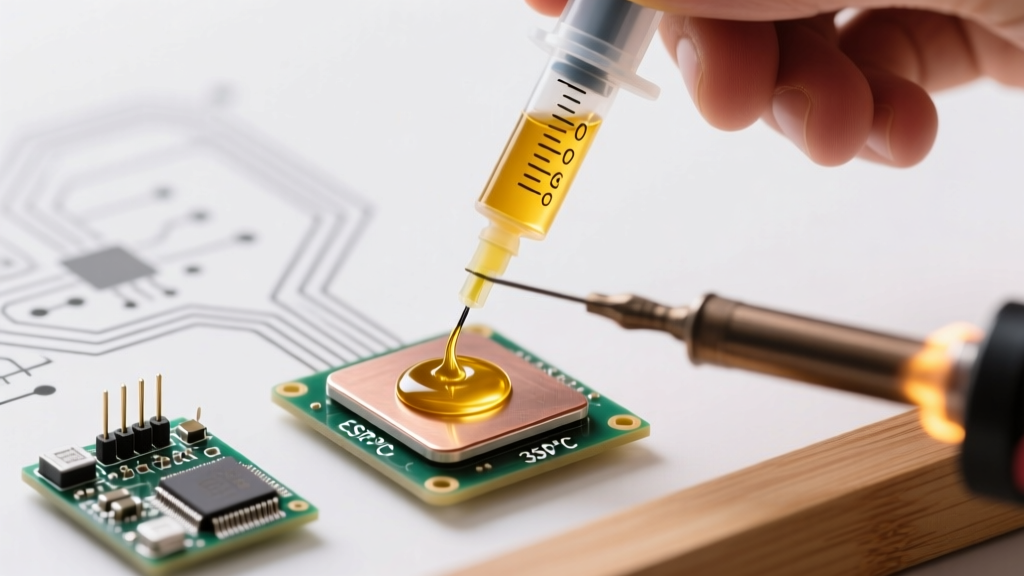
| Physical State | Thick, metallic gray paste (viscosity similar to toothpaste). | Amber liquid, tacky gel, or pen-dispensed fluid. |
| Primary Application | Stencil printing for SMT reflow soldering; precision SMT hand-soldering with hot air. | Through-hole hand soldering, SMT rework, desoldering, and drag-soldering. |
| Heat Requirement | Requires a reflow profile (hotplate, reflow oven, or hot air gun) to melt the metal powder. | Activated by a soldering iron tip or hot air, but does not melt into a joint itself. |
| Storage | Must be refrigerated (0-10°C) to prevent the flux from reacting with the metal powder prematurely. | Room temperature storage is generally acceptable; keep sealed to prevent solvent evaporation. |
Deep Dive: Solder Paste (The SMT Specialist)
Solder paste is engineered for Surface Mount Technology (SMT). It is a precise mixture of microscopic solder spheres (powder) and a sticky chemical flux (the vehicle). According to IPC J-STD-005 standards, the metal powder is categorized by mesh size, which dictates the smallest component you can reliably solder.
Understanding Powder Types
- Type 3 (25-45 µm): Best for larger SMT components like SOICs and 0805 passives. It is forgiving and less prone to solder balling.
- Type 4 (20-38 µm): The modern workhorse. Essential for fine-pitch QFNs, BGAs, and 0402 components. If you are designing boards in 2026, Type 4 is the default recommendation.
- Type 5 & 6 (< 15 µm): Reserved for ultra-micro SMT (0201 or 01005 components) and micro-BGAs. Highly susceptible to oxidation and expensive.
Real-World Product Picks & Pricing
For beginners setting up an SMT hotplate or using a stencil, you need a reliable, no-clean paste.
- Chip Quik SMD291AX10 (Sn63/Pb37): A phenomenal leaded Type 3 paste. It melts at a low 183°C, making it incredibly forgiving on DIY hotplates. Price: ~$22 for a 10g syringe.
- Kester EP256 (SAC305 Lead-Free): An industry-standard Type 4 lead-free paste. It requires higher reflow temperatures (peak 245°C) but is necessary for RoHS-compliant commercial prototypes. Price: ~$35 for a 10g syringe.
Deep Dive: Standalone Flux (The Rework & Through-Hole Hero)
Standalone flux contains no metal. Its sole purpose is to remove oxidation from copper pads and component leads, allowing molten solder to wet the surfaces and form an intermetallic bond. As detailed in Kester's technical resources on flux chemistry, modern fluxes are categorized by their activator strength and residue cleanliness.
The Three Main Flux Chemistries
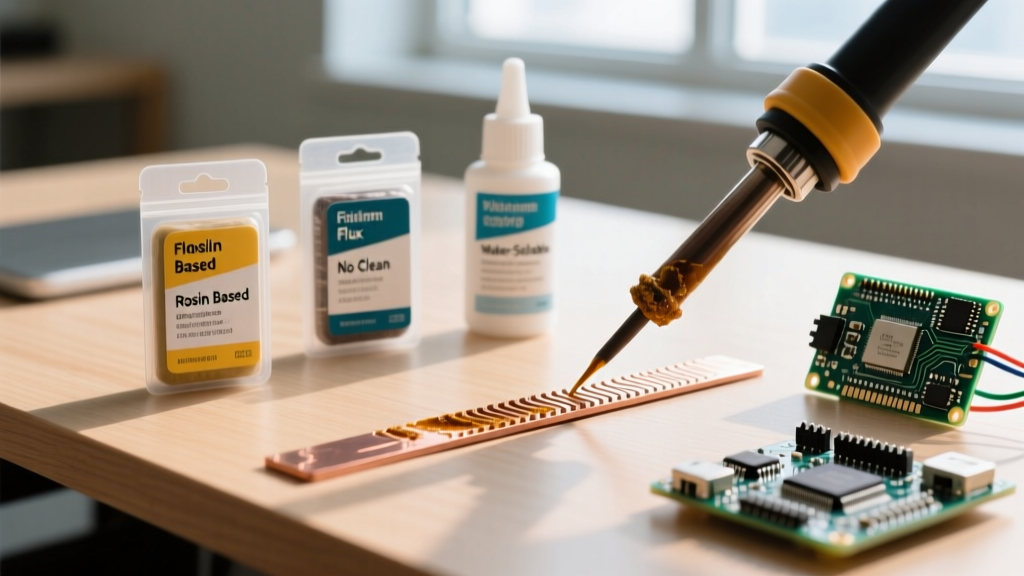
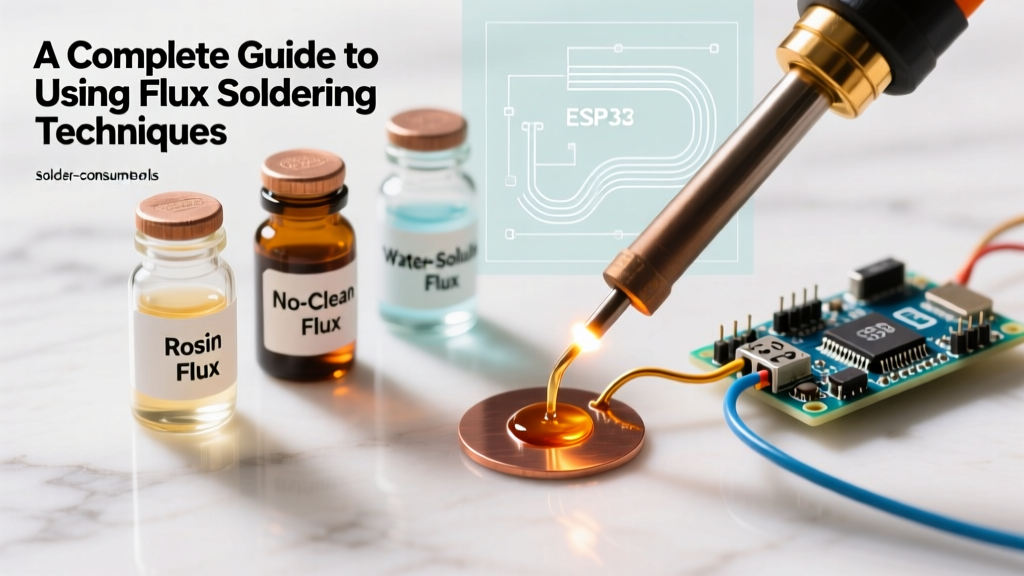
- Rosin (R, RMA, RA): The traditional standard. RMA (Rosin Mildly Activated) is excellent for general electronics but leaves a sticky, amber residue that must be cleaned with isopropyl alcohol (IPA) to prevent long-term dendritic growth.
- No-Clean (NC): Formulated with synthetic resins that leave a minimal, hard, and electrically safe residue. This is the dominant chemistry for modern consumer electronics. Caution: The residue is safe, but it can be difficult to clean if you try to wash it off later.
- Water-Soluble (OA - Organic Acid): Highly aggressive activators that make soldering heavily oxidized boards incredibly easy. Critical Warning: The residue is highly corrosive and must be cleaned with heated deionized (DI) water immediately after soldering. Never use tap water, as the ions will cause rapid corrosion.
Real-World Product Picks & Pricing
- Amtech NC-559-V2-TF (No-Clean Gel): The gold standard for SMT rework and drag-soldering fine-pitch ICs. The thick gel stays exactly where you dispense it. Price: ~$35 for a 10cc syringe.
- MG Chemicals 8341 (No-Clean Pen): Perfect for quick through-hole touch-ups and applying flux to a single pin without making a mess. Price: ~$9 per pen.
Critical Failure Modes: What Happens When You Mix Them Up?
Understanding the boundary between paste and flux is where beginners either succeed or destroy their PCBs. Here are the most common edge cases and failure modes.
Failure Mode 1: Adding Liquid Flux to Solder Paste During Reflow
The Mistake: A beginner applies solder paste to a QFN pad, but feels it needs "more flux" to flow well, so they squirt liquid rosin flux on top before hitting it with a hot air gun.
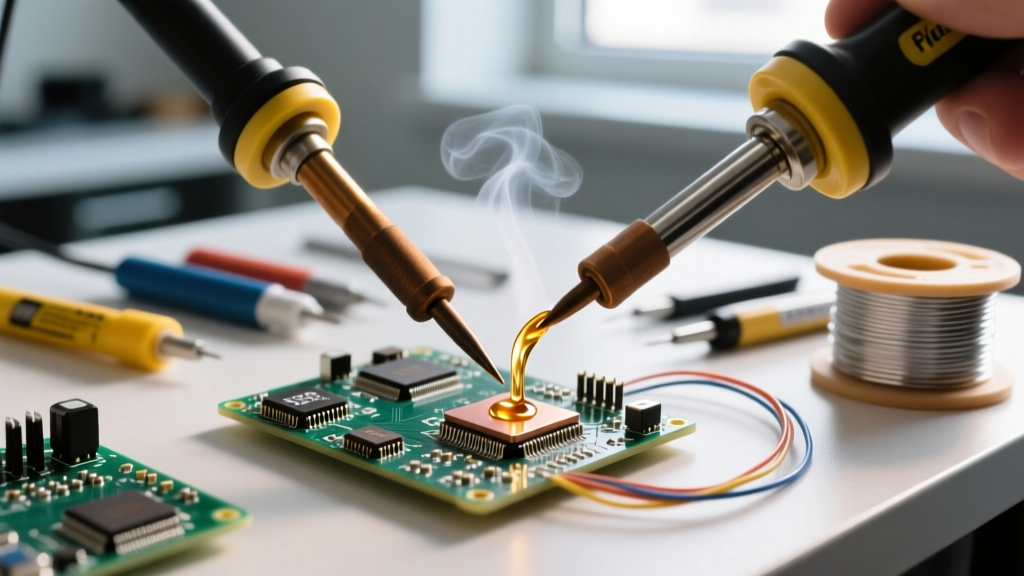
The Result: Catastrophic solder balling and splattering. The solvents in the liquid flux boil violently when heated, physically exploding the microscopic solder spheres out of the paste and across your PCB, creating micro-shorts between fine-pitch pins.
The Fix: Never add liquid flux to fresh solder paste. The paste already contains 10-12% flux by weight. Only add gel flux if you are reworking (removing and replacing) an old component where the original paste's flux has already burned off.
Failure Mode 2: Using Solder Paste for Through-Hole Components
The Mistake: Trying to solder a standard DIP IC or header pin by squirting solder paste into the plated through-hole (PTH) and heating it with an iron.
The Result: The flux vehicle boils and spits, and the metal powder oxidizes before it can flow into the barrel of the hole, resulting in a weak, porous, and cold solder joint.
The Fix: Use standard rosin-core solder wire (e.g., 0.8mm diameter Sn63/Pb37) and a properly tinned soldering iron tip. Apply standalone gel flux to the wire if the through-hole is heavily oxidized.
Failure Mode 3: The "Drying Out" Paste Trap
The Mistake: Leaving a syringe of solder paste open on the workbench over the weekend.
The Result: The volatile solvents in the flux vehicle evaporate. When you attempt to use it on Monday, the paste is dry and crumbly. It will not melt uniformly, leading to "grapeing" (where solder spheres fuse together but fail to wet the pad).
The Fix: Always recap syringes immediately. Store them vertically in a dedicated refrigerator at 0-10°C. Before using refrigerated paste, let it sit at room temperature for at least 2 hours to prevent condensation from forming inside the syringe, which causes violent spattering during reflow.
Actionable Decision Framework: Which Should You Use?
Use this step-by-step logic flow to select the right consumable for your current project:
- Are you using a stencil and a reflow oven/hotplate?
Yes: Use Solder Paste (Type 4 for modern boards, Type 3 for older/larger designs). - Are you hand-soldering standard through-hole components with an iron?
Yes: Use Solder Wire (with internal rosin core). Keep a No-Clean Flux Pen nearby for oxidized pads. - Are you drag-soldering a fine-pitch TQFP or SOIC chip by hand?
Yes: Tin the pads first, apply a generous bead of No-Clean Gel Flux, and use a wide soldering iron tip with minimal solder wire. - Are you replacing a dead BGA or QFN chip (Rework)?
Yes: Clean the old pads with wick, apply No-Clean Gel Flux to the pads, and either place pre-tinned components or use a tiny amount of Solder Paste applied via a precision needle.
Frequently Asked Questions (FAQ)
Can I use plumbing flux for electronics?
Absolutely not. Plumbing flux (like Oatey or Harris) contains highly corrosive zinc chloride or petroleum bases designed for copper pipes. If used on a PCB, it will eat through the copper traces within days and create conductive paths that short-circuit your board. Always use electronics-grade flux compliant with IPC J-STD-004 specifications.
Why does my no-clean flux leave a white, chalky residue?
This happens when no-clean flux is exposed to excessive heat for too long, or when you attempt to clean it with low-purity isopropyl alcohol. The alcohol partially dissolves the resin, and as it evaporates, it leaves a white, powdery film. To avoid this, either leave the clear, hard residue alone (it is safe), or clean it thoroughly with >99% IPA and a stiff brush, followed by a final rinse.
Does solder paste expire?
Yes. Unopened and refrigerated, most pastes have a shelf life of 6 months. Once opened and kept at room temperature, it should be used within 1 to 2 weeks. Using expired paste leads to severe oxidation of the metal powder, resulting in dull, grainy joints and excessive solder balling.
Final Thoughts for the Beginner
Mastering the distinction between soldering paste and flux is a major milestone in your electronics journey. Solder paste is your precision tool for batch SMT manufacturing and stencil work, while standalone flux is your tactical ally for hand soldering, rework, and overcoming oxidation. By selecting the correct chemistry (No-Clean vs. Rosin), matching the powder type to your component pitch, and respecting storage requirements, you will dramatically increase your first-pass yield and build reliable, professional-grade electronics.