
The State of Flux Core Soldering Wire in 2026
As we navigate through 2026, the landscape of electronics assembly continues to be shaped by stricter RoHS 3.0 environmental compliance and the miniaturization of SMD components down to 01005 sizes. For both professional PCB assembly houses and advanced DIY hobbyists, selecting the right flux core soldering wire is no longer just about picking between leaded and lead-free alloys. The internal flux chemistry—its activation temperature, spatter profile, and residue conductivity—dictates the reliability of your electrical connections.
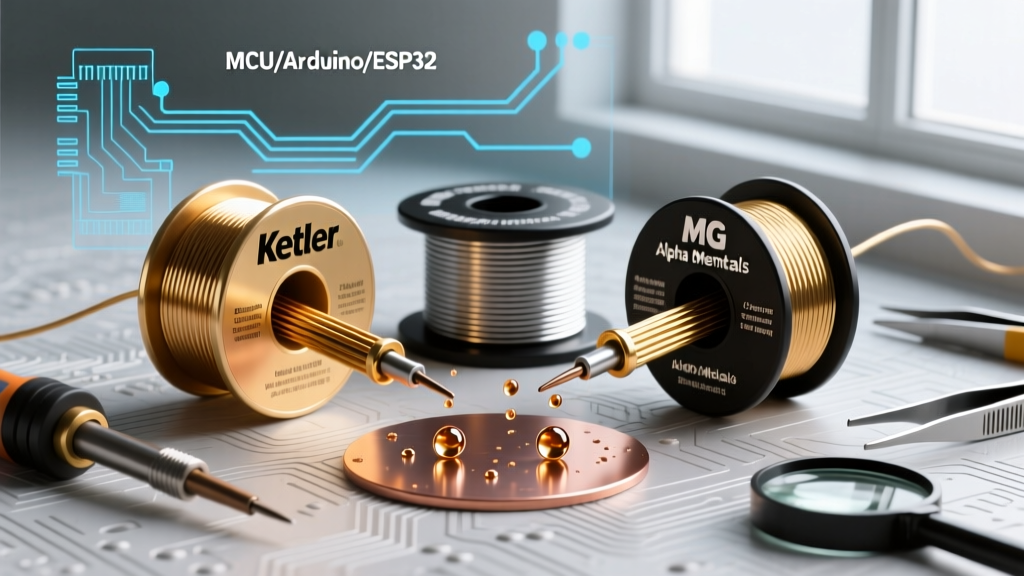
According to the IPC J-STD-001 standard for soldered electrical and electronic assemblies, proper wetting and flux activation are critical to preventing latent field failures. In this comprehensive brand comparison, we pit the three undisputed heavyweights of the soldering consumables market against each other: Kester, Alpha Metals (MacDermid), and MG Chemicals. We will evaluate their flagship flux core soldering wire models based on real-world wetting performance, spatter mitigation, and 2026 market pricing.
The Contenders: Flagship Models Analyzed
1. Kester: The Industry Benchmark
Kester (now part of ITW) has been the default specification for aerospace and high-reliability electronics for decades. In 2026, their two most prominent wires remain the Kester 44 (Rosin Mildly Activated - RMA) and the Kester 245 (No-Clean).
- Kester 44 (Sn63Pb37): Featuring a 2% rosin core, this wire offers unparalleled wetting speeds. The flux activates at roughly 150°C, effectively stripping light oxidation before the solder reaches its 183°C liquidus point. However, it leaves a sticky, amber residue that requires cleaning with 99% isopropyl alcohol (IPA) or a dedicated saponifier to prevent parasitic capacitance in high-frequency RF circuits.
- Kester 245 (SAC305): A premium lead-free, no-clean option. The 2% halide-free core is engineered for low-voiding in BGA rework. At $62 per pound (1lb spool) in 2026, it is an investment, but the zero-spatter formulation protects sensitive optical sensors nearby on the board.
2. Alpha Metals: The Lead-Free Innovator
Alpha Metals (MacDermid Alpha) dominates the high-volume SMT and lead-free hand-soldering space. Their flagship Alpha Omega 340 and Alpha Telecore HF wires are engineered specifically to combat the high thermal profiles required by SAC (Tin-Silver-Copper) alloys.
- Alpha Omega 340 (SAC305): This no-clean flux core soldering wire utilizes a highly active, yet halide-free, rosin ester matrix. It is designed to maintain wetting even on heavily oxidized pads that have undergone multiple reflow cycles. Priced around $68 per pound, it is the most expensive on our list, but its ability to reduce tombstoning in 0402 components justifies the cost for production environments.
- Edge Case Performance: When dragging soldering across large thermal ground planes, Alpha's flux core maintains its activator efficacy longer than competitors, preventing the dreaded 'cold joint' balling effect.
3. MG Chemicals: The Heavy-Duty Workhorse
MG Chemicals caters heavily to the repair, prototyping, and heavy-duty electrical sectors. Their MG 4895 and MG 4885 lines are famous for aggressive flux cores that cut through severe oxidation.
- MG 4895 (Sn60Pb40): With a massive 3.3% RMA rosin core, this wire is a beast for vintage electronics restoration and thick-gauge wire tinning. The high flux volume means it bubbles and spatters significantly more than Kester or Alpha, but it guarantees a shiny, concave fillet even on tarnished brass or nickel. At $41 per pound, it offers the best raw value for hobbyists and repair techs.
- MG 4885 (Water-Soluble): For applications requiring ultra-clean ionic residue profiles (like high-impedance analog audio boards), MG's water-soluble core is exceptional. It must be washed with hot deionized water post-soldering, as the residue is highly corrosive if left unattended.
Head-to-Head Comparison Matrix
| Brand & Model | Alloy | Flux Type & Core % | Spatter Level | Wetting Speed | 2026 Price (1lb Spool) |
|---|---|---|---|---|---|
| Kester 44 | Sn63Pb37 | RMA Rosin (2%) | Low | Excellent | $45 - $48 |
| Kester 245 | SAC305 (Lead-Free) | No-Clean (2%) | Very Low | Very Good | $60 - $65 |
| Alpha Omega 340 | SAC305 (Lead-Free) | No-Clean (2.2%) | Low | Excellent | $65 - $70 |
| MG 4895 | Sn60Pb40 | RMA Rosin (3.3%) | High | Outstanding | $38 - $42 |
| MG 4885 | Sn63Pb37 | Water-Soluble (2%) | Medium | Excellent | $44 - $47 |
Deep Dive: Wire Diameter and Thermal Mass Matching
A common mistake in 2026 is using a single diameter of flux core soldering wire for an entire PCB assembly. The diameter of the wire dictates the volume of flux delivered to the joint per millimeter of feed. Matching the wire gauge to the thermal mass of the component is critical for optimal flux activation.
Diameter Selection Guide
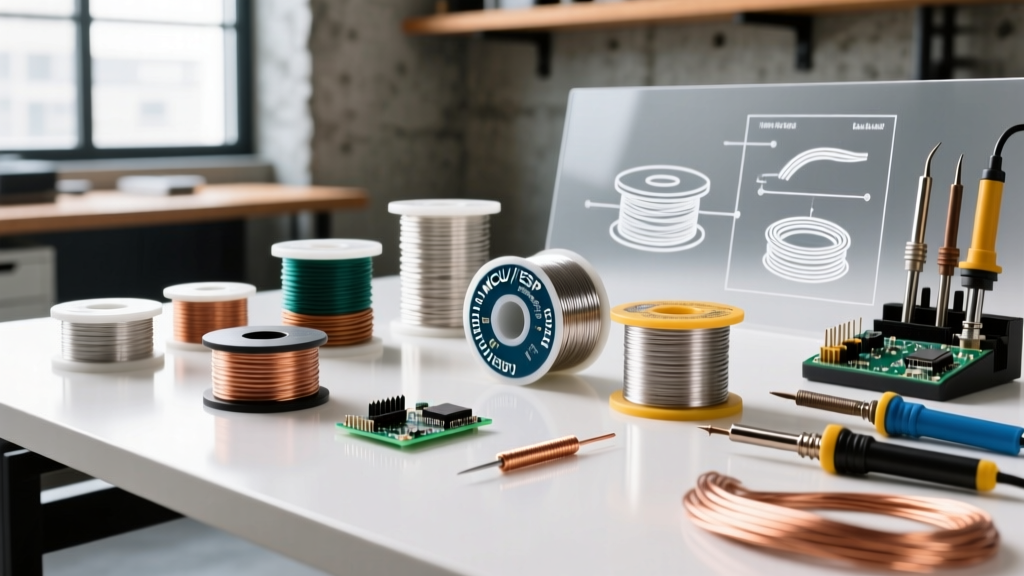
- 0.010" (0.25mm): Strictly for micro-SMD work (0201 and 01005 packages). The tiny flux core prevents bridging on fine-pitch QFN pads.
- 0.020" (0.50mm): The standard for general 0603/0805 SMD components and SOIC ICs. Provides a balanced flux-to-solder ratio for standard 350°C iron tips.
- 0.031" (0.80mm): Ideal for through-hole components (DIP, TO-220) and larger SMD connectors. Delivers enough flux volume to clean oxidized through-hole barrels.
- 0.040" - 0.062" (1.0mm - 1.5mm): Reserved for heavy electrical wiring, XT90 battery connectors, and large ground lugs. Using thinner wire here results in flux exhaustion before the thermal mass reaches liquidus, leading to cold, grainy joints.
Real-World Failure Modes and Edge Cases
Even the best flux core soldering wire will fail if mishandled. Based on field failure analysis and guidelines from the NASA Workmanship Standards for soldering, here are the most common edge cases we see in the lab:
1. Flux Exhaustion on Multi-Layer Ground Planes
When soldering a component leg to a 4-layer PCB with an internal ground plane, the copper acts as a massive heatsink. If you feed the wire too slowly, the flux boils off and loses its chemical activators before the solder can properly alloy with the copper. Solution: Use a high-thermal-capacity chisel tip, pre-heat the board to 100°C, and use a wire with a 3%+ flux core (like MG 4895) or supplement with external liquid tacky flux.
2. The 'Tombstone' Effect in Lead-Free SMD
When using SAC305 lead-free flux core wire for hand-soldering small passives, uneven heating can cause the flux on one pad to activate and pull the component upright (tombstoning). Alpha Omega 340 mitigates this through a proprietary slow-activation solvent matrix that ensures both pads reach the same surface tension simultaneously.
Expert Storage Tip: Flux core soldering wire is not immortal. The solvents inside the rosin core can evaporate through the microscopic pores of the solder metal over time. While Sn63Pb37 rosin wire can last 3+ years if kept in its original nitrogen-flushed mylar bag, water-soluble and aggressive no-clean cores should be used within 12 to 18 months. If your wire spits violently and leaves a dry, chalky residue, the core has desiccated—discard it.
Pricing and Value Analysis
The global tin supply chain fluctuations of 2024 and 2025 have stabilized, but the cost of silver (used in SAC305 lead-free alloys) keeps lead-free flux core wires at a premium. In 2026, you can expect to pay between $38 and $48 for a 1lb spool of high-quality leaded (Sn63 or Sn60) wire. Lead-free SAC305 wires will consistently sit in the $60 to $75 range per pound. Beware of unbranded 'Amazon special' wires priced below $25/lb; independent metallurgical assays frequently reveal inaccurate alloy ratios (e.g., 50/50 instead of 63/37) and highly acidic, corrosive flux cores that will destroy your PCB traces within months.
Final Verdict: Which Brand Should You Choose?
The 'best' flux core soldering wire depends entirely on your specific application and cleaning capabilities:
- For High-Reliability & Aerospace (Leaded): Kester 44 remains the undisputed king. Its predictable wetting and IPC-compliant residue profile make it the safest choice for mission-critical hardware.
- For Modern Lead-Free Production: Alpha Omega 340 is worth the premium. Its low-spatter, high-wetting formula saves time on rework and reduces the risk of thermal damage to sensitive silicon.
- For Repair, Vintage Restoration, & Hobbyists: MG 4895 offers the best bang for your buck. The aggressive 3.3% flux core effortlessly handles the tarnished pads and oxidized wires commonly found in repair scenarios.
Frequently Asked Questions (FAQ)
Can I use lead-free flux core wire on my standard 40W soldering iron?
No. SAC305 lead-free alloys require tip temperatures of 350°C to 380°C to properly activate the flux and achieve a liquidus state. A standard 40W iron will struggle to recover heat, leading to prolonged dwell times, burned flux, and lifted PCB pads. You need a temperature-controlled station with at least 60W-80W of thermal recovery power.
Why does my flux core wire spit and splatter everywhere?
Spattering occurs when the flux core boils too rapidly. This is usually caused by an iron temperature set too high (above 400°C) or by using a wire with a high solvent content (like water-soluble cores) on a massive thermal pad. Lower your tip temperature by 20°C and ensure your tip is properly tinned to transfer heat efficiently without localized overheating.
Do I need to clean 'No-Clean' flux residue?
Technically, no-clean flux residues are designed to be benign and non-conductive after cooling. However, according to technical resources from Indium Corporation, if the flux is not heated to its full activation temperature, unreacted activators can remain trapped in the residue, potentially causing electrochemical migration (dendrite growth) in high-humidity environments. For high-impedance or high-voltage circuits, always clean no-clean residue with an IPA brush.