
Understanding Soldering Paste ZJ 18: Composition and Use Cases
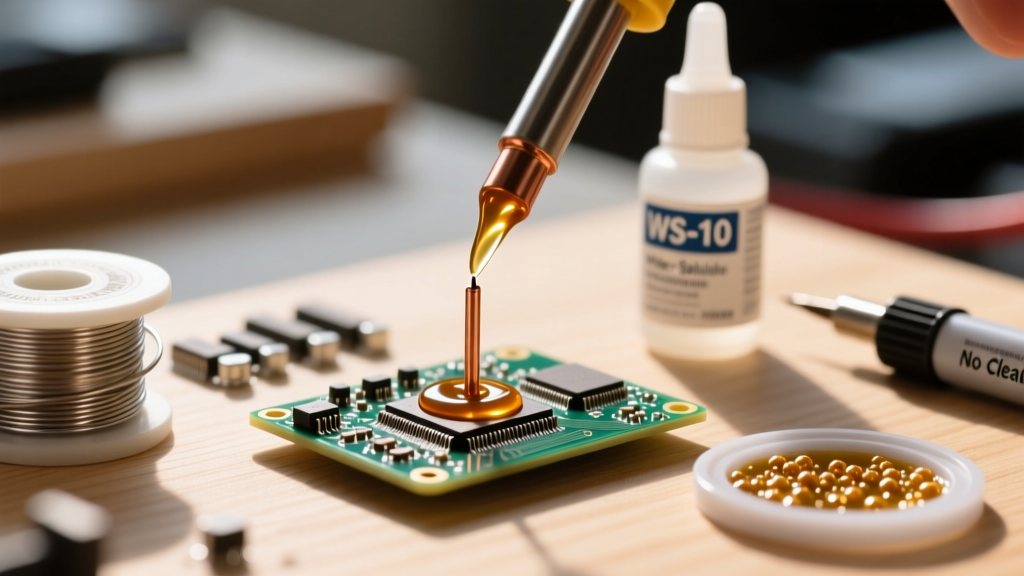
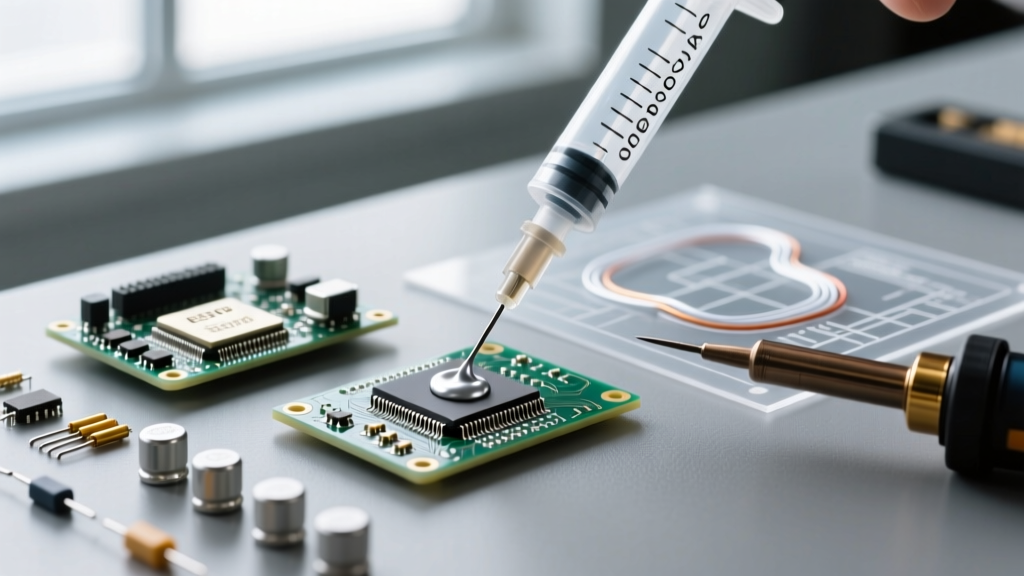
Soldering paste ZJ 18 has become a staple in the micro-soldering, BGA (Ball Grid Array) rework, and PCB repair communities. Known for its high-tack viscosity, excellent wetting characteristics, and moderate activation temperature, ZJ 18 is primarily formulated for precision surface-mount device (SMD) rework and drag-soldering applications. However, like all advanced chemical consumables, it demands strict adherence to safety protocols and precise thermal management to ensure both operator health and joint reliability.
Unlike basic rosin flux pens, ZJ 18 is a complex suspension of solder alloy powder (typically Sn63/Pb37 or lead-free SAC305, depending on the specific variant purchased) within a rosin-based, mildly activated (RMA) flux matrix. Understanding the chemical profile of this matrix is the first step in establishing a safe and effective workspace.
Chemical Profile and Hazard Identification
The flux vehicle in ZJ 18 relies on colophony (natural rosin) as the primary film-forming agent, which provides the necessary tackiness to hold fine-pitch components in place prior to reflow. To lower the surface tension and promote wetting, manufacturers incorporate mild organic acid activators, such as adipic or glutaric acid. The solvent base usually consists of glycol ethers, such as dipropylene glycol methyl ether (DPM), which dictate the paste’s rheology and drying profile.
Primary Health Hazards
- Respiratory Sensitization: When heated above 150°C, colophony vaporizes and oxidizes, creating a complex aerosol of aliphatic aldehydes and acidic compounds. According to the Health and Safety Executive (HSE) guidelines on rosin fumes, repeated inhalation of these fumes is a leading cause of occupational asthma and chronic respiratory sensitization.
- Dermal Absorption and Dermatitis: Glycol ether solvents can strip natural oils from the skin, leading to contact dermatitis. Prolonged, unprotected skin contact allows these solvents to penetrate the epidermal barrier, potentially causing systemic toxicity.
- Ocular Irritation: Flux spatter during the reflow phase can eject microscopic droplets of acidic activators, posing a severe irritation risk to unprotected eyes.
For a deeper clinical understanding of these risks, technicians should review the NCBI occupational health literature on colophony-induced asthma, which details the irreversible nature of rosin-sensitized airways.
Mandatory PPE and Fume Extraction Engineering
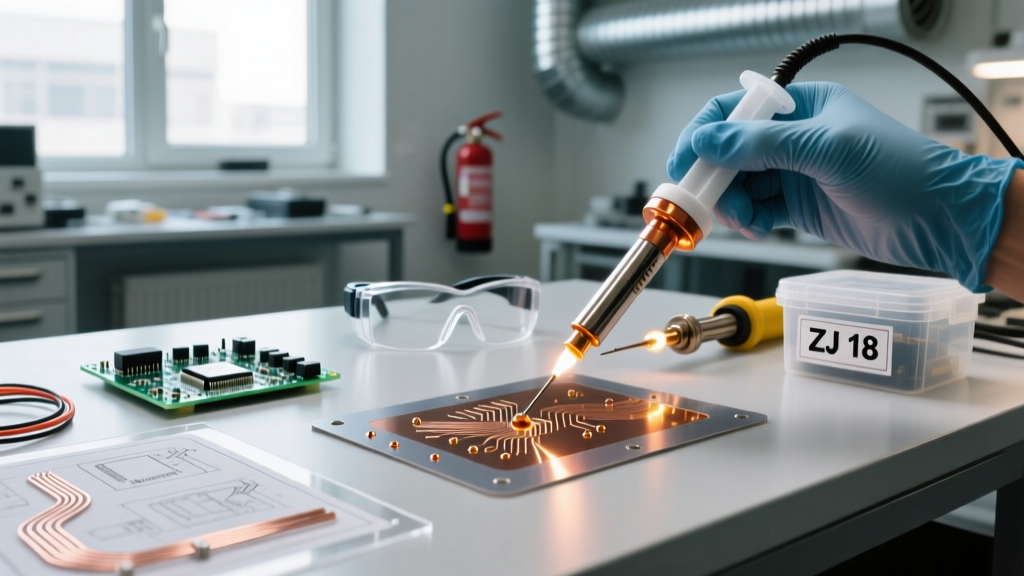
Relying on an open window or a basic desk fan is a critical safety failure when working with ZJ 18 paste. Proper engineering controls and Personal Protective Equipment (PPE) are non-negotiable.
The Fume Extraction Matrix
| Control Measure | Specification Requirement | Purpose |
|---|---|---|
| Source Capture Hood | Positioned ≤ 15 cm from the solder joint | Captures thermal plume before it enters the operator’s breathing zone. |
| Airflow Velocity | Minimum 100 CFM (Cubic Feet per Minute) | Overcomes the upward thermal draft generated by the rework station. |
| Particulate Filtration | True HEPA (H13 or H14 grade) | Traps microscopic flux aerosols and metallic particulates. |
| Gas Phase Filtration | Activated Carbon impregnated with Potassium Permanganate | Neutralizes VOCs and acidic aldehydes that pass through HEPA filters. |
PPE Selection
- Gloves: Use 4-mil to 6-mil Nitrile gloves. Latex degrades rapidly when exposed to glycol ethers and offers poor chemical resistance.
- Eyewear: ANSI Z87.1-rated safety glasses with side shields to block lateral flux spatter.
- Respiratory Protection: If source extraction is unavailable, a half-mask respirator equipped with P100 particulate filters and organic vapor (OV) cartridges is required.
Thermal Staging: Preventing Spatter and Outgassing
One of the most common failure modes when using ZJ 18 is “spatter”—the violent ejection of molten solder and acidic flux. This occurs when the solvent base boils rapidly, and the resulting vapor pressure exceeds the tensile strength of the molten solder meniscus. To prevent this, technicians must employ a staged thermal profile.
Expert Insight: Never apply a 350°C iron directly to a fresh bead of ZJ 18 paste. The instantaneous vaporization of the glycol ethers will cause micro-explosions, scattering conductive solder spheres across the PCB and risking catastrophic short circuits.
Recommended Thermal Profile for ZJ 18 Rework
- Pre-Heat / Solvent Drive-Off (80°C - 110°C for 60-90 seconds): Use a hot air rework station or an IR pre-heater to gently elevate the PCB temperature. This allows the volatile solvents to evaporate gradually without boiling the flux matrix.
- Activation Soak (150°C - 170°C for 30 seconds): The rosin softens, and the mild organic acids activate, breaking down copper oxides on the pads and component leads.
- Reflow Phase (217°C+ for Lead-Free / 183°C+ for SnPb): Apply the primary heat source (soldering iron or targeted hot air) to achieve the liquidus temperature. The flux now acts as a protective blanket, preventing re-oxidation while the solder wets the metallization.
Storage, Shelf Life, and Degradation Signs
ZJ 18 paste is highly sensitive to environmental conditions. Improper storage alters its viscosity, leading to poor dispensing and compromised solder joints.
- Temperature Control: Store between 10°C and 25°C (50°F - 77°F). Do not freeze the paste, as extreme cold can cause the flux vehicle and alloy powder to separate irreversibly.
- Shelf Life: Unopened syringes or jars typically last 12 to 24 months from the date of manufacture. Once opened, aim to consume the paste within 6 months.
- Signs of Degradation: If the paste exhibits severe solvent bleed (a clear liquid pooling at the top of the jar), excessive stringing when dispensed, or a gritty texture indicating advanced oxidation of the solder powder, it must be discarded.
Post-Solder Cleaning and IPC Compliance
While some variants of ZJ 18 are marketed as “no-clean,” leaving flux residues on high-impedance or high-frequency circuits can lead to electrochemical migration (dendrite growth) and parasitic capacitance. For high-reliability repairs, cleaning is mandatory.
Adhering to the IPC J-STD-004 standard for soldering fluxes, residues from rosin-based mildly activated pastes should be removed using a specialized saponifier or high-purity solvent.
Cleaning Protocol
- Allow the PCB to cool to room temperature. Cleaning a hot board will cause the flux to cross-link and harden, making removal nearly impossible.
- Apply >99% Isopropyl Alcohol (IPA) or a dedicated aerosol flux remover (e.g., MG Chemicals Super Wash or Kester cleaners) to the joint.
- Agitate gently using a natural hog-bristle brush. Avoid synthetic brushes, which can generate static charges or melt if the board retains residual heat.
- Wipe away the dissolved residue with a lint-free cleanroom swab or cellulose wipe. Do not allow the solvent to air-dry, as it will simply redeposit the dissolved flux activators back onto the board.
Troubleshooting Common ZJ 18 Failure Modes
Charred or Blackened Flux Residue
Cause: Exceeding 260°C for longer than 45 seconds, or using an oversized iron tip that transfers excessive thermal mass.
Solution: Reduce iron temperature to 320°C-350°C, use a micro-pencil tip for localized heat transfer, and rely on a high-quality liquid flux to supplement the paste if extended dwell times are unavoidable.
Graping and Head-in-Pillow Defects
Cause: Incomplete coalescence of the solder powder within the paste, often due to expired paste (oxidized powder) or insufficient peak reflow temperature.
Solution: Verify the liquidus temperature of the specific ZJ 18 alloy variant. Ensure the thermal soak phase is long enough to activate the flux fully before the final reflow spike.
Tombstoning on 0402/0201 Components
Cause: Asymmetric flux application leading to uneven wetting forces during reflow. One pad wets faster, pulling the component upright.
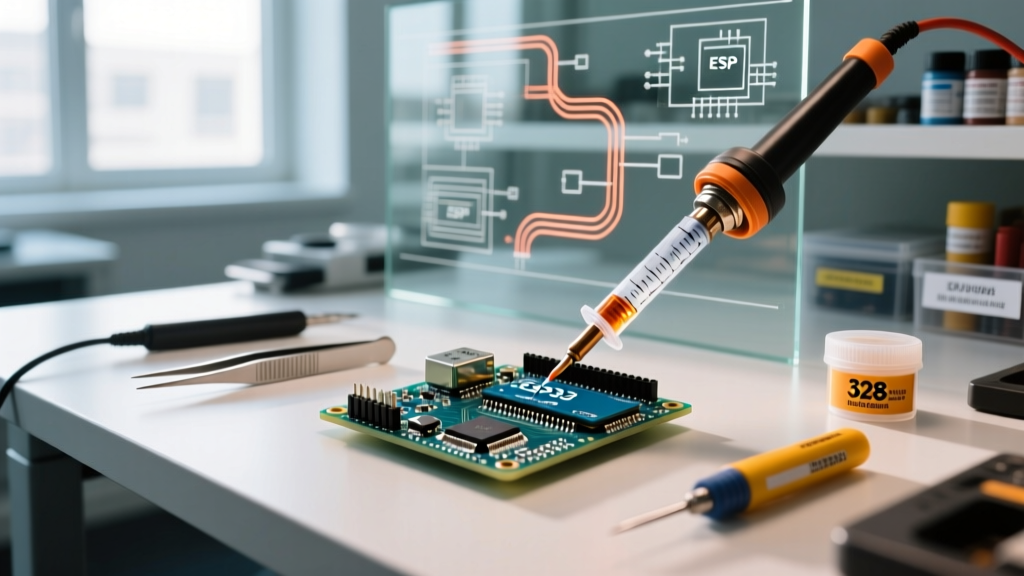
Solution: Apply ZJ 18 symmetrically. When using a syringe, ensure the pneumatic dispenser is calibrated to 15-25 PSI with a consistent vacuum suck-back setting to prevent uneven droplet deposition.
By respecting the chemical properties of soldering paste ZJ 18 and implementing rigorous safety and thermal staging protocols, technicians can achieve flawless, high-reliability micro-soldered joints while maintaining a safe, compliant workspace.