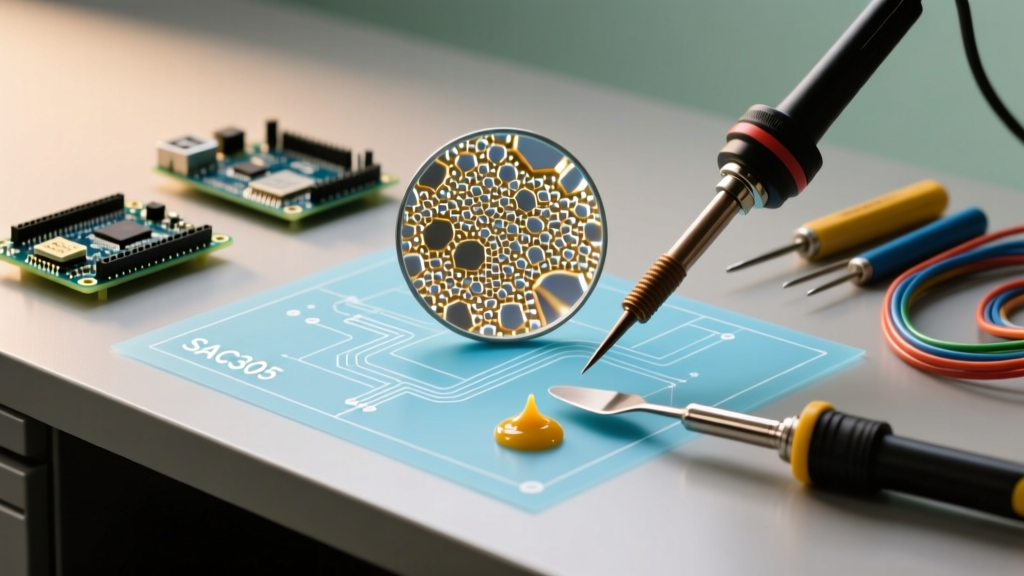

The Chemical Reality: Why Solder Won't Stick Without Flux
If you have ever tried to melt solder onto a copper pad only to watch it ball up and roll away, you have experienced oxidation. When copper is heated to typical soldering temperatures (300°C to 380°C), it instantly reacts with oxygen in the air to form copper oxide (CuO and Cu2O). Solder physically cannot wet or bond to copper oxide. This is where flux for soldering becomes the most critical consumable in your toolkit.
Flux is a chemical cleaning agent that activates at high temperatures, dissolving metal oxides and preventing further oxidation while the solder cools. According to the IPC (Association Connecting Electronics Industries), the proper selection and application of flux are just as important as the solder alloy itself. In this 2026 beginner guide, we will dissect the chemistry, classifications, and practical applications of modern fluxes to ensure you achieve perfect, shiny, and reliable solder joints every time.
Decoding Flux Classifications (IPC J-STD-004B)
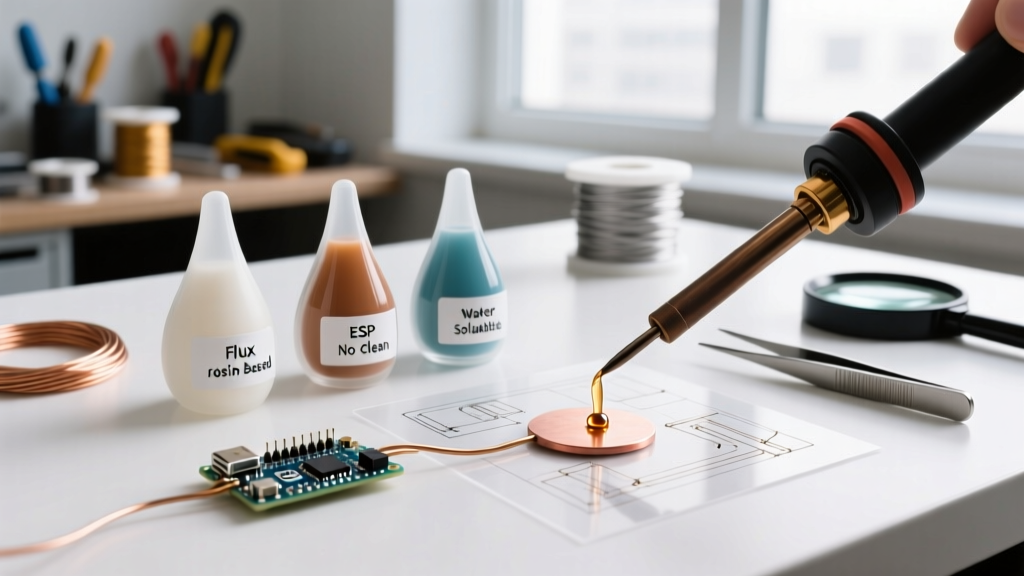
The electronics industry categorizes flux based on the IPC J-STD-004B standard, which evaluates fluxes by their base composition, activity level (ability to remove oxides), and reliability (corrosiveness of the residue). Understanding these three main categories is essential for matching the flux to your specific project, whether you are building a simple Arduino sensor or repairing a multi-layer motherboard.
The Big Three: Rosin, No-Clean, and Water-Soluble Compared
| Flux Type | Base Chemistry | Activity Level | Cleanup Required? | Best Application | Avg Price (30g) |
|---|---|---|---|---|---|
| Rosin (R, RMA, RA) | Abietic Acid (Pine Sap) | Low to High | Yes (IPA) | General DIY, Through-Hole | $12 - $18 |
| No-Clean (NC) | Synthetic Resins | Low to Medium | No (Optional) | SMD, BGA, Fine-Pitch | $18 - $28 |
| Water-Soluble (OA) | Organic/Dicarboxylic Acids | Very High | Yes (DI Water) | Heavily Oxidized Boards | $15 - $22 |
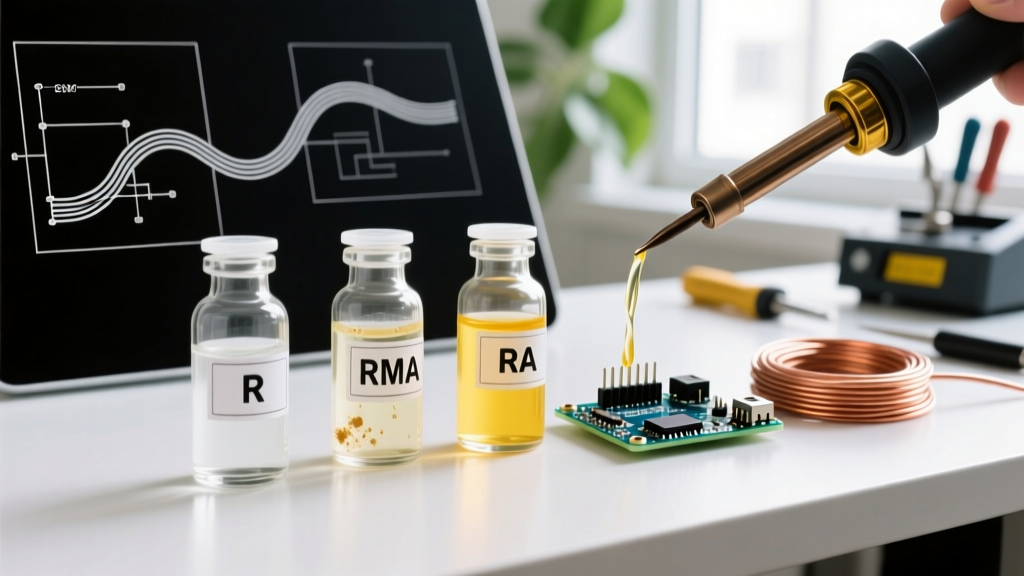
1. Rosin Flux (R, RMA, RA)
Rosin flux is derived from purified pine tree sap (abietic acid). It is the oldest and most traditional flux type.
- R (Rosin): Barely active, used for pristine, highly solderable surfaces.
- RMA (Rosin Mildly Activated): The sweet spot for most hobbyists. Contains mild activators to clean light oxidation.
- RA (Rosin Activated): Contains halide activators (chlorides/bromides) for heavy oxidation, but leaves highly corrosive residue that must be cleaned.
Expert Pick: Kester 186 or Kester 245. These are industry staples. Expect to pay around $15 for a 30g syringe of liquid or tacky rosin.
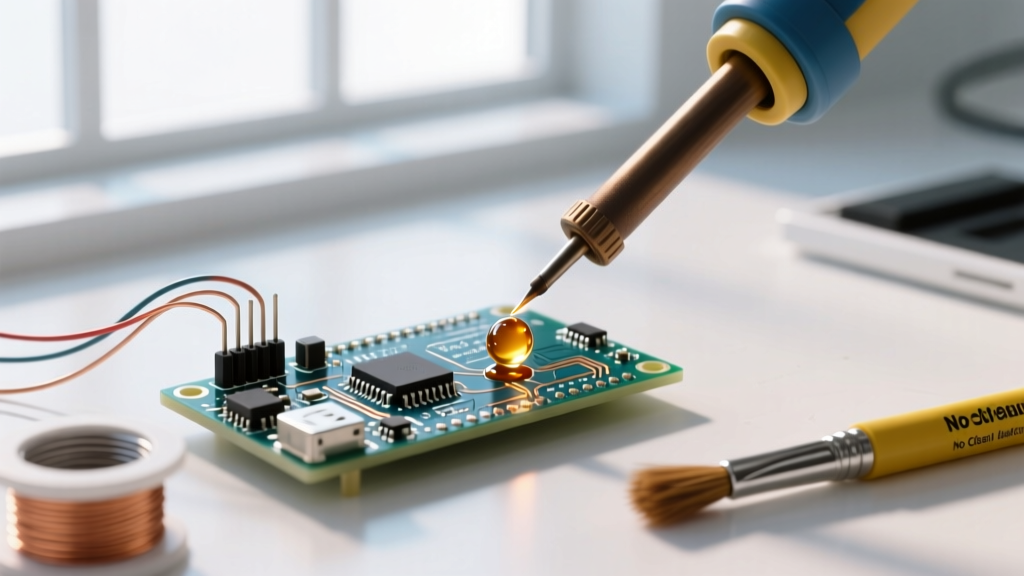
2. No-Clean Flux
As the name implies, no-clean flux is designed to leave a benign, clear residue that does not conduct electricity or cause corrosion. Modern no-clean fluxes use synthetic resins and weak organic acids that deactivate entirely once the soldering iron is removed.
Warning: If you attempt to clean no-clean flux with standard 90% Isopropyl Alcohol (IPA), you will likely just smear the synthetic resin across the PCB, creating a sticky, white, cloudy mess. If you must clean it for aesthetic reasons, use a dedicated no-clean flux remover or 99.9% IPA with a stiff hog-hair brush.
Expert Pick: Amtech NC-559-V2-TF. This is the gold standard for BGA rework and fine-pitch SMD soldering in 2026. A 30cc syringe costs roughly $24.
3. Water-Soluble (Organic Acid) Flux
Water-soluble fluxes are highly aggressive. They utilize dicarboxylic acids to strip away severe oxidation, making them ideal for restoring old, tarnished vintage electronics or soldering to difficult metals like nickel. However, the residue is highly hygroscopic (absorbs moisture from the air) and conductive. According to reliability studies by the NASA Electronic Parts and Packaging (NEPP) Program, failure to clean water-soluble flux residues will inevitably lead to dendritic growth and catastrophic short circuits in high-impedance circuits.
Expert Pick: MG Chemicals 8341 or Indium 5.2J. Requires thorough cleaning with warm (60°C) deionized (DI) water, not just tap water, to prevent ionic contamination.
Form Factors: Syringes, Pens, and Liquids
Choosing the right delivery method is just as important as the chemistry:
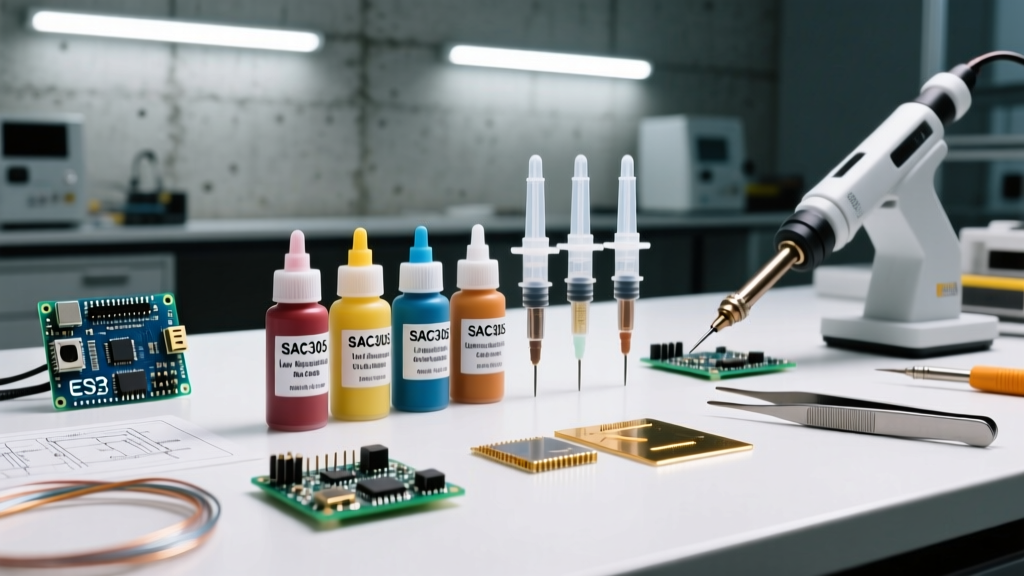
- Tacky Flux Syringes (Paste): Thick, gel-like consistency. Perfect for SMD drag soldering and BGA reballing. It stays exactly where you dispense it. Use a 21-gauge blunt needle for precise application.
- Flux Pens: Liquid flux housed in a marker-like applicator. Excellent for quickly coating a row of through-hole pins before using a soldering iron. Messy for fine-pitch SMD work.
- Liquid Flux (Pump/Squeeze Bottle): Highly volatile, alcohol-based liquid. Used primarily in wave soldering or for flooding a board prior to hot-air rework. Evaporates quickly, so timing is critical.
The Cleanup Protocol: Avoiding Dendrites and Smears
Proper cleanup separates amateur work from professional, high-reliability assemblies. Here is the exact protocol for post-soldering cleanup:
- Cool Down: Allow the PCB to cool to room temperature. Cleaning a hot board causes thermal shock to ceramic capacitors and rapid evaporation of your solvent.
- Solvent Selection: For Rosin, use 99%+ Isopropyl Alcohol. For Water-Soluble, use heated Deionized Water with a saponifier (like Kyzen Aquanox). Never use acetone on a PCB; it will melt plastic connectors and strip silkscreen.
- Agitation: Apply the solvent and scrub gently with an ESD-safe toothbrush or hog-hair brush. The mechanical action is required to lift the dissolved flux out from under tight-pitch IC pins.
- Evaporation/Drying: Blow off the dirty solvent with compressed air or an ESD-safe ionizing blower before it can evaporate and redeposit the flux solids onto the board.
Common Beginner Failure Modes
Even with the right flux for soldering, improper technique leads to defects. Watch out for these edge cases:
- Tombstoning: When soldering 0402 or 0603 SMD components, uneven flux application can cause one pad to outgas and wet faster than the other, literally standing the component up on its end like a tombstone. Fix: Apply a perfectly symmetrical, micro-dotted amount of tacky flux to both pads.
- Solder Spattering (Solder Balls): If your liquid flux contains trapped moisture, or if you apply too much heat too quickly, the flux will boil violently, exploding microscopic spheres of molten solder across your board. Fix: Pre-heat the board to 100°C to gently evaporate flux solvents before applying the main soldering heat.
- Burnt Flux (Black Residue): Leaving a 400°C iron on a flux puddle for more than 3-4 seconds carbonizes the activators. Burnt flux is highly acidic and will eat through copper traces over time. Fix: If the flux turns dark brown or black, wipe it away with a brass sponge, apply fresh flux, and try again.
Final Thoughts for the Workbench
As surface-mount components continue to shrink in 2026, the margin for error with flux application decreases. Invest in high-quality, name-brand fluxes from suppliers like Indium Corporation, Kester, or Amtech. Avoid the mystery-brand, unbranded syringes found on ultra-cheap marketplaces; they often contain unregulated halide levels that will destroy your PCBs via galvanic corrosion within months. Treat your flux with the same respect as your soldering iron, and your joints will be mechanically robust and electrically flawless.