
The Critical Role of Liquid Soldering Flux for Electronics
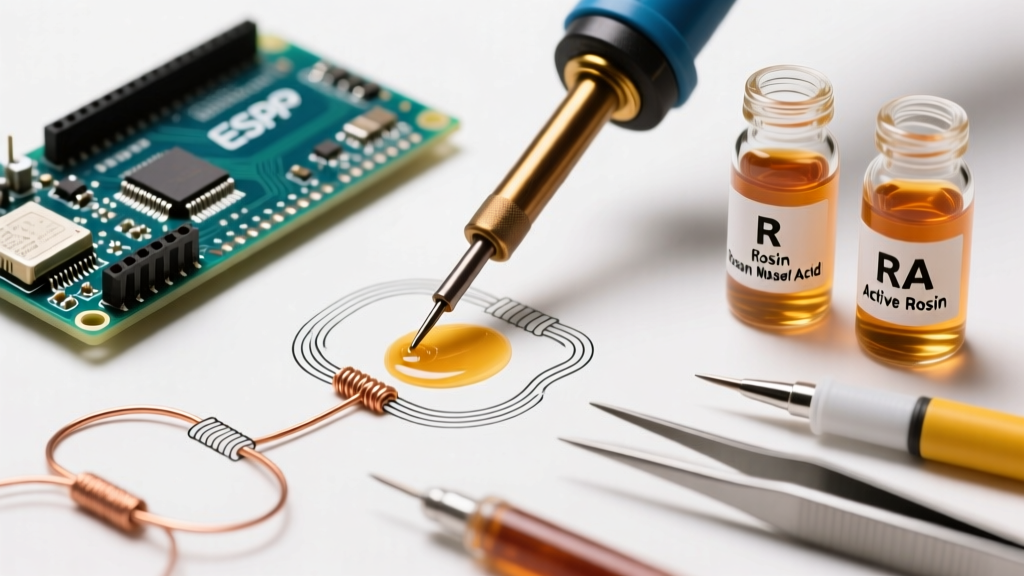
When executing high-density SMD rework, drag-soldering fine-pitch QFPs, or reviving heavily oxidized through-hole pads, standard rosin-core solder wire simply does not provide enough chemical activation. This is where a dedicated liquid soldering flux for electronics becomes indispensable. Unlike viscous gels or tacky pastes, true liquid fluxes wick instantly into microscopic vias and under bottom-terminated components (BTCs), ensuring uniform wetting and eliminating cold joints.
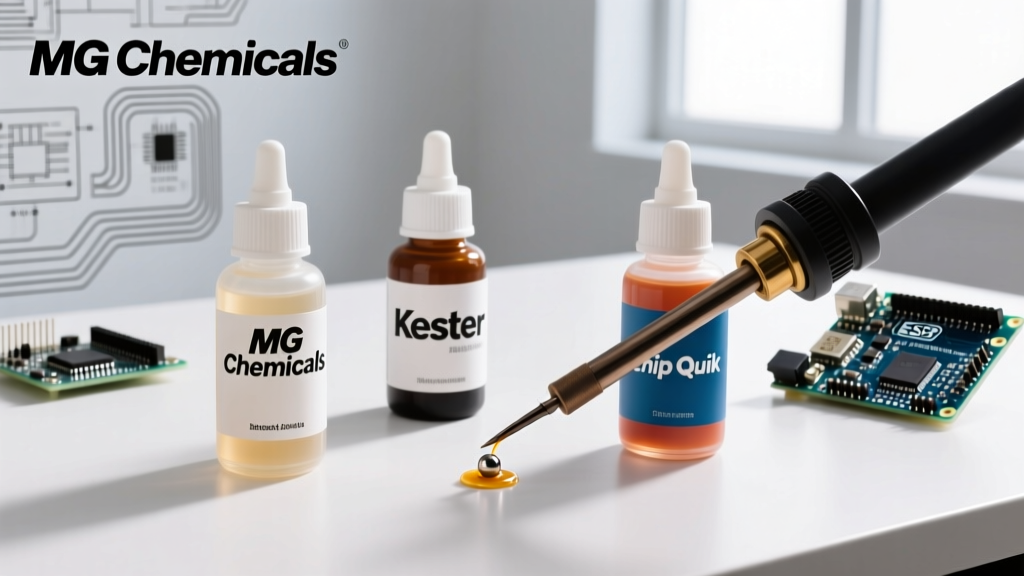
As of 2026, the shift toward lead-free assemblies and ultra-miniature 0201 and 01005 passive components demands fluxes with precise activation temperatures and controlled volatility. Choosing the wrong formulation can lead to catastrophic field failures, including electrochemical migration (dendritic growth) and parasitic capacitance from trapped residues. In this comprehensive brand comparison, we evaluate the top three liquid flux formulations dominating the professional electronics workbench: MG Chemicals 8341, Kester 186, and Chip Quik NC191.
2026 Liquid Flux Comparison Matrix
Before diving into the metallurgical and chemical nuances, here is a high-level comparison of the three flagship liquid fluxes based on current 2026 market specifications and IPC J-STD-004B classifications.
| Brand & Model | Flux Type | IPC Classification | Activation Temp | Viscosity (cP) | Cleaning Required? | Est. Price (2026) |
|---|---|---|---|---|---|---|
| MG Chemicals 8341 | No-Clean (Synthetic) | ROL0 | 150°C - 180°C | ~15 cP | No (Minimal Residue) | $18 / 100ml |
| Kester 186 | RMA (Rosin Mildly Activated) | ROL1 | 120°C - 140°C | ~35 cP | Yes (Mandatory) | $14 / 4oz |
| Chip Quik NC191 | No-Clean (Halide-Free) | REL0 | 140°C - 160°C | ~10 cP | No | $22 / 10ml Pen |
Deep Dive: MG Chemicals 8341 (No-Clean Liquid)
Formulation and Performance
MG Chemicals 8341 is a synthetically derived, halide-free no-clean liquid flux. It is engineered specifically for automated selective soldering and manual rework where post-solder cleaning is economically unfeasible. The solvent base utilizes a proprietary blend of glycol ethers, which provides a slower evaporation rate than standard isopropyl alcohol (IPA) bases. This is critical when drag-soldering 0.5mm pitch TQFPs, as the flux remains active through the entire 45-second thermal cycle without drying out.
Edge Cases and Failure Modes
While 8341 leaves a nearly invisible, non-conductive residue, it is not immune to thermal abuse. If your soldering iron is set above 380°C (common for stubborn lead-free ground planes), the flux will undergo rapid thermal decomposition, leaving a stubborn, dark brown char that is difficult to remove and can interfere with optical automated inspection (AOI) systems. Furthermore, applying 8341 directly to a hot iron tip causes violent solvent boiling, resulting in microscopic flux splatter across adjacent high-impedance analog traces.
Expert Technique: Always apply liquid flux to the cold or warm (under 100°C) PCB pads. Allow 10-15 seconds for the heavy solvents to off-gas before introducing a 320°C iron tip. This prevents the "popcorn effect" and ensures smooth capillary action.
Deep Dive: Kester 186 (RMA Rosin Liquid)
The Aerospace and Automotive Standard
Kester 186 is the undisputed heavyweight champion of Rosin Mildly Activated (RMA) liquid fluxes. Built on a natural pine rosin base with mild organic acid activators, it provides aggressive oxide reduction that synthetic no-clean fluxes simply cannot match. When dealing with heavily tarnished legacy boards, ENIG pads suffering from "black pad" syndrome, or pure tin finishes prone to oxidation, Kester 186 restores wettability almost instantly. It is heavily referenced in legacy NASA workmanship standards for high-reliability through-hole and wire-to-board terminations.
The Cleaning Imperative
The trade-off for Kester 186’s aggressive wetting is its residue. The amber, tacky rosin left behind is highly hygroscopic. If left uncleaned in environments with fluctuating humidity and DC bias voltages, the residue will absorb moisture and ionize, leading to dendritic short circuits. According to IPC J-STD-004B guidelines, RMA fluxes classified as ROL1 mandate rigorous post-solder cleaning. A simple wipe with 99% IPA is insufficient; it merely smears the rosin into the vias. Proper removal requires a dedicated saponifier or an ultrasonic bath with a specialized flux remover (like MG Chemicals 413A) followed by a high-pressure DI water rinse and a 120°C bake-out.
Deep Dive: Chip Quik NC191 (Precision No-Clean)
Targeted Application for Micro-SMD
Chip Quik NC191 bridges the gap between bulk liquid fluxes and precision application. Available in a 10ml needle-dispenser pen, it is the go-to choice for 2026 micro-soldering tasks involving 0201 passives and BGA reballing. Its ultra-low viscosity (approximately 10 cP) allows it to flow effortlessly beneath tight-clearance components via capillary action without requiring mechanical lifting of the IC.
Limitations in High-Volume Rework
The primary drawback of NC191 is its rapid solvent flash-off. Because it is formulated for pinpoint accuracy rather than broad coverage, the active window is relatively short (roughly 20-30 seconds at room temperature). If you are attempting to drag-solder a 144-pin LQFP, NC191 will dry out before you reach pin 80, resulting in bridging on the latter half of the IC. It is strictly a localized rework flux, not a bulk assembly flux.
Thermal Dynamics and Flux Activation Profiles
Understanding the thermal dynamics of liquid fluxes is what separates hobbyists from professional rework technicians. Liquid fluxes do not merely "clean" the pad; they undergo a precise chemical phase change.
- Phase 1: Solvent Evaporation (50°C - 120°C): The carrier fluid boils off. If heat is applied too rapidly, the expanding vapor traps the activators, preventing them from contacting the metal oxide layer.
- Phase 2: Activator Activation (120°C - 180°C): The mild organic acids or halides melt and react with the copper oxide, converting it into a metallic salt that dissolves into the molten solder.
- Phase 3: Passivation (200°C+): The rosin or synthetic resin melts, covering the freshly stripped metal to prevent re-oxidation while the solder alloy undergoes intermetallic compound (IMC) formation.
When using lead-free SAC305 alloys (melting point 217°C), the liquid flux must sustain its passivation layer up to 250°C. MG Chemicals 8341 and Kester 186 both handle this thermal load, but Kester 186 will darken significantly, requiring heavier post-process cleaning.
Final Verdict: Selecting the Right Liquid Flux
There is no universal "best" liquid soldering flux for electronics; the optimal choice is dictated entirely by your reliability requirements and cleaning capabilities.
Choose MG Chemicals 8341 If:
You are performing high-volume consumer electronics rework, lack the infrastructure for chemical cleaning, and need a reliable no-clean formulation that won't cause parasitic leakage on high-impedance circuits.
Choose Kester 186 If:
You are restoring vintage hardware, soldering to highly oxidized RF shielding cans, or building aerospace/medical devices where IPC Class 3 reliability is mandatory, and you possess the ultrasonic cleaning equipment necessary to remove RMA residues safely.
Choose Chip Quik NC191 If:
Your daily workflow involves microscopic 0201 component replacement, smartphone logic board rework, and you require pinpoint, localized flux application without flooding adjacent micro-phonics or MEMS sensors.
By matching the flux chemistry to your specific thermal profile and cleaning protocols, you ensure robust intermetallic bonds and long-term field reliability in your electronic assemblies.