
The Core Chemistry: What Is Flux For When Soldering?
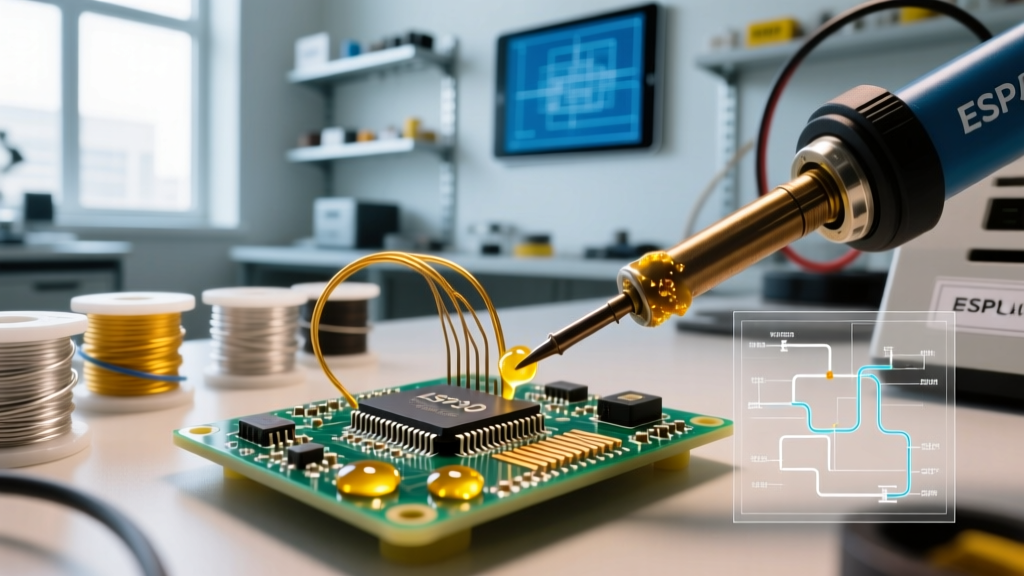
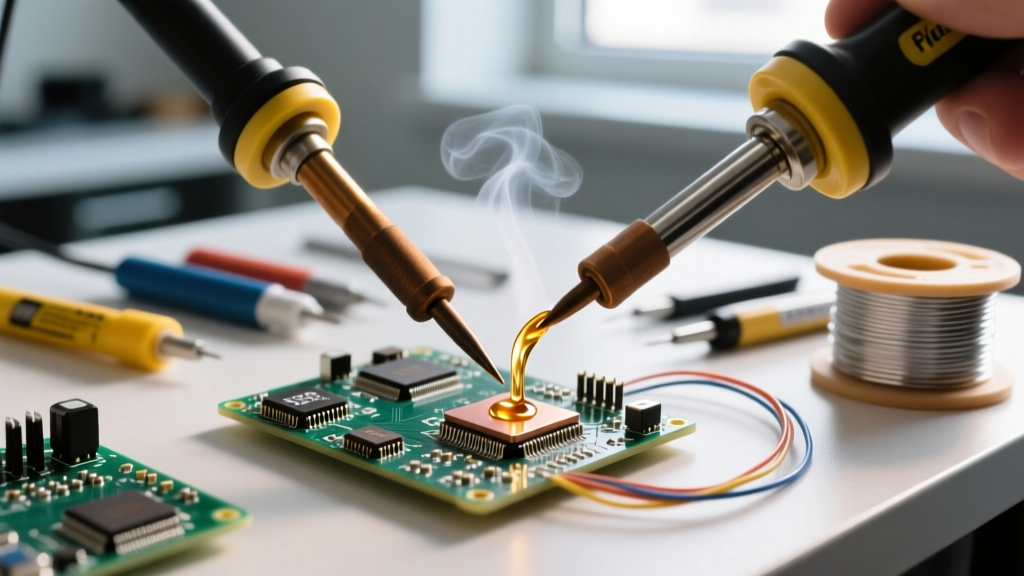
When electronics engineers and hobbyists ask, what is flux for when soldering, the simplest answer is that it is a chemical cleaning agent. However, from a metallurgical perspective, flux is a vital reducing agent designed to strip metallic oxides from both the component lead and the PCB pad, while simultaneously lowering the surface tension of the molten solder to promote capillary action and wetting.
At room temperature, copper forms a passive oxidation layer (CuO and Cu2O). Molten solder will not bond to copper oxide; it will simply ball up and roll off, resulting in a catastrophic cold joint. Flux contains chemical activators—typically weak organic acids like adipic, glutaric, or succinic acid—that become thermally active just below the solder's melting point. These activators react with the metal oxides to form metallic salts, exposing pristine, bare metal for the solder alloy to form an intermetallic compound (IMC) layer.
Choosing the correct flux is not just about achieving a shiny joint; it is a strict compatibility exercise. Using the wrong flux chemistry for your specific metal substrate, solder alloy, or environmental operating conditions can lead to latent failures, including galvanic corrosion, electromigration, and high-frequency signal degradation.
IPC J-STD-004B: The Universal Compatibility Language
To understand flux compatibility, you must understand the IPC J-STD-004B standard, which classifies fluxes using a precise four-character alphanumeric code. This standard is the bedrock of professional electronics manufacturing and dictates how flux residues behave post-soldering.
- First Two Letters (Base Material): RO (Rosin), RE (Resin/Synthetic), OR (Organic Acid), IN (Inorganic Acid).
- Third Letter (Activity Level): L (Low), M (Medium), H (High). This indicates the volume of activators and the flux's aggressiveness in removing heavy oxidation.
- Fourth Character (Halide Content): 0 (No halides / less than 50ppm) or 1 (Halides present). Halides (like chlorides and bromides) dramatically increase cleaning power but leave highly corrosive residues if not cleaned.
Expert Insight: For 90% of modern commercial PCB assembly, a ROL0 (Rosin, Low Activity, No Halides) or REL0 (Resin, Low Activity, No Halides) flux is the mandated standard. It provides enough activity for clean OSP (Organic Solderability Preservative) copper finishes while leaving a benign, non-conductive residue.
Flux Compatibility Matrix: Matching Chemistry to Application
The table below outlines how different flux chemistries interact with specific metals, solder alloys, and cleaning requirements. This matrix is essential for determining what flux is best for your specific soldering scenario.
| Flux Classification | Base Chemistry | Compatible Metals | Ideal Solder Alloy Pairing | Post-Solder Cleaning |
|---|---|---|---|---|
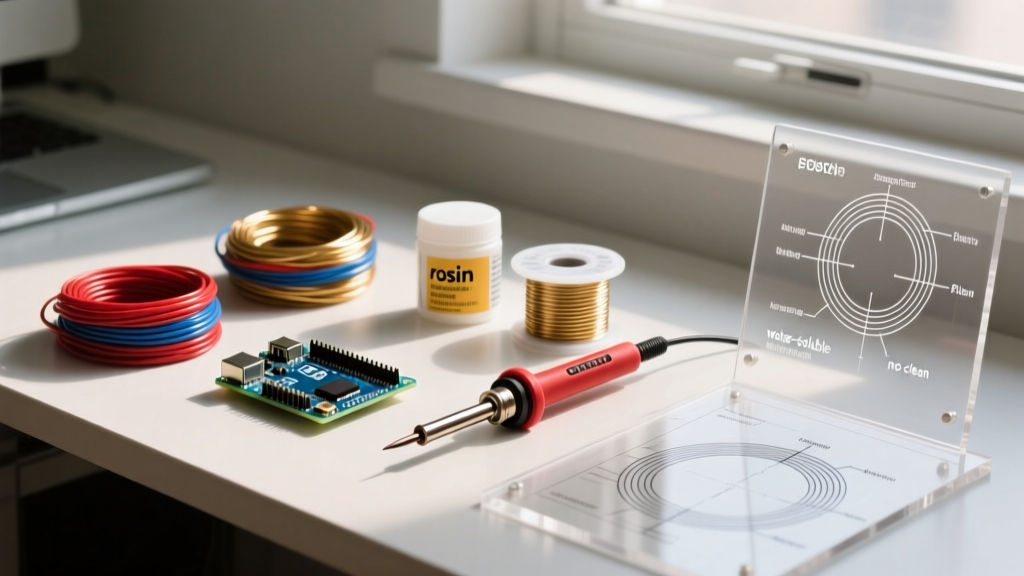
| ROL0 / ROL1 | Rosin (Pine Sap Extract) | Copper, Brass, Gold, Silver | Sn63/Pb37, SAC305 | Optional (Isopropyl Alcohol for aesthetics) |
| ORH1 | Organic Acid (Water-Soluble) | Copper, Nickel, Bare Steel | Sn96.5/Ag3.0/Cu0.5, High-Temp Lead-Free | Mandatory (Deionized Water within 4 hours) |
| REL0 | Synthetic Resin (No-Clean) | Copper, ENIG, Immersion Silver | SAC305, Sn42/Bi58 (Low Temp) | None (Residue is dielectric and safe) |
| INL1 / INH1 | Inorganic Acid (Plumbing) | Galvanized Steel, Iron, Heavy Copper | Tin-Antimony, High-Lead Alloys | Mandatory (Hot Water + Neutralizer) |
Deep Dive: Top Flux Types and Their Ideal Pairings
1. Rosin-Based Flux (RMA / RA)
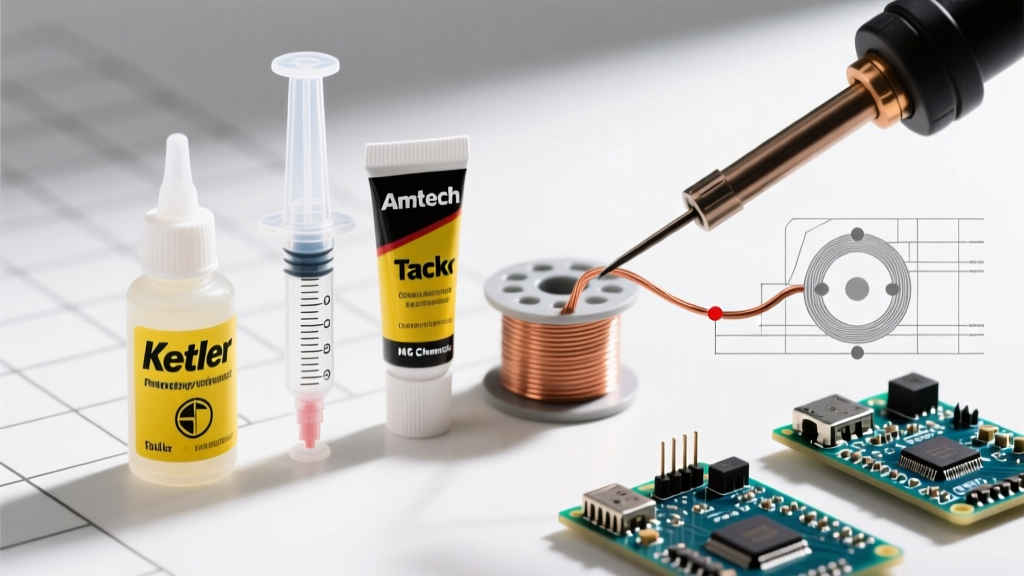
Rosin flux is derived from purified pine sap. Mildly Activated (RMA) rosin fluxes, such as the industry-standard Kester 186 (typically priced around $25 for a 16 oz bottle), are the workhorses of through-hole and general-purpose PCB soldering. The rosin matrix acts as a physical barrier, sealing the heated metal away from ambient oxygen during the soldering process. Compatibility Note: Rosin fluxes struggle with heavily oxidized nickel or stainless steel. They are strictly compatible with standard copper, ENIG (Electroless Nickel Immersion Gold), and HASL (Hot Air Solder Leveling) finishes.
2. Water-Soluble Flux (Organic Acid - OA)
When dealing with stubborn oxidation, thick ground planes, or non-standard metals like nickel-plated connectors, water-soluble fluxes like MG Chemicals 8341 (~$22 for a 10ml syringe) are required. These contain aggressive organic acids that strip oxides rapidly. Compatibility Note: The residue from ORH1 fluxes is highly hygroscopic and conductive. If left on a PCB in environments with >60% relative humidity, it will cause dendritic growth (electromigration), where microscopic metal whiskers grow between traces, eventually causing dead shorts. You must clean this flux using heated Deionized (DI) water, not tap water, as tap water introduces ionic contaminants that exacerbate corrosion.
3. No-Clean Flux (Synthetic Resin)
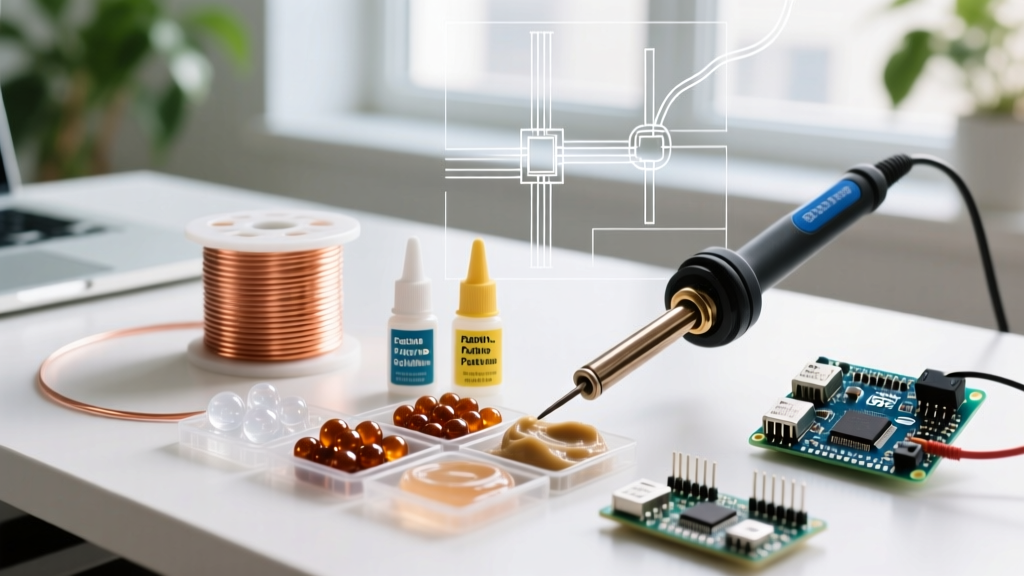
No-clean fluxes, such as Chip Quik SMD291AX (~$18 for a 10g syringe), dominate modern Surface Mount Technology (SMT). They are engineered to volatilize or polymerize upon heating, leaving behind a clear, hard, dielectric residue that will not interfere with high-impedance circuits or RF signals. Compatibility Note: No-clean fluxes have a lower thermal degradation threshold. If your soldering iron dwell time exceeds 3-4 seconds at 380°C, the resin will carbonize, turning into a hard, black, conductive sludge that is nearly impossible to remove and can cause leakage currents.
The Danger Zone: Incompatible Flux Scenarios
Understanding what flux is for when soldering also means knowing what never to use. The most common and destructive mistake made by beginners is using plumbing flux on electronics.
- Zinc Chloride / Ammonium Chloride (Plumbing Flux): These inorganic acids are designed to strip heavy rust from copper pipes. If applied to a PCB, the chloride ions will permanently embed themselves in the fiberglass laminate and under BGA (Ball Grid Array) components. This causes rapid galvanic corrosion, eating through 1oz copper traces in a matter of weeks. Never use plumbing paste on electronics.
- Mixing Flux Chemistries: Applying a rosin-based tacky flux over a water-soluble solder paste creates a cross-linked chemical sludge. The rosin encapsulates the water-soluble activators, preventing them from being washed away during the aqueous cleaning process, trapping corrosive salts directly under the component leads.
Thermal Profiles: Matching Flux Activation to Solder Melt
For flux to work, its chemical activators must trigger before the solder alloy reaches its liquidus (melting) temperature. If your iron temperature is too low, the solder melts before the flux cleans the pad, resulting in a grainy, de-wetted joint.
- Leaded Solder (Sn63/Pb37): Melts at 183°C. Standard rosin fluxes activate between 150°C and 170°C. Set iron to 300°C - 320°C for optimal thermal transfer.
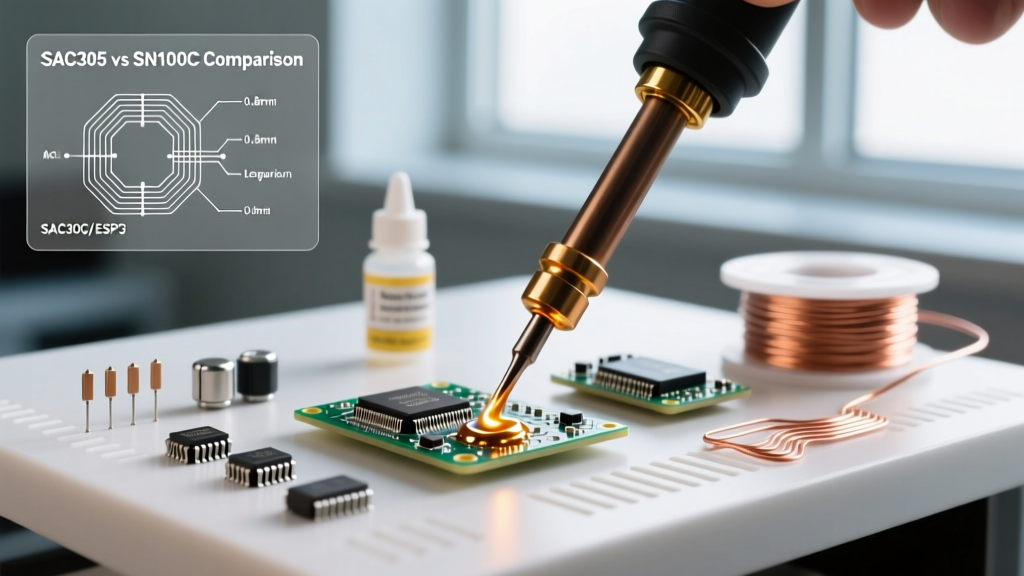
- Lead-Free Solder (SAC305): Melts at 217°C - 220°C. Requires a specialized lead-free no-clean flux (like Indium Corporation's TAC series) formulated with higher-temperature activators that trigger around 180°C - 190°C. Set iron to 340°C - 360°C.
- Low-Temperature Solder (Sn42/Bi58): Melts at 138°C. Requires specialized low-temp fluxes; standard rosin will not activate in time, leading to severe cold joints unless pre-heated.
Expert Troubleshooting: When Flux Compatibility Fails
Even with the right flux, application errors can ruin compatibility. Use this diagnostic guide to troubleshoot your solder joints:
- Symptom: Flux turns black and crusty immediately.
Cause: Thermal degradation. Your iron tip temperature exceeds 380°C, or your dwell time is too long. The organic resin is burning. Fix: Lower temperature to 320°C and use a thicker flux application to act as a thermal buffer. - Symptom: Solder balls up and refuses to flow onto the pad (De-wetting).
Cause: The flux activity level is too low for the oxidation present, or the pad has an incompatible finish (e.g., trying to solder to bare aluminum or un-flashed stainless steel with ROL0 rosin). Fix: Switch to a high-activity ORH1 water-soluble flux or mechanically abrade the surface first. - Symptom: Tombstoning in SMD components.
Cause: Uneven flux activation. One pad heats faster than the other, causing the flux on that side to volatilize and the solder to wet prematurely, pulling the component upright. Fix: Ensure symmetrical trace routing to ground planes to balance thermal mass, and apply flux evenly to both pads before heating.
Conclusion: Precision in Chemistry
Ultimately, answering the question of what flux is for when soldering requires looking beyond the smoke and the stickiness. Flux is a highly engineered chemical bridge between your solder alloy and your base metal. By respecting the IPC J-STD-004B classifications, matching the activator profile to your specific solder alloy's melting point, and adhering to strict cleaning protocols for organic acids, you transition from merely melting metal to engineering reliable, long-lasting metallurgical bonds. For further technical data on alloy and flux pairings, consult the Kester Flux Technical Datasheets to verify chemical compatibility with your specific PCB laminates.