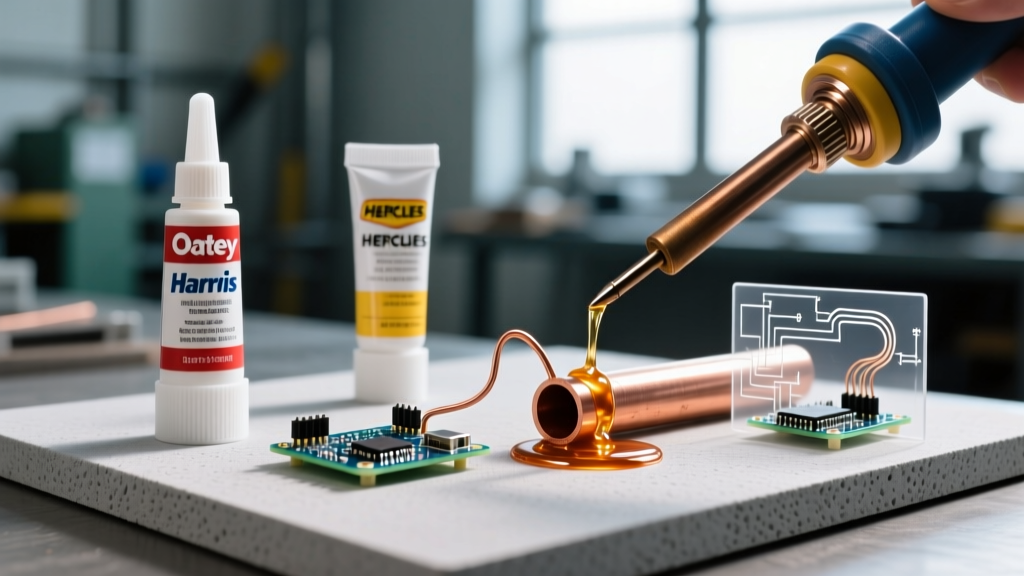

The Chemistry of Copper Pipe Flux: Why Brand Matters
When tackling plumbing or HVAC projects, selecting the best flux for soldering copper pipe is just as critical as choosing the right solder alloy. Flux is not merely a sticky paste; it is a chemical etching agent designed to strip copper oxide from the pipe surface, prevent re-oxidation during heating, and reduce the surface tension of the molten solder to promote capillary action. In 2026, the market is dominated by a few legacy brands, but their chemical formulations dictate vastly different outcomes depending on whether you are sweating potable water lines or brazing ACR (Air Conditioning Refrigeration) tubing.
According to the International Association of Plumbing and Mechanical Officials (IAPMO), all fluxes used on potable water systems must be easily cleanable and non-corrosive to prevent long-term pinhole leaks. Furthermore, any flux used on drinking water lines must comply with NSF/ANSI 61 standards to ensure no toxic heavy metals or volatile organic compounds (VOCs) leach into the water supply. Below, we break down the top four flux brands and models available this year, analyzing their chemical bases, ideal use cases, and real-world pricing.
2026 Brand Showdown: Top 4 Fluxes for Copper Plumbing
1. Oatey No. 5 Paste Flux (The Industry Standard)
Oatey No. 5 is arguably the most recognized paste flux in North America. It features a petroleum-based carrier with zinc chloride as the primary active etching agent. The petroleum base gives it excellent staying power, meaning it won't run down vertical pipes before you apply the torch. It is highly effective at cutting through mild oxidation and is fully compliant with ASTM B813 standards for plumbing fluxes.
- Best For: General residential potable water lines (Type M and Type L copper).
- Pros: High viscosity stays in place; excellent capillary draw; widely available.
- Cons: Petroleum base requires thorough wiping with a damp rag while hot; if left uncleaned, the zinc chloride can cause micro-corrosion over decades.
- 2026 Retail Price: ~$5.98 per 4 oz. can.
2. Harris Stay-Clean Liquid Flux (The HVAC & Pro Choice)
Harris Stay-Clean is a liquid, water-soluble flux that relies on a precise blend of zinc chloride and ammonium chloride. Because it is a liquid, it excels at wicking into the tightest tolerances of ACR refrigeration copper tubing. HVAC professionals prefer this for nitrogen-purged refrigeration lines because it leaves a glass-like, non-corrosive residue that won't flake off and clog expansion valves or compressor oil systems.
- Best For: HVAC refrigeration lines, tight-tolerance ACR tubing, and overhead soldering.
- Pros: Superior wicking action; non-corrosive residue; no petroleum mess.
- Cons: Low viscosity means it can run off the joint if over-applied; shorter working time under the torch.
- 2026 Retail Price: ~$7.45 per 4 oz. bottle.
3. Oatey H2O Soluble Flux (The Eco-Friendly & Commercial Choice)
As commercial building codes tighten regarding indoor air quality and long-term pipe degradation, water-soluble fluxes like Oatey H2O have surged in popularity. This formula completely eliminates the petroleum base, replacing it with a water-soluble synthetic carrier. Once the joint cools, the residual flux dissolves entirely with a simple wipe of a wet rag, virtually eliminating the risk of hidden pinhole leaks inside closed walls.
- Best For: Commercial plumbing, in-wall residential rough-ins, and eco-conscious builds.
- Pros: Zero VOCs; cleans up instantly with water; meets strict NSF/ANSI 61 potable water standards.
- Cons: Can boil and splatter if the pipe is damp when applied; requires completely dry copper before application.
- 2026 Retail Price: ~$6.29 per 4 oz. can.
4. Hercules Swif 95 (The Heavy-Duty Teflon Option)
Hercules Swif 95 is a premium, high-temperature paste flux infused with microscopic Teflon (PTFE) particles. This unique formulation allows the flux to maintain its chemical etching properties at much higher temperatures than standard zinc chloride pastes. It is specifically engineered for lines that will be subjected to secondary heating, brazing, or extreme thermal cycling.
- Best For: High-pressure steam lines, medical gas lines, and joints requiring multiple heating passes.
- Pros: Resists burning off under high heat; Teflon additive provides a micro-seal during the cooling phase.
- Cons: Overkill for standard residential water lines; highest price point.
- 2026 Retail Price: ~$9.99 per 4 oz. can.
Head-to-Head Comparison Matrix
| Brand / Model | Base Type | Active Agent | Best Application | Clean-up Method | Est. Price (4oz) |
|---|---|---|---|---|---|
| Oatey No. 5 | Petroleum Paste | Zinc Chloride | Residential Potable Water | Damp rag while hot | $5.98 |
| Harris Stay-Clean | Water-Soluble Liquid | Zinc/Ammonium Chloride | HVAC / ACR Refrigeration | Wet rag / Rinse | $7.45 |
| Oatey H2O | Water-Soluble Paste | Zinc Chloride | Commercial / In-Wall | Wet rag / Rinse | $6.29 |
| Hercules Swif 95 | Teflon Paste | Zinc Chloride + PTFE | High-Temp / Steam / Med Gas | Damp rag while hot | $9.99 |
Application Edge Cases & Critical Failure Modes
Even the best flux for soldering copper pipe will fail if applied incorrectly. Understanding metallurgical failure modes is what separates a master plumber from a weekend DIYer.
Failure Mode 1: Flux Burn and Oxidation Rebound
If you apply too much heat or use a standard propane torch on thick Type K copper, the flux will reach its boiling point and carbonize before the solder melts. This is known as 'flux burn.' The copper will turn a dark, iridescent black, and the solder will bead up and roll off the joint rather than wicking inside. The Fix: Do not simply add more flux over the burnt joint. You must let the pipe cool, mechanically re-clean the joint with 120-grit emery cloth, and reapply fresh flux.
Failure Mode 2: Galvanic Corrosion from Steel Wool
Never use steel wool to clean copper pipe before fluxing. Steel wool sheds microscopic iron particles that become embedded in the soft copper. When water flows through the pipe, these iron inclusions create a galvanic cell, leading to rapid rust spots and eventual pinhole leaks. Always use aluminum-oxide sanding cloth or specialized copper cleaning brushes.
Failure Mode 3: Using Plumbing Flux on Electrical Wires
CRITICAL WARNING: The zinc and ammonium chlorides found in plumbing fluxes are highly conductive and aggressively corrosive to copper wire strands. Never use Oatey No. 5 or Harris Stay-Clean on electrical soldering projects. Always use rosin-based (RMA) flux for electronics to prevent short circuits and wire degradation.
Step-by-Step: Achieving the Perfect Capillary Solder Joint
To maximize the performance of your chosen flux, follow this precise sequence:
- Cut and Deburr: Cut the copper pipe square using a rotary tubing cutter. Use the attached reamer to remove the internal burr; an internal burr creates water turbulence that causes erosive corrosion over time.
- Mechanical Cleaning: Sand the outside of the pipe and the inside of the fitting with 120-grit emery cloth until both surfaces shine like a new penny. Do not touch the cleaned metal with your bare fingers (skin oils inhibit flux).
- Flux Application: Apply a thin, even layer of your chosen flux to the outside of the pipe only. Insert the pipe into the fitting, giving it a quarter-turn to spread the flux evenly. Wipe away any excess flux squeezed out of the joint with a dry rag.
- Heating: Apply your torch flame to the fitting, not the pipe. The fitting has more mass and needs to reach the solder's melting point (typically 430°F for 95/5 lead-free solder) first.
- Soldering: Touch the solder wire to the opposite side of the joint from the flame. When the flux bubbles slightly and the solder instantly wicks into the joint, remove the flame. You should see a continuous silver ring around the entire joint edge.
- Quench and Clean: Wipe the joint with a damp rag immediately to remove residual flux and quench the metal, locking the joint in place.
Frequently Asked Questions (FAQ)
Can I use electrical rosin flux on copper plumbing pipes?
No. Rosin flux (derived from pine sap) is too mild to etch the heavy oxidation found on plumbing-grade copper. Furthermore, it does not meet the EPA's National Primary Drinking Water Regulations regarding safe chemical residues in potable water systems. Stick to zinc-chloride or water-soluble plumbing fluxes.
Does plumbing flux expire?
Petroleum-based fluxes like Oatey No. 5 have an almost indefinite shelf life if the lid is sealed tightly, though they may separate and require stirring. Water-soluble fluxes, however, can dry out or crystallize after 18 to 24 months. If your water-soluble flux has turned into a hard, chalky puck, discard it and buy a fresh can.
What solder alloy should I pair with these fluxes in 2026?
For potable water lines, the Uniform Plumbing Code (UPC) mandates the use of lead-free solder. The industry standard is 95/5 (95% Tin, 5% Antimony) or 99.3/0.7 (99.3% Tin, 0.7% Copper). Avoid 50/50 tin-lead solder entirely, as it has been banned for drinking water applications for decades and poses severe health risks.