
The True Economics of Liquid Flux for Soldering Electronics
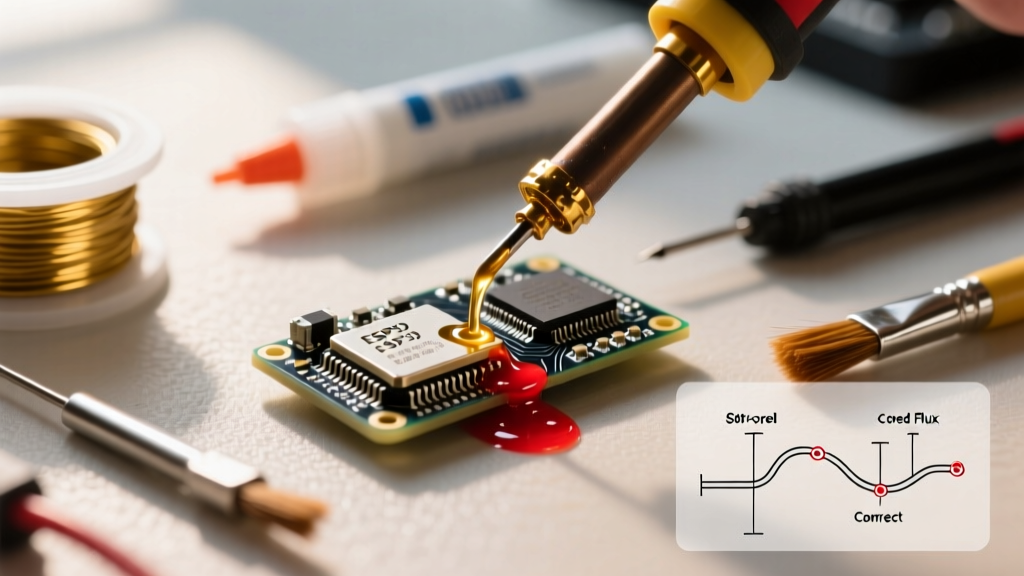
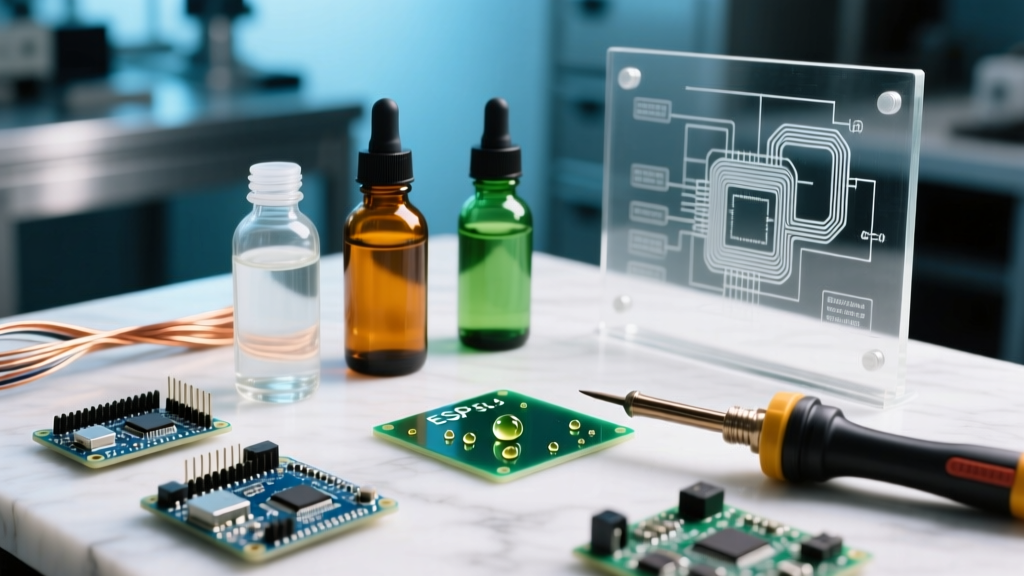
When building or repairing printed circuit boards (PCBs), the focus often lands on the price of the soldering station or the microcontroller itself. However, as component densities increase and 01005 passive packages become standard in 2026, the chemical consumables you use dictate your success rate. Specifically, liquid flux for soldering electronics is a category where hobbyists and small-scale labs frequently miscalculate their total cost of ownership (TCO). Buying the cheapest $8 bottle of flux from an online marketplace seems economical until you factor in the cost of board cleaning, rework time, and scrapped PCBs due to electrochemical migration.
This cost analysis breaks down the real financial impact of liquid flux selection. We will examine upfront material costs, the hidden expenses of post-solder cleaning, application waste factors, and the catastrophic costs of flux-induced failures, providing a comprehensive framework for makers, repair technicians, and small-batch manufacturers.
Upfront Material Costs: 2026 Market Pricing
The market for liquid flux has stabilized in 2026 following recent supply chain shifts in rosin and synthetic resin sourcing. Below is a comparative analysis of popular liquid fluxes used in electronics, categorized by their chemistry and form factor. Pricing reflects average distributor rates (e.g., DigiKey, Mouser, and direct manufacturers) as of early 2026.
| Brand / Model | IPC Classification | Form Factor | Volume | Est. 2026 Cost | Cost per mL |
|---|---|---|---|---|---|
| Kester 2331-ZX | ORM0 (Water-Soluble) | Bottle | 100mL | $28.00 | $0.28 |
| MG Chemicals 8341 | ROL0 (No-Clean) | Bottle | 100mL | $22.50 | $0.23 |
| Chip Quik NC191 | ROL0 (No-Clean) | Dispenser Pen | 10mL | $14.95 | $1.50 |
| Amtech NC-559-V2-TF | ROL0 (No-Clean) | Syringe | 30mL | $45.00 | $1.50 |
As highlighted in DigiKey's technical breakdown of soldering flux, the IPC-J-STD-004B standard classifies flux by base material (Rosin, Resin, Organic, Inorganic) and activity level. Notice that while bulk bottles (Kester, MG Chemicals) offer a vastly superior cost-per-mL ($0.23 - $0.28), convenience packaging like pens and syringes command a 500% to 600% premium. For high-volume labs, bulk bottles with secondary dispensing systems are the only financially viable option.
The Hidden Cost of Cleaning (Post-Soldering Economics)
The most misunderstood variable in flux cost analysis is the post-solder cleaning process. The decision between Water-Soluble (e.g., ORM0, ORO1) and No-Clean (e.g., ROL0, REL0) fluxes dramatically alters your operational overhead.
Water-Soluble Flux: The Cleaning Tax
Water-soluble liquid flux for soldering electronics provides excellent wetting and leaves a highly active residue that must be removed. If left on the board, it will cause rapid corrosion and dendritic growth. The cost of cleaning includes:
- Deionized (DI) Water: Tap water introduces ions that cause short circuits. A 5-gallon jug of DI water costs roughly $15, but a proper DI water filtration system for a lab runs $300+.
- Ultrasonic Cleaner: Essential for removing flux from under tight-pitch ICs and BGAs. A reliable 2-liter heated ultrasonic cleaner costs between $120 and $180.
- Labor and Drying Time: Boards must be baked or air-dried completely to prevent trapped moisture. This adds 30-60 minutes of handling and oven time per batch.
No-Clean Flux: The Thermal Profiling Trade-off
No-clean fluxes (like MG Chemicals 8341) are designed so that the heat of the soldering iron or reflow oven consumes the activators, leaving behind a benign, inert rosin/resin residue. While this eliminates the $150+ ultrasonic cleaner requirement and saves 45 minutes of labor per batch, it introduces a different cost: thermal profiling. If you do not apply enough heat to fully activate the flux, the residue remains sticky and mildly acidic. Furthermore, no-clean fluxes generally have a narrower process window, potentially increasing rework rates for novice operators.
Application Method Economics: Waste and Contamination
How you apply the liquid flux directly impacts your consumable burn rate. Dipping a brush directly into a master bottle is a common practice that leads to two hidden costs: cross-contamination and evaporation.
Industry Insight: In small-batch manufacturing, up to 30% of liquid flux in open-top bottles is lost to evaporation or rendered unusable due to particulate contamination from the application brush. Transitioning to closed-loop dispensing reduces consumable waste by an average of 42%.
To optimize your cost-per-joint, consider the following application hierarchy:
- Blunt-Needle Syringe Dispensing (Lowest Waste): Using a 5cc syringe with a 22-gauge blunt tip allows you to deposit micro-drops of flux exactly where needed. This prevents over-application and keeps the master reservoir sealed.
- Flux Pens (Medium Waste): Convenient for field repairs, but the internal wick dries out if left uncapped for even a few minutes, turning a $15 pen into plastic waste.
- Open-Bottle Brush Application (Highest Waste): High evaporation rate of the alcohol/water carrier, plus the risk of dropping debris into the flux, ruining the entire $30 bottle.
Calculating the Cost of Board Failure
The ultimate hidden cost of selecting substandard or inappropriate liquid flux for soldering electronics is board failure. According to reliability data referenced by Kester's flux portfolio guidelines, electrochemical migration (ECM) is a primary failure mode in humid environments when flux residues are not properly managed.
Consider a hypothetical scenario where a small-batch manufacturer produces 100 IoT sensor boards. Each assembled PCB costs $45 in components and fabrication.
- Scenario A (Premium No-Clean + Proper Profiling): Flux cost is $0.15 per board. Yield is 98%. Two boards require rework ($10 labor each). Total flux + rework cost: $35.
- Scenario B (Cheap Unbranded Flux + Incomplete Cleaning): Flux cost is $0.05 per board. However, 5% of boards fail in-field within 3 months due to dendritic shorting caused by halide-laden residue. Replacing 5 boards costs $225 in parts, plus $150 in expedited shipping and diagnostic labor. Total failure cost: $380.
The $15 saved upfront on flux resulted in a $345 net loss. When sourcing liquid flux, always verify the IPC-J-STD-004B classification on the technical data sheet (TDS). Avoid 'universal' or unbranded fluxes that do not explicitly state their halide content and activity level.
ROI Decision Matrix: Which Flux Fits Your Budget?
To help you allocate your 2026 consumables budget effectively, use this decision matrix based on your operational profile:
1. The Hobbyist / Occasional Repair Tech
- Volume: 1-5 boards per month.
- Best Economic Choice: No-Clean Flux Pen (e.g., Chip Quik NC191). Despite the high cost-per-mL ($1.50), the absolute dollar amount is low, and it eliminates the need for cleaning equipment. Store the pen horizontally in a sealed ziplock bag to prevent the wick from drying out.
2. The Prototyping Lab / Small-Batch Manufacturer
- Volume: 50-500 boards per month.
- Best Economic Choice: Bulk No-Clean Liquid Flux (e.g., MG Chemicals 8341 or Kester 952-S) dispensed via precision syringes. At $0.23 per mL, your flux cost drops to pennies per board. Invest the savings into a quality temperature-controlled soldering station to ensure proper thermal activation of the no-clean chemistry.
3. High-Reliability / Aerospace / Medical Contract Manufacturer
- Volume: 1,000+ boards, strict IPC-A-610 Class 3 requirements.
- Best Economic Choice: Water-Soluble Flux (e.g., Kester 2331-ZX) paired with an automated inline aqueous cleaning system. While the capital expenditure for the cleaning system is high ($5,000+), it guarantees zero ionic residue, passing strict Surface Insulation Resistance (SIR) testing and eliminating the risk of catastrophic field failures in mission-critical devices.
Final Verdict on Flux Economics
Treating liquid flux for soldering electronics as a mere commodity is a costly mistake. The true cost of flux is not printed on the bottle; it is calculated in the labor of cleaning, the precision of your thermal profiling, and the long-term reliability of the solder joints. By understanding IPC classifications, optimizing your dispensing methods to reduce waste, and matching the flux chemistry to your specific production scale, you can significantly reduce your total cost of ownership while simultaneously improving your first-pass yield. For the most up-to-date safety and handling protocols, always consult the manufacturer's Safety Data Sheets (SDS) and explore the MG Chemicals flux lineup or equivalent technical resources before scaling your production.