
The Illusion of 'Metal Glue': Why Solder Needs Chemical Help
When beginners first pick up a soldering iron, they often mistake solder for a type of metallic glue that simply melts and sticks two components together. In reality, soldering is a complex metallurgical process. The molten alloy does not adhere to the copper pad; it forms a rigid crystalline structure known as an Intermetallic Compound (IMC), specifically the Cu6Sn5 phase. However, this IMC cannot form if the copper surface is contaminated. This brings us to the most critical, yet misunderstood, consumable in electronics assembly: flux.
If you have ever asked, what does flux do when soldering, the short answer is that it acts as a chemical cleaning agent and an oxygen barrier. Without it, even the most expensive soldering station and the highest-quality solder wire will fail to create a reliable electrical joint.
The Core Chemistry: Oxidation and the Race Against Time
Copper is a highly reactive metal. The moment a printed circuit board (PCB) is exposed to ambient air, it begins to oxidize, forming a microscopic layer of copper oxide (CuO). When you apply heat from a soldering iron, this oxidation process accelerates exponentially. Solder will not wet (flow and bond to) copper oxide; it will simply ball up and roll away.
Expert Insight: Flux contains chemical activators—such as abietic acid in traditional rosin fluxes—that remain largely inert at room temperature. When heated to their specific activation threshold, these activators become mild acids that dissolve the copper oxide layer, converting it into a soluble salt that floats to the surface of the molten solder.
Simultaneously, the liquid flux coats the heated joint, displacing oxygen and preventing new oxides from forming while the solder cools. According to the IPC soldering standards, proper wetting and IMC formation must occur within seconds, making the chemical timing of your flux just as important as the temperature of your iron.
The Timing Trap: Flux Activation Temperatures
A common beginner mistake is applying flux too early or using an iron that is too hot, which destroys the chemistry before the solder can melt. Flux does not work instantaneously at any temperature. Let us look at the thermal timeline of a standard Rosin Mildly Activated (RMA) flux:
- 90°C - 120°C (Softening Phase): The solid rosin vehicle begins to melt and flow across the pad, but no chemical cleaning is occurring yet.
- 150°C - 180°C (Activation Phase): The chemical activators trigger. This is when the copper oxide is actually stripped away. This phase must coincide with the melting of your solder.
- 200°C+ (Exhaustion Phase): The flux begins to boil, burn, and carbonize. If your solder has not melted by the time the flux reaches this stage, the joint is left unprotected, leading to severe oxidation.
If your iron is set to 400°C, the flux will vaporize in less than 1.5 seconds. For 63/37 leaded solder (which melts at 183°C), an iron temperature of 320°C to 340°C provides the perfect thermal ramp, allowing the flux 3 to 5 seconds to clean the pad before the solder flows.
Comparison Matrix: Choosing the Right Chemistry
Not all fluxes are created equal. The NASA Electronic Parts and Packaging (NEPP) program and IPC guidelines categorize fluxes based on their activator strength and cleanability. Here is how the three primary types compare in 2026:
| Flux Type | IPC Designation | Activator Level | Cleaning Required? | Best Application | 2026 Market Example & Cost |
|---|---|---|---|---|---|
| Rosin (RMA) | ROL0 / ROL1 | Low | Optional (Recommended) | General Through-Hole, Heavy Wires | Kester 44 Paste (~$18 / 2oz jar) |
| No-Clean | ROL0 | Very Low | No | SMD, Fine-Pitch QFP/BGA | MG Chemicals 8341 (~$25 / 10g syringe) |
| Water-Soluble | ORH1 | High | Yes (Mandatory) | Heavily Oxidized Parts, Auto-DIP | Indium CW-810 (~$45 / 100g jar) |
Deep Dive: The 'No-Clean' Misconception
Beginners often assume 'No-Clean' means the residue is electrically invisible and structurally irrelevant. While it is true that modern no-clean fluxes (like MG Chemicals 8341) leave behind a benign, non-conductive rosin ester residue that will not cause short circuits, the residue is highly hygroscopic (absorbs moisture) and sticky. If you are probing a circuit with a multimeter, the sticky residue will coat your probe tips, ruining your continuity readings. Furthermore, if you plan to apply a conformal coating to the PCB later, the no-clean residue must be cleaned off, or the coating will delaminate.
Real-World Failure Modes: What Happens When Flux Fails?
Understanding what flux does when soldering requires looking at what happens when it is absent, exhausted, or improperly chosen. Here are three specific failure modes you will encounter:
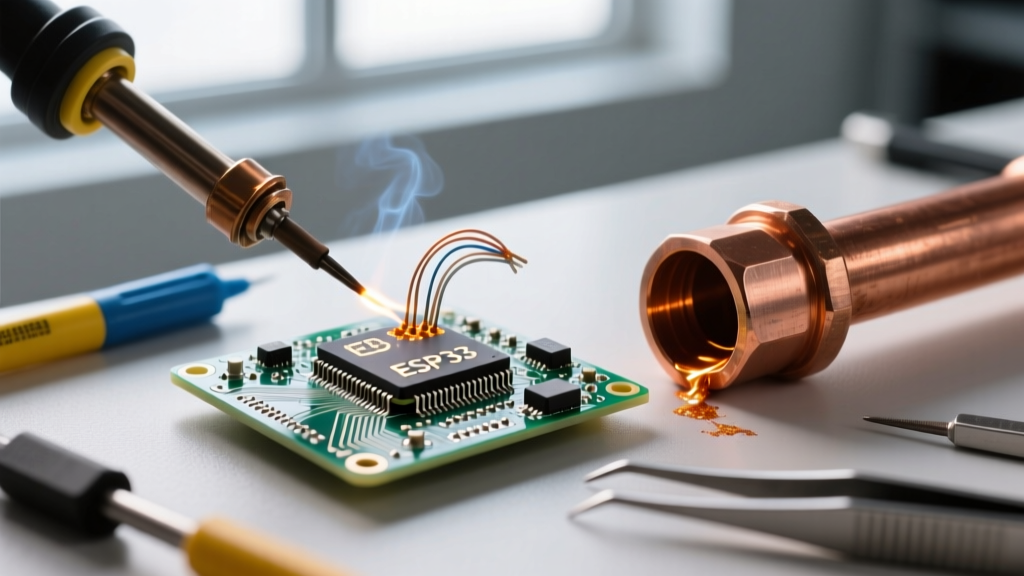
- De-Wetting and Solder Balling: The solder melts but refuses to flow onto the copper pad, instead forming a perfect sphere on the tip of your iron. Cause: The flux boiled off before the pad reached the solder's liquidus temperature, allowing a fresh layer of copper oxide to form instantly.
- Tombstoning (SMD Components): A surface-mount resistor or capacitor stands up on one end during reflow. Cause: Asymmetric flux activation. If one pad heats up faster than the other, the flux on that pad activates and pulls the component via surface tension before the other side has melted.
- Dendritic Growth and Corrosion: Weeks after assembly, the PCB develops microscopic metallic 'trees' (dendrites) that bridge adjacent pads, causing a short circuit. Cause: Using a highly active Water-Soluble (ORH1) flux and failing to clean the board with heated Deionized (DI) water and a stiff brush. The leftover acidic activators eat away at the copper when exposed to ambient humidity.
The 2026 Beginner's Purchasing and Application Framework
To build a reliable soldering kit, match your flux chemistry to your specific workflow. Do not buy a generic 'all-purpose' flux; buy specific consumables for specific tasks.
Scenario A: Arduino Prototyping and Through-Hole Components
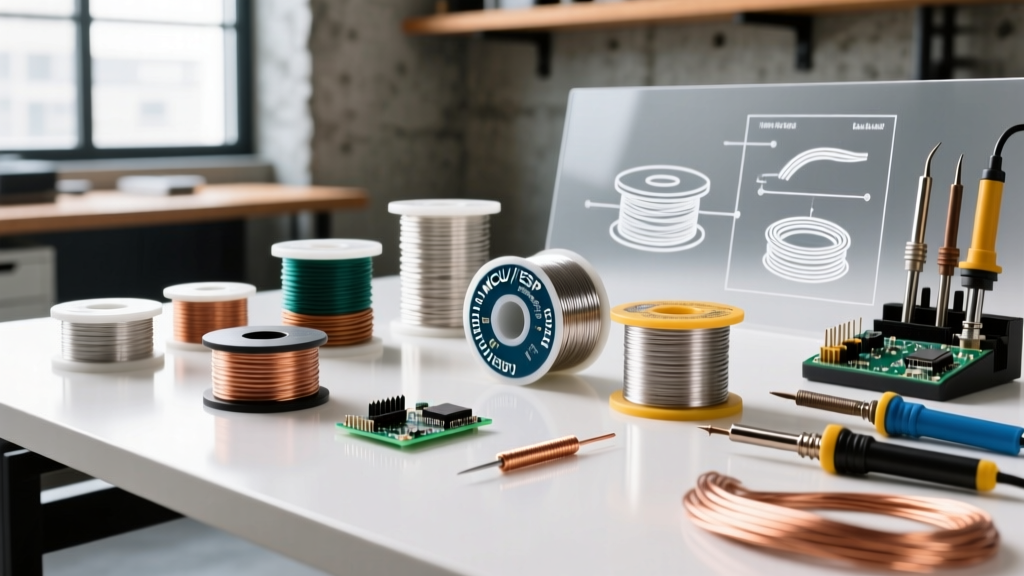
For standard 2.54mm pitch headers and DIP ICs, rely on the flux built directly into your solder wire. Purchase a high-quality 63/37 (eutectic) rosin-core wire, such as Multicore 362 or Kester 245. The 2% to 3% flux core is perfectly calibrated to activate exactly as the 183°C solder melts. Rule: Do not add external liquid flux for basic through-hole work unless you are reworking a damaged, heavily oxidized pad.
Scenario B: Drag Soldering Fine-Pitch SMD Chips
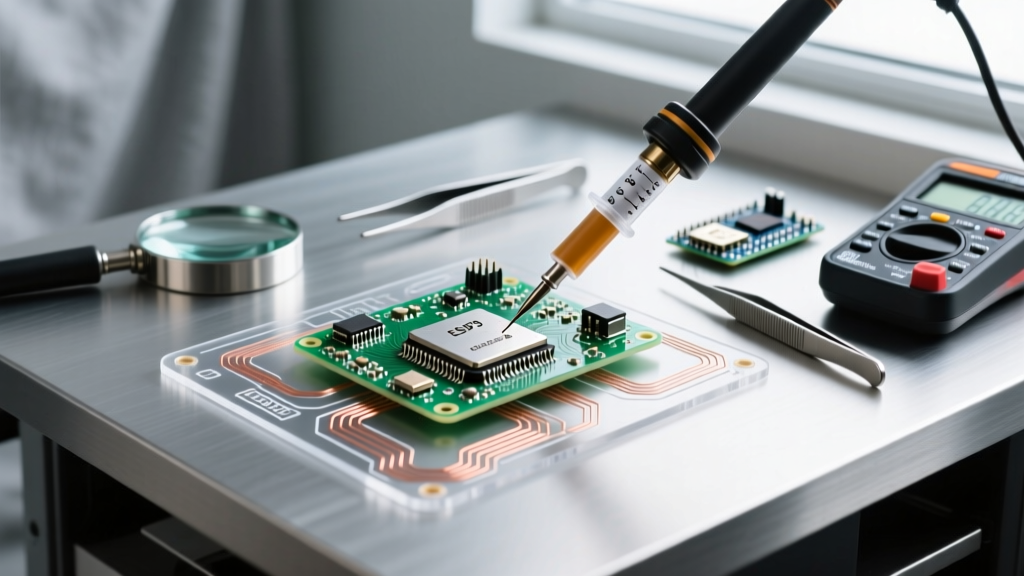
When soldering 0.5mm pitch TQFP or SOIC chips, the built-in wire flux is insufficient because it burns away before you can drag the iron across 40 pins. You must use an external 'tacky' flux. Apply a generous bead of Chip Quik SMD291AX (approx. $22 for a 10cc syringe) to the pads before applying heat. The high-viscosity rosin holds the component in place, prevents bridging by increasing solder surface tension, and provides a massive thermal window for drag soldering.
Frequently Asked Questions (FAQ)
Can I use plumbing flux for soldering electronics?
Absolutely not. Plumbing flux (often zinc chloride or muriatic acid based) is designed to strip heavy corrosion from copper pipes. It is highly corrosive and will permanently destroy the microscopic traces on a PCB, leading to catastrophic failure within days. Always use electronics-grade flux that meets Kester technical documentation and IPC-J-STD-004 specifications.
Why does my solder joint look dull and grainy?
A dull, grainy, or crystalline joint is a classic sign of a 'cold joint' or flux exhaustion. This happens when the joint was disturbed while cooling, or when the iron was not hot enough to properly melt the solder and activate the flux chemistry, resulting in a weak, high-resistance mechanical bond rather than a proper IMC layer.
How long does liquid flux last once opened?
Most alcohol-based liquid fluxes (like Kester 951) have a shelf life of 12 to 18 months once opened. The isopropyl alcohol carrier evaporates over time, thickening the flux and altering its activation temperature. Store flux in a tightly sealed, cool environment, and if it becomes syrup-like, thin it with 99% isopropyl alcohol, not standard 70% rubbing alcohol which contains too much water.