
The Thermodynamics of Copper Oxidation in Heavy-Duty Joints
When discussing flux copper pipe soldering, most DIYers focus on the mechanical technique—applying heat and feeding solder. However, from a material science perspective, soldering is a complex thermodynamic and chemical process. Whether you are joining Type L copper plumbing lines or sweating heavy 2/0 AWG copper ground straps to an electrical busbar, the fundamental barrier to a successful joint is copper oxidation.
At room temperature, copper forms a microscopic, passive layer of cuprous oxide (Cu2O) that protects the underlying metal. However, when you apply a propane or MAP-Pro torch (burning at roughly 3,600°F), the surface temperature of the copper rapidly exceeds 400°F. At these elevated temperatures, the oxidation rate accelerates exponentially, converting the passive Cu2O into cupric oxide (CuO), a thick, black, non-conductive layer. Molten tin-based solder will not wet or alloy with CuO. If you attempt to solder over this layer, the solder will simply ball up and roll off, resulting in a cold joint.
This is where flux transitions from a mere 'helper' paste to an absolute metallurgical necessity. The flux must chemically strip the CuO layer and protect the bare copper from atmospheric oxygen while the solder reaches its liquidus state.
The Chemical Mechanism: How Acid Flux Dissolves Oxide
Plumbing fluxes are fundamentally different from the mild rosin fluxes used in PCB assembly. Heavy-duty copper pipe soldering requires aggressive, inorganic acid fluxes—primarily based on zinc chloride (ZnCl2) and ammonium chloride (NH4Cl).
When zinc chloride is heated to soldering temperatures (roughly 450°F to 500°F), it undergoes a hydrolysis reaction with trace moisture and the water of hydration within the flux paste vehicle. This reaction generates highly reactive hydrochloric acid (HCl) gas directly at the joint interface:
ZnCl2 + H2O + Heat → HCl↑ + Zn(OH)Cl
The localized HCl aggressively attacks the cupric oxide layer, converting it into copper(II) chloride (CuCl2), which is highly soluble and easily displaced by the incoming molten solder. Once the oxide is removed, the bare, highly reactive copper surface is exposed, allowing the tin in the solder to form intermetallic compounds (IMCs)—specifically Cu6Sn5 and Cu3Sn—which create the actual metallurgical bond.
Flux Chemistry Comparison Matrix
| Flux Type | Active Ingredients | Activation Temp | Primary Use Case | 2026 Avg. Cost (4oz) |
|---|---|---|---|---|
| Inorganic Acid (IA) | Zinc Chloride, Ammonium Chloride | 350°F - 450°F | Copper plumbing, heavy ground lugs | $8.50 - $11.00 |
| Tinning Acid | Zinc Chloride + Sn/Sb Powder | 350°F - 450°F | Pipe joints requiring pre-tinning | $12.00 - $15.00 |
| Water-Soluble Organic | Organic acids (e.g., Lactic, Citric) | 400°F - 500°F | Food-safe plumbing, HVAC | $10.00 - $13.00 |
| Rosin Mildly Activated | Abietic acid, Rosin, mild halides | 350°F - 400°F | Electronics, sensitive RF shielding | $14.00 - $18.00 |
Capillary Action and Surface Tension Dynamics
A successful sweated joint relies on capillary action to draw the molten solder deep into the annular space between the pipe and the fitting. For capillary action to occur, the surface tension of the molten solder must be lower than the surface energy of the copper substrate. Flux plays a dual role here: by removing the oxide layer, it restores the high surface energy of the bare copper. Simultaneously, the molten flux vehicle (often a petroleum or water-glycol base) floats on top of the solder, acting as a thermal blanket and reducing the solder's surface tension, allowing it to flow into gaps as tight as 0.002 inches.
The Galvanic Danger: Why Plumbing Flux Destroys Electronics
As an electrical DIYer, you might be tempted to use Oatey No. 5 or Superior No. 30 acid flux when soldering heavy-gauge electrical connections, such as 4/0 AWG battery lugs or copper grounding busbars. This is a catastrophic material science error.
While acid fluxes are easily washed off plumbing lines with water, electrical joints are often enclosed, heat-shrunk, or taped. The chloride ions (Cl-) left behind by zinc chloride flux are highly mobile and hygroscopic—they actively absorb moisture from the ambient air. In the presence of a DC voltage (even a 12V automotive or solar system), these chloride ions create a conductive electrolyte. This triggers electrochemical migration (ECM), where copper ions dissolve at the anode and plate out as metallic dendrites at the cathode. Over months or years, these dendrites bridge the gap, causing micro-shorts, parasitic battery drains, and eventual galvanic corrosion that turns the copper joint into a brittle, green, high-resistance powder.
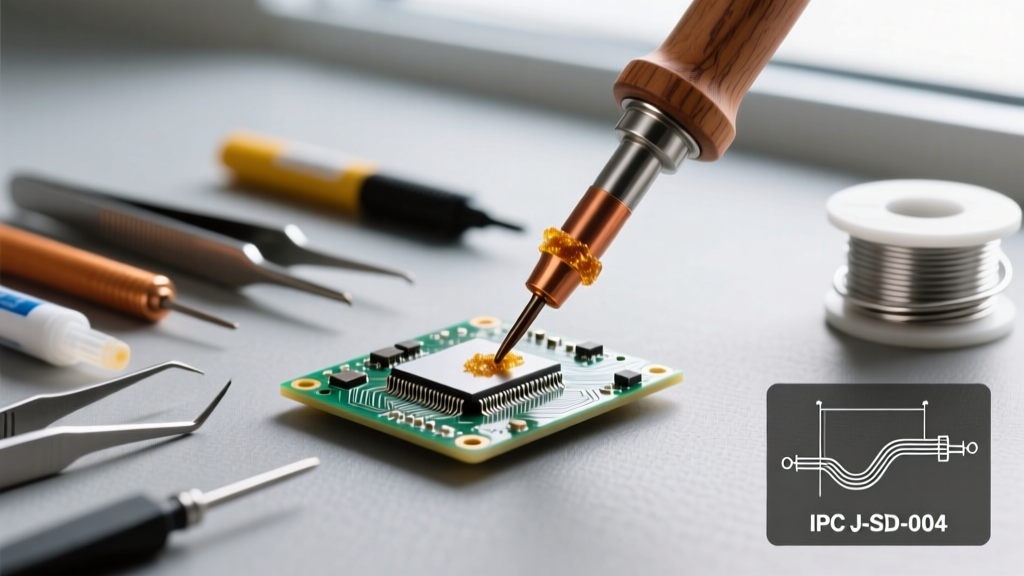
For heavy electrical copper joints, you must use electronic-grade Rosin Mildly Activated (RMA) flux, such as Kester 186, or a high-solids No-Clean flux like Superior No. 71. While they require more heat and mechanical prep, they leave a benign, non-conductive residue that will not compromise the circuit over time. For more on flux standardizations, refer to the IPC J-STD-004 flux requirements.
Optimizing the Flux-Copper Interface: A Step-by-Step Protocol
To achieve a flawless metallurgical bond on thick copper (whether Type K plumbing or heavy electrical strapping), follow this material-science-optimized workflow:
- Mechanical Ablation: Use 120-grit sandpaper or a specialized copper wire brush to physically remove the macro-oxide layer. Do not touch the cleaned copper with bare skin; sebum (skin oils) acts as a localized solder mask and prevents wetting.
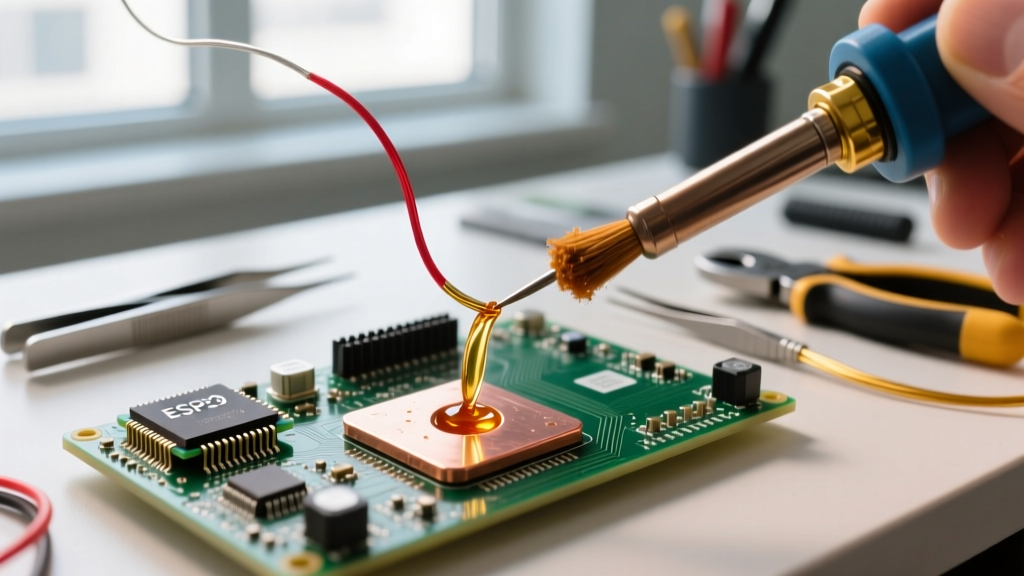
- Flux Application (The Oxygen Barrier): Apply a thin, even layer of flux immediately after cleaning. In plumbing, use a water-soluble or tinning flux (like Oatey H-2O 5%) to comply with the EPA Safe Drinking Water Act lead-free mandates. For electrical grounding lugs, apply a heavy coat of Kester 186 RMA paste.
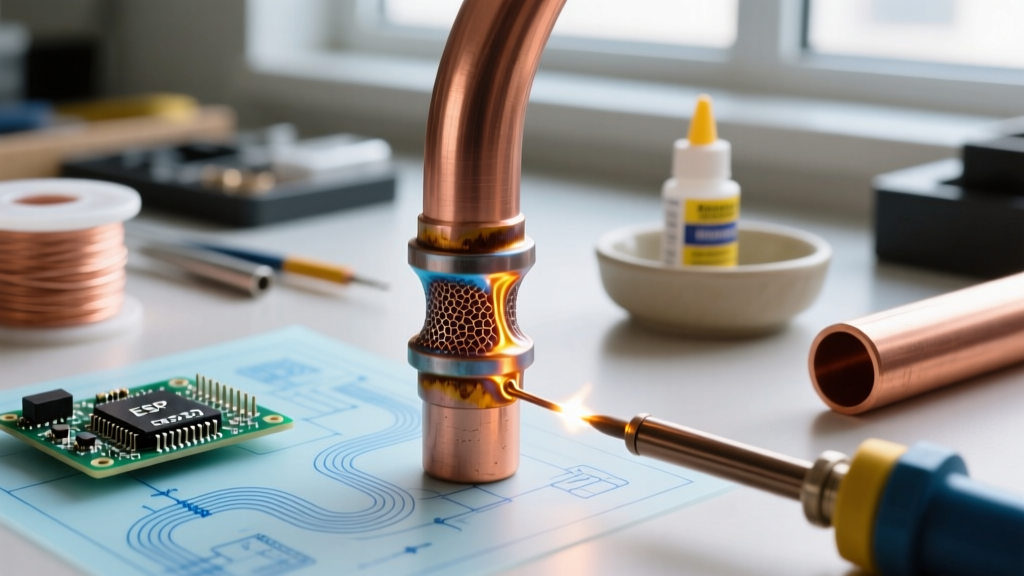
- Thermal Gradient Management: Apply heat to the fitting or the thickest mass of copper, not directly to the joint seam. Copper is highly thermally conductive. You want the capillary space to reach 450°F uniformly. If you heat the joint seam directly, the flux will burn off (carbonize) before the deeper copper reaches soldering temperature.
- Flux Boil-Off Indicator: Watch the flux. As the joint approaches 400°F, the water/glycol vehicle will boil and bubble. When the bubbling stops and the flux becomes completely silent and glassy, the joint is at thermal equilibrium (approx. 450°F+).
- Solder Introduction: Touch the solder wire (e.g., 95/5 Tin/Antimony for plumbing, or 63/37 Eutectic for electrical) to the opposite side of the flame. If the capillary space is properly fluxed and heated, the solder will instantly flash-melt and be violently drawn into the joint via capillary action.
Pro-Tip: Heat Sinking for Proximity Joints
When soldering copper pipes or heavy wires near sensitive components (like PVC transitions or electronic housings), wrap a wet rag or use specialized aluminum heat-sink putty around the adjacent area. The latent heat of vaporization of the water in the rag will cap the local temperature at 212°F (100°C), preventing thermal damage while allowing the joint to reach the required 450°F.
Frequently Asked Questions
Can I use electrical rosin flux for copper plumbing?
Technically, rosin flux (abietic acid) is too weak to dissolve the heavy cupric oxide layer that forms on thick-walled copper pipes when exposed to a high-BTU torch. While it might work on very thin copper flashing, it will result in severe cold joints on Type L or M plumbing pipes. Stick to inorganic acid fluxes for plumbing, but ensure they are certified lead-free and NSF/ANSI 61 compliant for potable water.
Why does my solder turn into a black, crusty mess?
This is 'burnt flux.' If you apply too much heat, or leave the torch on the joint after the flux has stopped bubbling, the organic vehicles and rosin compounds carbonize. This carbon layer acts as a physical barrier, preventing the solder from wetting the copper. You must let the joint cool, re-abrade the copper mechanically, and start over with fresh flux.