
The True Economics of High-Temperature Brazing Consumables
When professionals and advanced DIYers transition from standard electronics work to high-temperature joining, the consumable requirements shift dramatically. Technically classified as brazing (operating above 842°F / 450°C), silver soldering requires specialized chemical agents to prevent oxidation and promote capillary action. Selecting the right flux for silver soldering is rarely a straightforward decision based on the sticker price of the jar. In 2026, with copper and silver alloy prices remaining elevated, the hidden costs of joint failure, rework, and post-braze cleanup heavily influence the true return on investment (ROI) of your consumables.
This comprehensive cost analysis breaks down the direct pricing, hidden operational expenses, and application-specific economics of the most common silver brazing fluxes on the market. Whether you are sweating copper linesets for HVAC/R systems, fabricating automotive fuel lines, or setting bezels in fine jewelry, understanding the financial impact of your flux choice is critical.
The Chemistry and Temperature Thresholds
Standard rosin or water-soluble fluxes used in PCB assembly vaporize and burn off around 600°F (315°C). Silver soldering alloys, such as AWS A5.8 BCuP-5 (15% silver) or BAg-24 (50% silver), require torch temperatures ranging from 1100°F to 1500°F (590°C to 815°C). Therefore, the flux for silver soldering must rely on high-temperature alkali metal fluorides, borates, and boric acid derivatives.
Expert Insight: According to the American Welding Society (AWS) Brazing Handbook, the primary function of high-temperature flux is to dissolve existing metal oxides and protect the base metal up to 1600°F. If the flux's thermal threshold is exceeded before the filler metal melts, the flux 'burns out,' forming a glassy borax slag that actively prevents alloy flow and guarantees a failed joint.
Categorizing Flux Tiers: Direct Cost Breakdown
The market for silver brazing fluxes is segmented into three primary tiers. Prices below reflect average 2026 retail and wholesale distributor rates for standard 1 lb (16 oz) containers.
Tier 1: Generic Borax Cones and Powders
Derived from sodium tetraborate, generic borax is the oldest and cheapest option. While adequate for basic blacksmithing or low-stakes iron/steel forge brazing, it lacks the active fluoride agents needed for copper-to-copper or copper-to-brass capillary action. Cost: $6.00 to $10.00 per lb.
Tier 2: Standard White Flux (Borax/Boric Acid Blends)
Products like Harris Stay-Silv White Flux or J-Weld White Brazing Flux represent the industry standard for general HVAC and plumbing. They offer a working range of 1050°F to 1600°F and provide reliable oxide cleaning for copper and brass. Cost: $18.00 to $24.00 per lb.
Tier 3: Fluoride-Modified Black and Specialty Pastes
For demanding applications involving stainless steel, tungsten carbide, or tight-tolerance jewelry work, fluoride-modified fluxes (such as Lucas-Milhaupt Black Flux or Handy & Harman Handy Flux Type B-1) are mandatory. The addition of potassium fluoroborate aggressively breaks down tenacious oxides like chromium oxide. Cost: $35.00 to $55.00 per lb.
Cost Analysis Matrix: Price vs. Performance
| Flux Category | Representative Product | Approx. Cost (1 lb) | Cost Per Joint (Est.) | Temp Range | Cleanup Difficulty |
|---|---|---|---|---|---|
| Generic Borax | Generic Borax Cone | $6.00 - $10.00 | $0.05 - $0.08 | 1400°F - 2000°F | Extreme (Mechanical) |
| Standard White | Harris Stay-Silv White | $18.00 - $24.00 | $0.12 - $0.18 | 1050°F - 1600°F | Moderate (Wire Brush) |
| Fluoride Black | Lucas-Milhaupt Black | $35.00 - $45.00 | $0.25 - $0.35 | 1050°F - 1700°F | Low (Hot Quench/Pickle) |
| Specialty Paste | Handy & Harman B-1 | $45.00 - $55.00 | $0.40 - $0.60 | 1100°F - 1600°F | Low (Ultrasonic/Water) |
The Hidden Costs: Rework, Scrap, and Joint Failure
Focusing solely on the per-ounce cost of the flux for silver soldering is a classic false economy. The true financial drain occurs during post-braze operations and rework. As detailed by Lucas-Milhaupt's brazing fundamentals research, improper flux selection leads to specific, costly failure modes.
Failure Mode 1: Borax Glazing and Slag Entrapment
When standard white flux is overheated or held at temperature too long, the borates vitrify into a hard, glass-like coating. Removing this glaze from a copper lineset requires aggressive mechanical wire brushing or chemical pickling. If a joint leaks during pressure testing due to slag entrapment, the technician must cut out the fitting, clean the tubing, and re-braze. Cost impact: A single failed 1/2" copper joint in an HVAC system costs roughly $15 in scrapped materials and 20 minutes of labor (approx. $25-$35), entirely wiping out the $10 saved by buying cheap flux.
Failure Mode 2: Fluoride Pitting on Thin Metals
Conversely, using aggressive fluoride black fluxes on very thin silver jewelry or delicate capillary tubes can cause micro-pitting if left on the metal post-braze. While the upfront joint success rate is 99%, failure to neutralize and clean the fluoride residue can lead to long-term galvanic corrosion, resulting in warranty claims or ruined artisan pieces.
Real-World Scenario: 50-Joint HVAC Manifold Project
To illustrate the economic divergence, let us model a commercial refrigeration retrofit requiring 50 brazed copper joints using 15% silver alloy (BCuP-5).
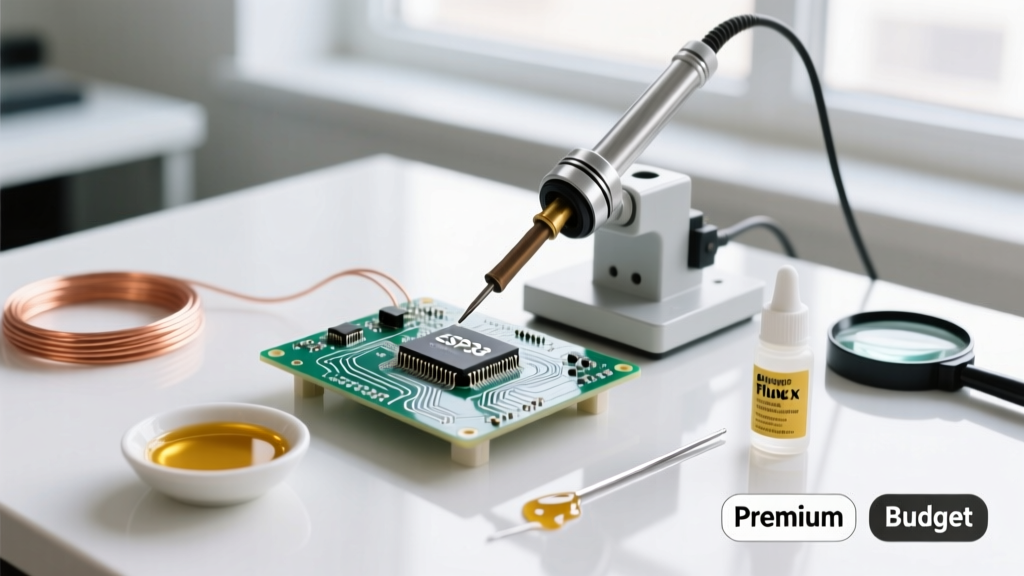
- Budget Approach (Generic/White Flux Blend): Material cost for flux is roughly $15. However, the lack of active fluorides on older, slightly oxidized copper pipes results in a 10% first-pass failure rate during nitrogen pressure testing. Reworking 5 joints costs $150 in labor and scrap. Total Consumable + Rework Cost: $165.
- Premium Approach (Fluoride-Modified Paste): Material cost for a 1 lb tub of high-grade paste flux is $45. The aggressive oxide cleaning ensures a 100% first-pass yield, even on marginally prepared tubing. Zero rework is required. Total Consumable + Rework Cost: $45.
The data clearly demonstrates that premium fluxes act as an insurance policy against catastrophic labor losses. For further technical validation on joint preparation and flux efficiency, the Harris Products Group technical data sheets provide excellent baseline metrics on capillary flow rates relative to flux chemistry.
Shelf Life and Storage Depreciation
Another frequently overlooked cost factor is shelf life. Water-based flux pastes are prone to desiccation. A $40 jar of black flux left unsealed in a dry service truck will turn into a solid brick within three months. While it can sometimes be revived by meticulously stirring in distilled water (never tap water, as chlorine and minerals introduce contaminants), the labor time spent reconstituting the paste often exceeds the cost of replacement.
Pro-Tip for Cost Optimization: Purchase flux in smaller 4 oz or 8 oz containers if your monthly volume is under 50 joints. The 30% price premium per ounce on smaller containers is easily offset by eliminating the waste of dried-out, expired 1 lb tubs.
Expert Verdict: Optimizing Your Consumables Budget
The optimal choice of flux for silver soldering depends entirely on your base metals, operational environment, and the financial penalty of a failed joint.
- For standard copper-to-copper HVAC and plumbing: Stick to high-quality Standard White Fluxes (e.g., Harris Stay-Silv). The $20/lb price point offers the best balance of capillary promotion and manageable cleanup, provided you maintain strict heat control to prevent borax glazing.
- For copper-to-brass, stainless steel, or oxidized vintage lines: Upgrade to Fluoride-Modified Black Fluxes. The $40/lb investment guarantees oxide dissolution and prevents costly rework on dissimilar or stubborn metals.
- For fine jewelry and precision electronics heat-sinks: Utilize Specialty Paste Fluxes. The superior flow characteristics and easier water/ultrasonic cleanup protect the high intrinsic value of the base materials.
Ultimately, treating your flux as a precision chemical tool rather than a generic commodity will yield stronger joints, lower rework rates, and a significantly healthier bottom line in 2026 and beyond.