
The Metallurgical Challenge: Why Aluminum Requires Extreme Measures
Soldering aluminum is fundamentally different from joining copper or brass. The difficulty lies in the aluminum oxide layer (Al2O3) that forms instantly upon exposure to air. While pure aluminum melts at roughly 660°C (1,220°F), its oxide shell melts at a staggering 2,072°C (3,762°F). Standard rosin or no-clean fluxes are entirely incapable of dissolving this ceramic-like barrier. To achieve a metallurgical bond, technicians must rely on highly aggressive, corrosive chemical agents—specifically, aluminum soldering flux formulations based on heavy chlorides and fluorides.
While these fluxes make aluminum soldering possible, they introduce severe occupational hazards. Heating chloride and fluoride salts releases toxic, corrosive gases that can cause permanent respiratory damage and severe chemical burns. This guide details the exact safety protocols, personal protective equipment (PPE), and post-solder neutralization steps required to work with these consumables safely in 2026.
Chemical Breakdown: Understanding the Fume Hazards
To manage risks, you must understand what is in your flux. Unlike mild organic acids found in standard electronics flux, aluminum fluxes rely on inorganic salts.
- Zinc Chloride (ZnCl2) & Ammonium Chloride (NH4Cl): Found in popular liquid and paste fluxes like Superior Flux 3020 and La-Co 13010. When heated above 250°C, these compounds decompose and release hydrogen chloride (HCl) gas. HCl is highly irritating to the mucous membranes and reacts with ambient moisture to form hydrochloric acid aerosols.
- Fluoroborates and Hydrofluoric Acid (HF) Precursors: Used in heavy-duty brazing and high-strength soldering pastes. When subjected to soldering temperatures, these can release hydrogen fluoride (HF) gas. HF is exceptionally dangerous; it bypasses surface pain receptors, penetrates deep tissue, and decalcifies bone. Exposure requires immediate medical intervention with calcium gluconate gel.
According to the National Institute for Occupational Safety and Health (NIOSH), inhalation of fluoride and chloride flux fumes can lead to acute chemical pneumonitis and chronic conditions like fluorosis. Proper ventilation and respiratory protection are not optional.
Mandatory PPE and Workspace Engineering
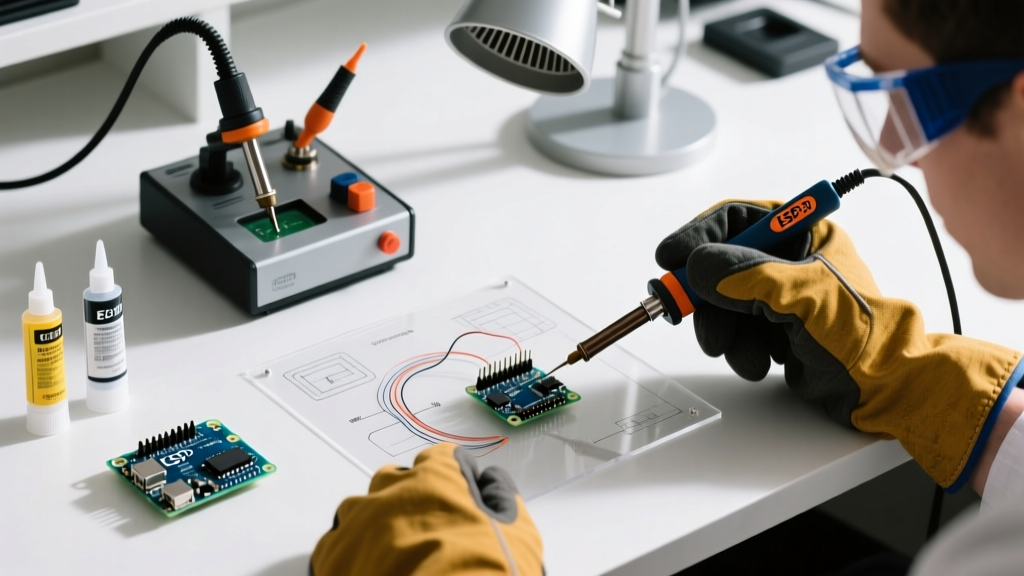
Standard DIY soldering setups are insufficient for aluminum work. Before opening a container of aluminum soldering flux, ensure your workspace meets the following criteria:
1. Respiratory Protection
A standard N95 mask or a basic solder fume extractor with a carbon filter will not stop acid gases. You must use a NIOSH-approved half-face or full-face respirator equipped with specific cartridges:
- Acid Gas (AG) Cartridges: Such as the 3M 6002 or 3M 6003, which are rated for chlorine, hydrogen chloride, sulfur dioxide, and hydrogen fluoride.
- P100 Particulate Filters: Such as the 3M 2097 (which includes a nuisance-level organic vapor/acid gas relief layer) stacked over the AG cartridges to trap metallic oxide particulates.
2. Dermal Protection
Chloride-based fluxes are highly hygroscopic and corrosive to human skin. Standard 4-mil nitrile gloves can be compromised by prolonged exposure to liquid zinc chloride fluxes. Use 8-mil to 15-mil nitrile gloves (e.g., MicroFlex XRT) and wear long sleeves made of natural fibers (cotton) to prevent synthetic fabrics from melting to the skin if a hot solder splatter occurs.
3. Source Capture Ventilation
The OSHA Welding, Cutting, and Brazing eTool mandates source capture for toxic fumes. Use a fume extractor with an articulating arm (e.g., Hakko FA-400 or Metcal MX-AIR) positioned exactly 4 to 6 inches from the solder joint. The airflow must pull fumes away from your breathing zone, not across your face.
CRITICAL SAFETY WARNING: Never eat, drink, or smoke in an area where aluminum soldering flux is used. Ingesting even trace amounts of zinc chloride or fluoride residues transferred from your hands can cause severe gastrointestinal hemorrhaging and systemic toxicity.
Step-by-Step Safe Soldering Protocol
Aluminum acts as a massive heat sink. A standard 40W soldering iron will fail to bring the joint to the flux's activation temperature (typically 280°C - 350°C), resulting in a cold, crumbly joint. Use an 80W to 120W temperature-controlled station (like the Weller WESD51 or Hakko FX-951) set to 380°C (715°F).
- Degrease the Surface: Wipe the aluminum with 99% isopropyl alcohol (IPA) or acetone to remove machining oils. Allow it to flash off completely.
- Mechanical Disruption: Use a stainless-steel wire brush to aggressively score the aluminum surface. This increases surface area and breaks the initial macro-oxide layer.
- Apply Flux Sparingly: Using a wooden applicator or acid brush, apply a thin layer of aluminum soldering flux (e.g., La-Co 13010) only to the scored area. Excess flux will boil violently, spattering hot acid onto your workspace.
- Heat and Scrub: Apply the tinned iron tip to the joint. As the flux melts and bubbles, use the tip of the iron or a specialized titanium scrubbing tool to mechanically scrape the aluminum surface through the liquid flux pool. The flux prevents new oxygen from reaching the metal while you break the micro-oxide layer.
- Feed the Solder: Introduce a zinc-bearing aluminum solder alloy (such as Indalloy 227, which is 70% Sn / 30% Zn). The zinc in the solder alloys with the aluminum substrate, creating a galvanic bridge. Allow the solder to flow via capillary action.
- Remove Heat and Cool: Remove the iron and let the joint cool naturally. Do not blow on it or quench it in water, as rapid cooling can crack the brittle zinc-tin intermetallic layer.
Post-Solder Neutralization: Stopping Galvanic Corrosion
The most common failure in aluminum soldering occurs weeks after the joint is made. The residual chloride and fluoride salts are highly hygroscopic (they absorb moisture from the air) and will aggressively corrode the aluminum, leading to joint failure and white, powdery oxidation. According to the cleanliness standards outlined by IPC guidelines for corrosive fluxes, immediate neutralization is mandatory.
The Neutralization Workflow
- Prepare a Baking Soda Bath: Mix a 5% to 10% solution of sodium bicarbonate (baking soda) in warm water (approx. 40°C / 104°F). The warm water increases the solubility of the zinc chloride salts.
- Scrub the Joint: Submerge the soldered part or apply the solution with a stiff nylon brush. You will see the solution fizz as the alkaline baking soda neutralizes the acidic flux residues (forming harmless sodium chloride and zinc carbonate precipitates).
- Rinse Thoroughly: Rinse the part under running deionized (DI) or distilled water for at least 60 seconds to wash away the neutralized salts.
- Final IPA Displacement: Submerge or spray the joint with 99% IPA to displace the water, preventing new aluminum oxide from forming in the presence of liquid water.
- Dry Completely: Use a hot air rework station or compressed air to dry the joint entirely.
Consumable Comparison: Aluminum Flux vs. Standard Electronics Flux
| Feature | Standard Rosin (RMA) | No-Clean (Synthetic) | Aluminum Soldering Flux |
|---|---|---|---|
| Active Chemistry | Abietic Acid (Organic) | Adipic / Succinic Acid | Zinc Chloride, Fluoroborates |
| Activation Temp | 150°C - 180°C | 180°C - 210°C | 250°C - 350°C |
| Fume Toxicity | Low (Mild irritant) | Low to Moderate | Extreme (Acid / HF gas) |
| Oxide Dissolving Power | Weak (Copper/Silver only) | Moderate | Aggressive (Aluminum, Stainless) |
| Post-Solder Cleaning | Optional (Cosmetic) | Not Required | Mandatory (Neutralization) |
| Avg. Cost (4oz / 2026) | $10 - $15 | $15 - $25 | $18 - $35 |
Troubleshooting Common Aluminum Soldering Failures
- Failure Mode: Solder Balls Up and Refuses to Wet
Cause: The oxide layer was not mechanically broken under the flux pool, or the iron lacked the thermal mass to keep the aluminum above the solder's liquidus temperature.
Fix: Increase iron wattage, pre-heat the aluminum part with a hot air gun to 150°C, and ensure you are physically scraping the substrate through the liquid flux. - Failure Mode: Black, Tarry Smut on the Joint
Cause: The flux was overheated and carbonized. This happens if you leave a high-wattage iron on the flux pool for more than 5-7 seconds without feeding solder.
Fix: Remove heat, let the joint cool, clean off the carbonized flux with a brass wire brush, and re-apply fresh flux. - Failure Mode: White Powder Forming Days Later
Cause: Incomplete neutralization. Chloride salts remain trapped in micro-crevices, absorbing humidity and causing galvanic pitting.
Fix: Soak the part in an ultrasonic cleaner filled with the warm baking soda solution for 10 minutes, followed by a rigorous DI water rinse.
When to Avoid Chemical Flux Entirely: Ultrasonic Alternatives
For safety-critical environments, medical device manufacturing, or enclosed assemblies where post-solder washing is impossible, chemical aluminum soldering flux should be avoided entirely. In 2026, the industry standard for fluxless aluminum joining is Ultrasonic Soldering.
Ultrasonic soldering irons (such as those from Sunbonder or MST) utilize high-frequency acoustic waves (typically 20kHz to 60kHz) at the tip to create microscopic cavitation bubbles in the molten solder. When these bubbles collapse against the aluminum surface, they generate localized shockwaves that physically shatter the aluminum oxide layer, allowing the molten zinc-tin solder to bond directly to the bare aluminum without any chemical flux. While the initial equipment investment is high (typically $600 to $1,200 for a benchtop unit), it entirely eliminates the respiratory hazards, PPE requirements, and washing steps associated with corrosive chemical fluxes.