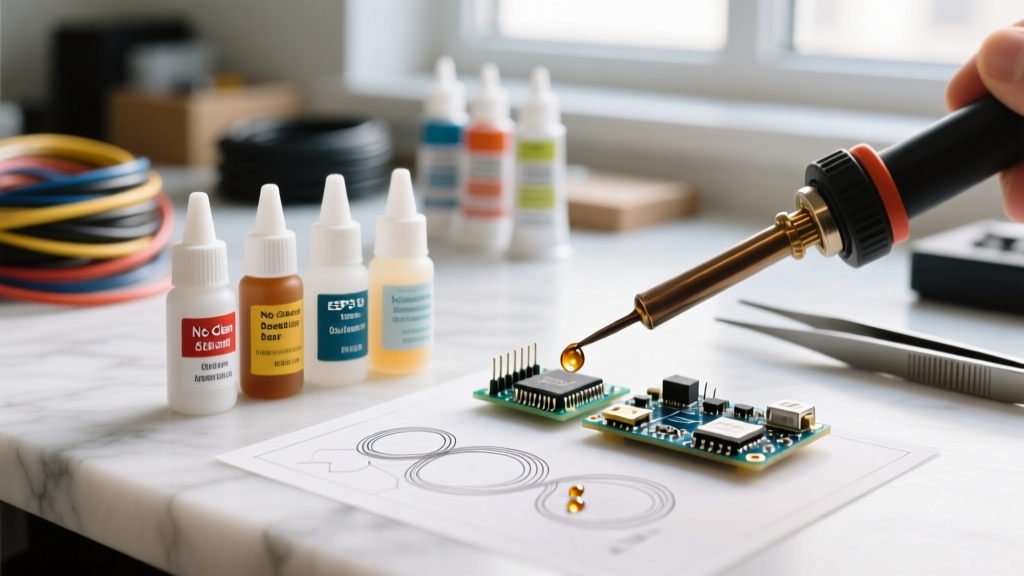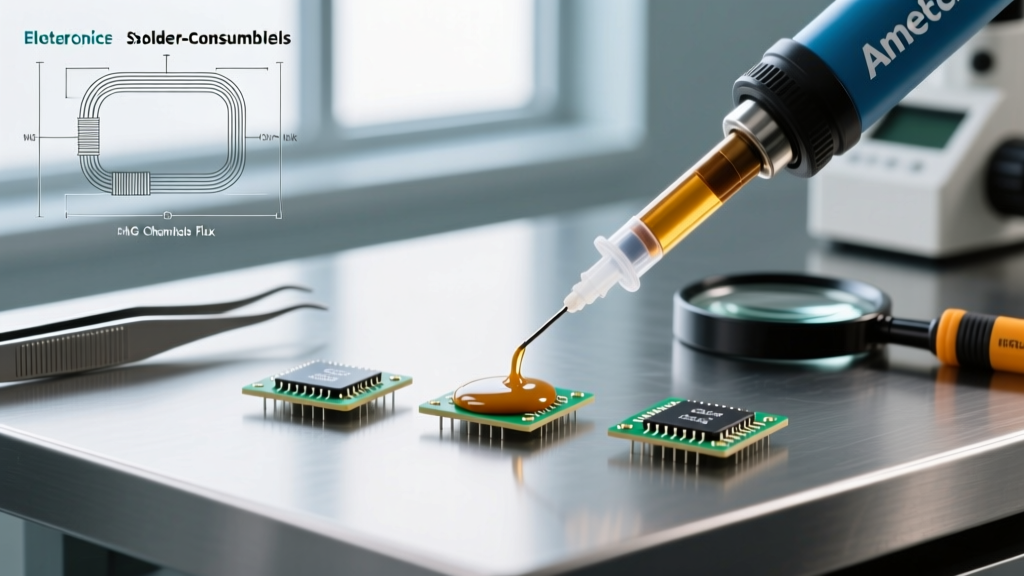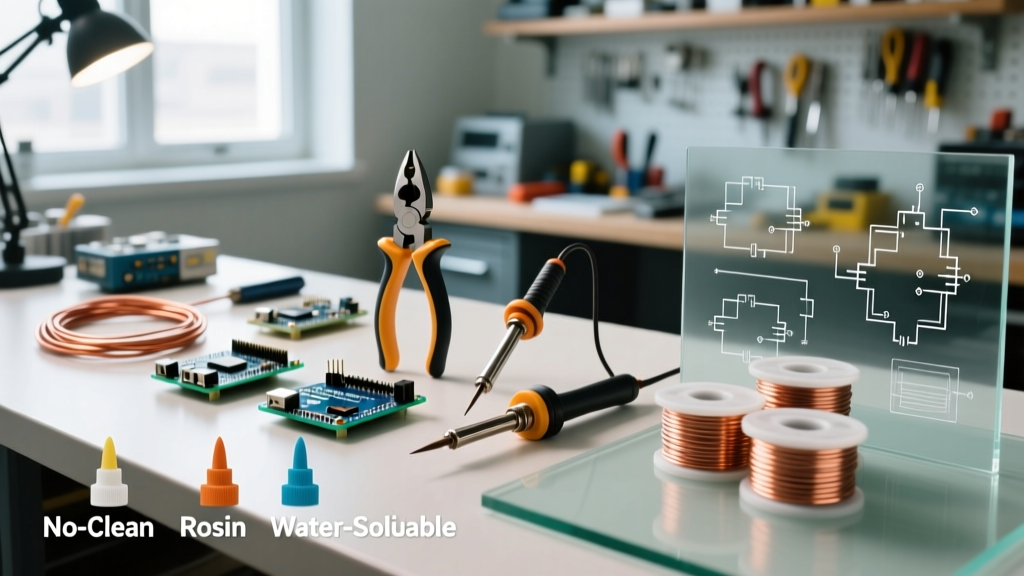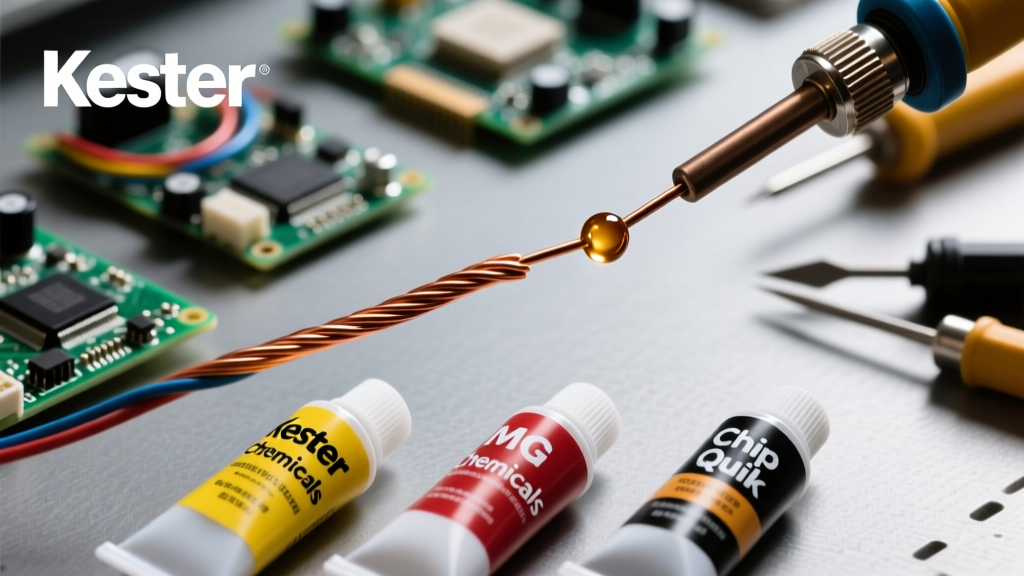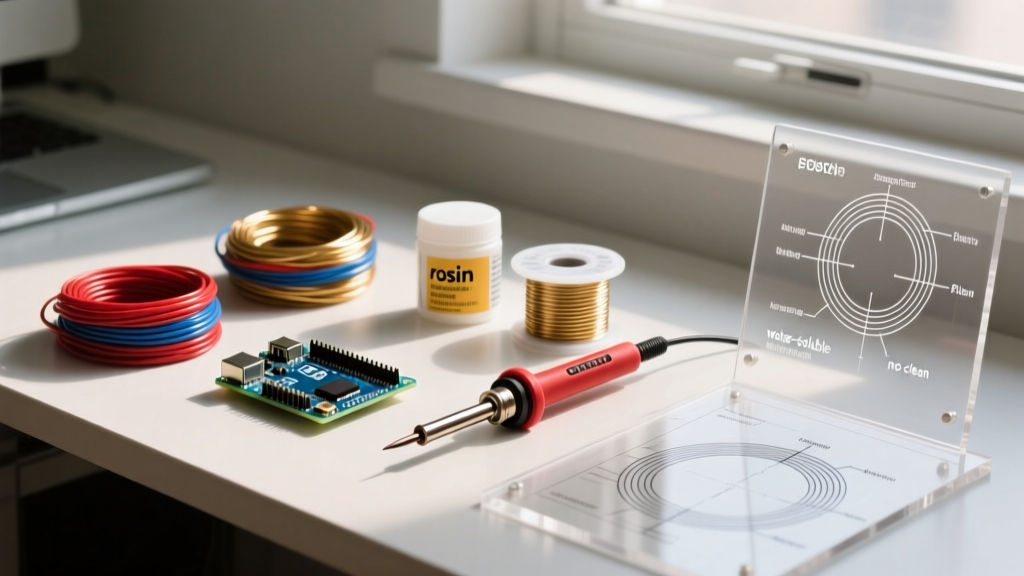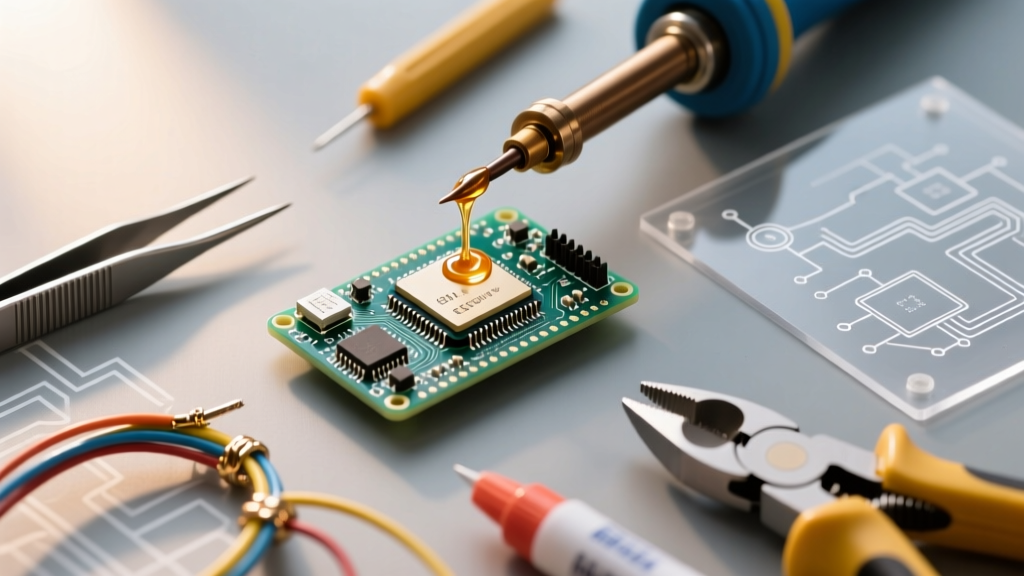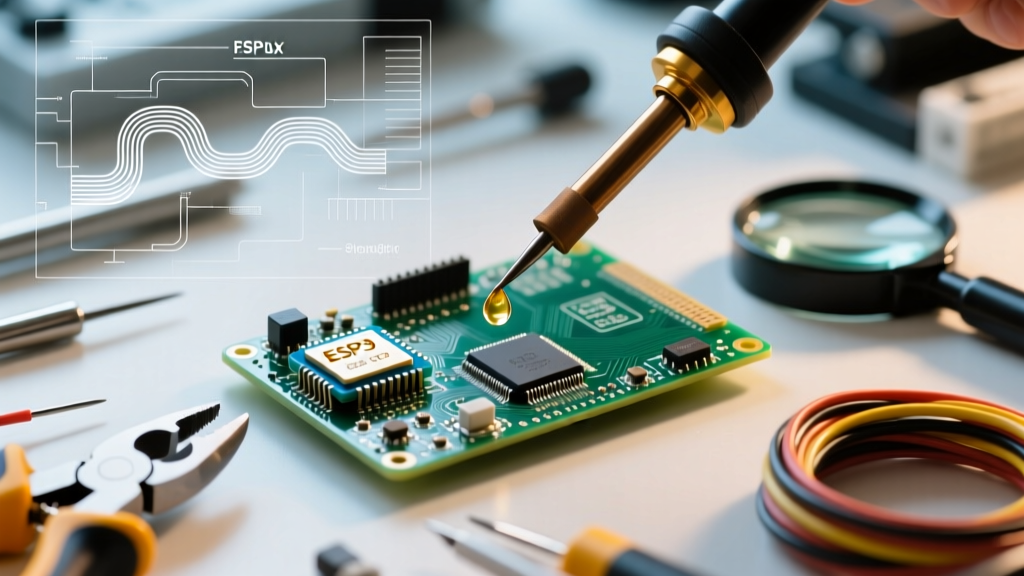

While hobbyists often view flux as a mere 'sticky paste' that helps solder adhere, electronics manufacturing engineers understand it as a highly engineered, transient chemical solvent. As of 2026, with component pitches shrinking to 0.3mm and BGAs becoming ubiquitous, misunderstanding the chemical mechanics of flux leads to catastrophic yield losses. When evaluating the primary uses of flux in soldering, professionals must look beyond basic cleaning and examine surface tension modification, thermal transfer, and oxidation shielding.
The Chemical Mechanics: How Flux Actually Works
At a molecular level, copper and tin surfaces rapidly form metal oxides (CuO, Cu2O, and SnO2) when exposed to ambient air. Molten solder will not alloy with oxidized metal; it will simply ball up and roll off. Flux contains activators—typically weak carboxylic acids like adipic, glutaric, or succinic acid, and sometimes halides. When heated to their specific activation temperature (usually between 150°C and 180°C), these activators chemically reduce the metal oxides into soluble salts, exposing the pristine base metal for intermetallic compound (IMC) formation.
Expert Insight: The activator strength must be perfectly balanced. Too weak, and oxides remain; too strong, and the flux residues become highly corrosive, leading to long-term electrochemical migration (dendritic growth) under voltage bias.
The 4 Core Uses of Flux in Soldering
To master surface mount and through-hole assembly, you must leverage all four functional uses of flux during the reflow or manual soldering profile.
1. Oxide Dissolution and Chemical Cleaning
The most fundamental use is the removal of surface oxides on both the PCB pads and the component leads. Without this chemical reduction, the liquidus phase of the solder alloy cannot physically contact the base metal, preventing the formation of the critical Cu6Sn5 intermetallic layer required for a reliable joint.
2. Surface Tension Reduction (Wetting)
Flux acts as a surfactant. By lowering the surface tension of the molten solder, it allows the liquid alloy to flow and 'wet' the pad uniformly. This is especially critical in fine-pitch SMD work, where capillary action must pull solder into tight gaps (e.g., 0.4mm QFN pads) without bridging adjacent pins.
3. Thermal Transfer Medium
Before the solder melts, the liquid flux bridges the gap between the iron tip (or reflow air) and the component lead. This liquid bridge dramatically improves thermal conductivity, ensuring the joint reaches the solder's liquidus temperature (e.g., 217°C for SAC305) faster and more evenly, reducing thermal shock to sensitive ICs.
4. Oxidation Barrier (Shielding)
Once activated and the oxides are cleared, the flux residue floats to the surface of the molten solder pool. This physical layer acts as a barrier, preventing atmospheric oxygen from re-oxidizing the joint while it is in its vulnerable liquid state before solidification.
Expert Comparison Matrix: Flux Types and Use Cases
Selecting the correct chemistry is dictated by the IPC J-STD-004B standard, which classifies flux by material (Rosin, Resin, Synthetic, Organic) and activity level (Low, Medium, High). Below is a 2026 market breakdown of top-tier consumables and their specific applications.
| Flux Type | IPC Designation | Activation Temp | Primary Use Case | Cleaning Req. | Example Product & Est. Cost |
|---|---|---|---|---|---|
| Rosin Mildly Activated (RMA) | ROL0 / ROL1 | 150°C - 170°C | High-reliability aerospace, automotive | Optional (but recommended) | Kester 245 (~$32 / 10g syringe) |
| No-Clean (NC) | REL0 | 160°C - 190°C | Consumer electronics, high-volume SMT | No | Indium TACFlux 020 (~$45 / 10g) |
| Water-Soluble (WS) | ORH0 / ORH1 | 120°C - 150°C | Heavy chassis, severely oxidized boards | Mandatory (DI Water) | MG Chemicals 8351 (~$28 / 10ml) |
| Tacky / Rework | ROL0 | 140°C - 160°C | BGA reballing, fine-pitch rework | Optional | Chip Quik SMD291AX (~$18 / 10g) |
Application-Specific Expert Recommendations
Fine-Pitch SMD and BGA Rework
For 0.4mm pitch components and BGAs, standard liquid fluxes will boil off or wick away before reflow is complete. Experts mandate the use of tacky fluxes (like Chip Quik SMD291AX). These contain higher ratios of synthetic resins and rheological modifiers that provide physical 'tack' to hold the BGA in place while exhibiting a slow, extended activation window. This prevents 'tombstoning' (where one pad wets before the other, pulling the component upright) by ensuring both pads reach activation temperature simultaneously.
High-Reliability Aerospace and Medical
In mission-critical environments governed by IPC standards and NASA workmanship requirements, the primary concern is long-term Surface Insulation Resistance (SIR). Experts recommend ROL0 (Rosin, Organic, Low activity) fluxes. While technically 'no-clean', high-reliability manufacturers still wash the boards using saponified aqueous cleaners to remove any residual activators, ensuring zero risk of electrochemical migration in high-humidity operational environments.
Heavy-Duty Through-Hole and Chassis Grounding
When soldering large ground planes or thick gauge wires (10 AWG+), the thermal mass rapidly dissipates heat, requiring prolonged iron contact. Standard no-clean fluxes will exhaust and carbonize (turn black) before the solder melts. Here, the use of Water-Soluble (Organic Acid) fluxes is recommended. Their aggressive activators and high boiling point solvents survive extended heat exposure, ensuring a pristine wetting action on heavy copper. As noted by metallurgical data from Indium Corporation, WS fluxes must be cleaned with heated deionized water within 4 hours to prevent severe corrosion.
Failure Modes: When Misunderstanding Flux Causes Defects
Even the best Kester or Alpha fluxes will fail if the thermal profile or application volume is mismanaged. Watch for these specific edge cases:
- Solder Balling and Spattering: If your pre-heat ramp rate exceeds 3°C/s, the volatile solvents in the flux (typically alcohols or glycol ethers) will flash-boil. This causes microscopic explosions, ejecting tiny spheres of solder away from the joint. Fix: Restrict ramp rates to 1.5°C - 2.0°C/s.
- Dendritic Growth (Shorts): Using an RA (Rosin Activated) or Water-Soluble flux and failing to clean the residue. Under a DC voltage bias and high humidity, the uncleaned ionic activators form conductive metallic 'trees' (dendrites) between pads, causing latent short circuits months after deployment.
- Charred Flux Residue: Applying a 400°C iron tip directly to no-clean flux. The resins carbonize, creating a hard, glass-like insulating layer that actually prevents subsequent solder from wetting the pad during rework. Fix: Use a lower tip temp (320°C-350°C) and add fresh liquid flux to re-dissolve the charred resin.
Best Practices for Manual Flux Application
When applying supplemental flux during hand soldering or rework, volume control is paramount. Over-application of no-clean flux leaves a thick, sticky residue that can interfere with automated optical inspection (AOI) and bed-of-nails ICT testing. Aim for 0.5mg to 1.0mg of flux per joint. Use a precision dispensing syringe with a 22-gauge or 25-gauge Luer-lock tip, applying just enough to lightly coat the pad surface without pooling into adjacent vias. For selective wave soldering or manual drag soldering on QFPs, a high-quality natural bristle brush (not synthetic, which can melt) dipped in a low-solids liquid flux provides the optimal thin-film coverage required for flawless wetting.