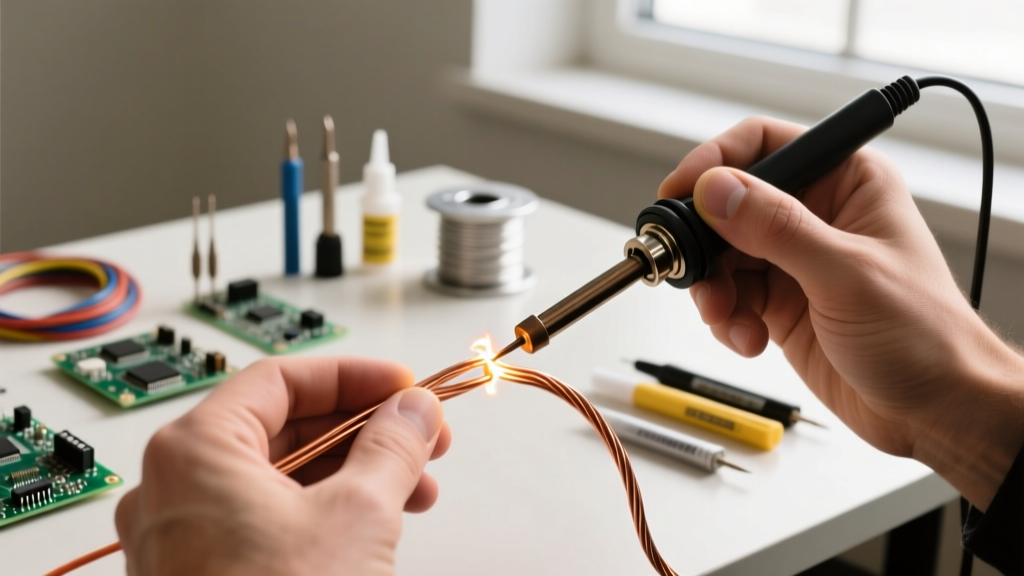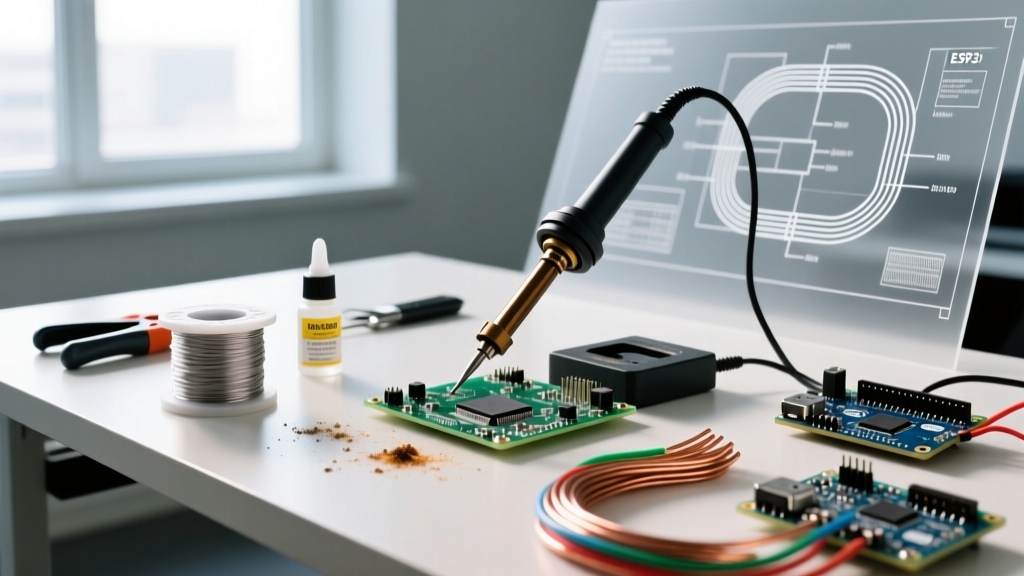

The Short Answer: Do You Need Flux for Soldering?
The direct answer is yes, you absolutely need flux for soldering. However, the more accurate question for modern electronics work is whether you need to apply external flux, or if the flux already embedded inside your solder wire (rosin-core) is sufficient for the task. Flux is not an optional accessory; it is the chemical engine that makes the metallurgical bond possible. Without it, surface tension and oxidation will cause molten solder to ball up and refuse to wet the copper pad or component lead.
In professional electronics assembly and advanced DIY, understanding when to rely on core flux and when to introduce external liquid, paste, or tacky flux is the dividing line between a reliable joint and a field failure. This guide breaks down the chemistry, the failure modes of flux-starved joints, and expert product recommendations for 2026.
The Golden Rule of Soldering: Solder does not stick to metal; it sticks to clean, oxide-free metal. Flux is the chemical agent that removes the oxides and prevents new ones from forming while the iron heats the joint.
The Chemistry of Wetting and Oxidation
When copper or tin-lead is exposed to air, it rapidly forms a microscopic layer of oxidation (CuO and SnO2). Molten solder cannot bond to this oxide layer. Furthermore, the heat from your soldering iron accelerates this oxidation process in real-time.
Flux solves this through a two-part chemical reaction:
- Chemical Reduction: Rosin-based fluxes contain abietic acid, which becomes mildly active when heated to its activation temperature (typically 150°C to 180°C). It dissolves the metal oxides into the flux itself.
- Surface Tension Reduction: Flux lowers the surface tension of the molten solder, allowing it to flow (wet) across the pad rather than beading up like water on a waxed car.
According to the IPC Soldering Standards (specifically IPC J-STD-004B), a proper solder joint requires a wetting angle of less than 30 degrees. Without adequate flux, the solder will exhibit a non-wetting failure mode with an angle greater than 90 degrees, resulting in a mechanically weak and electrically resistive connection.
When Rosin-Core Solder is Sufficient
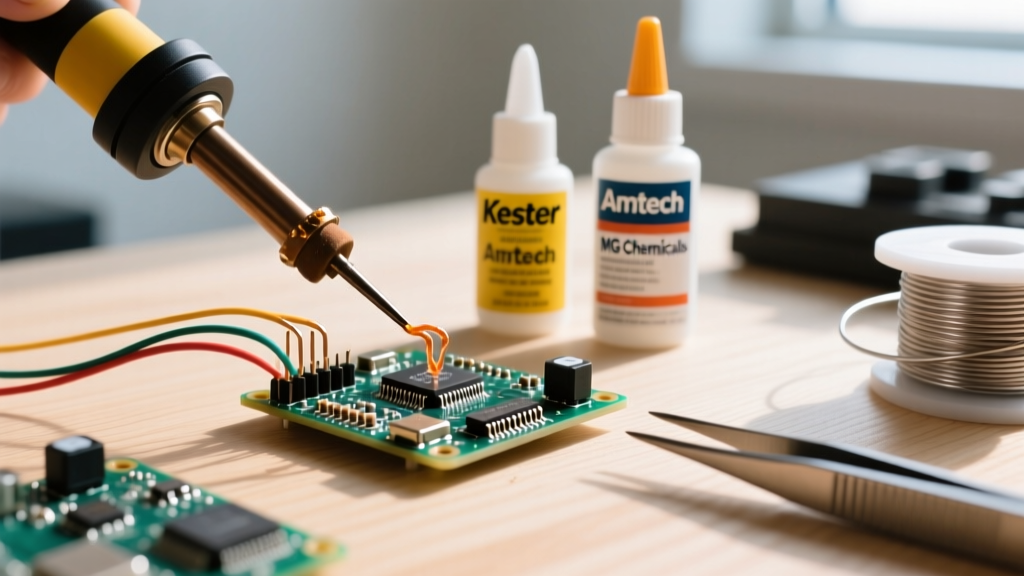
Most commercial solder wire (like the ubiquitous Kester 44) contains a core of rosin flux, usually making up 2% to 3% of the wire's total weight by volume. For many standard tasks, this internal flux is perfectly adequate.
- Fresh Through-Hole Prototyping: Soldering new, untarnished through-hole components (DIP ICs, capacitors, resistors) to a freshly manufactured PCB.
- Quick Wire Splices: Tinning fresh stranded copper wire where the oxidation layer is minimal.
- Single-Pass Joints: Joints that can be heated, flowed, and cooled within 2 to 3 seconds.
The Limitation: Core flux is volatile. If you apply heat for more than 3-4 seconds, the flux boils off, leaves behind a hardened, inactive rosin residue, and the joint becomes starved. If you need to reheat the joint or add more solder, the original core flux is gone, and you must add external flux.
When You MUST Apply External Flux
Professional rework technicians and advanced hobbyists keep external flux on their bench at all times. You must supplement with external flux in the following scenarios:
- Surface Mount (SMD) Drag Soldering: When drag soldering fine-pitch ICs (0.5mm pitch or smaller), the core flux depletes before you finish the row. Tacky flux keeps the solder contained to the pads, preventing bridges.
- Desoldering and Rework: Removing a component destroys the original flux. Adding fresh flux (especially a high-solids paste) is mandatory to ensure the solder wicks cleanly into your desoldering braid.
- Oxidized or Legacy Boards: If a PCB has been sitting in a humid garage for two years, the core flux will not be strong enough to cut through the heavy tarnish. A water-soluble or mildly activated rosin (RMA) liquid flux is required.
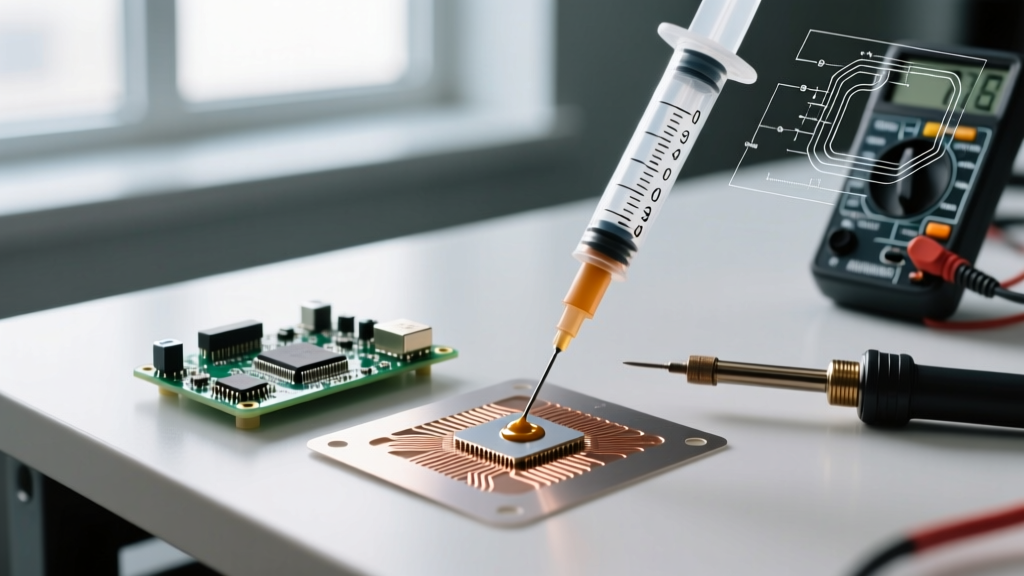
- QFN and BGA Packages: Bottom-termination components require a dedicated tacky flux paste applied directly to the footprint before placement and reflow.
Expert Comparison Matrix: 2026 Flux Recommendations
Selecting the right external flux depends entirely on your cleaning capabilities and the components you are using. Below is our expert matrix for the most reliable formulations currently on the market.
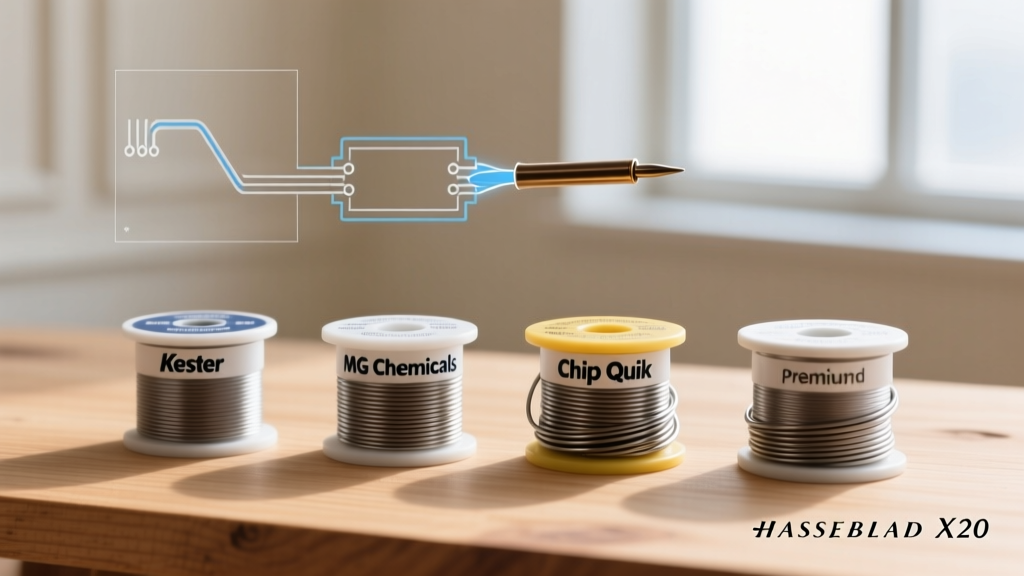
| Flux Type | Top 2026 Product Pick | Avg. Price | Activation Temp | Best Use Case | Cleaning Required? |
|---|---|---|---|---|---|
| Rosin (R/ROM) | Kester 44 Liquid / Pen | $12 - $18 (2oz) | 150°C - 170°C | General through-hole, wire tinning, hobbyist SMD | Optional (Isopropyl Alcohol) |
| No-Clean (Tacky) | Amtech NC-559-V2-TF | $35 - $45 (10cc) | 160°C - 190°C | QFN/BGA rework, fine-pitch drag soldering | No (Leaves safe, clear residue) |
| Water-Soluble (OA) | MG Chemicals 8341 | $20 - $25 (10ml) | 120°C - 150°C | Heavily oxidized boards, thick gauge wire, plumbing | MANDATORY (Deionized water) |
| Gel / Syringe | Chip Quik NC191 Gel | $15 - $20 (10ml) | 140°C - 180°C | Quick SMD touch-ups, 0402/0603 passives | No |
Failure Modes: The Cost of Skipping Flux
Attempting to solder without adequate flux—or relying on depleted core flux—leads to distinct, catastrophic failure modes that are heavily documented in the NASA Workmanship Manual (NASA-HDBK-8739.3).
1. Cold Joints and Disturbed Joints
Without flux to lower surface tension, the solder takes longer to melt and flow. This prolongs the heat exposure, often cooking the internal rosin before the pad reaches thermal equilibrium. The result is a dull, grainy, convex joint with microscopic fractures that will fail under thermal cycling.
2. Tombstoning (SMD Components)
When soldering 0402 or 0603 surface mount components, uneven surface tension will literally pull the component upright, standing on one end like a tombstone. Applying a uniform layer of tacky flux to both pads equalizes the surface tension during reflow, keeping the component anchored flat.
3. Electrochemical Migration (ECM)
If you use a Water-Soluble (Organic Acid) flux because you needed extra cleaning power, but you fail to wash the board with distilled water afterward, the acidic residue remains. When voltage is applied, this residue facilitates dendritic growth—microscopic metal trees that grow between pads, eventually causing a dead short circuit.
Step-by-Step Expert Protocol for Applying External Flux
To get the most out of your external flux, follow this precise application sequence:
- Pre-Heat and Clean: Wipe the target pads with 99% Isopropyl Alcohol (IPA) to remove skin oils. Apply a small amount of flux before the iron touches the board.
- Dispense Sparingly: If using a syringe or pen, apply a thin, even film. More flux does not equal a better joint; excessive flux boils violently, causing dangerous solder splatter (solder balling).
- Engage the Heat: Touch the iron to the pad and the component lead simultaneously. Allow 1-2 seconds for the flux to activate and bubble slightly.
- Feed the Solder: Introduce your rosin-core solder to the opposite side of the iron tip, letting the activated flux draw the solder through the joint via capillary action.
- Inspect and Clean: Remove the heat. If using No-Clean flux, leave the residue. If using Rosin, scrub with a stiff brush and IPA to prevent long-term corrosion.
Frequently Asked Questions
Can I use plumbing flux for electronics?
Absolutely not. Plumbing flux (like Oatey No. 95) contains highly corrosive zinc chloride and hydrochloric acid designed to eat through heavy pipe oxidation. If used on a PCB, it will rapidly eat through the thin copper traces and destroy the fiberglass substrate within weeks, regardless of cleaning.
Does 'No-Clean' flux really mean I don't have to clean it?
In a strict aerospace or medical manufacturing environment (per IPC-A-610 Class 3 standards), all flux residues are often cleaned to prevent any risk of parasitic capacitance or outgassing. However, for consumer electronics, DIY drones, and standard commercial PCBs, modern No-Clean fluxes (like Amtech NC-559) are engineered to be electrically inert and non-corrosive. Leaving the clear, hard residue on the board is perfectly safe and standard practice.
Why is my flux turning black and burning?
Flux burns when the iron temperature is set too high or the tip is left on the joint too long. If you are using standard Sn63/Pb37 solder, your iron should be set between 320°C and 350°C. If you are using Lead-Free (SAC305), you may need 350°C to 380°C, but you must use a flux specifically rated for high-temperature lead-free profiles, otherwise the rosin will carbonize instantly, rendering it useless.