
Why Flux is Non-Negotiable in Electronics
If you have ever tried to solder a component to a printed circuit board (PCB) only to watch the solder ball up and refuse to stick, you have experienced the frustration of oxidation. Soldering without flux is like trying to glue wet wood; the chemical bond simply cannot form. Flux for electronics soldering is the unsung hero of every reliable joint. It serves three critical functions: it chemically removes existing metal oxides, it prevents re-oxidation during the heating process by forming a protective liquid barrier, and it lowers the surface tension of the molten solder, allowing it to flow smoothly into the microscopic crevices of the pad and component lead.
For beginners entering the world of microcontrollers, DIY audio, or general PCB repair, understanding flux chemistry is just as important as knowing how to set your soldering iron temperature. In this comprehensive guide, we will break down the exact types of flux available in 2026, decode industry standards, and provide actionable product recommendations to elevate your soldering from amateur to professional.
The Chemistry: How Flux Actually Works
When copper pads and component leads are exposed to air, they form a microscopic layer of copper oxide (CuO). Molten solder (whether tin-lead or lead-free SAC305) cannot wet or bond to CuO. Flux contains activators—typically weak organic acids or halides. When heated to soldering temperatures (usually between 180°C and 250°C), these activators become highly reactive. They strip the oxygen away from the copper oxide, converting it into a metal salt that dissolves directly into the flux vehicle (the liquid or gel carrier). Once the bare, pure copper is exposed, the molten solder instantly wets the surface, forming a reliable intermetallic compound (IMC) layer.
The 3 Main Types of Flux for Electronics Soldering
Choosing the wrong flux can lead to catastrophic board failure, short circuits, or irreversible corrosion. Below is a comparison matrix of the three primary flux families used in electronics.
| Flux Type | Base Chemistry | Activity Level | Cleaning Required? | Best Application |
|---|---|---|---|---|
| Rosin (RMA/RA) | Natural pine resin (Abietic acid) | Low to Moderate | Yes (with 99% IPA) | General DIY, through-hole, vintage repair |
| No-Clean (NC) | Synthetic resins & weak organic acids | Low | No (leaves benign residue) | SMD rework, BGA, modern SMT assembly |
| Water-Soluble (OA) | Organic Acid (Adipic/Succinic) | High | Yes (DI Water, mandatory) | Heavily oxidized boards, industrial wave |
1. Rosin Flux (R, RMA, RA)
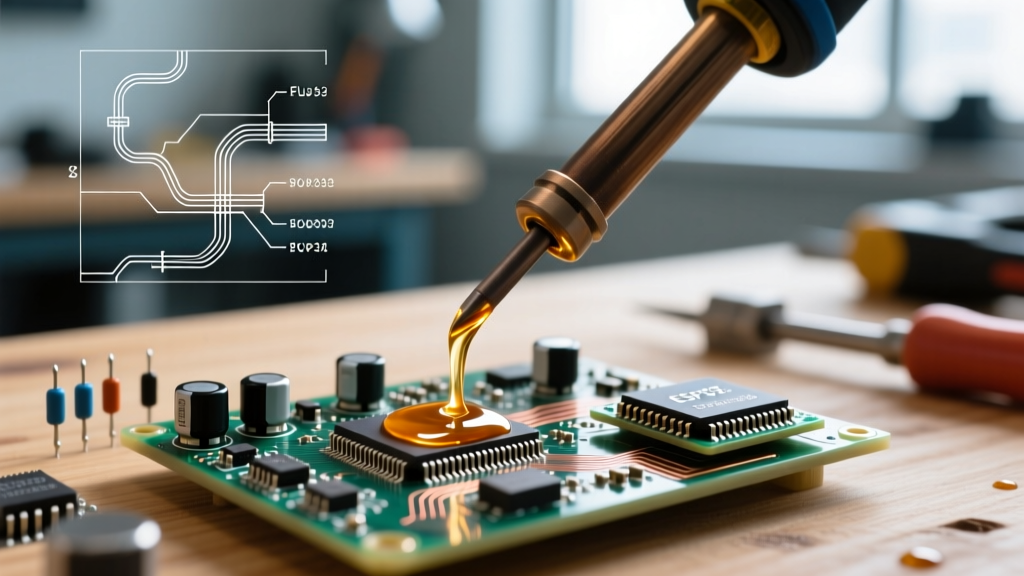
Derived from pine tree sap, rosin is the oldest and most traditional flux. Rosin Mildly Activated (RMA) is the standard for most hobbyist solder wire cores. It leaves a hard, amber-colored, sticky residue. While this residue is generally non-corrosive and electrically insulating, it can attract dust and moisture over time, and it makes visual inspection of joints difficult. You must clean it using 99% Isopropyl Alcohol (IPA) and a stiff brush.
2. No-Clean Flux (NC)
No-clean fluxes are formulated with synthetic resins that leave behind a hard, transparent, and chemically inert residue after heating. This residue is designed to trap any unreacted activators, preventing electrochemical migration (ECM) or dendritic growth (microscopic metallic trees that cause short circuits). No-clean is the undisputed king of modern Surface Mount Technology (SMT) and QFP/BGA rework. Warning: If you are building high-impedance RF circuits or precision analog sensors, even no-clean residue can introduce parasitic capacitance; cleaning is still advised in those niche scenarios.
3. Water-Soluble (Organic Acid) Flux
Water-soluble fluxes are highly aggressive. They are fantastic for soldering to heavily oxidized through-hole pads or large ground planes that suck away heat. However, they are extremely corrosive. If you use water-soluble flux, you must clean the board with heated Deionized (DI) water within 2 hours of soldering. Tap water will not work, as the chlorine and minerals will react with the flux to create conductive salts.
CRITICAL BEGINNER WARNING: Never, under any circumstances, use plumbing flux (like zinc chloride paste or tinning fluid) on electronics. Plumbing fluxes contain highly aggressive inorganic acids that will eat through your copper traces and destroy the PCB within days. Always use flux specifically rated for electronics.
Decoding IPC J-STD-004B: What Do ROL0 and ORL1 Mean?
When you buy professional-grade flux, you will see alphanumeric codes based on the IPC J-STD-004B standard. Understanding this code gives you instant insight into the flux's behavior:
- Letter 1 (Composition): RO (Rosin), OR (Organic Acid), IN (Inorganic Acid), RE (Resin/Synthetic).
- Letter 2 (Activity): L (Low), M (Moderate), H (High).
- Number (Halides): 0 (Zero halides, less than 500ppm), 1 (Contains halides, highly active).
For 95% of beginner and intermediate electronics work, you want a ROL0 (Rosin, Low activity, Zero halides) or REL0 (Resin/Synthetic No-Clean, Low activity, Zero halides) flux. These provide the perfect balance of wetting action and long-term reliability without the risk of halide-induced corrosion.
Top Flux Products for Beginners (2026 Market Guide)
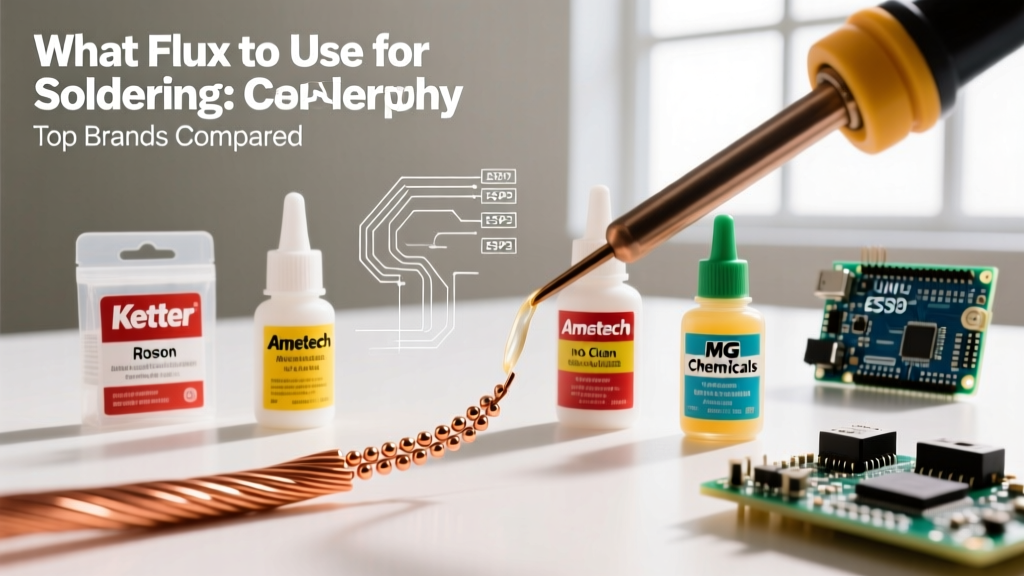
The market is flooded with cheap, no-name fluxes on e-commerce sites that often contain hidden corrosive halides. Stick to established chemical manufacturers. Here are the top reliable choices for your workbench in 2026:
1. Amtech NC-559-V2-TF (Tacky No-Clean Syringe)
Price: ~$28 for a 10cc syringe.
Best For: SMD drag soldering, BGA reballing, and tack-holding components before heating. This is a REL0 no-clean gel. Its high viscosity means it stays exactly where you dispense it and doesn't boil off instantly when the iron touches it. It is the gold standard for micro-soldering and smartphone repair.
2. Kester 186 Mildly Activated Rosin (Liquid)
Price: ~$18 for a 1-pint can.
Best For: Tinning wires, through-hole components, and general bench work. This is an RMA liquid flux. You apply it with an acid brush or a dedicated flux dispenser bottle. It flows beautifully into tight spaces but requires IPA cleanup.
3. MG Chemicals 8341 No-Clean Flux Pen
Price: ~$14 per pen.
Best For: Quick touch-ups and field repairs. The pen format allows for precise application directly onto a stubborn pad without the mess of a syringe or liquid brush. It leaves a very low-residue, non-corrosive film.
Step-by-Step Application & Cleaning Protocol
Applying flux correctly is just as important as the soldering itself. Follow this workflow for optimal results:
- Pre-Clean: Wipe the PCB pads with 99% IPA to remove skin oils and manufacturing dust.
- Apply Flux: Apply a small amount of flux to the pad. For liquid, use a brush; for gel, use a needle tip. You only need enough to cover the metal surface—a pea-sized drop is often too much for SMD work.
- Pre-Heat & Tin: Touch your iron to the pad and component lead simultaneously. Feed a tiny amount of solder wire (which contains its own core flux) to establish a fillet.
- Let it Flow: The external flux will activate, pull the solder into the joint via capillary action, and create a smooth, concave, shiny fillet.
- Clean (If Required): If using RMA or Water-Soluble flux, wait 60 seconds for the board to cool. Apply 99% IPA and scrub with an ESD-safe hog-hair brush. Wipe away the dissolved residue with a lint-free Kimwipe. Repeat until the board is completely dry and non-tacky.
Critical Failure Modes & Troubleshooting
Even with the right flux, beginners encounter specific failure modes. Here is how to diagnose them:
- Solder Balling / Splatter: If your liquid flux violently pops and spatters solder balls across your board, you are either applying way too much flux, or your iron temperature is too high (above 380°C), causing the solvent carrier to flash-boil into steam instantly. Lower your iron to 320°C-340°C and use less flux.
- De-wetting (Solder pulls away from the pad): This happens when the flux burns out before the joint reaches thermal equilibrium. If you are soldering a large ground plane, the copper acts as a massive heatsink. The flux activates, cleans the pad, but then carbonizes and dies before the solder melts. Solution: Use a higher thermal mass iron tip (like a bevel or large chisel) and apply fresh flux right before the solder melts.
- Dull, Grainy Joints: Often mistaken for a 'cold joint', a dull finish on lead-free solder (SAC305) is actually normal. However, if using 63/37 SnPb solder, dullness indicates movement during the cooling phase or flux exhaustion. Add a touch of fresh liquid flux and reflow the joint for 2 seconds.
Health, Safety, and Fume Extraction
Flux fumes are not just annoying; they are a genuine health hazard. The vaporized rosin (colophony) and synthetic resins are known respiratory sensitizers. Prolonged exposure without ventilation can lead to occupational asthma. According to safety guidelines outlined by organizations like the CDC and NIOSH, you must never lean directly over your soldering work to inhale the plume.
Actionable Advice: Invest in a dedicated fume extractor. A basic carbon-filter fan like the Hakko FA-400 (approx. $55) is the absolute minimum for hobbyists. For serious daily work, consider a HEPA/Carbon combination unit that pulls the smoke down and away from your breathing zone. Always work in a room with ambient cross-ventilation.
Frequently Asked Questions
Do I need extra flux if my solder wire already has a rosin core?
For simple through-hole components and large wires, the 2% to 3% flux core inside your solder wire is sufficient. However, for SMD drag soldering, desoldering with wick, or repairing oxidized vintage boards, the core flux burns off too quickly. You must supplement it with external liquid or gel flux to maintain a wetting environment throughout the entire heating cycle.
Can I use no-clean flux and still clean it off?
Yes. While 'no-clean' implies you don't have to clean it, you absolutely can. No-clean residue is notoriously difficult to dissolve because it is designed to harden and trap activators. To clean no-clean flux, you cannot just use IPA; you need a specialized saponifier or a high-solvency cleaner like MG Chemicals 413B, followed by an IPA rinse.
Why did my flux turn black and crusty?
Black, crusty residue is carbonized flux. This happens when you apply excessive heat for too long, burning the organic resin base into carbon. Carbon is slightly conductive and can cause leakage currents in high-impedance circuits. If your flux turns black, you need to lower your iron temperature, use a larger tip for better heat transfer, or apply fresh flux to clean up the carbonized mess.
For further reading on advanced aerospace and high-reliability soldering standards involving flux selection, the NASA Electronic Parts and Packaging (NEPP) program provides extensive documentation on workmanship and material requirements for critical electronics.