
Why Flux is the Unsung Hero of Soldering
When beginners first pick up a soldering iron, they usually obsess over the solder alloy or the iron's wattage. However, as any seasoned PCB assembly technician will tell you, the true secret to a reliable, shiny, and electrically sound joint lies in the chemical preparation of the metals. Without flux, soldering is virtually impossible. As we navigate the 2026 landscape of electronics assembly, where lead-free SAC305 and SAC405 alloys dominate and require higher thermal profiles, understanding the types of flux for soldering is no longer optional—it is critical for preventing catastrophic board failures.
Flux serves two primary purposes: it chemically strips away metal oxides that form on copper pads and component leads, and it reduces the surface tension of the molten solder, allowing it to 'wet' and flow smoothly across the joint. But not all fluxes are created equal. Using the wrong type can lead to corroded traces, short circuits, or brittle cold joints.
Decoding the IPC J-STD-004B Standard
Before diving into the specific categories, beginners must understand how the industry classifies flux. The IPC J-STD-004B standard uses a four-character code to define flux composition, activity level, and halide content. For example, a flux labeled ROL0 means:
- RO: Rosin base material.
- L: Low activity level.
- 0: Zero halides (no corrosive chlorine or bromine compounds).
Understanding this nomenclature prevents beginners from accidentally purchasing a highly active, halide-heavy flux for a delicate surface-mount device (SMD) repair, which could destroy the board within weeks due to hidden corrosion.
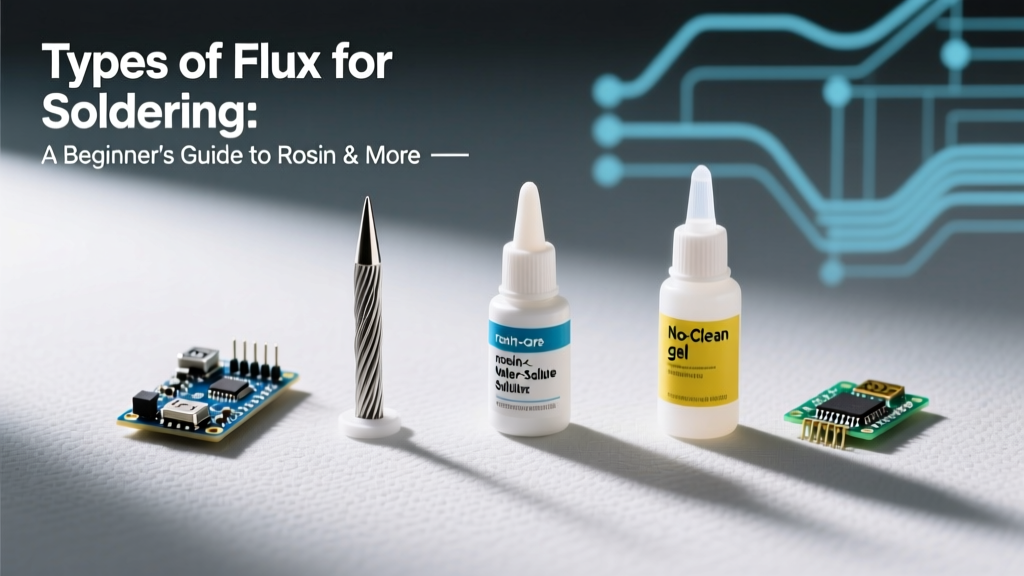
The 3 Main Types of Flux for Soldering
1. Rosin Flux (R, RMA, and RA)
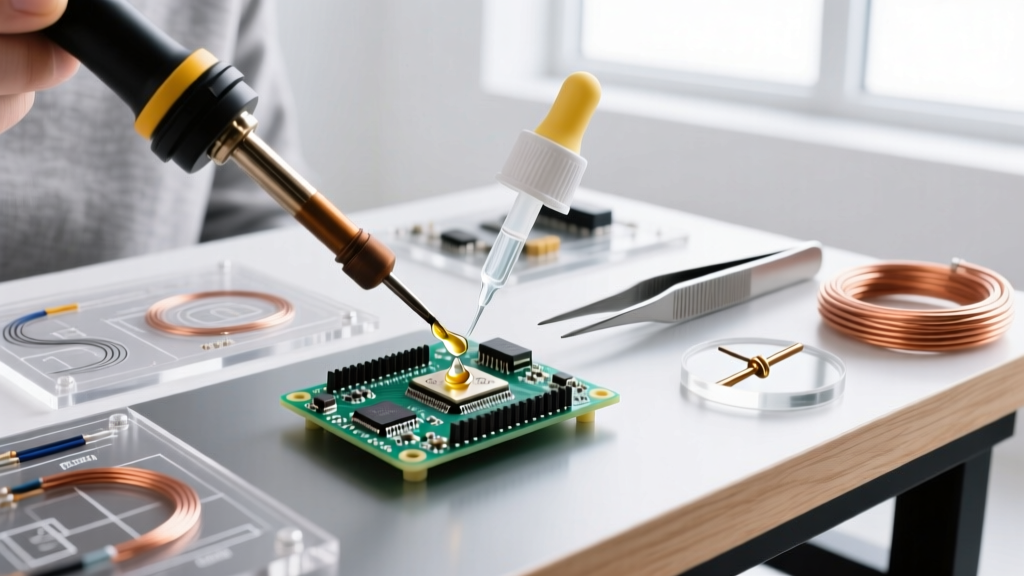
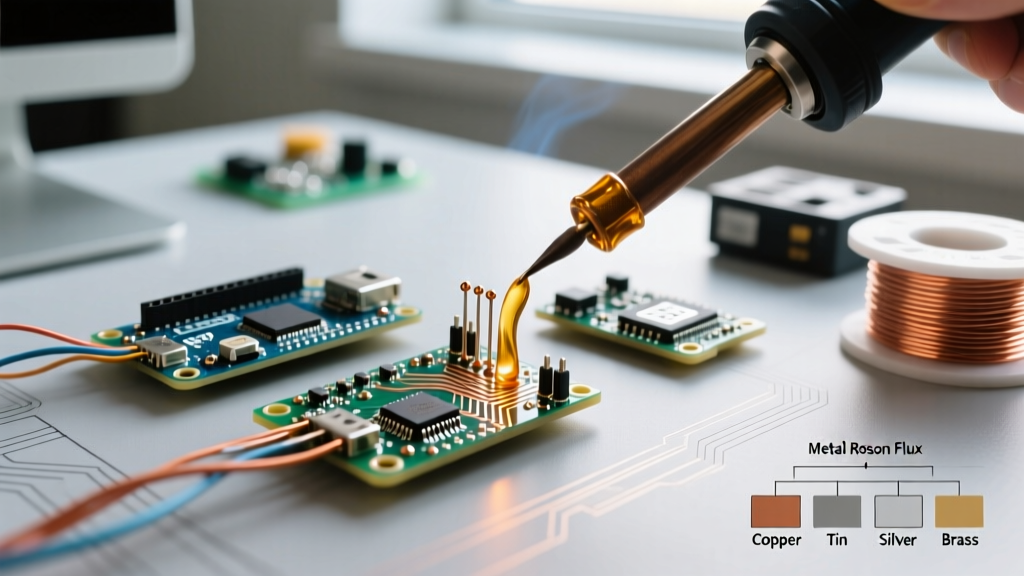
Rosin flux is derived from the purified sap of pine trees, primarily relying on abietic acid. When heated to its activation temperature (typically around 150°C to 170°C), abietic acid becomes highly reactive, dissolving copper oxide and forming a protective rosin glass over the joint as it cools.
- Pure Rosin (R): Very mild, rarely used today because it lacks the activators needed for modern, slightly oxidized boards.
- Rosin Mildly Activated (RMA): The gold standard for hobbyists and general DIY electronics. It contains mild organic acids to boost cleaning power. A classic example is Kester 186 RMA liquid flux, which costs around $12 to $18 for a 2oz bottle. It leaves a sticky, amber residue that should be cleaned with 99% Isopropyl Alcohol (IPA) for aesthetic and inspection purposes, though it is generally non-corrosive if left alone.
- Rosin Activated (RA): Contains stronger acidic activators for heavily oxidized boards. The residue must be cleaned immediately after soldering to prevent long-term corrosion.
2. Water-Soluble Flux (Organic Acid / OA)
Water-soluble fluxes, often referred to as Organic Acid (OA) fluxes, are formulated with aggressive organic acids like adipic, glutaric, or succinic acid. They are designed for high-volume manufacturing environments where boards pass through an automated aqueous washing station immediately after the reflow oven.
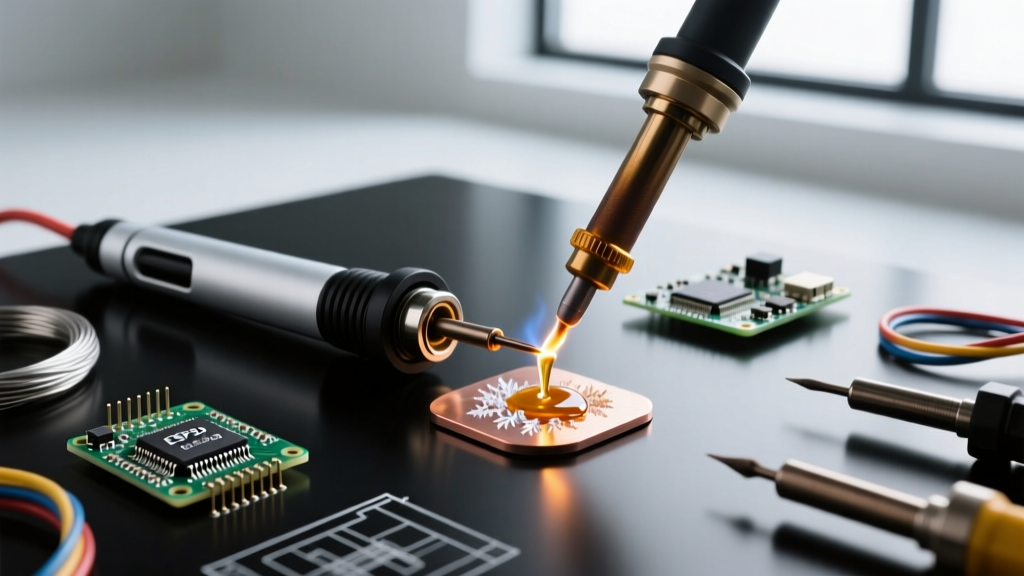
CRITICAL WARNING FOR BEGINNERS: Never use OA flux for manual hand-soldering unless you have a dedicated ultrasonic cleaner and hot deionized (DI) water wash station. Standard 99% IPA will not dissolve OA residue; it will only spread it across the board. Leftover OA flux will absorb moisture from the air and cause dendritic growth—microscopic metal 'trees' that bridge adjacent pins and cause catastrophic short circuits.
According to the NASA Workmanship Standards for Soldered Electrical Connections, failure to properly remove water-soluble flux residues is a primary cause of latent field failures in high-reliability aerospace electronics.
3. No-Clean Flux
As the name implies, no-clean flux is designed to leave behind a minimal, hard, clear, and electrically insulating residue that does not require removal. Modern no-clean fluxes utilize synthetic resins and mild organic activators that are completely consumed or rendered inert during the high-heat reflow process.
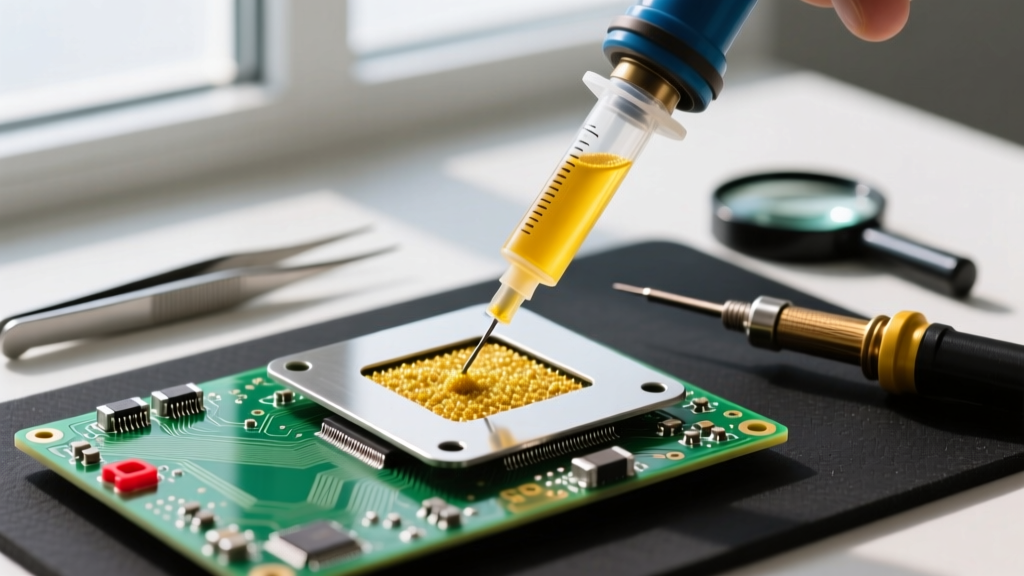
For SMD rework and stencil printing, tacky no-clean flux pastes are indispensable. The Amtech NC-559-V2-TF (a 10cc syringe retailing for about $35 to $45) is widely considered an industry benchmark for BGA reballing and QFN drag-soldering. Beginner Mistake: Do not attempt to clean no-clean flux with standard IPA. The alcohol breaks down the hardened resin matrix, turning the harmless residue into a white, sticky, and potentially conductive sludge. If you must clean it, use a specialized saponifier or a high-purity aerosol flux remover.
Flux Comparison Matrix
| Flux Type | Base Material | Activity Level | Cleaning Required? | Best Application | Corrosion Risk |
|---|---|---|---|---|---|
| Rosin (RMA) | Pine Sap (Abietic) | Mild | Recommended (IPA) | Through-hole, general DIY | Very Low |
| Water-Soluble (OA) | Organic Acids | High | Mandatory (Hot DI Water) | Automated SMT, heavy oxidation | Extreme (if uncleaned) |
| No-Clean | Synthetic Resin | Low to Mild | No (Leave intact) | SMD rework, BGA, fine-pitch | None (if fully heated) |
Choosing the Right Flux Form Factor
Beyond the chemical composition, flux comes in several physical forms, each suited to specific soldering techniques:
- Flux-Cored Solder Wire: The most common form for beginners. The flux is extruded inside the solder wire (usually 1.8% to 2.2% by weight). Excellent for through-hole components, but often insufficient for complex SMD drag-soldering.
- Liquid Flux: Applied with a brush or dauber. Ideal for pre-tinning wires and large ground planes. Beware of cheap 'plumbing fluxes' sold in hardware stores; these contain zinc chloride and will instantly destroy electronic copper traces.
- Flux Pens: Contain a low-solid, no-clean or RMA liquid flux in a click-pen applicator. The MG Chemicals 8341 No-Clean Flux Pen ($8 to $12) is perfect for targeted application on 0603 or 0805 SMD pads without flooding the surrounding area.
- Tacky Flux Paste: A thick, gel-like substance dispensed via syringe. Essential for holding tiny SMD components in place before the solder melts and for reworking Ball Grid Arrays (BGAs).
Troubleshooting Common Flux-Related Failures
Even with the right type of flux, improper technique can lead to visible and invisible defects. Here is how to diagnose flux-related issues on your workbench:
- Violent Splattering and Popping: This occurs when liquid flux is applied too heavily, or when the soldering iron temperature exceeds 400°C, causing the flux solvents to boil instantly. Lower your iron temperature to 320°C–350°C for lead-free solder and apply flux sparingly.
- De-wetting (Solder Balls Up and Refuses to Stick): The flux has burned off before the solder could melt, or the pad is heavily oxidized beyond the flux's capacity. Clean the pad with fiberglass scratch pen, apply fresh RMA liquid flux, and try again.
- White Chalky Residue: If using no-clean flux, this usually means the joint did not reach a high enough temperature to fully activate and clear the flux, or you attempted to clean it with low-purity (70%) rubbing alcohol. Always use 99%+ IPA for electronics cleaning.
Safety and Fume Extraction
Flux fumes are not merely annoying; they are a recognized occupational health hazard. The vaporized rosin and synthetic resins contain volatile organic compounds (VOCs) and fine particulate matter that can cause occupational asthma and contact dermatitis. As of 2026, proper benchtop ventilation is considered mandatory for anyone soldering more than a few hours a week.
Invest in a dedicated fume extractor with a HEPA and activated carbon filter combo, such as the Hakko FA-430 (approximately $180) or a BOFA system for professional labs. A simple desk fan blowing the smoke toward your face or across the room is entirely inadequate and merely redistributes hazardous particulates into your breathing zone.
Frequently Asked Questions
Can I use plumbing flux for electronics?
Absolutely not. Plumbing fluxes (like Tinning Flux or Paste Flux used for copper pipes) are highly acidic, typically containing zinc chloride or hydrochloric acid. They are designed to eat through heavy pipe oxidation and will rapidly corrode and dissolve the delicate copper traces on a printed circuit board.
Does flux expire?
Yes. Liquid and paste fluxes have a shelf life, typically 12 to 24 months when stored in a cool, dark place. Over time, the solvents evaporate, and the activators degrade, resulting in a thick, ineffective paste that will cause cold joints. Always check the manufacturer's date code on the syringe or bottle.
How much flux is too much?
For SMD work, a thin, translucent coating over the pads is sufficient. If you are pooling thick globs of tacky flux that squeeze out from under the components and require extensive post-soldering cleanup, you are using too much. Excess flux can trap heat, potentially damaging sensitive silicon dies during prolonged rework.
By mastering the chemical nuances of rosin, water-soluble, and no-clean formulations, beginners can transition from frustrating, unreliable solder joints to professional-grade, factory-quality assemblies. Remember: the iron provides the heat, but the flux makes the connection.