
The Chromium Oxide Barrier: Why Standard Fluxes Fail
Stainless steel owes its corrosion resistance to a passive, microscopic layer of chromium oxide. While this protects the metal from rust, it acts as an impenetrable shield against standard rosin (RMA) or mildly activated (RA) fluxes. To achieve a metallurgical bond, you need a highly active, acidic flux capable of dissolving this oxide layer at soldering temperatures. Finding the best flux for stainless steel soldering requires balancing aggressive oxide removal with manageable fumes and post-solder cleanup.
Metallurgical Note: According to technical guidelines from the American Welding Society, the chromium oxide layer on 300-series stainless steel regenerates almost instantly in the presence of oxygen. Your flux must not only strip the oxide but exclude atmospheric oxygen until the molten solder wets the bare iron/nickel matrix.
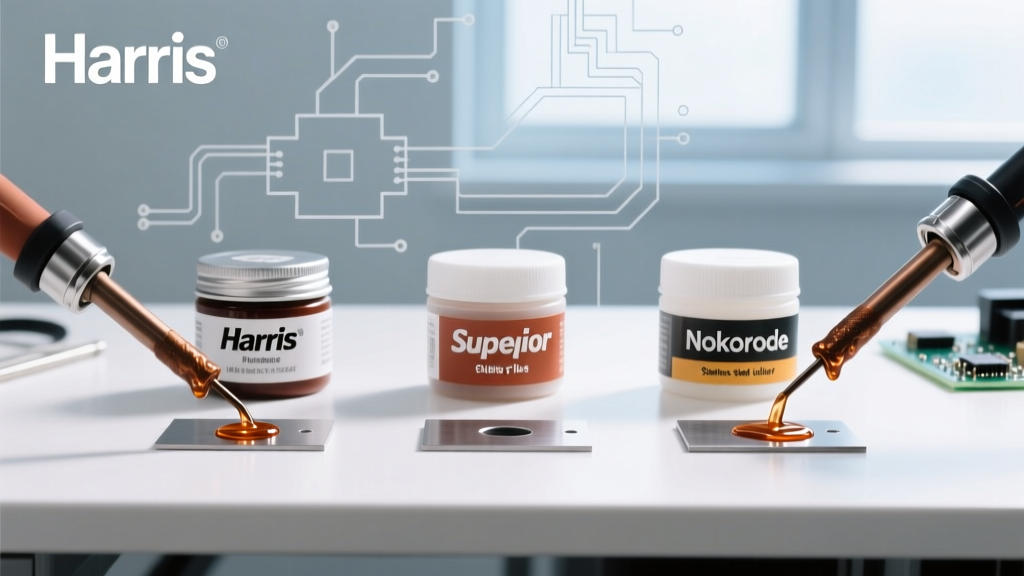
Brand 1: Harris Stay-Clean Liquid Flux (The Aggressive Standard)
Harris Stay-Clean is the undisputed workhorse for HVAC and heavy-duty stainless repairs. It is a water-white liquid composed primarily of zinc chloride and ammonium chloride.
Performance & Application
Because it is a low-viscosity liquid, Stay-Clean wicks deeply into lap joints and capillary gaps. It activates rapidly around 150°C (302°F), violently breaking down the chromium oxide layer. However, its high water content causes aggressive spattering when it hits a 380°C (715°F) soldering iron tip.
- Pricing: ~$9.50 for a 4 oz (118 ml) bottle.
- Best For: Heavy-gauge stainless sheet metal, structural wire joints, and horizontal flat seams.
- Drawbacks: Extreme spatter, harsh hydrochloric off-gassing, and rapid creep (it runs everywhere).
Brand 2: Superior #30 Paste Flux (The Precision Choice)
Manufactured by Superior Flux & Mfg. Co., the #30 Stainless Steel Soldering Paste uses a zinc chloride active agent suspended in a heavy petrolatum (petroleum jelly) vehicle. This structural difference completely changes the handling dynamics.
Performance & Application
The paste base melts at roughly 60°C (140°F), coating the joint before the active chlorides trigger at 180°C (356°F). The petrolatum acts as a physical oxygen barrier, preventing the chromium oxide from reforming during the critical wetting phase. Furthermore, the high viscosity eliminates the spatter associated with liquid fluxes.
- Pricing: ~$16.00 for a 2 oz (56 g) jar.
- Best For: Vertical joints, fine stainless wire mesh, electronic shielding cans, and precision instrument repair.
- Drawbacks: Higher cost per ounce, and the petroleum residue requires solvents (like mineral spirits) for cleanup before water washing.
Brand 3: Nokorode Stainless Steel Flux (The Balanced Alternative)
Nokorode offers a specialized stainless steel paste that utilizes a proprietary blend of organic acids and mild chlorides. It is engineered to reduce the noxious fume output typical of heavy zinc chloride formulations.
Performance & Application
While slightly less aggressive than Harris Stay-Clean on heavily oxidized 316-grade stainless, Nokorode provides excellent wetting on 304 and 430 grades. It requires a slightly higher iron temperature—optimally 390°C (735°F)—to fully activate the organic carriers.
- Pricing: ~$18.50 for a 4 oz (113 g) jar.
- Best For: Indoor repairs, food-grade stainless equipment (where fume control is critical), and environments lacking heavy ventilation.
- Drawbacks: Slower wetting action; requires longer dwell times on the joint, increasing the risk of thermal damage to nearby heat-sensitive components.
Head-to-Head Specification Matrix
| Feature | Harris Stay-Clean | Superior #30 Paste | Nokorode SS Paste |
|---|---|---|---|
| Base Chemistry | Zinc/Ammonium Chloride (Aqueous) | Zinc Chloride (Petrolatum) | Organic Acid / Mild Chloride |
| Physical Form | Low-Viscosity Liquid | High-Viscosity Paste | Medium-Viscosity Paste |
| Activation Temp | ~150°C (302°F) | ~180°C (356°F) | ~200°C (392°F) |
| Spatter Level | High (Violent boiling) | Very Low | Low |
| Post-Solder Cleanup | Water + Baking Soda | Solvent, then Water + Base | Hot Water + Mild Detergent |
| Approx. Cost (2026) | $9.50 / 4 oz | $16.00 / 2 oz | $18.50 / 4 oz |
Selecting the Right Solder Alloy to Pair with Your Flux
Flux chemistry is only half the equation. Stainless steel has poor thermal conductivity compared to copper, meaning heat dissipates slowly but localized hot spots can easily burn flux before the bulk metal reaches flow temperature. Furthermore, stainless steel exhibits poor wetting characteristics with standard lead-free alloys unless specialized formulations are used.
- 60/40 or 63/37 Sn/Pb (Leaded): Still the gold standard for DIY and non-RoHS industrial repairs. The lower liquidus temperature (183°C / 361°F) allows the flux to do its work without boiling off prematurely. Excellent capillary action on stainless.
- SAC305 (Sn96.5/Ag3.0/Cu0.5): The standard lead-free alternative. Requires higher iron temperatures (350°C+), which pushes the limits of chloride-based fluxes. If using SAC305 on stainless, Superior #30 paste is mandatory to prevent flux burnout.
- Sn/Ag (95/5 or 96/4): Often preferred for food-grade or high-temperature stainless applications (like coffee machine boilers) where lead is prohibited but copper-bearing alloys would cause joint degradation.
Step-by-Step Soldering Protocol for Stainless Steel
Even the best flux for stainless steel soldering will fail if the thermal and mechanical preparation is inadequate. Follow this exact sequence for 304 and 316 stainless alloys:
- Mechanical Abrasion: Scuff the joint area with 120-grit aluminum oxide sandpaper or a stainless steel wire brush. Never use a carbon steel brush, as embedded carbon particles will cause localized galvanic corrosion (tea-staining) later.
- Solvent Degreasing: Wipe the abraded area with 99% isopropyl alcohol or acetone to remove skin oils and machining coolants.
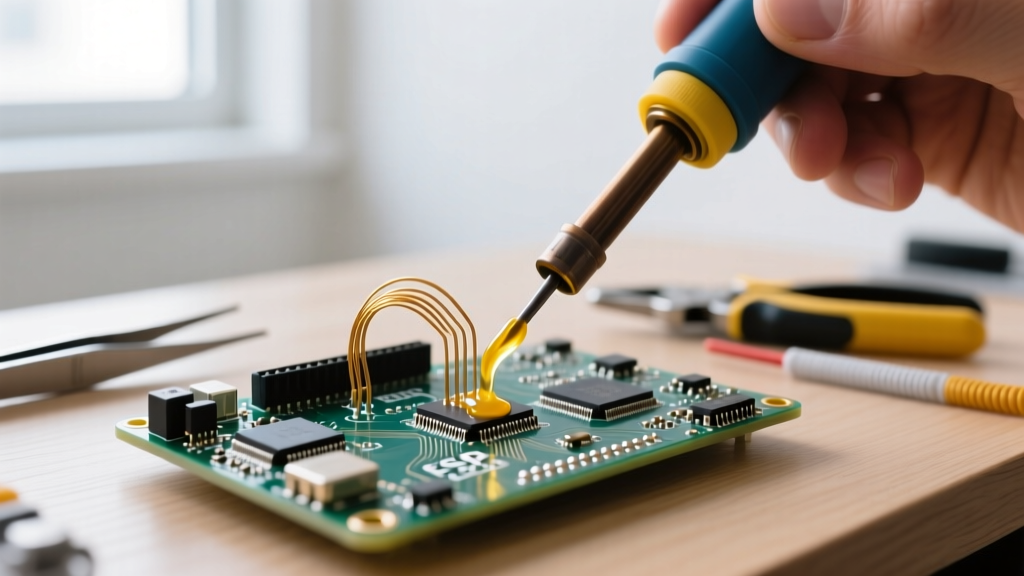
- Flux Application: Apply a generous bead of your chosen paste (or liquid) to cover the entire joint plus a 2mm perimeter.
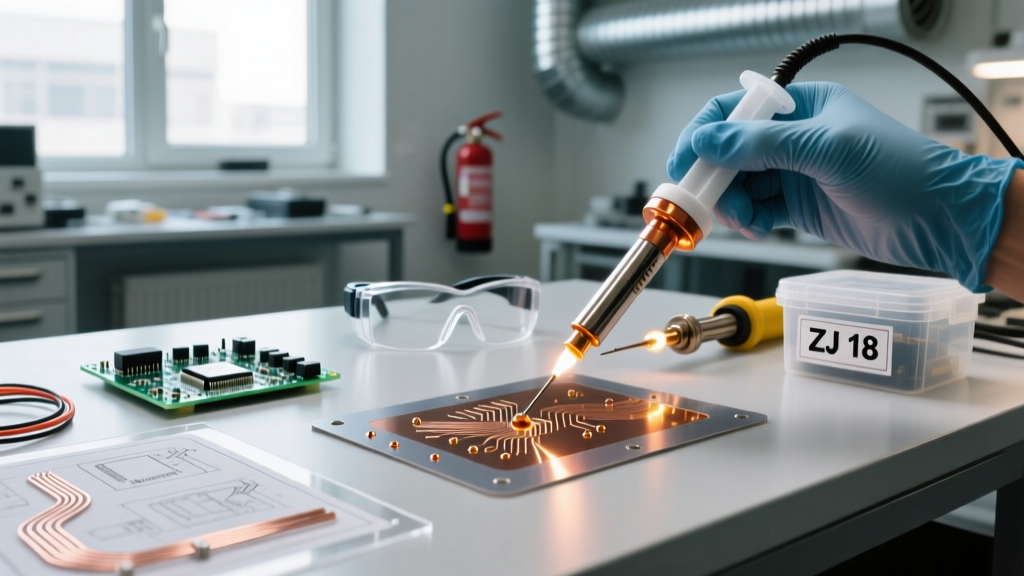
- Thermal Pre-heat: Using a high-wattage iron (minimum 80W for thick gauges) set to 380°C (715°F), touch the tip to the stainless steel part, not the flux. Allow the metal to conduct heat into the flux until it bubbles and turns clear (approx. 3-5 seconds).
- Solder Feed: Introduce a 60/40 Sn/Pb or Sn96.5/Ag3.0/Cu0.5 (SAC305) wire directly into the joint interface. Capillary action will draw the molten alloy under the flux blanket.
Critical Cleanup and Passivation
Acidic fluxes leave behind chloride salts. If left on stainless steel, these salts will attract ambient moisture and destroy the passive chromium oxide layer, resulting in severe pitting corrosion within 48 hours. According to metallurgical standards referenced by Indium Corporation, neutralization is non-negotiable.
- For Liquid Fluxes (Harris): Douse the joint immediately with a saturated baking soda (sodium bicarbonate) and water slurry. The alkaline base neutralizes the hydrochloric byproducts. Rinse with distilled water.
- For Paste Fluxes (Superior/Nokorode): Wipe away the bulk petroleum residue with mineral spirits. Follow with the baking soda slurry, then a final distilled water rinse and compressed air dry.
Troubleshooting Stainless Soldering Failures
Why is the solder balling up and refusing to wet?
This indicates the iron temperature is too low to sustain the endothermic reaction required to keep the flux active, or the chromium oxide layer was not fully breached. Increase your iron temperature by 20°C and ensure you are heating the base metal, not just melting solder onto the iron tip.
Why did the joint turn black and crusty?
You have burned the flux. Zinc chloride decomposes and oxidizes if exposed to temperatures exceeding 425°C (797°F) for prolonged periods. Use a higher-wattage iron to transfer heat faster, reducing the total dwell time on the joint.