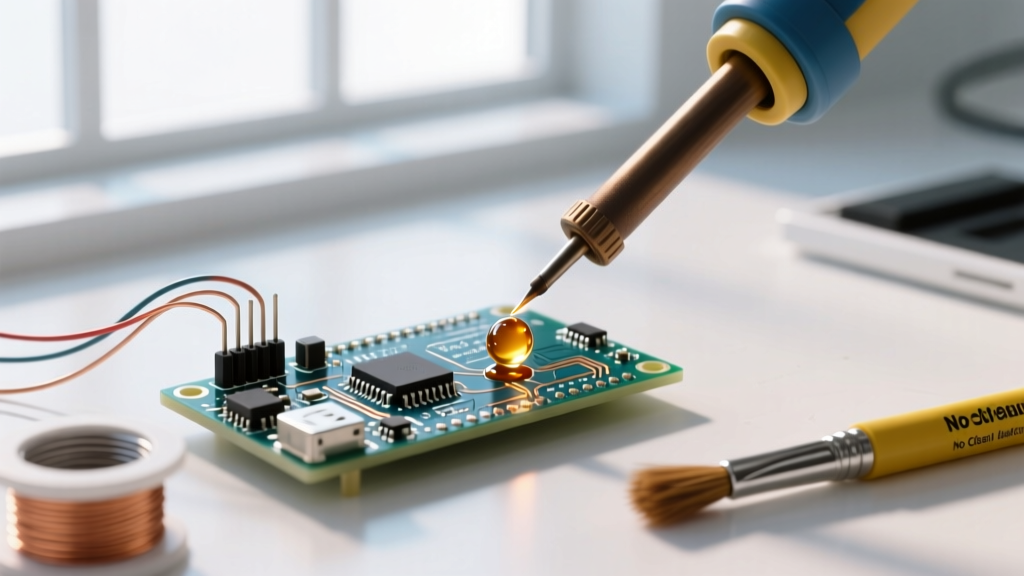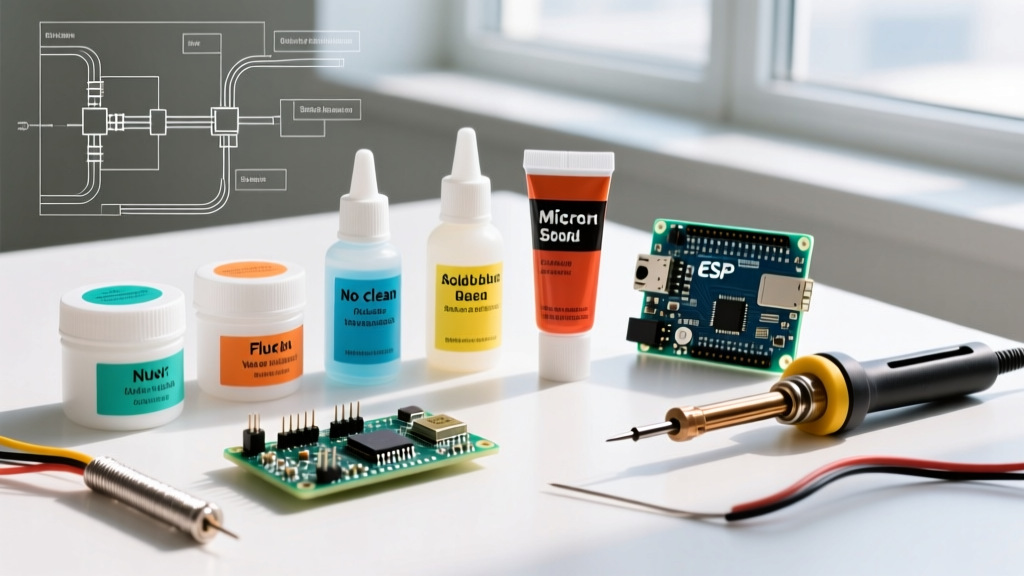

When makers, engineers, and procurement teams search for electric flux for soldering, they are often bridging a colloquial terminology gap. In physics, 'electric flux' describes the distribution of an electric field through a surface. However, on the electronics workbench, this phrase is universally used to describe electronic-grade chemical fluxes—the vital consumables that reduce surface tension, prevent oxidation, and ensure reliable metallurgical bonds on printed circuit boards (PCBs).
As of early 2026, global supply chain stabilization has normalized the pricing of specialty chemicals, but the cost of flux extends far beyond the sticker price on a syringe or bottle. A true cost analysis must factor in direct material costs, hidden cleaning overhead, capital equipment depreciation, and the catastrophic financial risks of electrochemical migration (ECM). This guide deconstructs the economics of electronic soldering fluxes to help you optimize your consumables budget without sacrificing IPC compliance.
The Terminology Gap: What You Are Actually Buying
Before analyzing costs, we must eliminate a dangerous procurement error. Beginners searching for 'electric flux' sometimes accidentally purchase plumbing or HVAC fluxes (like Oatey tinning flux or zinc chloride pastes). These are highly acidic, designed for copper pipes, and will aggressively corrode PCB traces and component leads within weeks. True electronic fluxes are formulated to meet IPC J-STD-004 standards, classifying them by base material (Rosin, Resin, Organic, Inorganic), activity level, and halide content.
Direct Material Costs: 2026 Electronic Flux Pricing Matrix
The baseline cost of flux varies wildly depending on its chemical formulation and delivery method. Liquid fluxes are vastly cheaper per gram than viscous tacky fluxes packaged in precision syringes. Below is a 2026 pricing breakdown of industry-standard electronic fluxes.
| Flux Type & Model | Classification | Form Factor | Avg. 2026 Unit Price | Cost per Gram / mL |
|---|---|---|---|---|
| Kester 245 (No-Clean) | ROL0 | 10 oz (295 mL) Liquid | $32.00 | $0.11 / mL |
| MG Chemicals 8341 (Rosin) | ROL1 | 10g Jar (Paste) | $11.50 | $1.15 / g |
| Chip Quik SMD291AX (Tacky) | ROL0 | 10cc Syringe | $21.99 | $2.20 / cc |
| Kester 331 (Water-Soluble) | ORH1 | 10 oz (295 mL) Liquid | $28.00 | $0.09 / mL |
| Indium NC-559-V2-TF | ROL0 | 10g Jar (Paste) | $45.00 | $4.50 / g |
Material Cost Takeaway: For high-volume wave or selective soldering, liquid no-clean fluxes like Kester 245 offer the lowest direct material cost at roughly $0.11 per milliliter. However, for precision SMD rework and BGA balling, tacky fluxes are mandatory. While a 10cc syringe of Chip Quik SMD291AX costs $2.20 per cc, a typical 0603 component rework requires less than 0.05cc, keeping the direct material cost per joint at roughly $0.11.
The Hidden Economics: Cleaning, Labor, and Equipment
The most critical mistake in flux cost analysis is ignoring the post-soldering cleanup phase. The IPC and NASA-STD-8739.3 workmanship standards dictate strict cleanliness requirements for high-reliability electronics. Your choice of flux dictates your cleaning overhead.
1. No-Clean Flux: The Illusion of Zero Cost
No-clean fluxes (like Kester 245 or Amtech NC-559) are designed to leave a benign, transparent residue that does not require removal. Direct cleaning cost: $0.00. However, the hidden cost lies in thermal profiling. No-clean fluxes are highly sensitive to overheating. If your reflow oven or soldering iron exceeds the flux's activation window (typically 150°C to 180°C) for too long, the residue burns into a hard, dark amber crust. This crust can interfere with bed-of-nails ICT (In-Circuit Testing) probes, resulting in false test failures that cost $5 to $15 per board to troubleshoot and re-test.
2. Water-Soluble (OA) Flux: High Performance, High Overhead
Organic Acid (OA) water-soluble fluxes provide the best wetting action and brightest solder joints, making them ideal for heavily oxidized boards. But they are highly corrosive and must be cleaned within 4 to 8 hours of soldering.
- Capital Equipment: Requires an ultrasonic cleaner or heated DI (Deionized) water wash system ($500 - $3,500 initial investment).
- Consumables: DI water generation and filtration, plus specialized saponifiers ($80 per gallon).
- Labor & Time: 10 minutes of washing, rinsing, and baking per batch. At a burdened labor rate of $35/hour, cleaning adds roughly $2.50 to $5.00 per board in low-volume runs.
3. Rosin (RMA) Flux: The Middle-Ground Tax
Rosin Mildly Activated (RMA) fluxes require chemical solvents for removal. In 2026, environmental regulations have heavily restricted the use of aggressive solvents, pushing labs toward high-purity (99%+) Isopropyl Alcohol (IPA) or specialized HFE (Hydrofluoroether) cleaners.
Cost Alert: Tech-grade 99% IPA has seen price volatility, averaging $35 to $45 per gallon in 2026. Furthermore, manual scrubbing with IPA and lint-free wipes takes an average of 3 minutes per board. This labor-intensive process makes RMA flux the most expensive option when factoring in total cost of ownership (TCO) for production environments.
Failure Mode Economics: When Cheap Flux Destroys Margins
The ultimate hidden cost of flux selection is field failure. If you attempt to save $15 by using a high-halide, high-activity flux (like an REL1 or ORH1) on a high-impedance or high-voltage PCB without proper cleaning, you risk Electrochemical Migration (ECM).
ECM occurs when ionic residue from the flux absorbs ambient moisture, creating a conductive pathway between adjacent traces. Under voltage bias, metallic dendrites grow between the anode and cathode, eventually causing a short circuit. Consider the economics of a field failure:
- Direct Material Savings: $15.00 (using cheaper, highly active flux).
- Cost of Field Return (RMA): Shipping, diagnostic labor, and replacement PCB costs average $150 to $400 per unit.
- Reputational Damage: Immeasurable, but potentially resulting in lost enterprise contracts.
For high-reliability aerospace, medical, or automotive electronics, the cost of the flux is entirely negligible compared to the cost of a recall. This is why IPC J-STD-004 mandates rigorous Silver Chromate and Corrosion testing for fluxes, and why procurement teams must strictly enforce ROL0 (Rosin, Low activity, zero halides) or REL0 specifications for no-clean assemblies.
Strategic Procurement: Syringes vs. Gallons
Your production volume should dictate your packaging format, which drastically alters the cost-per-gram.
- Prototyping & Rework (1-50 boards/month): Purchase 10cc syringes or 10g jars. Yes, you are paying a 2000% premium per gram compared to bulk, but flux has a shelf life (typically 6 to 12 months at room temperature, or up to 24 months refrigerated). Throwing away half a gallon of expired water-soluble flux erases any bulk discount.
- Mid-Volume Production (50-500 boards/month): Transition to 10oz (295mL) bottles or 30cc pneumatic syringes. This is the sweet spot for cost-efficiency without risking expiration.
- High-Volume / Automated (500+ boards/month): Procure 1-gallon or 5-gallon pails for wave and selective soldering machines. Liquid no-clean fluxes in bulk drop to roughly $60-$80 per gallon, reducing the material cost per board to fractions of a penny.
Final Verdict: Optimizing Your 2026 Consumables Budget
Searching for 'electric flux for soldering' should ultimately lead you to a strategic decision based on your assembly process, not just the upfront price tag. For 90% of DIY, prototyping, and general electronics repair, a high-quality ROL0 no-clean flux like Kester 245 or Chip Quik SMD291AX offers the best total cost of ownership by entirely eliminating the labor and chemical costs of post-solder cleaning. Reserve water-soluble fluxes exclusively for heavily oxidized legacy boards or specialized high-yield production lines where automated DI water washing is already established. By aligning your flux chemistry with your IPC reliability requirements and cleaning capabilities, you protect both your profit margins and your product's long-term reliability.