
The Critical Role of Liquid Flux in Modern PCB Rework
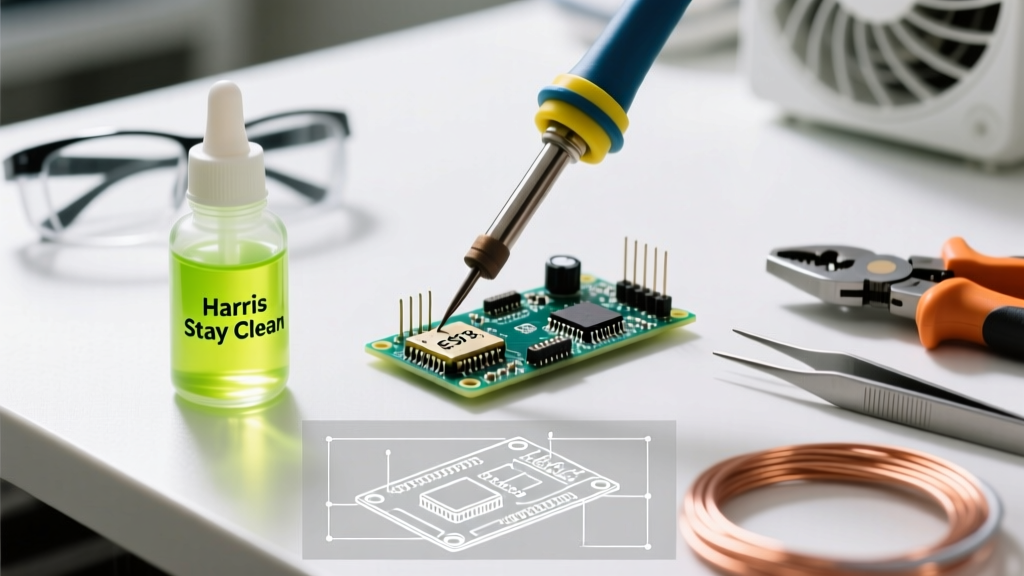
As surface-mount components shrink to 01005 and 008004 imperial sizes in 2026, the physical limits of traditional solder paste and high-viscosity gels become apparent. For micro-soldering, BGA reballing, and tight-pitch QFN rework, soldering flux liquid is not just an alternative; it is an absolute necessity. Unlike paste fluxes that dry out or gel fluxes that trap solvents, liquid flux relies on low surface tension and capillary action to penetrate microscopic gaps beneath component leads, ensuring complete oxide removal and uniform solder wetting.
In this expert guide, we break down the chemistry of liquid fluxes, recommend specific industry-standard formulations, and detail the precise application and cleaning protocols required to prevent catastrophic board failures.
Decoding Flux Chemistry and IPC Classifications
When selecting a soldering flux liquid, you must look beyond marketing terms and reference the IPC J-STD-004 standard, which classifies flux based on composition, activity level, and halide content. Understanding these three-letter codes is critical for matching the flux to your specific reliability requirements.
- Composition (First Letter): RO (Rosin), RE (Resin), OR (Organic), IN (Inorganic).
- Activity Level (Second Letter): L (Low), M (Moderate), H (High).
- Halide Content (Third Character): 0 (0% halides) or 1 (greater than 0% halides).
For consumer electronics and standard prototyping, ROL0 (Rosin, Low activity, 0% halides) or REL0 (Resin, Low activity, 0% halides) liquids are the gold standard. They provide sufficient oxide removal without leaving corrosive ionic residues that could cause long-term electrochemical migration.
Expert Product Recommendations for 2026
Based on extensive rework testing and long-term reliability data, here are the top three liquid flux formulations trusted by professional rework technicians and aerospace engineers.
1. Kester 186 (Mildly Activated Rosin - RMA)
Kester 186 remains the undisputed benchmark for general-purpose liquid rosin flux. Classified as ROM1 (Rosin, Moderate activity, >0% halides), it contains a mild activator package that easily cuts through moderately oxidized pads and component leads. It is highly forgiving and provides excellent wetting on older, tarnished through-hole components and larger SMDs.
- Best For: Through-hole soldering, heavy-gauge wire tinning, and legacy SMD rework.
- Pricing (2026): ~$14 to $18 per 2oz (59ml) bottle.
- Drawback: Leaves a sticky, amber residue that requires cleaning with 99% Isopropyl Alcohol (IPA) or a dedicated saponifier for aesthetic or high-impedance applications.
2. MG Chemicals 8341 (No-Clean Liquid)
For modern, high-density SMD and BGA rework, MG Chemicals 8341 is a premier REL0 (Resin, Low activity, 0% halides) no-clean liquid flux. It features a synthetic resin base that leaves a hard, clear, and non-conductive residue post-reflow. Its low-solids formulation minimizes the risk of splattering during rapid heating.
- Best For: 0201/0402 SMD rework, QFN drag soldering, and BGA reflow where cleaning is impractical.
- Pricing (2026): ~$22 to $26 per 100ml bottle.
- Drawback: Lower activity means it struggles with heavily oxidized or lead-free HASL finishes without supplemental pre-cleaning.
3. Kester 245 (Water-Soluble Organic Acid)
When dealing with severely oxidized boards, nickel-palladium-gold (NiPdAu) finishes, or high-reliability aerospace applications where zero-residue is mandated, Kester 245 (ORH1 - Organic, High activity, >0% halides) is the weapon of choice. It aggressively strips oxides but is highly corrosive at room temperature.
- Best For: Aerospace PCB assembly, heavily oxidized RF shielding cans, and difficult-to-wet alloys.
- Pricing (2026): ~$25 to $30 per 100ml bottle.
- Drawback: Mandatory and immediate post-solder cleaning. Leaving this residue on a board will cause rapid dendritic growth and catastrophic short circuits.
Comparative Analysis: Liquid Flux Matrix
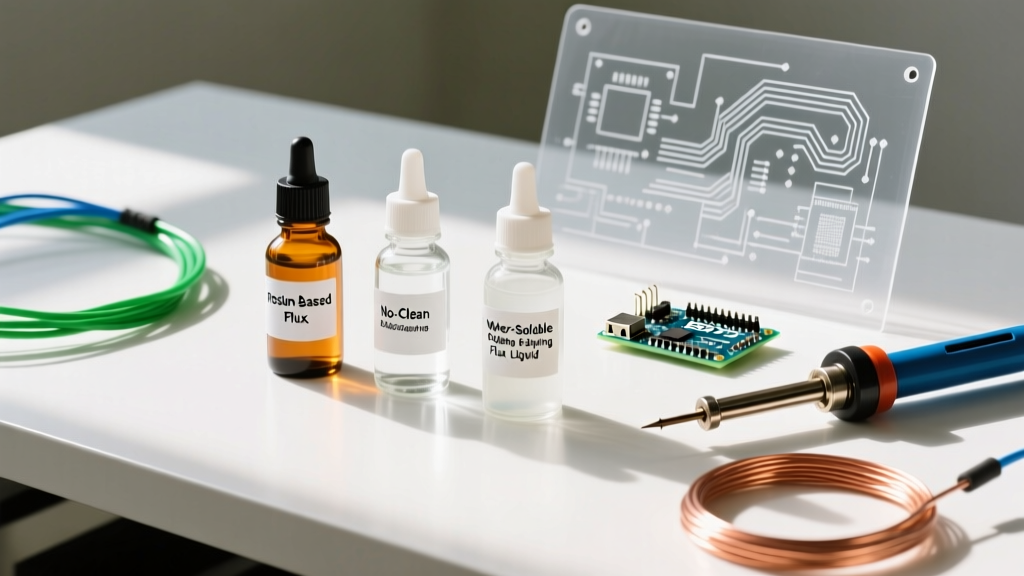
| Flux Type | IPC Code | Residue State | Cleaning Required? | Ideal Use Case |
|---|---|---|---|---|
| Mild Rosin (RMA) | ROM1 | Sticky, Amber | Recommended | General TH & SMD |
| No-Clean Resin | REL0 | Hard, Clear | No (Optional) | Micro-SMD, BGA, QFN |
| Water-Soluble (OA) | ORH1 | Invisible, Ionic | Mandatory | Severe Oxidation, RF |
Precision Application Techniques for Micro-Soldering
The effectiveness of a soldering flux liquid is entirely dependent on how it is applied. Flooding a board with liquid flux leads to solvent entrapment and subsequent solder balling. For precision work, employ the following methods:
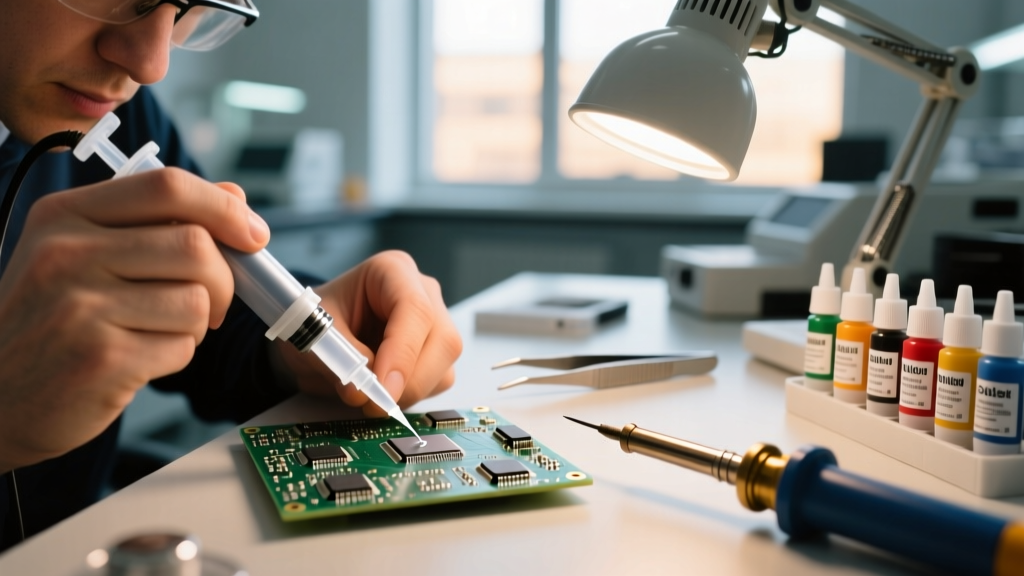
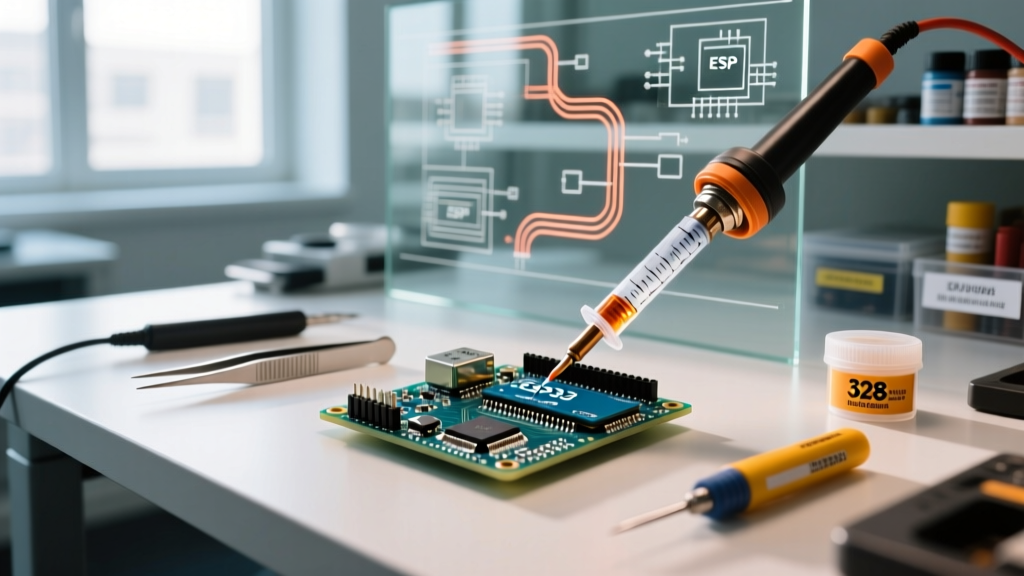
- 27-Gauge Syringe Dispensing: For 0402 components and QFN pads, use a 27-gauge blunt-tip needle attached to a manual syringe. Apply a microscopic bead along the pad edge; capillary action will pull the flux under the component during reflow.
- The Cut-Brush Method: Take a standard acid brush and use diagonal cutters to trim the bristles down to 1/4 inch of their original length. This creates a stiff, precise applicator perfect for painting flux onto specific IC pins without bridging adjacent traces.
- Flux Pens (Valve-Action): Tools like the Edsyn FLUXPEN are excellent for quick touch-ups on through-hole joints, but they lack the precision required for sub-1mm pitch SMD work. Reserve these for larger connectors.
According to the NASA Workmanship Standards for electronic assembly, flux must be applied in a controlled manner that prevents migration onto non-solderable surfaces or into unsealed components like potentiometers and relays, where it can cause intermittent contact failures.
Catastrophic Failure Modes and Edge Cases
Even the best soldering flux liquid will cause defects if mishandled. Be aware of these common failure modes:
Solvent Boiling and Micro-Splattering
Liquid fluxes are suspended in highly volatile solvents (like isopropanol or glycol ethers). If you apply liquid flux and immediately touch it with a 350°C soldering iron, the solvent flashes into steam instantly. This causes micro-explosions that scatter microscopic solder balls across your PCB, potentially shorting fine-pitch ICs. The Fix: Pre-heat your PCB to 100°C-120°C using a hot air gun or pre-heater plate before applying the liquid flux. This allows the solvents to evaporate gently before the reflow temperature is reached.
Electrochemical Migration (Dendrites)
Using a water-soluble (ORH1) flux on a high-impedance analog circuit or a high-voltage trace without proper cleaning will result in dendritic growth. Under humid conditions, the ionic halide residues create a conductive path between traces, leading to ghost voltages and eventual short circuits. The Fix: Never use water-soluble liquid flux on boards that cannot be submerged in an ultrasonic cleaner or washed with deionized water.
Asymmetric Wetting (Tombstoning)
When drag-soldering 0402 capacitors, applying liquid flux unevenly across the two pads will cause one pad to reach reflow temperature faster than the other. The surface tension of the molten solder on the active pad will pull the component upright, resulting in a tombstone. The Fix: Apply the liquid flux symmetrically using a precision needle, ensuring equal coverage on both anode and cathode pads.
Post-Solder Cleaning Protocols
If your process demands the removal of flux residue (either for aesthetic reasons, conformal coating adhesion, or ionic contamination testing), the cleaning agent must match the flux chemistry.
- For Rosin and No-Clean Resins: Use 99% Isopropyl Alcohol (IPA) or a specialized aerosol flux remover (e.g., MG Chemicals Super Wash). Scrub with a lint-free swab, then blow dry with compressed air to prevent the dissolved residue from settling back onto the board as a white, powdery film.
- For Water-Soluble (OA) Fluxes: IPA will not dissolve organic acid residues. You must use heated Deionized (DI) water with a resistivity of >1 megohm-cm, ideally mixed with a mild saponifier. The board should be rinsed in a secondary DI water bath and dried immediately with an air knife to prevent water spots and oxidation.
Frequently Asked Questions (FAQ)
Can I mix liquid flux with solder paste?
No. Mixing liquid flux into solder paste will dilute the solder powder concentration, alter the alloy's melting profile, and introduce excess solvents that cause severe splattering during reflow. Use liquid flux only as a supplemental wetting agent for rework, not as a paste thinner.
Does liquid flux expire?
Yes. While rosin-based liquids can last 2-3 years if sealed tightly, no-clean and water-soluble liquids typically have a shelf life of 12 to 18 months. Over time, the activators can precipitate out of the solution, and the solvents will evaporate, increasing the viscosity and reducing the flux's ability to penetrate tight pitches.
Is liquid flux safe for use on enameled copper wire?
Standard ROL0 or REL0 liquid fluxes will not burn through polyurethane or polyesterimide wire enamels. For magnet wire, you must use a specialized high-activity polyurethane-stripping flux or mechanically abrade the enamel before applying standard liquid flux and solder.