
The Chemistry of Connection: Why Flux Dictates Solder Joint Reliability
Achieving reliable intermetallic bonds on high-density FR-4 boards requires precise flux chemistry. While solder wire provides the physical and electrical bridge, the flux is the unsung hero that removes metal oxides, prevents re-oxidation during heating, and reduces surface tension to promote wetting. As of 2026, the shift toward ultra-low-VOC (Volatile Organic Compound) formulations and tighter component pitches (down to 0.4mm BGA) means that selecting the best flux for electronics soldering is no longer a matter of grabbing whatever is on the bench—it requires a targeted approach based on your specific alloy and board topology.
This comprehensive how-to tutorial will walk you through the exact decision frameworks, application techniques, and failure-mode troubleshooting required to master flux deployment in modern electronics assembly and rework.
Core Flux Chemistries: A Comparative Matrix
Before applying heat, you must match the flux chemistry to your operational requirements. The IPC J-STD-004 standard categorizes fluxes by base material and activity level. Below is a functional breakdown for bench-level electronics work.
| Flux Type | Base Chemistry | Activation Temp Range | Residue Cleanup | Ideal Application Scenario |
|---|---|---|---|---|
| Rosin (R / RMA) | Pine sap derivatives (Abietic acid) | 150°C – 180°C | Optional (R), Required (RMA) | General through-hole, hobbyist PCBs, vintage audio repair. |
| No-Clean (NC) | Synthetic resins, mild organic acids | 160°C – 200°C | Not required (leave on board) | SMD rework, QFN/BGA reflow, high-density consumer electronics. |
| Water-Soluble (OA) | Organic acids, glycol ethers | 180°C – 220°C | Mandatory (Deionized water wash) | Heavily oxidized legacy boards, automotive power electronics. |
| Tacky (Syringe) | Thickened No-Clean or Water-Washable | 150°C – 210°C | Depends on base chemistry | BGA reballing, precise 0402/0201 component placement. |
Step-by-Step Selection Guide: Matching Flux to Your Board
To determine the best flux for electronics soldering in your specific scenario, follow this triage protocol:
- Assess the Oxidation Level: If you are working on a brand-new HASL or ENIG finish PCB, a mild No-Clean flux is sufficient. If you are repairing a 15-year-old industrial control board with heavily tarnished pads, you must escalate to a Water-Soluble (OA) or heavily activated Rosin (RA) flux to chew through the corrosion.
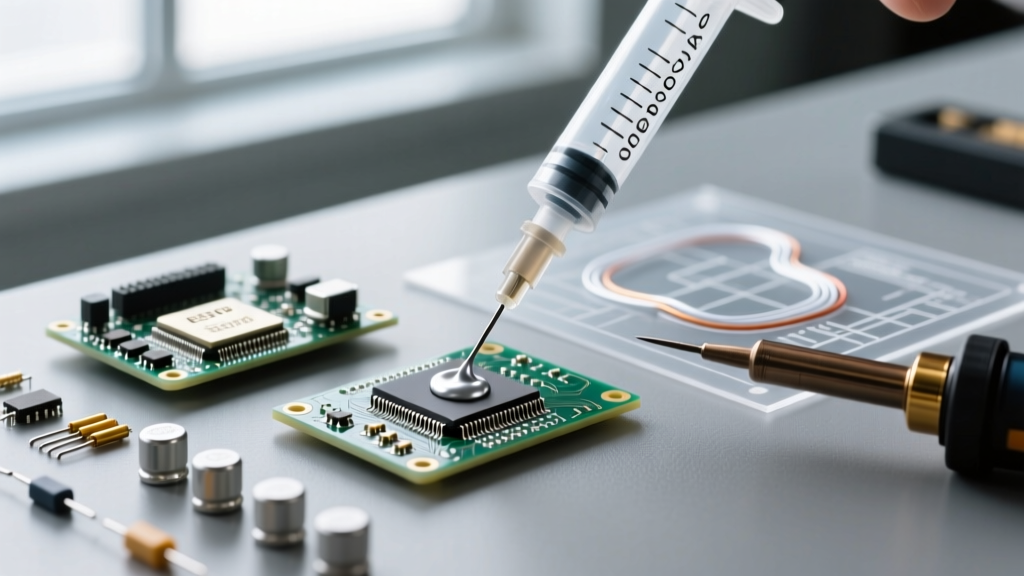
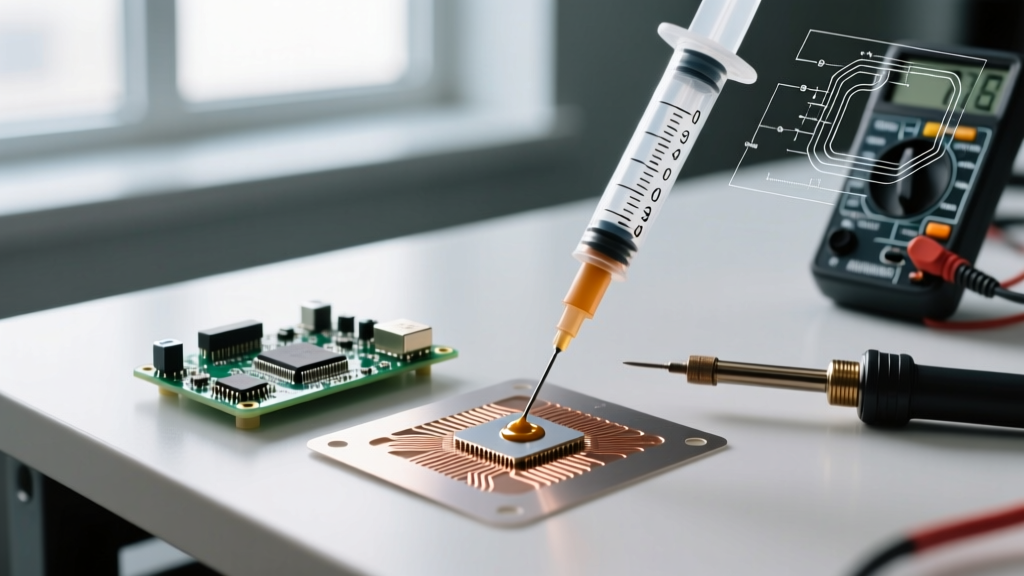
- Evaluate Component Density: For boards with tightly spaced SMDs (0.5mm pitch QFPs or BGAs), liquid fluxes will wick under components and become impossible to clean. Use a high-viscosity Tacky No-Clean flux applied via a 22-gauge needle to keep the chemistry exactly where you want it.
- Consider the Post-Solder Environment: If the PCB will be deployed in a high-humidity or high-voltage environment, leaving No-Clean residue can lead to electrochemical migration (dendrite growth) over time. In these cases, use a Water-Soluble flux and follow up with an ultrasonic deionized water bath, or use a No-Clean flux and meticulously clean it with a specialized saponifier.
⚠️ The 'No-Clean' Misconception:
According to reliability data from Indium Corporation, 'No-Clean' does not mean 'cannot be cleaned' or 'safe to ignore.' The residue is designed to be inert only if the flux is subjected to adequate heat to fully volatilize the activators. If you manually solder a joint with a No-Clean flux but pull the iron away too quickly, unreacted organic acids remain trapped in the sticky residue, posing a severe long-term corrosion risk.
Practical Application: How to Apply Flux Like a Master Technician
Proper application technique is just as critical as the chemical selection. Follow this standardized procedure for applying liquid and tacky fluxes during manual SMD rework.
Phase 1: Surface Preparation
Never apply flux over contaminated pads. Finger oils and environmental dust will trap outgassing flux, causing micro-voids in the solder joint.
- Scrub the target area with a lint-free wipe soaked in 99.9% Isopropyl Alcohol (IPA).
- Allow 15 seconds for the IPA to fully evaporate. Do not use compressed air to dry the board, as canned air often expels microscopic liquid propellants that contaminate the pads.
Phase 2: Precision Dispensing
- For Liquid Flux (Pen or Bottle): Apply a 1mm wide bead across the SMD pads. The flux should coat the copper but not pool over the solder mask. If it pools, you have applied too much, which will cause violent boiling and solder splatter when the iron makes contact.
- For Tacky Flux (Syringe): Use a pneumatic dispenser or a steady hand to apply a 0.5mm dot to each pad for 0603 components. For BGA rework, use a stencil or a specialized comb applicator to ensure uniform height across all spheres.
Phase 3: Thermal Activation and Soldering
Flux must reach its activation temperature before the solder melts to be effective.
- Set your soldering station to 320°C - 340°C (for leaded 63/37 Sn/Pb) or 350°C - 370°C (for SAC305 lead-free alloys).
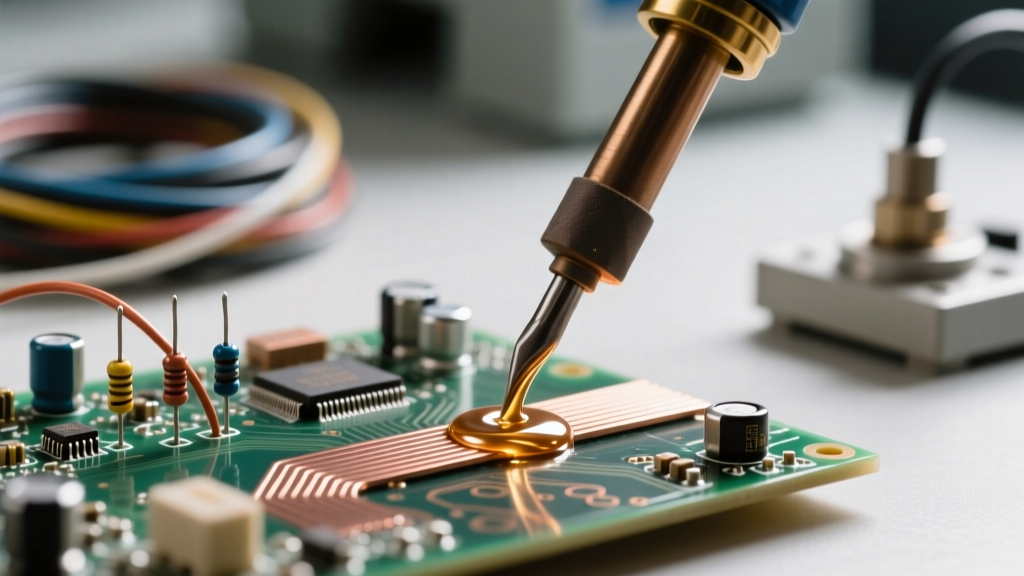
- Bring the iron tip close to the fluxed pad, allowing radiant heat to warm the flux for 1–2 seconds. You should see the liquid flux 'flash' (turn clear and slightly smoke).
- Introduce the solder wire to the opposite side of the pad. Capillary action will pull the molten solder through the activated flux zone, creating a perfect concave fillet.
Troubleshooting Common Flux-Induced Failure Modes
Even with the best flux for electronics soldering, improper thermal management or expired chemistry will result in defective joints. Use this diagnostic matrix to identify and correct bench errors.
| Visual Symptom | Root Cause Analysis | Corrective Action |
|---|---|---|
| Solder Splattering / Beading | Moisture trapped in water-based flux or liquid flux boiling violently due to excessive iron temperature (>400°C). | Lower iron temp by 20°C. Switch to a rosin-based or high-solids tacky flux that resists boiling. |
| Dull, Grainy, or Disturbed Joints | Flux exhaustion. The activators burned off before the solder fully wetted the pad, leaving a cold-joint crystalline structure. | Clean the joint with IPA. Apply a fresh drop of RMA liquid flux and reheat with fresh solder. |
| Tombstoning (SMDs standing up) | Uneven flux outgassing. One pad had more flux than the other, creating a vapor-pressure imbalance during reflow. | Ensure symmetrical flux application. Use a pre-heater (set to 120°C) to slowly activate flux before applying localized top-heat. |
| Charred, Black Residue | Rosin degradation. The soldering iron tip was left on the flux for too long, carbonizing the organic compounds. | Clean with aggressive flux remover. Lower tip temperature and reduce dwell time to under 3 seconds per joint. |
Pro-Tier Product Recommendations for 2026
Based on current bench testing and reliability metrics, here are the top-tier consumables for professional and advanced hobbyist labs:
- Amtech NC-559-V2-TF (Tacky No-Clean): The undisputed king of BGA rework and precision SMD tack-soldering. It features a high-tack formulation that holds components in place before reflow. Cost: ~$28.50 per 10cc syringe.
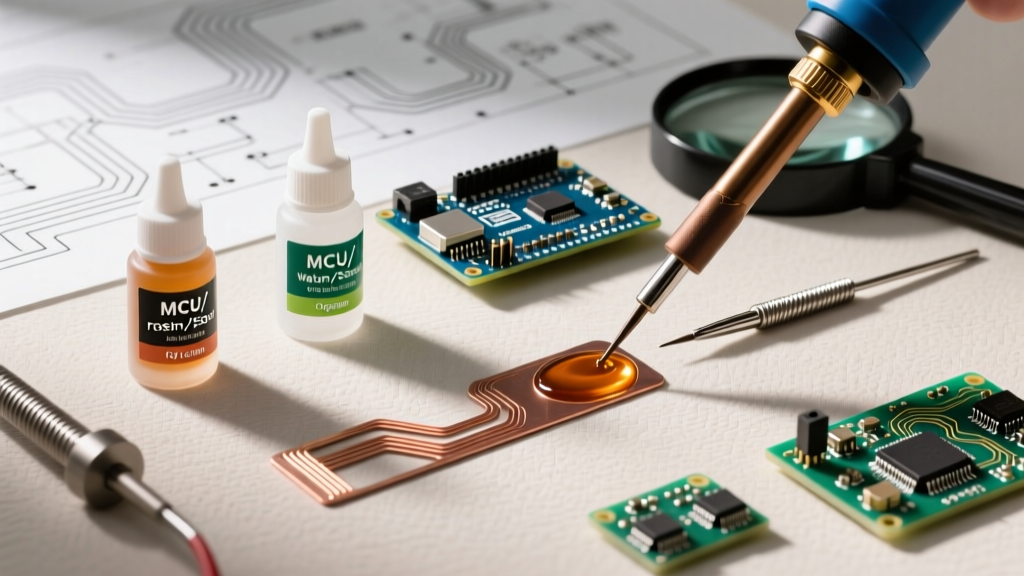
- Kester 186 Mildly Activated Rosin (Liquid): An industry-standard RMA flux. Incredible wetting action on slightly oxidized through-hole leads and vintage PCB restoration. Leaves a hard, amber residue that must be cleaned with 99% IPA or a dedicated rosin solvent. Cost: ~$14.99 per 2oz bottle.
- MG Chemicals 8341 (No-Clean Liquid Pen): Excellent for quick SMD touch-ups where cleaning is impractical. The felt-tip pen allows for targeted application without the mess of a brush. Cost: ~$12.00 per 10ml pen.
Safe Cleanup and Storage Protocols
Flux chemistry degrades when exposed to UV light, ambient moisture, and oxygen. To maximize the shelf life of your consumables:
- Rosin and No-Clean Liquids: Store at room temperature (20°C - 25°C) in opaque, tightly sealed containers. Expect a shelf life of 24 to 36 months.
- Tacky Syringes: Store vertically in a refrigerator at 5°C to 10°C to prevent the chemical matrix from separating or prematurely cross-linking. Crucial: Allow the syringe to acclimate to room temperature for at least 2 hours before use to prevent condensation from forming inside the barrel, which will cause severe splattering during soldering. Shelf life is typically 6 to 12 months.
- Water-Soluble: Highly hygroscopic. Keep sealed tightly. Shelf life is generally 12 months. If the liquid becomes cloudy or develops a precipitate, discard it immediately.
Mastering the application of the best flux for electronics soldering transforms your rework from a frustrating gamble into a predictable, repeatable science. By respecting the activation temperatures, matching the chemistry to the board topology, and maintaining strict storage protocols, you will consistently achieve IPC-A-610 Class 3 compliant solder joints on every project.