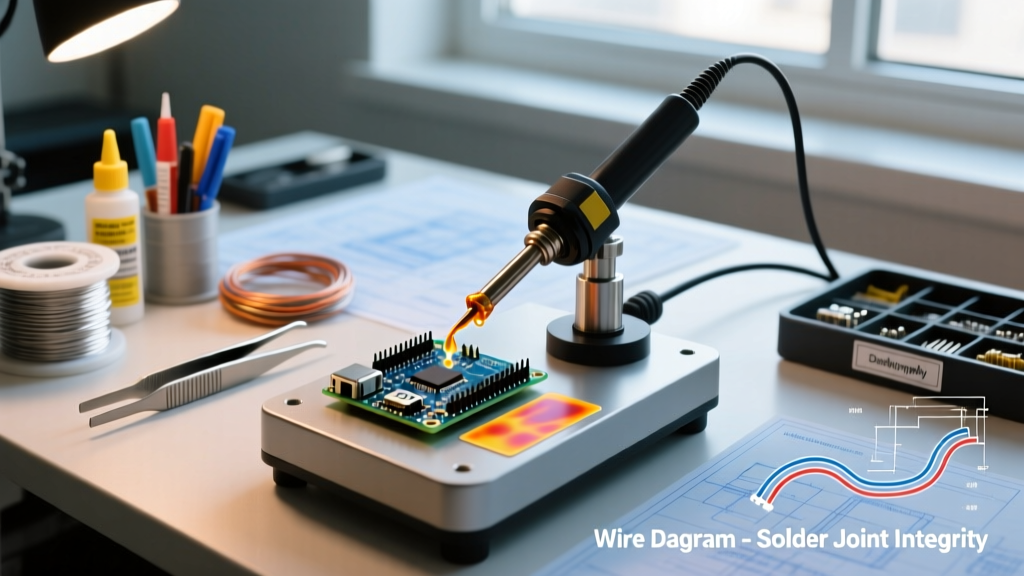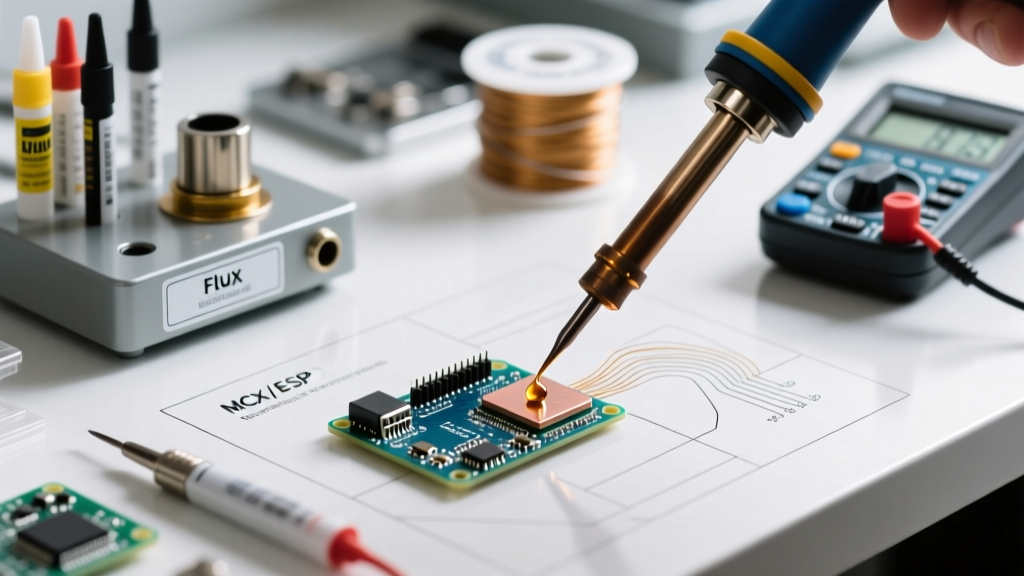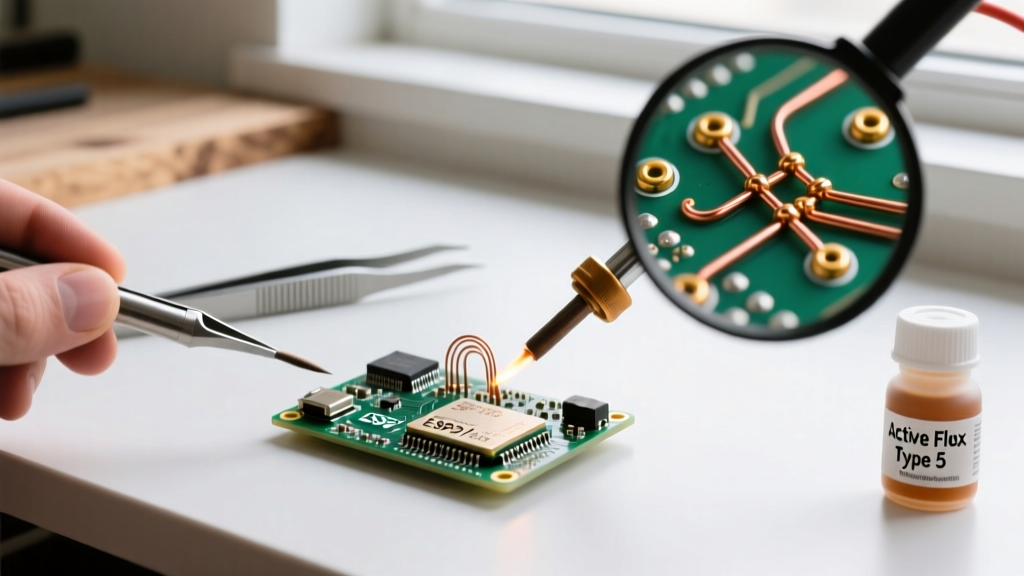

The Financial Illusion of Skipping Flux
In the pursuit of minimizing bill-of-materials (BOM) costs, many hobbyists and small-scale electronics manufacturers occasionally consider soldering without flux. The logic seems sound on the surface: if you are already using rosin-core solder wire, why spend an additional $8 to $20 on a separate flux pen or paste? However, this perspective fundamentally misunderstands the metallurgy of soldering and ignores the severe hidden costs associated with poor wetting, thermal damage, and rework. In 2026, with the price of advanced microcontrollers and high-density PCBs continuing to rise, the financial penalty for a failed solder joint has never been higher.
This cost analysis breaks down the true financial impact of omitting supplemental flux, comparing the nominal savings against the very real expenses of scrap, rework labor, and long-term field failures.
The Metallurgical Reality: Why Soldering Without Flux Fails
To understand the cost implications, we must first understand the physics of the solder joint. When copper pads and component leads are exposed to air, they rapidly form an oxide layer (Cu2O and CuO). When heated to typical soldering temperatures (320°C to 380°C), this oxidation accelerates exponentially.
Flux is not merely a 'sticky helper'; it is a chemical reducing agent. According to guidelines published by the IPC Standards Association, flux dissolves these metal oxides, allowing the molten solder (whether Sn63/Pb37 or lead-free SAC305) to form a proper intermetallic compound (IMC) layer with the base metal. When you attempt soldering without flux, the surface tension of the molten solder fights against the oxide barrier. The result is a high contact angle, poor wetting, and a mechanically weak 'cold' joint that may look shiny but lacks structural and electrical integrity.
The Myth of Flux-Core Sufficiency
A common counterargument is that modern solder wire contains a flux core (usually 2% to 3% by weight). While true, this internal flux is designed for ideal conditions: fresh, unoxidized components and standard thermal mass pads. If you are soldering a large ground plane, a heavily oxidized through-hole lead, or performing a rework operation on a board that has been sitting in a humid warehouse for six months, the flux core will burn off and volatilize before it can chemically clean the entire joint surface. Supplemental flux is mandatory in these scenarios to ensure a reliable IMC layer.
Direct vs. Indirect Cost Breakdown
Let us quantify the economics. Below is a comparative cost analysis for a hypothetical batch of 50 custom PCBs, each requiring 100 solder joints (5,000 joints total), comparing a proper flux-assisted workflow against a 'no-flux' approach using only standard 63/37 rosin-core wire.
| Cost Category | Scenario A: With Supplemental Flux (Kester 186 Pen) | Scenario B: Soldering Without Flux (Core Only) |
|---|---|---|
| Flux Material Cost | $12.50 (1.5 pens consumed) | $0.00 |
| Average Time per Joint | 2.5 seconds | 6.0 seconds (poor wetting requires re-heating) |
| Total Labor Time (at $25/hr) | $86.80 | $208.33 |
| Cold Joint / Rework Rate | 0.5% (25 joints) | 8.0% (400 joints) |
| Rework Material (Braid/Wick) | $3.00 | $24.00 |
| Scrapped Components (Thermal Damage) | $5.00 | $65.00 |
| Total Estimated Cost | $107.30 | $297.33 |
As the data illustrates, the $12.50 'saved' by omitting supplemental flux results in a net loss of nearly $190 per batch due to increased labor time, excessive desoldering braid consumption, and destroyed components.
The Rework and Thermal Damage Penalty
The most immediate financial bleed when soldering without flux is thermal damage to both the PCB and the components. Because the solder refuses to wet the pad quickly, the operator inevitably holds the soldering iron in place longer, often exceeding 10 to 15 seconds per joint.
Component and PCB Degradation
- FR-4 Delamination: Standard FR-4 PCBs have a glass transition temperature (Tg) of around 130°C to 140°C. Prolonged localized heating at 350°C causes the epoxy resin to break down, leading to pad lifting and internal trace delamination. A scrapped custom 4-layer PCB can cost anywhere from $15 to $80 to replace.
- Silicon Damage: Heat-sensitive semiconductors, such as MOSFETs and precision voltage references, can suffer internal die attach degradation when subjected to extended thermal stress. Replacing a fried $8.00 STM32 microcontroller or a $12.00 power management IC completely erases any flux savings.
- Tip Degradation: Holding an iron on a dry, non-wetting joint accelerates the oxidation and pitting of your soldering iron tip. Replacing a high-quality Weller or Hakko tip costs between $10 and $18, adding further hidden depreciation to your tools.
Expert Insight: According to the NASA Electronic Parts and Packaging (NEPP) Program workmanship standards, a proper solder joint should form within 2 to 4 seconds. If wetting does not occur in this timeframe, the operator must remove the iron, apply supplemental flux, and try again. Forcing the joint without flux is a direct violation of aerospace and high-reliability manufacturing standards.
Long-Term Reliability and Field Failures
If a product makes it past the initial assembly and testing phase, the costs of soldering without flux can escalate into catastrophic field failures. Joints that lack proper fluxing often suffer from microscopic voiding and incomplete IMC formation. Over time, thermal cycling and mechanical vibration will cause these weak joints to crack.
Furthermore, if acidic environmental contaminants are trapped in the porous surface of a poorly wetted joint, it can lead to dendritic growth and electromigration, eventually causing a short circuit. For a commercial product, a field return involving shipping, diagnostics, and warranty replacement can cost 10 to 100 times the original manufacturing cost. In the automotive or medical device sectors, a reliability failure can result in massive liability and brand destruction.
ROI of Specific Flux Types in 2026
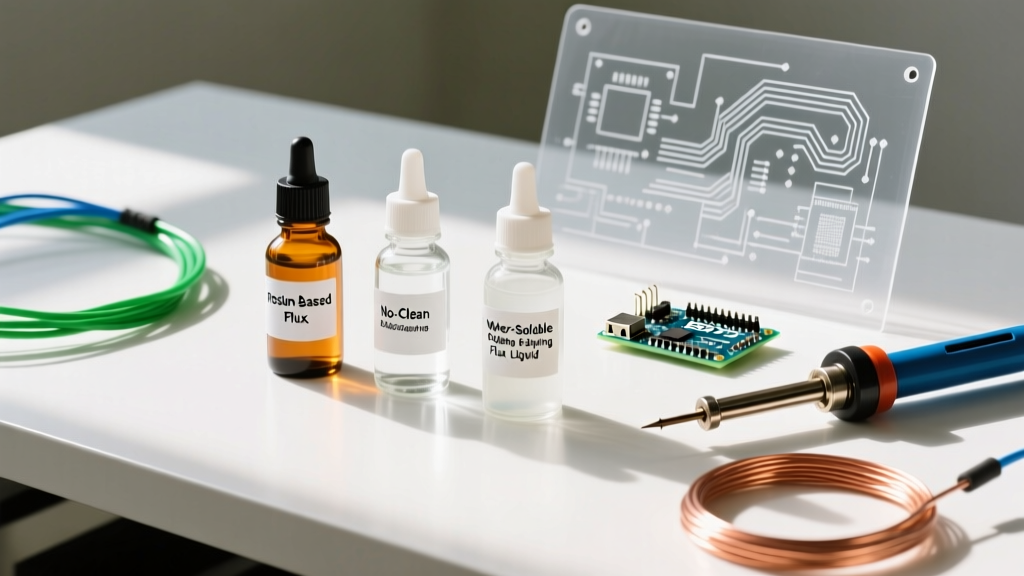
Not all fluxes are created equal, and selecting the right one optimizes your cost-to-performance ratio. Here is a breakdown of the most common supplemental fluxes and their specific ROI profiles for DIYers and small production runs:
1. Rosin-Based Flux (e.g., Kester 186 RMA)
Cost: ~$8.50 to $11.00 per pen/applicator.
Best For: General through-hole and SMD rework, heavily oxidized vintage electronics.
ROI Analysis: Offers the highest aggressive cleaning power for stubborn oxides. Requires cleaning with isopropyl alcohol (IPA) post-soldering to prevent long-term corrosion, which adds a minor labor and solvent cost, but saves expensive legacy components from the scrap bin.
2. No-Clean Liquid/Paste (e.g., MG Chemicals 8341 or Amtech NC-559-V2-TF)
Cost: ~$14.00 (100ml liquid) to $22.00 (10cc syringe paste).
Best For: High-density SMD assembly, BGA reballing, and rapid production where washing is skipped.
ROI Analysis: The highest overall ROI for modern manufacturing. The elimination of the post-solder cleaning step saves significant labor hours and IPA solvent costs. The residue is benign and highly dielectric, making it ideal for tight-pitch QFN and BGA packages where washing is impossible.
3. Water-Soluble Flux (e.g., Kester 245)
Cost: ~$18.00 per 100ml bottle.
Best For: Automated wave soldering or applications requiring pristine, visually inspectable boards.
ROI Analysis: Lowest ROI for manual DIY soldering due to the mandatory requirement of heated deionized water washing. If not washed thoroughly, the highly active organic acids will rapidly corrode copper traces, turning a cheap assembly into guaranteed e-waste.
The Final Verdict
The practice of soldering without flux is a false economy. While omitting a $10 flux pen might look like a line-item saving on a spreadsheet, the reality of the workbench tells a different story. The increased labor time, the consumption of expensive desoldering wick, the destruction of heat-sensitive ICs, and the looming threat of field failures make it one of the most expensive mistakes an electronics assembler can make.
For reliable, cost-effective electronics manufacturing in 2026, supplemental flux is not an optional luxury; it is a mandatory chemical tool. Invest in high-quality no-clean or rosin fluxes, apply them liberally to oxidized or high-thermal-mass joints, and watch your rework rates—and your overall production costs—plummet.
For further reading on proper soldering techniques and joint inspection, refer to the comprehensive SparkFun Through-Hole Soldering Tutorial, which details the critical role of flux in achieving perfect wetting angles.