
The Reality of the 'MSDS' in 2026: What Beginners Need to Know
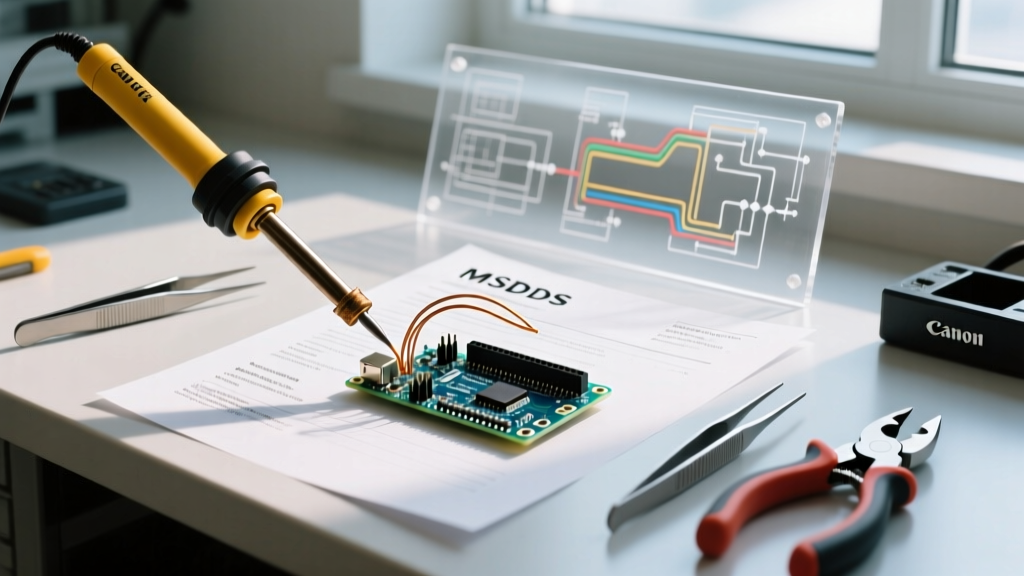
If you are new to electronics assembly, you have likely heard veteran technicians talk about checking the MSDS for soldering flux before using a new product. However, there is a critical terminology shift every beginner must understand right away: the 'MSDS' (Material Safety Data Sheet) is technically obsolete. Under the Globally Harmonized System (GHS) of Classification and Labeling of Chemicals, the Occupational Safety and Health Administration (OSHA) transitioned all documentation to the standardized 16-section SDS (Safety Data Sheet) format.
While the industry search term 'MSDS' persists among hobbyists and legacy engineers, the documents you will download from modern manufacturers like Kester, MG Chemicals, or Amtech are strictly SDS documents. Understanding how to read this standardized sheet is not just about regulatory compliance; it is about protecting your respiratory system, skin, and eyes from the specific chemical activators and solvents used in modern flux formulations.
Expert Insight: Never trust third-party 'MSDS aggregator' websites that host documents uploaded prior to 2016. Flux formulations change, and GHS compliance requires precise hazard classifications. Always download the SDS directly from the chemical manufacturer's official portal to ensure you are reading the current 2026 safety data.
Decoding the 16-Section SDS: Where to Look First
An SDS can look overwhelming to a beginner, spanning 5 to 10 pages of dense chemical data. As an electronics hobbyist or junior technician, you do not need to memorize the toxicological ecotoxicity data in Section 12. Instead, focus your attention on these five critical sections:
Section 2: Hazard Identification
This section provides the 'Signal Word' (either Danger or Warning) and the GHS pictograms. For most rosin and no-clean fluxes, you will see the Exclamation Mark pictogram, indicating skin irritation, eye irritation, or respiratory sensitization. Water-soluble fluxes may carry the Corrosion pictogram due to their high acidic content.
Section 4: First-Aid Measures
Flux splatter is a common hazard when soldering at temperatures exceeding 350°C (662°F). Section 4 dictates exact flushing times. For example, if a highly activated (RA) flux splashes into your eye, the SDS will typically mandate flushing with water for 15 to 20 minutes while holding the eyelid open, followed by immediate medical attention.
Section 7: Handling and Storage
This outlines environmental limits. Many liquid fluxes contain volatile organic compounds (VOCs) like isopropyl alcohol (IPA) or glycol ethers. Section 7 will specify storage temperatures (usually between 10°C and 25°C) and mandate keeping the containers away from ignition sources due to low flash points.
Section 8: Exposure Controls and Personal Protection (PPE)
This is your blueprint for setting up a safe workbench. It will specify the exact type of gloves required (usually nitrile) and the necessary ventilation metrics, such as Threshold Limit Values (TLV) for airborne particulates and vapors.
Section 9: Physical and Chemical Properties
Here you will find the flash point and boiling point. If you are using a liquid flux pen or spray, knowing the flash point (often around 12°C to 15°C for IPA-based fluxes) is critical for fire safety when working near hot soldering irons or heat guns.
Flux Chemistry and Hazard Profiles: A Comparison Matrix
Different flux chemistries present entirely different hazard profiles on their SDS. Below is a comparison of the three primary flux categories you will encounter in electronics assembly.
| Flux Type | Primary Active Chemicals | SDS Hazard Classification | Required PPE (Section 8) | First Aid Focus (Section 4) |
|---|---|---|---|---|
| Rosin / RMA | Abietic acid (Colophony), mild halide activators | Respiratory Sensitizer, Skin Irritant | Nitrile gloves, Fume Extractor with Carbon/HEPA | Inhalation (asthma-like symptoms), Skin washing |
| No-Clean | Glycol ethers, synthetic resins, trace adipic acid | Eye Irritant, Flammable Liquid (Category 2 or 3) | Safety glasses (ANSI Z87.1), Nitrile gloves | Eye flushing (15 mins), Fire safety protocols |
| Water-Soluble (OA) | Organic acids (glutaric, lactic), strong activators | Skin Corrosion/Irritation, Serious Eye Damage | Chemical splash goggles, Heavy-duty nitrile | Immediate eye/skin decontamination, Medical aid |
The Hidden Danger of Colophony (Rosin)
When reviewing the OSHA Hazard Communication guidelines, one specific chemical requires a beginner's utmost respect: Colophony (commonly known as rosin), which is primarily composed of abietic acid (CAS Number: 8050-09-7). Rosin is a known respiratory sensitizer. This means that repeated inhalation of rosin flux smoke can cause your immune system to develop a severe, lifelong allergic reaction, leading to occupational asthma. Once sensitized, even trace amounts of flux fumes can trigger severe respiratory distress. This is why Section 8 of a rosin-based SDS will heavily emphasize local exhaust ventilation (LEV).
Engineering Controls: Building a Safe 2026 Workbench
Reading the SDS is only half the battle; implementing Section 8 (Exposure Controls) is where many beginners fail. Relying on a standard room ceiling fan or an open window is entirely insufficient for capturing the sub-micron particulates and VOCs generated during soldering.
- Fume Extraction: You must use a dedicated fume extractor. For benchtop hobbyists, the Hakko FA-400 (priced around $60 in 2026) provides basic activated carbon filtration for VOCs. However, carbon filters do not capture solid particulates. For professional or heavy daily use, invest in a HEPA + Carbon combination unit like the Hakko FX-802 (approx. $450) or the Weller WXAB series, which trap both the rosin smoke particles and the chemical vapors.
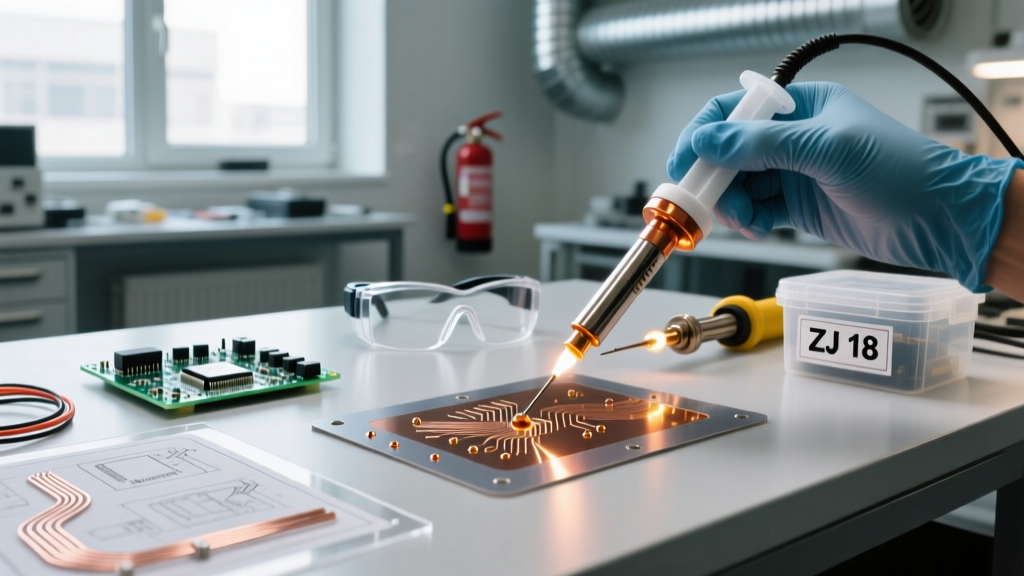
- Hand Protection: Section 8 will almost universally specify Nitrile gloves. Do not use latex gloves; the solvents in no-clean and liquid fluxes (like diethylene glycol monobutyl ether) will rapidly degrade latex, allowing the chemical activators to contact your skin. A standard 4-mil thickness nitrile glove provides adequate splash protection for bench work.
- Eye Protection: Flux splatter occurs when the moisture in the flux core boils rapidly upon contact with a 380°C iron tip. Standard prescription glasses do not offer side-impact or splash protection. Wear ANSI Z87.1 certified safety glasses with side shields, especially when using liquid flux dispensers or water-soluble pastes.
Step-by-Step: How to Source and Manage Your SDS Library
As you build your inventory of soldering consumables, maintaining an organized, up-to-date SDS library is a best practice, even for home labs.
- Identify the Manufacturer: Look at the product label. Do not search for 'generic rosin flux MSDS'. Search for the exact part number (e.g., 'Kester 245 63/37 SDS' or 'MG Chemicals 8341 No-Clean SDS').
- Navigate to the Official Portal: Go to the manufacturer's website and locate their 'Resources', 'Compliance', or 'SDS Library' section.
- Verify the Date: Check the 'Date of Issue' or 'Revision Date' on the first page of the document. If the document is older than 3 to 5 years, contact the manufacturer's technical support for the current revision.
- Check for Multi-Component Coverage: If you are using solder wire, the SDS will cover both the metal alloy (e.g., Tin/Lead or SAC305) and the flux core. Pay attention to the heavy metal warnings in Section 2 if you are using leaded solder, which require strict hand-washing protocols to prevent ingestion.
Frequently Asked Questions (FAQ)
Is the smoke from soldering iron melting the metal or the flux?
The visible smoke is almost entirely the flux boiling and decomposing, not the metal. Solder alloys (like Sn63/Pb37 or SAC305) melt at temperatures between 183°C and 220°C, which is far below their boiling points. Therefore, the SDS for the flux is the primary document you need to understand the inhalation hazards of the smoke.
What should I do if I accidentally ingest soldering flux?
Section 4 of the SDS will explicitly state: Do NOT induce vomiting unless directed by medical personnel. Many fluxes contain solvents that can cause severe lung damage if aspirated into the lungs during vomiting. Rinse your mouth with water and immediately contact a Poison Control Center or emergency medical services, providing them with the product's exact part number.
Do I need an SDS for 'lead-free' solder paste?
Yes. While lead-free pastes eliminate the heavy metal toxicity of lead, they still contain complex flux vehicles (often requiring refrigeration at 0°C to 10°C to prevent chemical degradation). The SDS will detail the hazards of the specific organic acids and thixotropic agents used in the paste, which can still cause severe eye and skin irritation.