
The Metallurgical Reality of Flux Selection
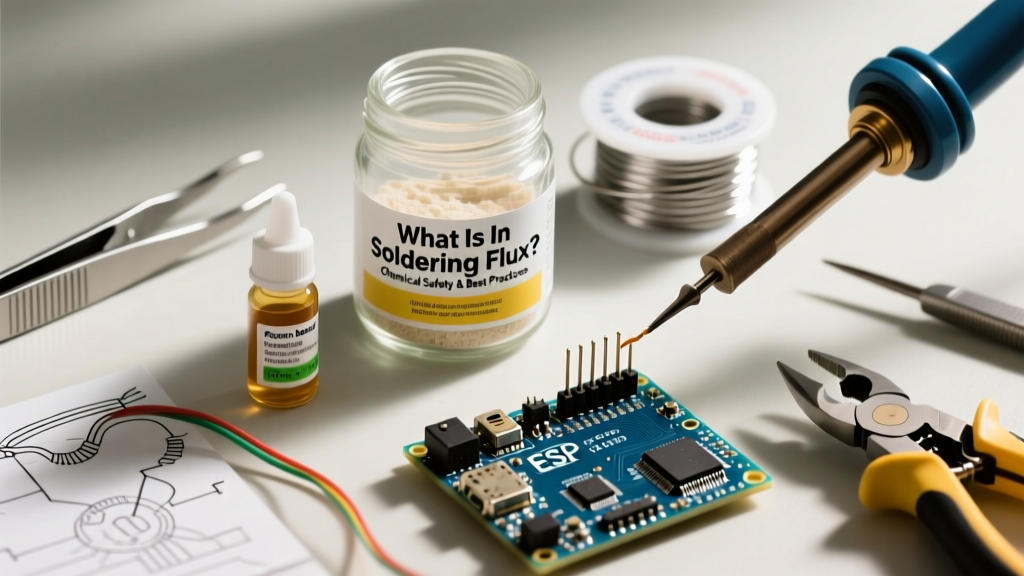
Navigating soldering flux electrical compatibility requires moving beyond generic advice and understanding the chemical interactions between flux activators, substrate finishes, and component tolerances. In modern electronics assembly, the flux is not merely a cleaning agent; it is a precisely engineered chemical matrix designed to reduce surface tension, dissolve metallic oxides, and prevent re-oxidation during the thermal excursion of the soldering process. Mismatching your flux chemistry to your specific electrical application is the primary cause of latent field failures, including electromigration, dendritic growth, and contact resistance spikes.
This comprehensive compatibility guide breaks down the exact flux formulations required for specific electrical substrates, wire types, and sensitive electromechanical components, utilizing the IPC-J-STD-004 classification framework and current 2026 market formulations.
Core Flux Chemistries & IPC Classifications
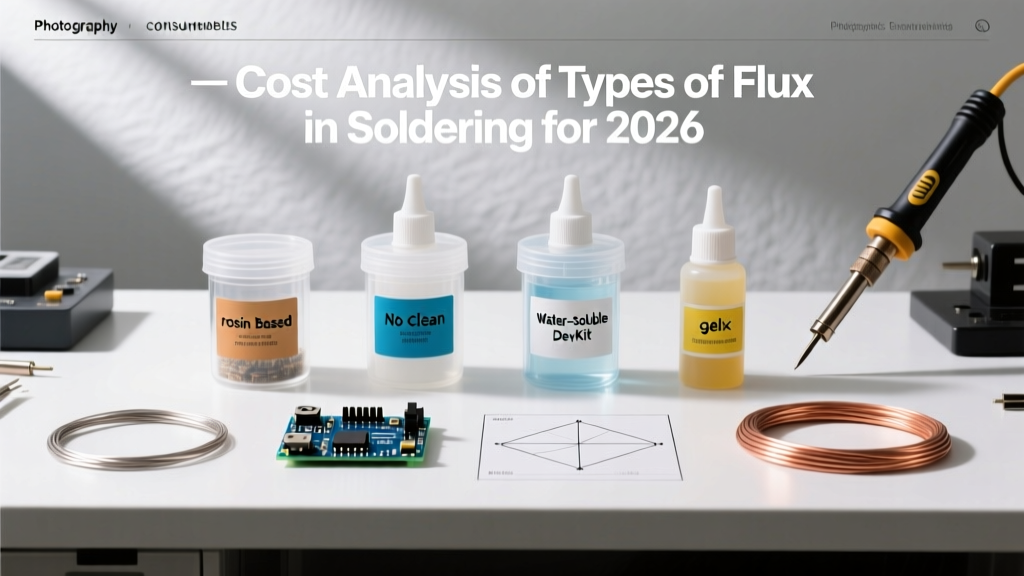
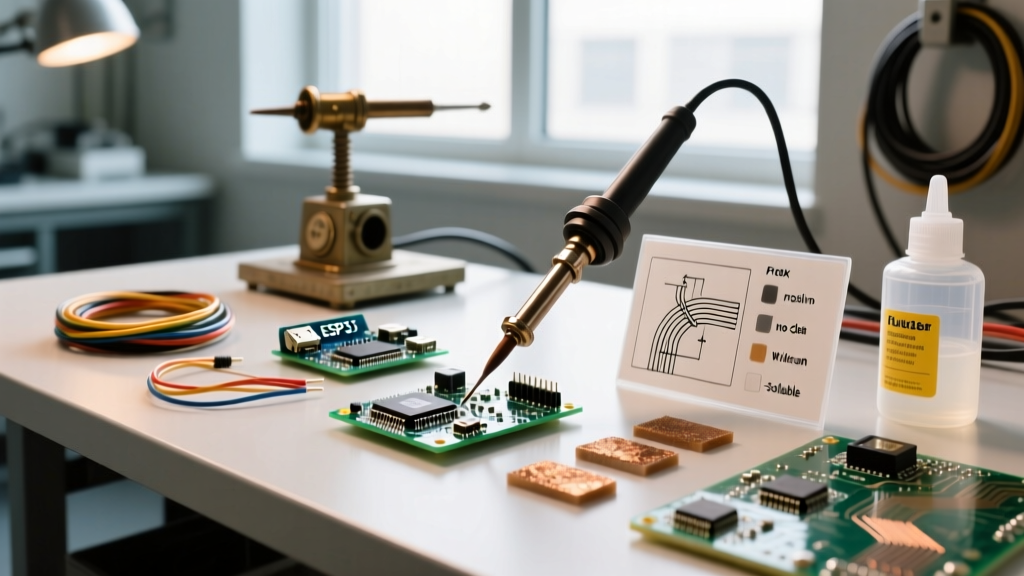
Before matching flux to a component, you must understand the baseline chemistries. The IPC (Association Connecting Electronics Industries) categorizes fluxes by their chemical composition (Rosin, Resin, Organic, Inorganic) and their activity level (Low, Medium, High). According to IPC standards, selecting the wrong activity level for a given oxide load will result in either cold joints (under-activated) or severe corrosion (over-activated).
| Flux Type | IPC Designation | Activation Temp Range | Residue Conductivity | Best Electrical Application |
|---|---|---|---|---|
| Pure Rosin (R) | ROL0 | 150°C - 180°C | Non-Conductive | High-reliability aerospace wiring |
| Mildly Activated Rosin (RMA) | ROM0 / ROM1 | 160°C - 200°C | Very Low | Standard PCB rework, tinned copper |
| No-Clean (NC) | ROL0 / REL0 | 180°C - 220°C | Low (if fully activated) | SMD assembly, ENIG finishes |
| Water-Soluble (OA) | ORH0 / ORH1 | 190°C - 240°C | Highly Conductive | Heavy oxidation, thick ground planes |
Substrate & Component Compatibility Matrix
1. Bare and Tinned Copper Wiring
For standard electrical wiring (e.g., 22 AWG to 10 AWG stranded copper), Mildly Activated Rosin (RMA) remains the undisputed industry standard. The rosin base provides excellent capillary action, wicking into the strands of the wire, while the mild halide activators strip light tarnish without attacking the copper substrate.
- Recommended Product: Kester 186 Liquid Flux. Priced around $16.00 per 2oz bottle in 2026, it offers a perfect balance of wetting speed and benign residue.
- Failure Mode to Avoid: Using Water-Soluble (OA) flux on stranded wire. If the OA flux wicks deep into the wire strands under the insulation jacket, it is nearly impossible to rinse out. Over time, the trapped organic acids will corrode the copper from the inside out, leading to brittle wire breaks under vibration.
2. PCB Finishes: ENIG vs. HASL
Printed Circuit Board surface finishes dictate the required aggressiveness of your flux.
- ENIG (Electroless Nickel Immersion Gold): The gold layer is incredibly thin (typically 2-4 microinches) and exists solely to protect the underlying nickel from oxidation. During soldering, the gold dissolves into the solder alloy almost instantly. No-Clean (ROL0) fluxes, such as MG Chemicals 8341 No-Clean Flux Pen (~$18.00), are ideal here. They provide enough activity to wet the nickel without leaving corrosive residues that could attack the nickel layer.
- HASL (Hot Air Solder Leveling): HASL boards already have a thick layer of solder on the pads. However, they often develop a tough tin-oxide shell if stored improperly. An RMA or Low-Solids No-Clean flux is required to break through this oxide shell. Pure Rosin (R) will typically fail to wet heavily oxidized HASL pads, resulting in dewetting and balling.
3. Electromechanical Components: The Capillary Trap
This is where the majority of catastrophic field failures occur. Components like unsealed relays (e.g., Omron G5V-2 series), slide switches, and rotary potentiometers have microscopic gaps between their moving contacts and the outer casing.
Expert Warning: Never use liquid fluxes (especially low-viscosity water-soluble or aggressive no-clean pens) near unsealed electromechanical components. Capillary action will draw the liquid flux directly into the contact chamber. Upon cooling, the flux residue solidifies, creating an insulating barrier that causes open circuits or erratic contact resistance. Always use a high-viscosity rosin paste or physically mask the component vents with high-temperature Kapton tape before applying liquid flux.
Advanced Rework: BGA and Fine-Pitch ICs
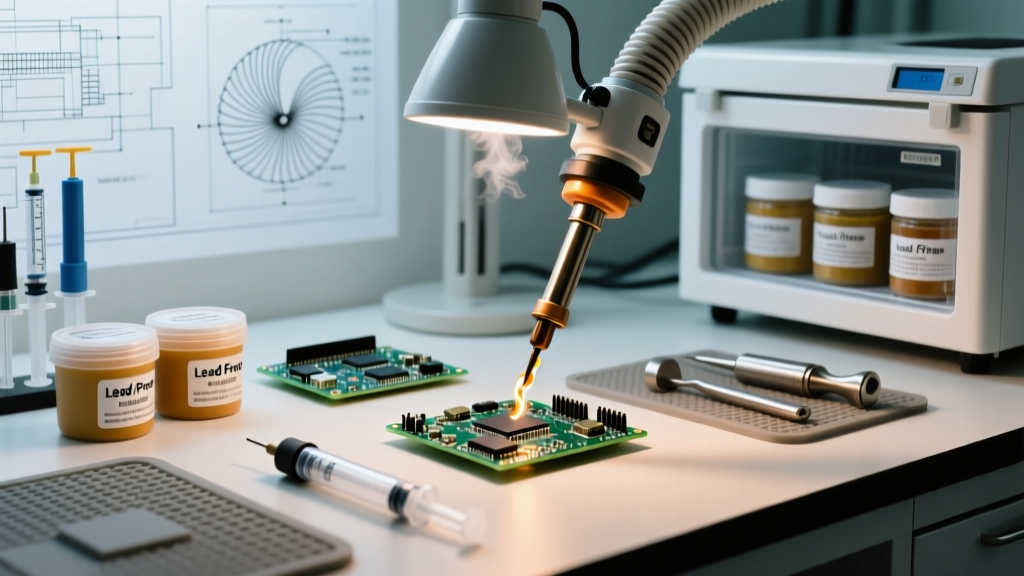
When reworking Ball Grid Arrays (BGAs) or fine-pitch QFNs (0.4mm pitch and below), the flux must perform two conflicting tasks: it must hold the component in place via tackiness, and it must completely vaporize or polymerize without leaving conductive pathways between adjacent pads.
For BGA reballing and rework, Tacky No-Clean Flux (e.g., Chip Quik SMD291AX, approx. $22.00 for a 10cc syringe) is mandatory. These formulations use synthetic resins that provide high tack at room temperature but undergo complete thermal decomposition at lead-free reflow temperatures (240°C - 250°C).
The Electromigration Threat
If you use a Water-Soluble flux under a BGA and fail to clean it properly, you invite electromigration. Under the influence of an electric field and ambient humidity, the ionic residues from the OA flux will cause copper or tin ions to migrate across the PCB substrate, forming metallic 'dendrites'. These microscopic metallic trees eventually bridge the gap between VCC and GND pads, causing a dead short. According to reliability data published by the NASA Electronic Parts and Packaging (NEPP) Program, ionic contamination under bottom-terminated components is a leading cause of mission-critical hardware failure in high-humidity environments.
Cleaning Protocols: Matching Solvent to Chemistry
A common and costly mistake in electrical assembly is attempting to clean the wrong flux with the wrong solvent. The cleaning chemistry must match the flux residue profile.
- Cleaning Rosin / RMA Flux: Requires a polar solvent. 99.9% Isopropyl Alcohol (IPA) is the standard. However, IPA only dissolves the rosin; it does not neutralize the activators. You must scrub with a lint-free swab and blow dry immediately, or the dissolved activators will simply redistribute across the board as the IPA evaporates.
- Cleaning Water-Soluble (OA) Flux: Do not use IPA. IPA will coagulate water-soluble residues, turning them into a hard, white, insoluble crust. Water-soluble fluxes must be cleaned with heated Deionized (DI) water (minimum 60°C) mixed with a specialized saponifier (e.g., Kyzen E5611). The saponifier breaks the surface tension of the water, allowing it to penetrate under tight-clearance SMD components and emulsify the organic acids.
- No-Clean Flux: By definition, it should not be cleaned. However, if aesthetic cleaning is required for optical inspection, specialized saponified cleaners or high-purity HFE (Hydrofluoroether) solvents are required, as standard IPA will smear the polymerized resin into a cloudy film.
Frequently Asked Questions (FAQ)
Can I use plumbing flux for electrical soldering?
Absolutely not. Plumbing fluxes are typically based on Zinc Chloride or Ammonium Chloride. These are highly aggressive inorganic acids designed to clean heavily oxidized copper pipes at high temperatures. If used on electrical components, the chloride ions will rapidly eat through copper traces, cause immediate galvanic corrosion, and destroy PCB substrates. Always use fluxes explicitly formulated for electronics that meet IPC-J-STD-004 requirements.
Why is my No-Clean flux leaving a sticky, conductive residue?
This is a classic symptom of incomplete thermal activation. No-clean fluxes rely on reaching a specific peak temperature (usually above 200°C) for a sufficient dwell time to polymerize the resin and neutralize the activators. If you are hand-soldering with a low-wattage iron or removing the heat too quickly, the flux remains in its active, un-polymerized state. This unreacted residue is mildly conductive and highly hygroscopic (absorbs moisture from the air), which can lead to leakage currents in high-impedance analog circuits.
Does liquid soldering flux expire?
Yes. Liquid fluxes contain volatile solvents (like IPA or glycol ethers) that maintain the activators in suspension. Over time, even in sealed containers, these solvents slowly evaporate or degrade, causing the activators to crystallize and precipitate out of the solution. Using expired flux results in poor wetting and uneven chemical distribution. Most high-quality liquid fluxes, such as those from MG Chemicals or Kester, have a strict shelf life of 6 to 12 months from the date of manufacture when stored at room temperature (20°C - 25°C). Always check the manufacturer's batch date code before use.