
Mastering the Chemistry of Wetting: A 2026 Brand Comparison
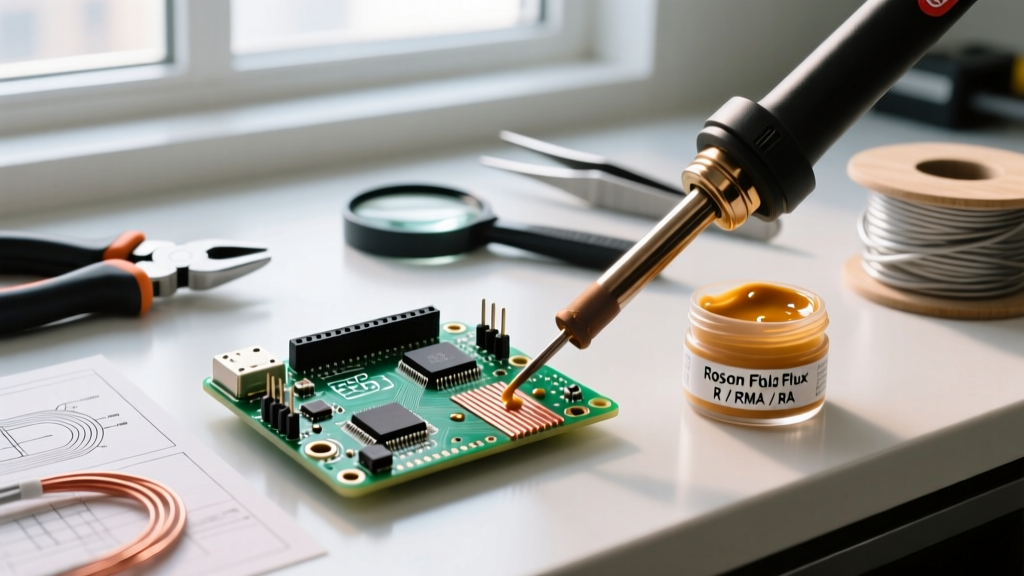
Understanding how to use flux for soldering is the dividing line between a reliable, aerospace-grade solder joint and a cold, high-resistance failure. Flux is not merely an accessory; it is a chemical catalyst designed to strip metallic oxides, prevent re-oxidation during heating, and reduce the surface tension of molten solder. In 2026, with the industry firmly entrenched in lead-free SAC305 (Sn96.5Ag3.0Cu0.5) and miniaturized 0201 metric components, selecting the right flux chemistry is more critical than ever.
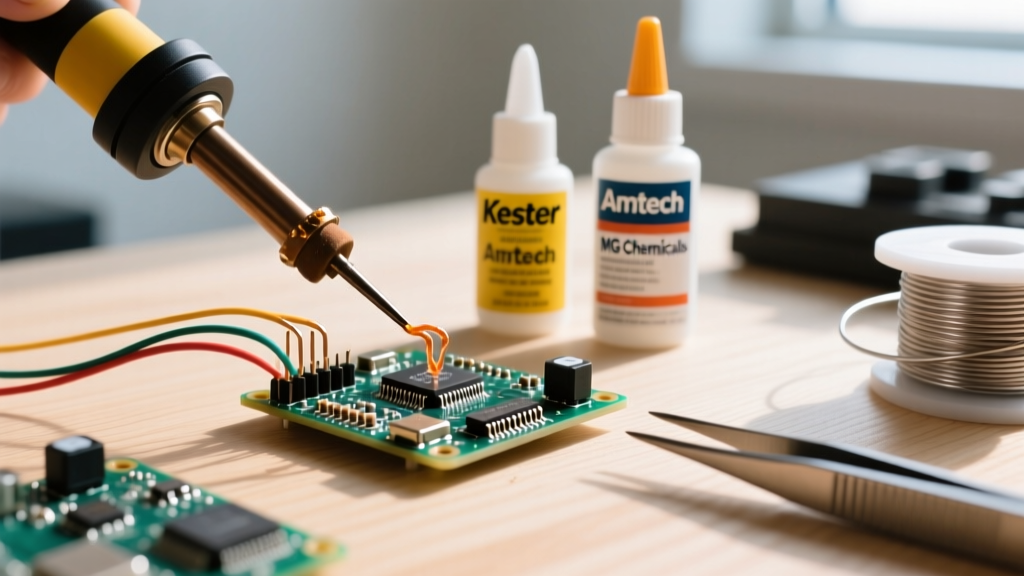
Rather than offering generic advice, this guide dissects how to use flux for soldering by comparing three dominant industry brands—Kester, Amtech, and MG Chemicals—across their specific flagship products. We will map each brand's unique chemical profile to its ideal application, complete with thermal staging protocols and failure mode analysis.
The IPC J-STD-004B Standard: Decoding Flux Classifications
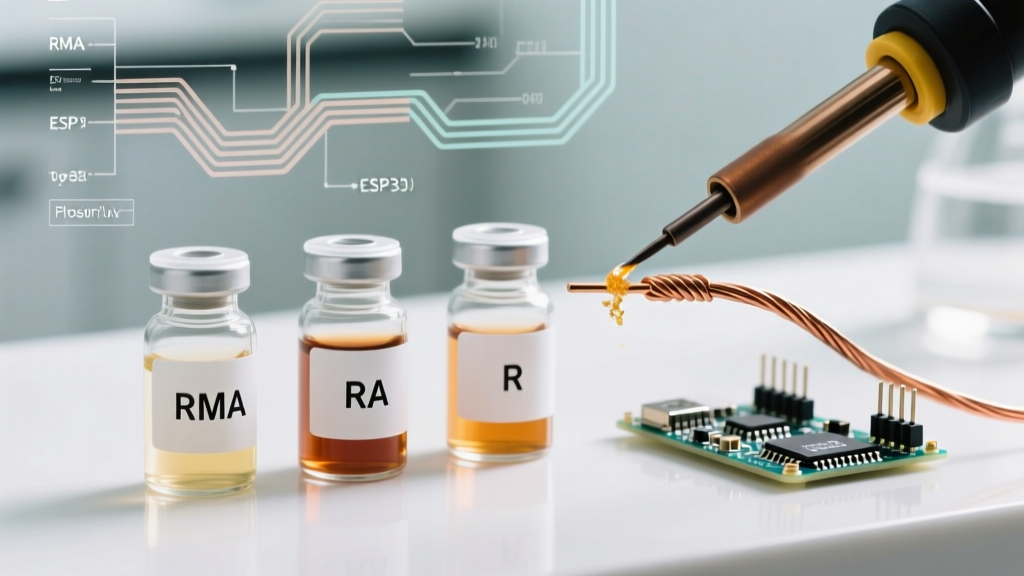
Before applying heat, you must understand what you are applying. The IPC (Association Connecting Electronics Industries) classifies fluxes under the J-STD-004B standard using a three-character code indicating material type, activity level, and halide content. For example, ROL0 means Rosin-based, Low activity, and 0% halides. Using a high-activity flux (like ROH1) on a high-impedance RF board without aggressive cleaning will lead to electrochemical migration (dendrite growth) and catastrophic short circuits under humid operating conditions.
Kester 186: The Heavy-Duty Rosin Standard for Through-Hole
Product Focus: Kester 186 Mildly Activated Rosin Liquid Flux (ROL0)
Kester 186 has been the benchmark for traditional through-hole and heavy-gauge wire tinning for decades. Its base is natural rosin (colophony) dissolved in an isopropanol (IPA) solvent, activated by mild organic acids.
How to Use Kester 186 Effectively
- Application: Apply 1-2 drops directly to the tinned wire or through-hole barrel using a precision dispenser bottle.
- The 3-Second Outgas Rule: This is where most beginners fail. The IPA solvent boils at 82°C. If you touch the flux with a 350°C soldering iron immediately, the rapid solvent expansion causes microscopic explosions, resulting in dangerous solder spatter and flux voids inside the joint. Wait 3 to 5 seconds for the solvent to evaporate before introducing the iron.
- Thermal Profile: The rosin activates and begins stripping copper oxides at approximately 150°C. Maintain your iron tip at 320°C-350°C for leaded 63/37 wire, or 360°C for lead-free alloys, ensuring the flux flows outward before the solder melts.
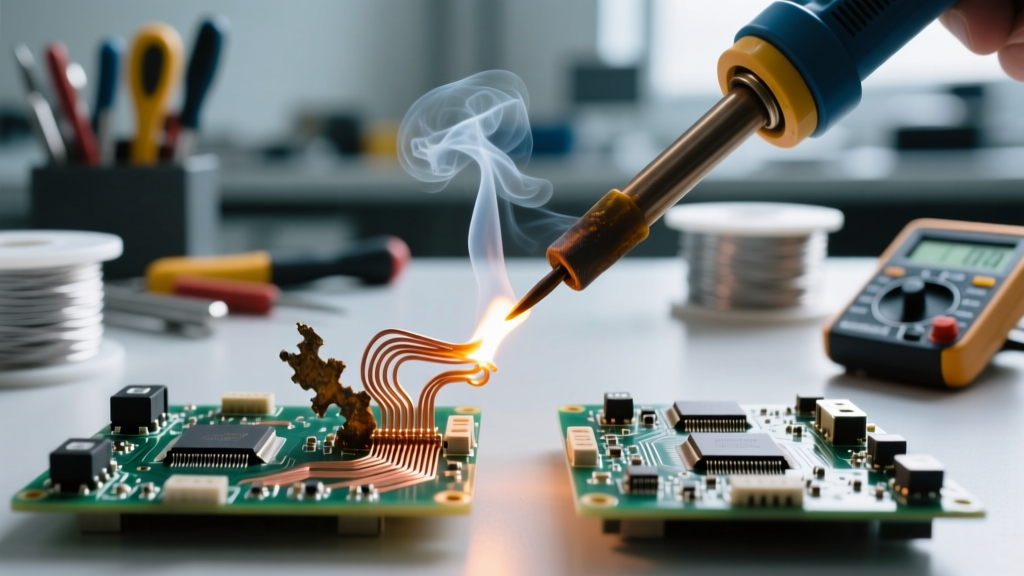
Failure Mode Alert: Exceeding 380°C with Kester 186 will carbonize the rosin base, leaving a hard, black, conductive residue that is nearly impossible to remove with standard IPA wipes and can interfere with Automated Optical Inspection (AOI) systems.
Amtech NC-559-V2-TF: The SMD & BGA Tacky Specialist
Product Focus: Amtech NC-559-V2-TF No-Clean Tacky Flux (REL0)
When dealing with surface-mount devices (SMDs), QFPs, or BGA reballing, liquid fluxes are useless—they boil away too quickly and lack the physical viscosity to hold components in place. Amtech's NC-559 is a synthetic resin (REL0) tacky flux engineered specifically for prolonged thermal profiles.
How to Use Amtech NC-559 for Drag Soldering & BGA
- Dispensing: Use a 10cc syringe with a 22-gauge blunt tip. For a 0.5mm pitch QFP chip, apply a continuous 1mm bead across the pads. The thixotropic agents in the flux ensure it stays exactly where placed, even when tilted.
- Component Seating: Press the IC into the tacky flux. The physical adhesion will hold the component in place, eliminating the need for tweezers during the initial heating phase.
- Thermal Endurance: Unlike liquid rosin, NC-559 is designed to survive the 240°C+ peak temperatures of lead-free reflow profiles for up to 90 seconds without charring or losing its wetting capability. This makes it indispensable for hot-air BGA rework where the entire board is heated for extended periods.
MG Chemicals 8341: Precision No-Clean for Micro-Rework
Product Focus: MG Chemicals 8341 No-Clean Flux Pen (REL0)
For quick touch-ups on 0402 or 0603 components, syringes and liquid bottles are too imprecise. The MG Chemicals 8341 pen utilizes a low-solids (approx. 3%) no-clean chemistry that leaves virtually invisible residue, eliminating the need for post-solder cleaning in high-density IoT assemblies.
How to Use the MG 8341 Pen
- Priming: Press the valve tip downward 3-4 times on a scrap pad until the flux saturates the nib. Never prime directly on a live PCB to avoid flooding adjacent components.
- Capillary Control: Lightly trace over the target pads. Because the solids content is so low, the flux relies on capillary action to pull molten solder into tight spaces, making it ideal for clearing micro-bridges between 0.4mm pitch gull-wing leads.
- Residue Management: While classified as "no-clean," the residue can become slightly tacky if exposed to high ambient humidity over time. For high-voltage or high-impedance sensor circuits, a quick wipe with 99% IPA is still recommended by the NASA Electronic Parts and Packaging (NEPP) Program to prevent parasitic leakage currents.
2026 Flux Comparison Matrix
| Brand & Model | Chemistry / IPC Class | Form Factor | Activation Temp | Best Application | 2026 Avg Price |
|---|---|---|---|---|---|
| Kester 186 | Rosin / ROL0 | Liquid (1L Bottle) | 150°C | Through-hole, heavy wire tinning | $34.00 |
| Amtech NC-559-V2-TF | Synthetic Resin / REL0 | Tacky Syringe (10cc) | 160°C | BGA rework, QFP drag soldering | $28.50 |
| MG Chemicals 8341 | No-Clean / REL0 | Liquid Pen (10ml) | 140°C | 0402/0603 touch-ups, bridge removal | $9.50 |
The Universal 4-Step Framework for Perfect Wetting
Regardless of the brand you choose, the physics of solder wetting remain constant. Follow this framework to ensure optimal intermetallic compound (IMC) layer formation.
1. Surface Preparation
Flux cannot penetrate thick layers of organic contamination or silicone conformal coating. Always wipe the work area with 99% Isopropyl Alcohol (IPA) and a lint-free polyester swab before applying flux.
2. Volume Matching
More flux does not equal a better joint. Excess flux traps boiling solvents under the solder wave, creating internal voids that weaken the joint's mechanical shear strength. Use the minimum amount required to coat the oxidation layer.
3. Thermal Staging
As noted with Kester 186, allow liquid solvents to outgas. For tacky fluxes like Amtech, use a pre-heater to bring the PCB ambient temperature to 100°C-120°C before applying the localized iron heat. This prevents thermal shock to ceramic capacitors (MLCCs) and ensures the flux activates evenly.
4. Wetting Angle Verification
A properly fluxed and heated joint will exhibit a concave fillet with a wetting angle of less than 75 degrees (ideally 30-45 degrees). If the solder beads up into a convex sphere (an angle >90 degrees), the flux has either been exhausted (burned off) or the pad was heavily oxidized beyond the flux's chemical capacity to clean it.
Health and Safety: Managing Flux Fumes
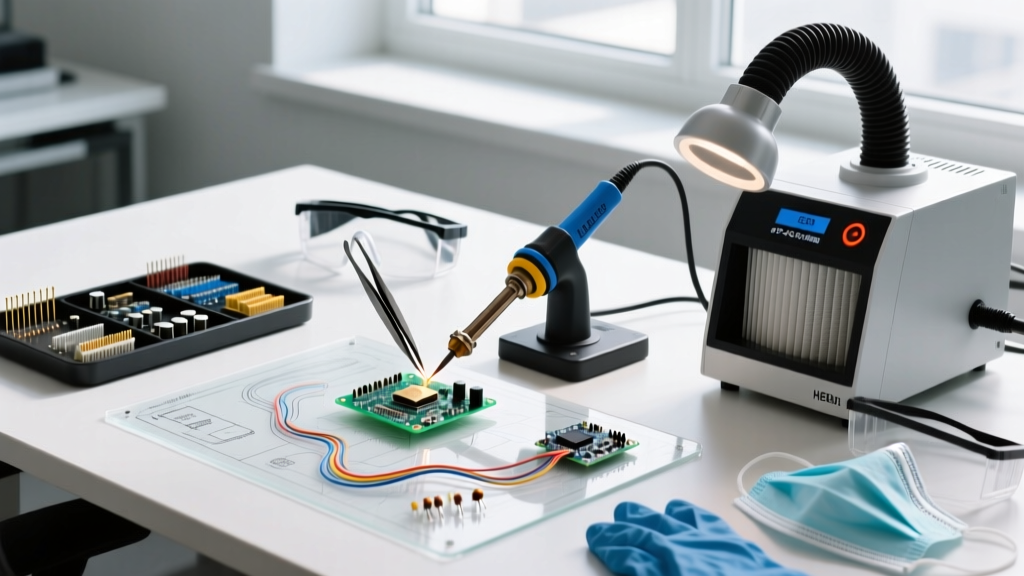
When learning how to use flux for soldering, safety must be integrated into your workflow. The vaporized rosin and synthetic resins contain colophony and aliphatic aldehydes, which are potent respiratory sensitizers. Prolonged exposure without extraction can lead to occupational asthma. According to guidelines referenced by CDC NIOSH (National Institute for Occupational Safety and Health), local exhaust ventilation (LEV) is mandatory. Never rely on a standard desk fan, which merely blows hazardous particulates across your face and room. Invest in a HEPA and activated carbon fume extractor positioned within 6 inches of the soldering zone to capture both particulate matter and volatile organic compounds (VOCs) at the source.
Final Verdict: Choosing Your Arsenal
There is no single "best" flux. Mastering how to use flux for soldering means building a multi-brand toolkit. Keep Kester 186 on your bench for heavy mechanical joints and wire harnesses. Stock Amtech NC-559 syringes for your microscope work, BGA reballing, and drag soldering. Finally, keep an MG Chemicals 8341 pen in your ESD toolkit for rapid, low-residue field repairs and micro-bridge clearing. By matching the chemical activation profile and physical viscosity to your specific thermal and mechanical requirements, you guarantee reliable, long-lasting electronic assemblies.