
Search any electronics forum, and you will inevitably find a frustrated beginner declaring that working with solder is an unpredictable art. Yet, if you walk into an aerospace manufacturing floor or a high-volume PCB repair depot, the consensus among veterans is entirely different. According to industry professionals, soldering is easy—but only when you stop treating it as a manual craft and start treating it as a predictable chemical and thermal process.
At ElectricalFlux, we convened a panel of three master technicians and engineering educators to deconstruct the myth of the 'difficult' solder joint. By analyzing their workflows, we can isolate exactly why beginners struggle, and more importantly, how to buy the right gear and apply the right techniques to make the process effortless.
The Expert Consensus: Physics Over Finesse
When we asked our panel why the phrase 'soldering is easy' triggers such debate, the answers pointed directly to a misunderstanding of thermal mass and flux chemistry. Here is what the experts had to say:
Marcus Vance, IPC Certified Instructor: 'Beginners think the iron melts the solder. It doesn't. The iron heats the pad and the lead, and the heated metal melts the solder. When students finally grasp that they are managing thermal transfer, not just pushing a hot stick, the process clicks. Soldering is easy when you let capillary action and wetting angles do the heavy lifting, as outlined in the IPC J-STD-001 standards.'
Sarah Lin, Avionics Harness Technician: 'In aerospace wiring, we follow strict NASA workmanship guidelines. The biggest mistake I see is flux starvation. People rely on the tiny rosin core inside their wire, but by the time the joint reaches 220°C, that flux has burned off. Adding external liquid or tacky flux makes soldering incredibly easy because it removes the oxidation barrier instantly.'
Dr. Aris Thorne, University EE Lab Director: 'The market is flooded with $15 adjustable irons that use rudimentary op-amp controllers. They overshoot temperatures, oxidizing the tip in seconds. Soldering is easy when your equipment maintains thermal equilibrium. Upgrading to a station with active thermal recovery removes 90% of the user error.'
The Equipment Matrix: Gear That Removes the Difficulty
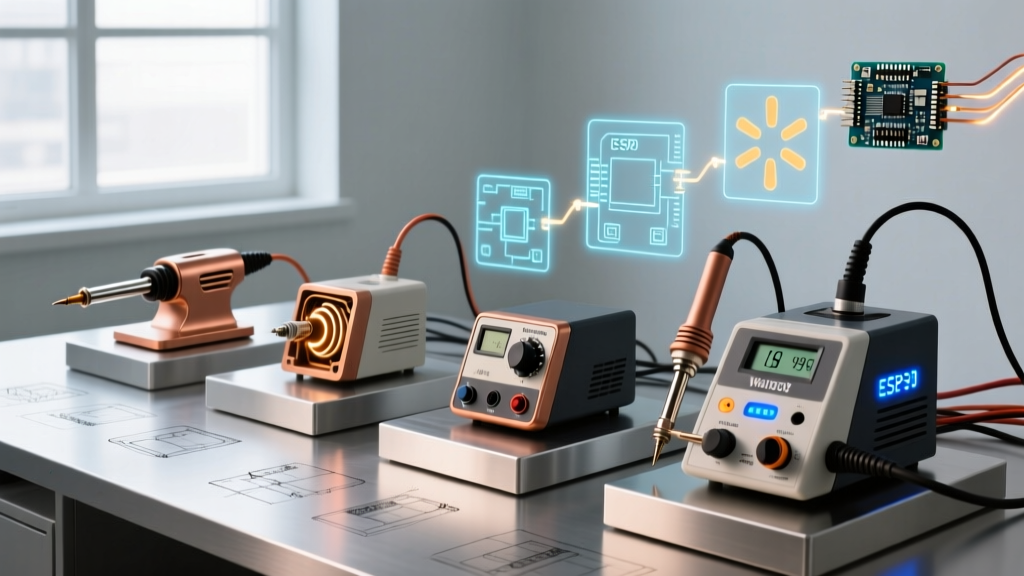
To prove that soldering is easy when properly equipped, we must look at the tools. A soldering station's ability to recover heat after touching a copper ground plane dictates whether you get a shiny, reliable fillet or a dull, crystalline cold joint. Below is our 2026 buyer's breakdown of stations that eliminate thermal lag.
| Station Model | Heating Architecture | Tip Cost (Avg) | Heat-Up / Recovery | 2026 Street Price |
|---|---|---|---|---|
| Pinecil V2 | RISC-V Direct DC Injection | $2.50 | 6 seconds / Excellent | $28 - $32 |
| Hakko FX-888D | Ceramic Element (Composite Tip) | $7.00 | 25 seconds / Moderate | $115 - $125 |
| Weller WE1010NA | Microprocessor Controlled | $9.50 | 20 seconds / Good | $105 - $110 |
| JBC CD-2BQF | Active Cartridge (Heater in Tip) | $45.00+ | 2 seconds / Unmatched | $525 - $550 |
Why the Pinecil V2 Changed the Game
Historically, achieving fast thermal recovery required spending over $400 on JBC or Metcal systems. However, the Pinecil V2 has disrupted this space. By utilizing a RISC-V microcontroller and direct DC injection, it monitors tip resistance hundreds of times per second. For a hobbyist wondering if soldering is easy on a budget, the Pinecil V2 running IronOS firmware provides near-instant heat-up times that rival $500 stations, provided you power it with a 65W USB-C PD adapter or a 24V DC barrel supply.
The Chemistry of 'Easy': Flux is the Real MVP
If you take away only one concept from this expert roundup, let it be this: solder does not stick to metal; it sticks to clean metal. Oxidation happens the millisecond your iron touches the air-exposed copper pad. Flux is the chemical agent that dissolves this oxidation.
- Rosin (R) / Kester 44: The gold standard for general through-hole and wire splicing. It leaves a hard, non-corrosive residue. Ideal for beginners because it is forgiving and smells like pine.
- Rosin Mildly Activated (RMA): Contains slight chemical activators to cut through heavier tarnish on older components or oxidized battery tabs.
- No-Clean (NC) / Amtech NC-559-V2-TF: Essential for SMD (Surface Mount Device) rework and BGA reballing. It has high viscosity, meaning it stays exactly where you syringe it, preventing solder bridges under a microscope.
Expert Tip: Never use plumbing acid flux on electronics. The zinc chloride will rapidly corrode your PCB traces, leading to catastrophic failure months down the line.
3 Failure Modes That Make Soldering Feel Hard
When beginners declare the process difficult, they are usually victims of one of three specific physical failure modes. Recognizing these will immediately elevate your skill level.
1. The Tip Geometry Mismatch
Beginners gravitate toward the finest, sharpest conical tip (like a 0.5mm pencil point), assuming precision requires a tiny tip. This is a thermal disaster. A conical tip has almost zero surface area to transfer heat into a large ground plane.
The Fix: Use the largest chisel or bevel tip that fits on the pad. A Hakko T18-D24 (2.4mm chisel) will transfer heat 400% faster than a T18-I (0.2mm conical), making the solder flow instantly and reducing the time the iron spends on the board, which prevents pad lifting.
2. The 'Cold Joint' Illusion
A dull, grainy joint is often blamed on 'bad solder.' In reality, it is usually caused by moving the component before the solder has fully transitioned through its plastic (semi-solid) phase, or by using lead-free SAC305 solder without raising the iron temperature to 350°C (662°F). If you are a beginner, stick to 63/37 Tin/Lead eutectic solder. It has a single melting point of 183°C and a wide plastic range, making it incredibly forgiving.
3. Oxidation Burn-Off
If your solder balls up and rolls off the tip like water on a hot skillet, your tip is oxidized. This happens when users leave their station at 400°C while not in use.
The Fix: Always dial your station down to 250°C when idle, and always leave a blob of cheap, high-rosin solder on the tip before turning it off. This 'sacrificial' layer oxidizes instead of the iron plating on your tip.
The 'First 3 Seconds' Execution Protocol
To standardize the process, our experts agreed on a universal 4-step protocol that guarantees a perfect joint every time. Memorize this sequence:
- Wet the Tip (0.5s): Wipe the iron on a damp brass sponge, then immediately apply a tiny amount of fresh solder to the tip. This creates a thermal bridge.
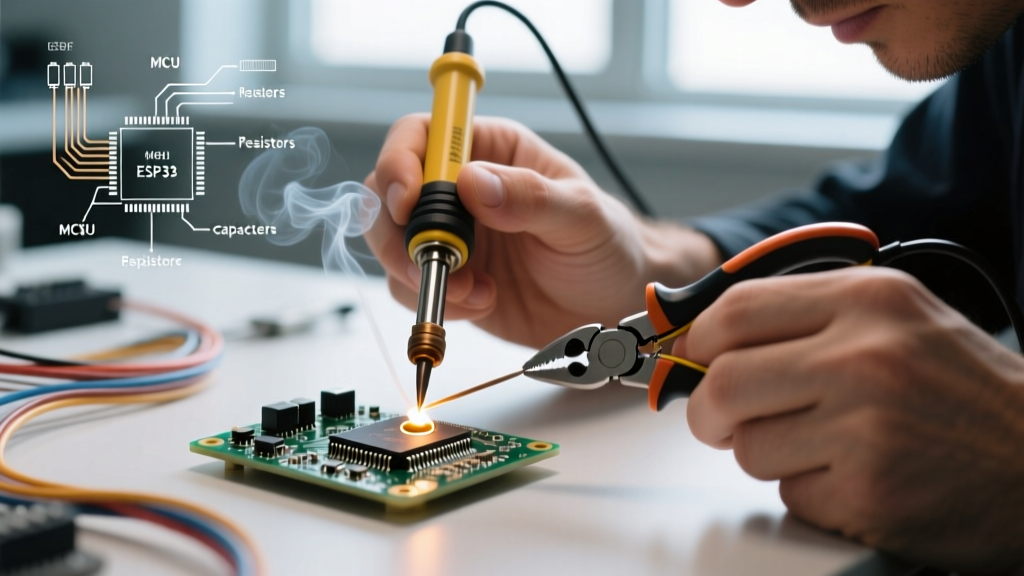
- Heat the Work, Not the Solder (1.5s): Touch the iron simultaneously to the PCB pad and the component lead. Do not feed solder yet.
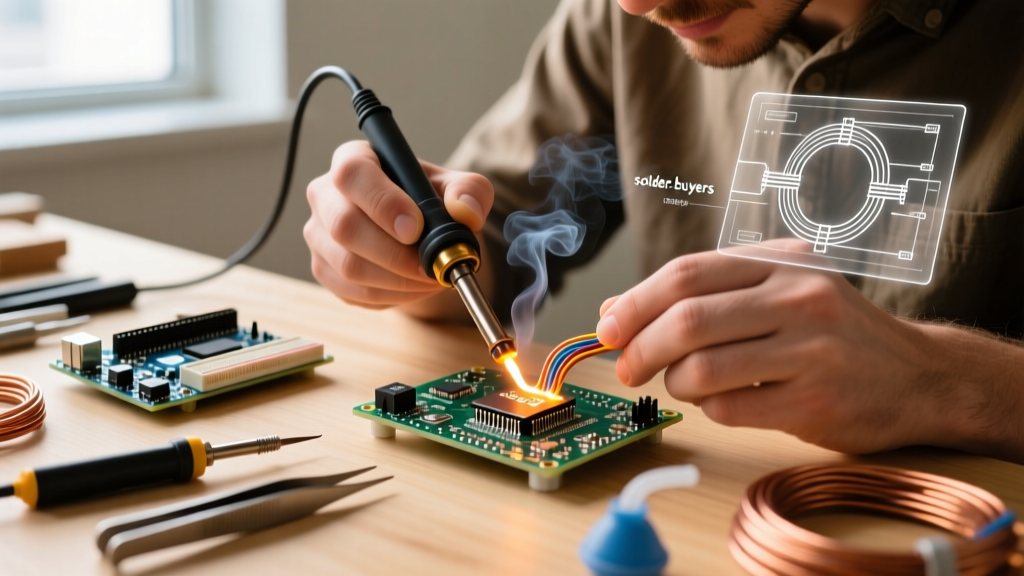
- Feed the Flux Core (1.0s): Touch your solder wire to the opposite side of the joint, not directly to the iron tip. When the pad is hot enough, the solder will snap to it and wick around the lead via capillary action.
- Remove and Inspect (0.5s): Pull the solder away first, then pull the iron away at a 45-degree angle. The joint should cool in 2 seconds, forming a smooth, concave volcano shape.
Frequently Asked Questions
Is soldering easy for SMD components?
Yes, but it requires a shift in technique. Instead of a traditional iron, SMD soldering is often easier using drag soldering with a gull-wing tip and copious amounts of liquid flux, or by using a hot air rework station (like the Quick 861DW) paired with solder paste. The flux holds the tiny 0603 or 0402 components in place via surface tension while the heat melts the paste.
Can I use cheap Amazon soldering kits?
While those $15 '60W Adjustable' kits come with plenty of accessories, their thermal regulation is notoriously poor. They use basic triac or op-amp circuits that cause massive temperature swings. As noted by Dr. Thorne, fighting an unstable iron makes the process unnecessarily difficult. Investing $30 in a Pinecil or $110 in a Hakko FX-888D will save you hours of frustration and ruined PCBs.
What is the best resource for visual learners?
We highly recommend reviewing the Adafruit Guide to Excellent Soldering or the visual library provided by Hakko's Learning Center. Seeing the exact wetting angle and flux boil-off in high definition bridges the gap between theory and practice.
Ultimately, the phrase soldering is easy isn't gatekeeping; it's a promise. Once you respect the thermal dynamics, invest in a temperature-stable iron, and rely heavily on chemical flux, the process transforms from a frustrating chore into a deeply satisfying, repeatable science.