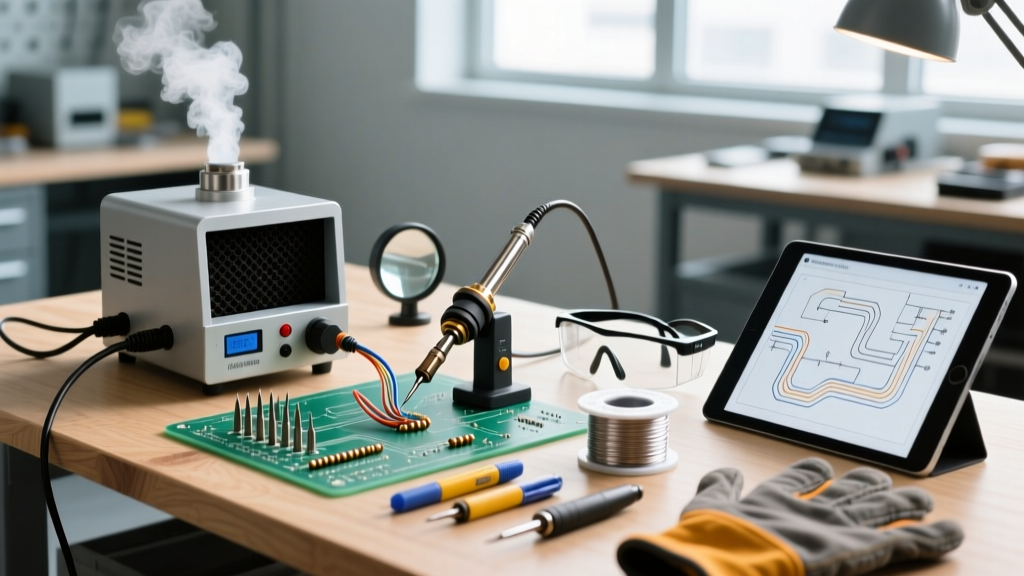

Defining the Arsenal: What Are Soldering Tools?
When beginners ask what are soldering tools, they often assume the answer is simply 'a hot pen and some metal wire.' However, as any IPC-certified master trainer will tell you, soldering is a complex interplay of thermodynamics, metallurgy, and chemical fluxing. Soldering tools encompass the entire ecosystem required to create a reliable, electrically conductive, and mechanically sound metallurgical bond between two surfaces.
To provide the most accurate, up-to-date 2026 perspective, we convened insights from senior Electronics Manufacturing Services (EMS) bench engineers, IPC J-STD-001 certified instructors, and veteran hardware hackers. This expert roundup dissects the essential gear, moving beyond generic advice to deliver exact model numbers, real-world pricing, and the specific failure modes that separate amateur hacks from professional-grade assemblies.
The Heat Sources: Irons, Stations, and Portable Tech
The core of any soldering kit is the heat source. The industry has shifted dramatically with the adoption of USB-C Power Delivery (PD) and RISC-V microcontrollers, changing the landscape of what are soldering tools in the portable space.
1. The Portable Disruptor: Pine64 Pinecil V2
For hobbyists, field technicians, and drone racers, the Pine64 Pinecil V2 ($26–$35) has fundamentally disrupted the market. Powered by a BL706 RISC-V chip and running the open-source IronOS firmware, it supports up to 65W via USB-C PD.
- Thermal Recovery: Reaches 320°C in under 15 seconds with a 24V PD supply.
- Expert Caveat: It lacks the thermal mass for heavy ground-plane PCB work. Experts recommend it strictly for SMD (Surface Mount Device) work up to 1206 sizes and light through-hole components.
2. The Bench Workhorses: Hakko FX-888D vs. Weller WE1010NA
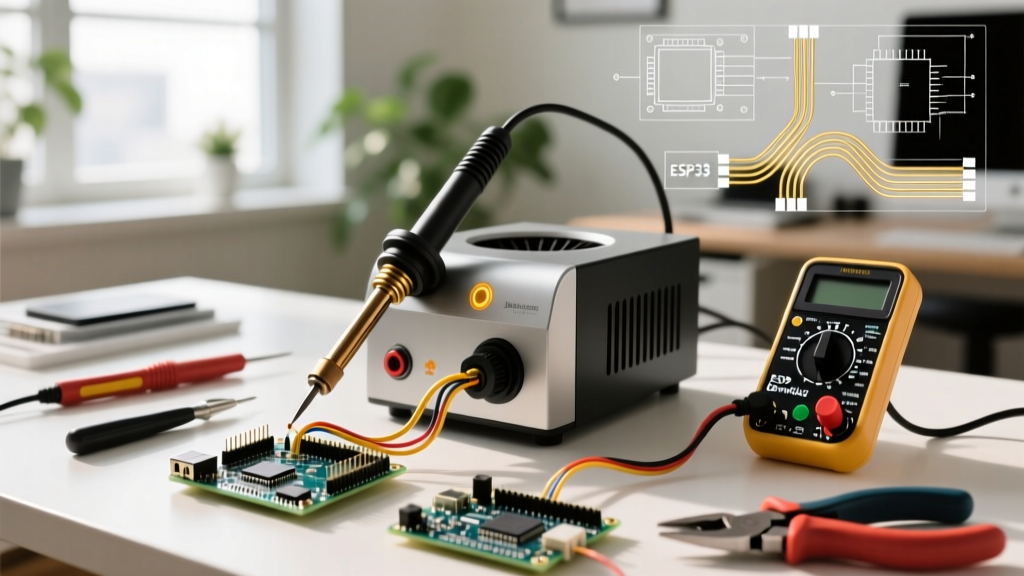
For dedicated bench work, traditional ESD-safe stations remain the gold standard. Our EMS engineers frequently debate the two titans of the $100–$130 prosumer tier:
- Hakko FX-888D ($115–$125): Outputs 70W and utilizes the ubiquitous T18 tip series. Its analog-to-digital control loop offers solid thermal recovery, though the UI requires navigating a two-button digital menu. The T18-B (conical) and T18-D24 (chisel) are mandatory additions.
- Weller WE1010NA ($110–$130): Also 70W, but features a more intuitive UI and the ET tip series. Bench technicians note that Weller's heating element design provides slightly faster thermal transfer to heavy copper pads compared to the Hakko, making it preferable for automotive wiring or large terminal blocks.
The Chemistry of the Joint: Solder Alloys and Flux
You cannot understand what are soldering tools without understanding the consumables. The iron merely provides the activation energy; the solder and flux execute the actual bond.
Solder Alloys: Leaded vs. Lead-Free
| Alloy Designation | Composition | Melting Point | Best Use Case |
|---|---|---|---|
| Kester 44 (Sn63/Pb37) | 63% Tin, 37% Lead | 183°C (Eutectic) | Hobbyist, prototyping, vintage repair. Zero plastic phase prevents disturbed joints. |
| SAC305 | 96.5% Sn, 3.0% Ag, 0.5% Cu | 217°C - 220°C | Commercial production, RoHS compliance. Requires higher iron temps (350°C+). |
| Sn42/Bi57/Ag1 | Tin, Bismuth, Silver | 138°C - 170°C | Low-temp rework, heat-sensitive components, step-soldering. |
Flux: The Unsung Hero
'Amateurs buy expensive irons and cheap flux. Professionals buy cheap irons and expensive flux. Flux is what actually solders the joint; the iron just melts the metal.' — Senior Rework Engineer, Tier 1 EMS Provider
Flux removes oxidation and reduces surface tension. For 2026 bench work, experts overwhelmingly recommend Amtech NC-559-V2-TF (a no-clean, tacky flux in a syringe) for SMD drag soldering, and MG Chemicals 8341 (rosin-based liquid/paste) for heavy through-hole wiring. Never use plumbing acid flux on electronics; it will cause catastrophic dendritic growth and short circuits within weeks.
Mechanical Prep and Hand Tools
A pristine joint is impossible without pristine preparation. The mechanical tools in your kit dictate your efficiency and the physical integrity of the wire.
Wire Strippers and Cutters
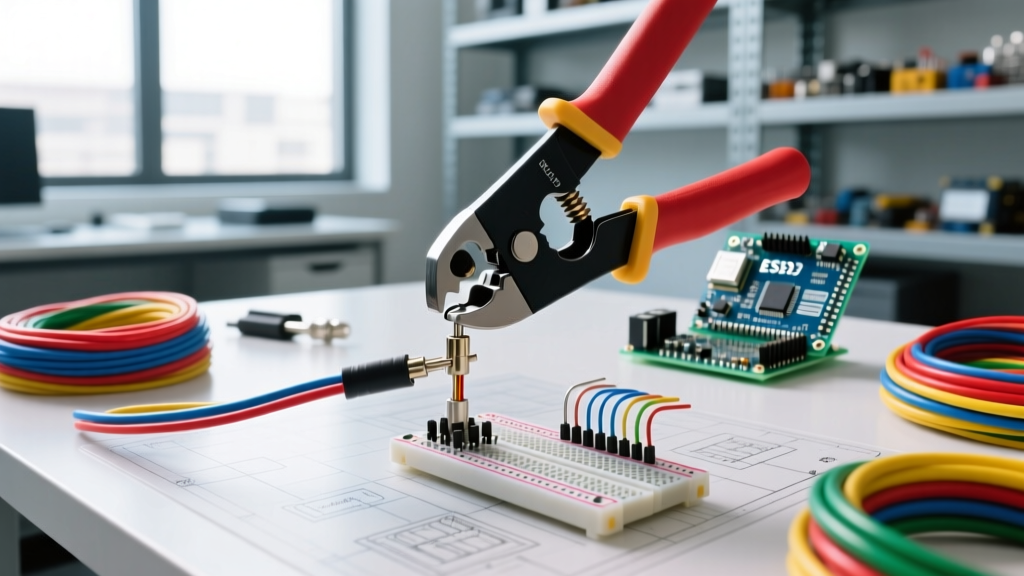
Ditch the cheap hardware store strippers that nick copper cores. Experts mandate the Knipex Electronic Super Knips 125mm (Model 78 61 125) ($35–$45). Its precision-ground jaws strip AWG 28 to AWG 14 without scoring the copper, preserving the wire's tensile strength. For flush cutting component leads, the Hakko CHP 170 Micro-Shear ($12–$15) features an induction-hardened edge that cuts 20AWG wire perfectly flush to the PCB pad, eliminating dangerous sharp snags.
Tweezers and Handling
When handling 0402 or 0603 SMD components, standard tweezers are too bulky. The Vetus ESD-15 (anti-magnetic, anti-acid stainless steel with ultra-fine curved tips) is the industry standard for under $15. For hot rework, titanium tweezers like the Quick TS12 are required, as titanium has low thermal conductivity and won't act as a heat sink, robbing the component of reflow temperature.
Expert Comparison Matrix: 2026 Kit Tiers
To help you build your kit based on your specific needs, our panel categorized what are soldering tools into three distinct purchasing tiers.
| Tier | Target User | Core Iron | Essential Accessories | Est. Budget |
|---|---|---|---|---|
| Field/Hacker | Drone repair, automotive, travel | Pinecil V2 + 65W PD Brick | $85 - $110 | |
| Prosumer/Bench | DIY audio, custom PCBs, retro modding | Hakko FX-888D or Weller WE1010NA | $180 - $220 | |
| Production/Rework | BGA rework, QFN stenciling, EMS | Quick 861DW (Hot Air) + JBC CD-2BQE | $800 - $1,200+ |
Advanced Rework and Safety Gear
As you progress from simple through-hole joints to multi-layer SMD rework, your definition of what are soldering tools must expand to include thermal air and safety equipment.
Hot Air Rework Stations
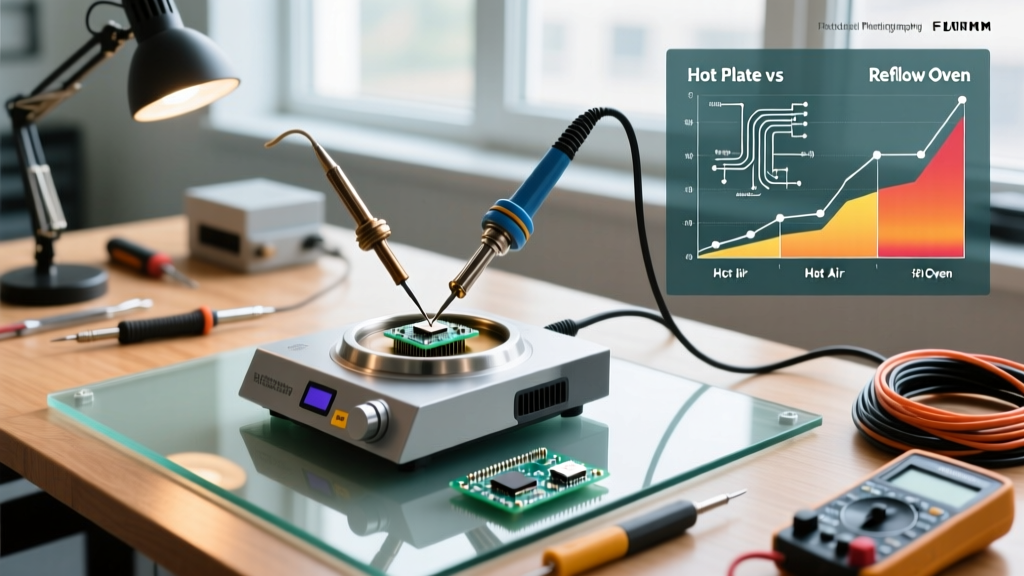
For desoldering SOIC-8 chips or reflowing QFN pads, a soldering iron is insufficient. The Quick 861DW ($250–$280) remains the undisputed champion in the mid-tier space. It delivers 1000W of power, ensuring that when you set the display to 350°C, the air temperature at the nozzle actually remains at 350°C even under high airflow (120L/min), preventing the dreaded 'cold air blast' effect that plagues cheaper 700W clones.
Fume Extraction and Safety
Soldering flux vaporizes into sub-micron particulate matter and volatile organic compounds (VOCs). According to OSHA Hazard Communication and Safety Guidelines, prolonged exposure to rosin-based flux fumes can cause occupational asthma and severe respiratory sensitization.
Never rely on a desk fan to blow fumes into your face. Experts require a localized fume extractor with a HEPA and activated carbon filter, such as the Hakko FA-400 ($60–$75) for light use, or a fully enclosed benchtop system like the BOFA 3D for continuous production environments. As detailed in Adafruit's Guide to Excellent Soldering, proper ventilation is just as critical as the iron itself.
Common Failure Modes and Expert Fixes
Even with the best tools, poor technique leads to failed assemblies. Our IPC-certified trainers highlighted the most common failure modes and how to use your tools to fix them:
- Black Tip Syndrome (Oxidation): Leaving a tinned tip at 400°C without use causes the flux core to burn off, oxidizing the iron plating. Solder will no longer wet the tip. Fix: Never use a wet cellulose sponge for daily cleaning; the thermal shock micro-fractures the plating. Use dry brass wire wool (like the Hakko 599B) and always leave a thick blob of solder on the tip before powering down.
- Cold Joints: Characterized by a dull, grainy, or lumpy appearance. This happens when the iron lacks the thermal mass to heat both the pad and the lead simultaneously, or when using lead-free solder at leaded temperatures. Fix: Increase station temp by 20°C, apply liquid flux directly to the joint, and use a wider chisel tip to maximize surface area contact.
- Solder Bridges on SMD Pins: Caused by using too much solder and insufficient flux. Fix: Apply a generous amount of Amtech NC-559 tacky flux over the bridged pins. Use a clean, wide chisel tip to let surface tension pull the excess solder onto the iron, or use a desoldering braid (Goot Wick) saturated with flux to wick it away.
Final Verdict from the Bench
Understanding what are soldering tools is the first step toward mastering electronics assembly. The tools you select should match your specific thermal requirements and workflow. For 90% of users entering the space in 2026, a Pinecil V2 for field work or a Hakko FX-888D for the bench, paired with premium Kester solder, Knipex strippers, and high-quality no-clean flux, will yield professional, IPC-compliant results. Invest heavily in your chemistry (flux and solder) and your mechanical prep tools, and the metallurgy will take care of itself.
For further reading on industry-standard assembly requirements, consult the IPC Standards for Electronic Assemblies, which govern the acceptability of soldered electrical and electronic products worldwide.