
The Core Distinction: Fusion vs. Adhesion
When fabricating electrical enclosures, building high-current busbars, or assembling battery packs, makers and engineers inevitably face a critical metallurgical choice: welding or soldering. While both processes join metals, their underlying physics, mechanical outcomes, and thermal impacts are fundamentally different. Making the wrong choice can lead to catastrophic joint failure, melted insulation, or compromised electrical conductivity.
To build a robust decision framework, we must first define the metallurgical boundary. According to the American Welding Society (AWS), welding is a fusion process that melts the base metals to form a continuous, homogenous joint. Soldering, conversely, relies on capillary action and surface wetting; a filler metal with a liquidus temperature below 840°F (450°C) bonds to the base metal without melting it. The base metal remains structurally intact, but the joint relies on the formation of a microscopic intermetallic compound (IMC) layer for adhesion.
The 4-Point Decision Matrix
Use this matrix to quickly evaluate whether your specific application demands the fusion of welding or the capillary adhesion of soldering.
| Evaluation Criteria | Soldering (Capillary Bond) | Welding (Fusion Bond) |
|---|---|---|
| Thermal Impact | Low (180°C - 400°C). Safe for heat-sensitive components and PVC insulation. | Extreme (1,500°C - 3,500°C). Creates a Heat-Affected Zone (HAZ) that can warp thin metals. |
| Structural Load | Low to Moderate. Fails under high shear stress or continuous mechanical vibration. | High. Joint strength often equals or exceeds the base metal's tensile strength. |
| Electrical Conductivity | Excellent. Silver-bearing solders minimize voltage drop across connections. | Variable. Weld porosity or alloy segregation can introduce micro-resistance. |
| Base Metal Alteration | None. Base metal crystal structure remains unchanged. | Significant. Alters grain structure in the HAZ, potentially causing embrittlement. |
When to Choose Soldering (The Capillary Advantage)
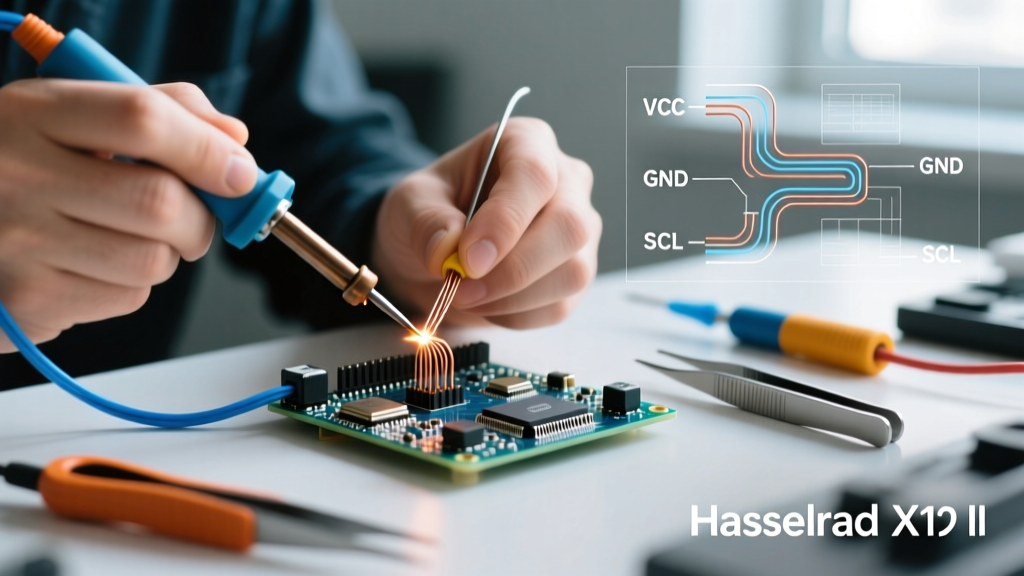
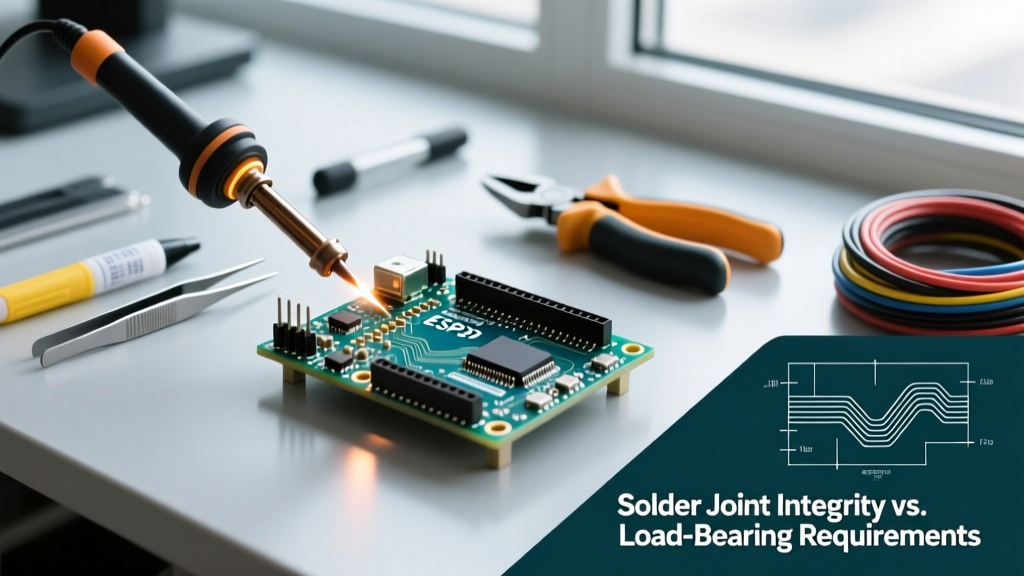
Soldering is the undisputed king of electrical connectivity and precision electronics. The IPC (Association Connecting Electronics Industries) sets the global benchmarks for these joints, emphasizing that a proper solder joint is defined by wetting angles and IMC thickness, not just the volume of filler metal.
Optimal Use Cases
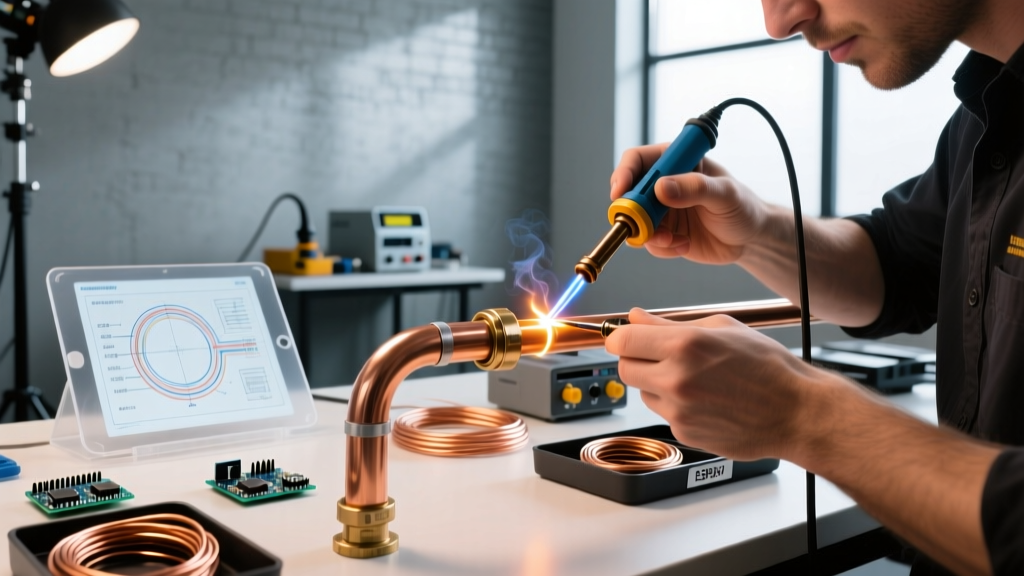
- Copper Busbars & Heavy Gauge Wiring: When joining copper lugs to PCB pads or linking copper busbars where mechanical strain is minimal. Using a silver-bearing solder like Harris Stay-Brite 8 (which melts at 535°F/280°C) provides a tensile strength of 17,000 PSI and superior conductivity.
- RF Shielding & Ground Planes: Soldering copper tape or braid to chassis grounds requires precise thermal control to avoid delaminating adjacent FR4 fiberglass.
- PCB Terminals & Connectors: High-current connectors (e.g., XT90 or AS150) soldered to 10 AWG silicone wire using a high-thermal-mass station like the Weller WE1010NA (70W, ~$135).
The IMC Layer: A Critical Edge Case
The most common failure mode in heavy-duty soldering is not a "cold joint," but an overgrown Intermetallic Compound (IMC) layer. When heat is applied for too long, the tin in the solder reacts with the copper base to form Cu6Sn5 and Cu3Sn crystals. A thin IMC layer (1-2 microns) is necessary for a bond, but prolonged heating causes this layer to thicken, transforming a ductile joint into a brittle, glass-like fracture point. This is why high-wattage irons that recover heat instantly are preferred over low-wattage irons that require prolonged dwell times.
When to Choose Welding (The Fusion Imperative)
When the joint must bear mechanical loads, withstand extreme vibration, or join metals that resist capillary wetting (like aluminum), welding is mandatory. The NASA Standards and Guidelines frequently dictate fusion welding for aerospace structural components where solder's shear weakness is unacceptable.
Optimal Use Cases
- Aluminum Busbars & Enclosures: Aluminum is notoriously difficult to solder due to its instantaneous formation of an aluminum oxide layer, which melts at 2,072°C (while the base aluminum melts at just 660°C). TIG (Tungsten Inert Gas) welding using Alternating Current (AC) is required; the positive half-cycle of the AC wave physically blasts away the oxide layer via ion bombardment, allowing fusion.
- Structural Battery Enclosures: Fabricating 3mm aluminum or steel battery boxes for EV conversions requires MIG or TIG welding to ensure crash-worthiness and structural rigidity.
- Chassis Grounds on Steel Frames: Soldering to galvanized or painted steel is toxic and unreliable. Welding a dedicated steel ground stud directly to the chassis ensures a permanent, zero-resistance path.
Spot Welding: The Battery Pack Exception
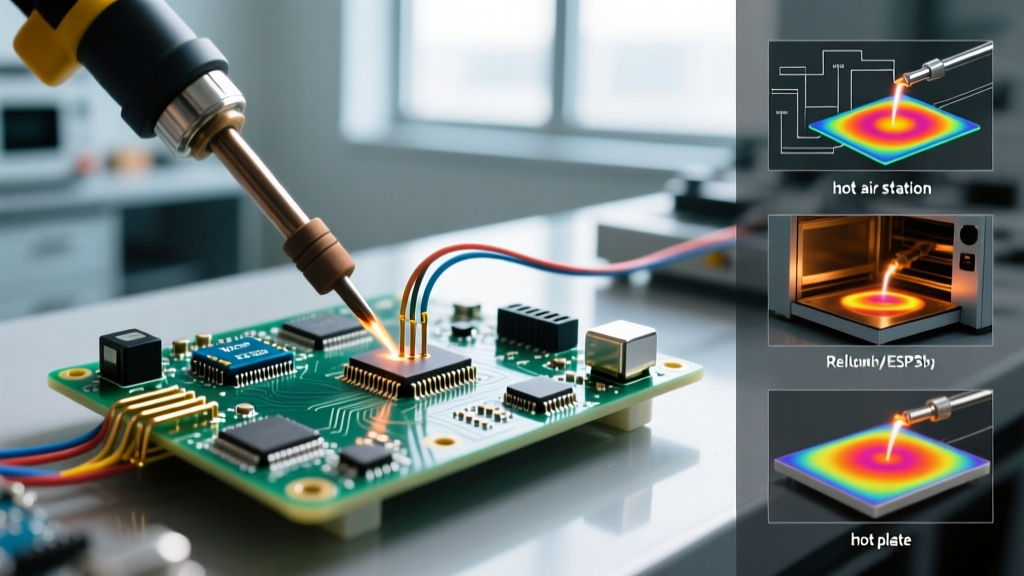
For DIY powerwalls and EV battery packs using 18650 or 21700 cylindrical Li-ion cells, neither traditional TIG welding nor soldering is ideal. Soldering risks heating the cell's internal jellyroll, melting the CID (Current Interrupt Device), or venting the electrolyte. Standard TIG will instantly burn through the 0.25mm steel can. The solution is Pulsed Resistance Spot Welding. Tools like the Kweld spot welder (~$150) deliver 1,000+ amps in 2 to 5 milliseconds, fusing 0.15mm pure nickel strips to the cell terminals without transferring destructive heat to the cell interior.
The 5-Step Decision Flowchart
If you are unsure which method to apply to your current workbench project, follow this sequential logic:
- Is the base metal Aluminum or Stainless Steel? Yes → Choose Welding (TIG/MIG). Soldering these requires highly corrosive, specialized fluxes that are unsuitable for most electrical environments.
- Will the joint bear mechanical load or vibration? Yes → Choose Welding or mechanical fastening (bolting/crimping). Solder will fatigue and crack under cyclic shear stress.
- Are there heat-sensitive components within 10mm of the joint? Yes → Choose Soldering. The HAZ of a weld will destroy semiconductors and melt polymer insulation.
- Is the joint purely for electrical continuity on Copper or Brass? Yes → Choose Soldering. It provides the lowest contact resistance and preserves the base metal's temper.
- Are you joining Li-ion cell terminals? Yes → Choose Pulsed Resistance Spot Welding with pure nickel strips.
Cost and Setup Comparison (2026 Market Reality)
Budget constraints often dictate the DIYer's toolkit. Here is a realistic breakdown of entry-to-mid-level setups for both disciplines.
Pro-Tip: Do not skimp on flux when soldering heavy copper. A $120 soldering station will outperform a $400 station if you use a high-quality liquid rosin flux to eliminate surface oxidation and promote instant capillary wetting.
Soldering Setup Costs
- Station: Weller WE1010NA or Hakko FX-888D ($110 - $140).
- Consumables: Harris Stay-Brite 8 silver solder kit ($35), Amtech NC-559-V2-TF tack flux ($18), 63/37 Leaded or SAC305 Lead-free wire solder ($25).
- Total Entry Cost: ~$188 - $218.
Welding Setup Costs
- Machine: Everlast PowerTIG 200DV (AC/DC TIG) (~$750) or a basic 110V MIG welder (~$400).
- Gas & Regulator: Argon tank (80cf) and flowmeter ($180 - $220).
- Consumables: Tungsten electrodes (2% Ceriated), filler rod, gas lenses ($60).
- Total Entry Cost: ~$640 (MIG) to $1,030 (TIG).
Expert Verdict: Matching the Method to the Material
The debate of welding or soldering is not about superiority; it is about metallurgical appropriateness. If your project demands structural integrity, joins aluminum, or involves high-vibration environments, invest the time and capital into learning TIG or MIG welding. The fusion bond is permanent and resilient. However, if your focus is on maximizing electrical conductivity, joining copper busbars, assembling PCBs, or working near heat-sensitive polymers, soldering remains the most precise, cost-effective, and electrically superior method. Always respect the thermal limits of your base materials, and let the physics of the joint dictate your tool choice.