
The Dual Meaning of 'Soldering Hands'
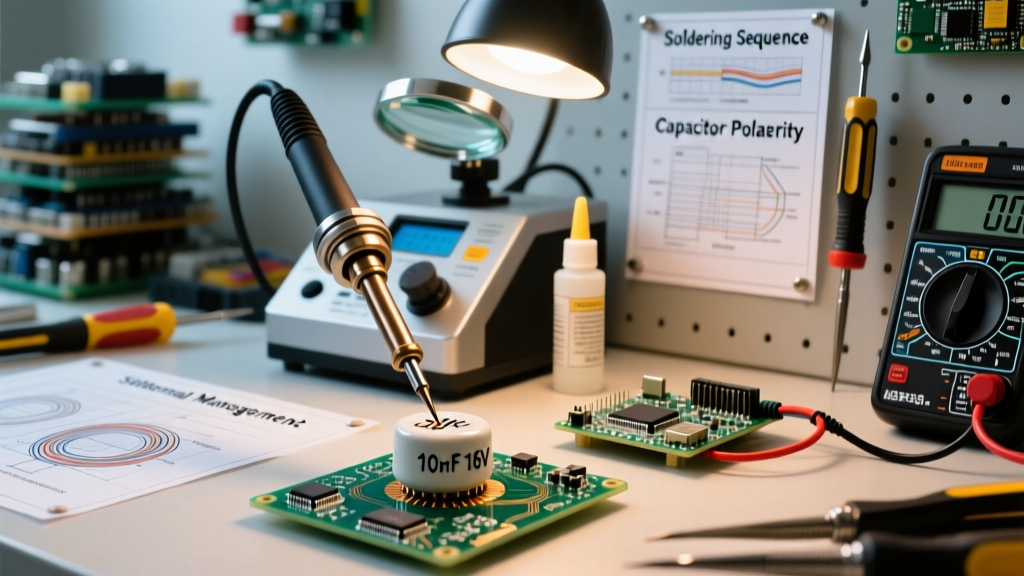
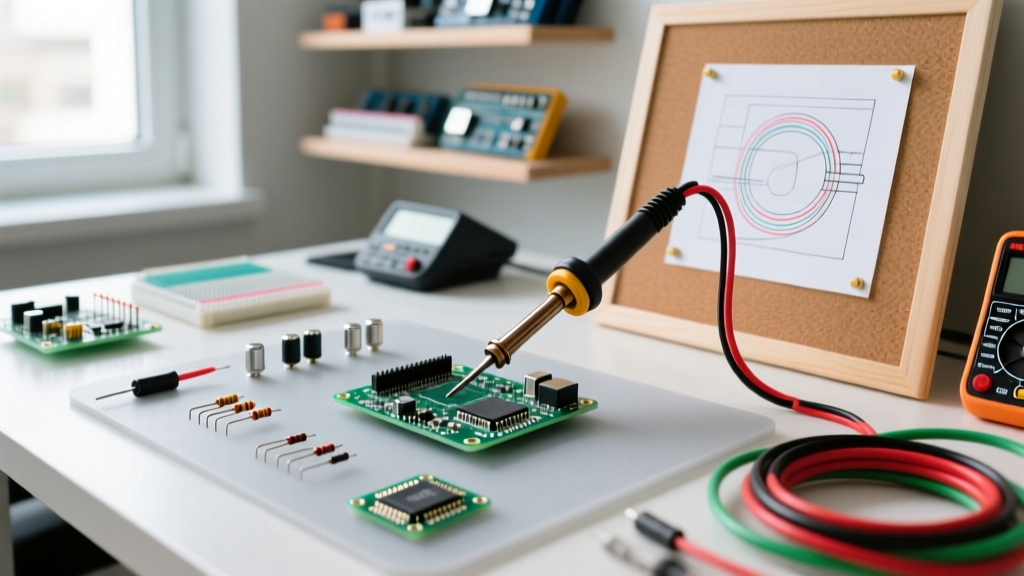
When electronics hobbyists and professional technicians search for solutions regarding 'soldering hands,' they are typically wrestling with two distinct but equally frustrating problems. The first is physiological: managing natural hand tremors, muscle fatigue, and micro-movements that turn a simple 0805 SMD soldering job into a bridged-pad nightmare. The second is mechanical: dealing with the inadequacies of 'third hand' workholding tools that slip, scratch ENIG finishes, or fail to ground sensitive components.
In this comprehensive 2026 troubleshooting guide, we will dissect both interpretations. We will analyze the biomechanics of physical hand stability, recommend specific iron weights for tremor dampening, and troubleshoot the most common failure modes of mechanical workholding arms. Whether you are assembling delicate drones or repairing heavy-gauge automotive wiring, mastering your soldering hands is the fastest way to achieve IPC-compliant joints.
Troubleshooting Physical Hand Tremors & Fatigue
The Biomechanics of Micro-Tremors
Every human being has a physiological tremor, typically oscillating between 8 and 12 Hz. While invisible when holding a coffee mug, this micro-movement is magnified exponentially when you are trying to place a 0.1mm solder wire onto a 0402 capacitor pad. Furthermore, factors like caffeine intake (which peaks in the bloodstream 45 minutes after consumption), low blood sugar, and muscle fatigue can increase tremor amplitude by up to 300%.
According to OSHA's guidelines on ergonomics, repetitive fine-motor tasks without proper bracing lead to rapid onset of localized muscle fatigue, exacerbating shakiness. To combat this, you must utilize the 'Pinky Anchor' technique and select a soldering iron handpiece with the correct inertial mass.
The Pinky Anchor Technique
Never solder with your hand hovering in mid-air. You must create a closed kinematic chain. Rest the heel of your palm or your pinky finger firmly on the workbench or the base of your PCB vise. This transfers the fine motor control from your shoulder and elbow (which are prone to drift) to your wrist and fingers (which offer high precision).
Iron Weight vs. Tremor Dampening Matrix
Counterintuitively, ultra-lightweight soldering irons are often terrible for users with shaky hands. A heavier handpiece provides inertial dampening, absorbing micro-tremors before they reach the tip. Below is a comparison of popular 2026 models and their suitability for unsteady hands.
| Soldering Iron Model | Handpiece Weight | Tremor Dampening | Best Use Case | Approx. Price (2026) |
|---|---|---|---|---|
| Pine64 Pinecil V2 | 28g (Ultra-Light) | Poor (Transfers Tremor) | Travel, field repairs, users with high dexterity | $26 |
| Hakko FX-888D | 55g (Medium) | Moderate | General through-hole, standard SMD work | $115 |
| Weller WE1010NA | 72g (Heavy) | Excellent (High Inertia) | Shaky hands, heavy gauge wire, long sessions | $145 |
| JBC CD-2BE | 38g (Balanced) | High (Ergonomic Grip) | Precision micro-soldering, BGA rework | $495 |
Actionable Fix: If you own a lightweight iron like the Pinecil V2 but suffer from tremors, 3D print or purchase a TPU (Thermoplastic Polyurethane) silicone grip sleeve. Increasing the handle diameter from 12mm to 18mm reduces grip tension, lowering forearm fatigue and subsequent hand shake.
Mechanical 'Third Hands': Workholding Troubleshooting
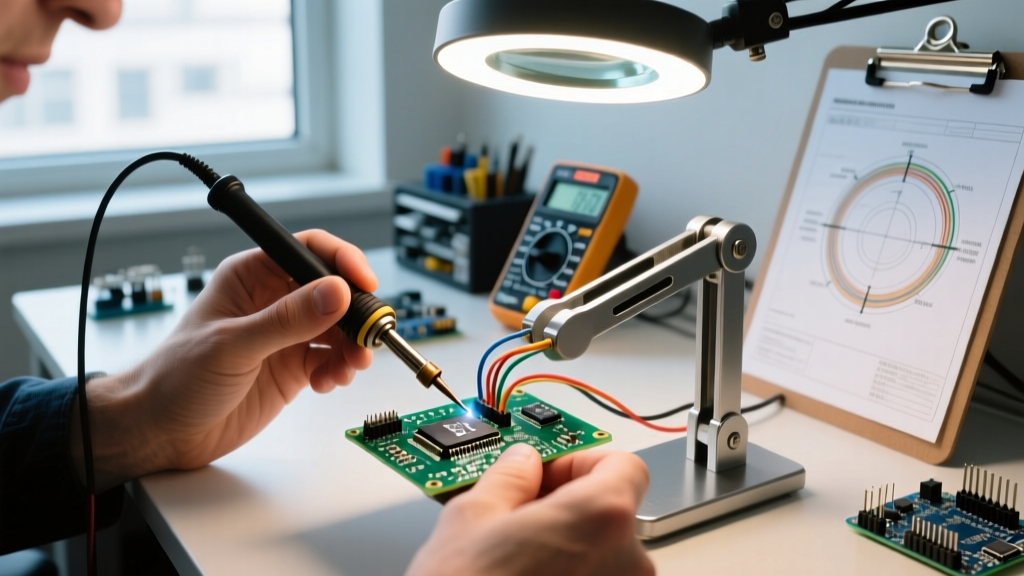
As detailed in Adafruit's excellent soldering guide, a reliable third hand is non-negotiable for modern electronics assembly. However, cheap workholding tools introduce their own set of catastrophic failures.
Edge Case: ENIG Pad Damage & ESD Risks
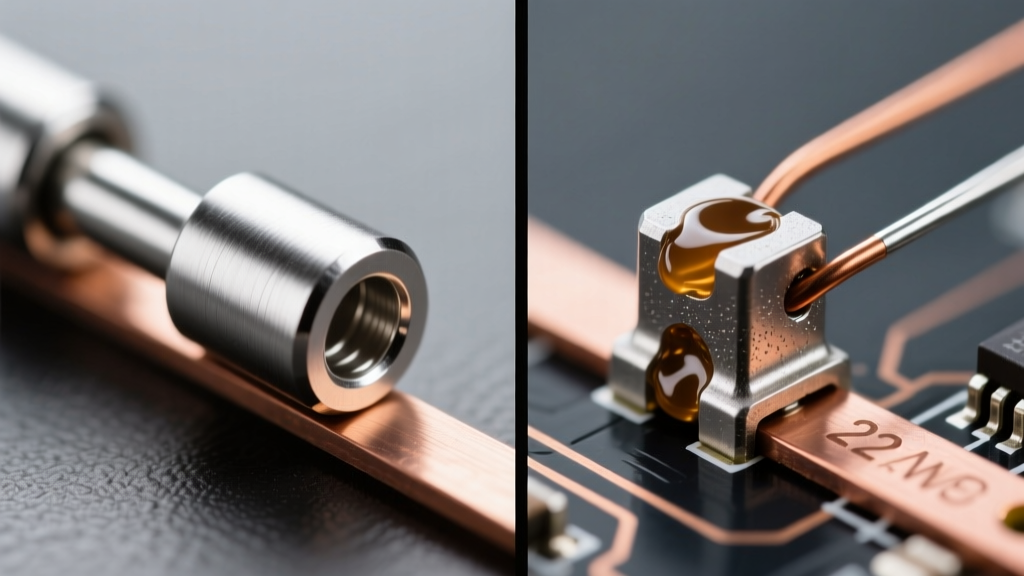
The standard nickel-plated steel alligator clips found on $15 generic helping hands are a liability. The aggressive teeth will gouge soft Electroless Nickel Immersion Gold (ENIG) pads, and the uninsulated metal can act as an antenna for Electrostatic Discharge (ESD), frying sensitive MOSFETs or microcontrollers. The IPC J-STD-001 standards strictly dictate ESD-safe handling for sensitive assemblies.
- The Fix for Pad Damage: Slide 2mm adhesive-lined heat shrink tubing over the jaws of your alligator clips and apply heat. This creates a custom, high-friction silicone-like grip that holds wires securely without marring PCB traces.
- The Fix for ESD: Upgrade to copper alligator clips with silicone boots, or invest in a specialized ESD-safe workholding system like the Kiprim Helping Hands with integrated grounding wires (approx. $22).
Troubleshooting Stiff or Melting Ball-Joints
Budget third-hand tools use nylon or cheap ABS plastic washers inside their ball-joints. When you apply 350°C heat to a wire held by the clip, thermal conductivity travels up the metal arm and softens the plastic washer, causing the joint to droop mid-solder.
The Fix: Disassemble the ball-joints and replace the nylon washers with PTFE (Teflon) washers. PTFE has a melting point of 327°C and maintains structural rigidity far beyond the thermal transfer limits of a steel arm. A pack of 50 PTFE washers costs about $6 and will permanently upgrade a $15 budget tool into a reliable workstation.
Premium Workholding Comparison
| Workholding System | Joint Type | Thermal Resilience | Price Range |
|---|---|---|---|
| Generic Cast-Iron Base | Nylon Ball-Joint | Low (Droops at 60°C) | $12 - $18 |
| Quad Hands Workstation | Friction-Tightened Aluminum | High (No plastic parts) | $89 - $105 |
| PanaVise 201 Junior | Knob-Tensioned Steel | Maximum (Industrial grade) | $45 - $55 |
| Andonstar AD409 Pro (w/ Stand) | Articulating Monitor Arm | High (Integrated digital view) | $270 - $300 |
Step-by-Step Troubleshooting Flowchart
Use this rapid diagnostic matrix when your soldering setup fails you mid-project:
- Symptom: The wire slips out of the third-hand clip when bumped.
Diagnosis: Oxidation on clip teeth or insufficient spring tension.
Solution: Scrub the jaws with a fiberglass scratch pen to expose bare metal, then wrap the exterior of the clip with a small zip-tie to increase clamping force. - Symptom: Solder wicks up the alligator clip instead of the wire.
Diagnosis: The clip is acting as a massive heatsink, drawing thermal energy away from the joint.
Solution: Move the clip further away from the stripping point, or use a ceramic-tipped tweezers as a thermal break between the iron and the clip. - Symptom: Hand cramps after 20 minutes of THT (Through-Hole Technology) soldering.
Diagnosis: 'Death grip' on a narrow iron handle.
Solution: Switch to a thicker foam grip sleeve and lower your workbench height by 2 inches so your elbows rest at a 90-degree angle, shifting the load from your wrist to your shoulder.
Expert FAQ: Soldering Hands & Ergonomics
Why do my hands shake more when looking through a microscope?
This is a psychological and physiological feedback loop known as 'visual-motor amplification.' When you magnify your work 40x, your brain perceives the natural 8Hz tremor as a massive, violent earthquake. Your muscles instinctively tense up to fight this perceived movement, which ironically increases muscle fatigue and tremor amplitude. Fix: Use a digital microscope with a slight latency or software-based image stabilization (like the 2026 models from Hayear), and practice 'breathing through the joint'—exhale slowly right as you apply the solder.
Can I use silicone molding to create custom third-hand bases?
Yes. Many advanced makers pour high-temperature RTV silicone over a magnetic base, embedding neodymium magnets and steel flex-arms directly into the cure. This creates a heavy, non-slip, thermally isolated base that outperforms cheap cast-iron tripods and eliminates the 'tuning fork' vibration effect when you bump the desk.
What is the safest way to hold a lithium battery tab while soldering?
Never use metal alligator clips on raw lithium cells; a slipped clip can short the terminals and cause thermal runaway. Use specialized Kapton-taped wooden clothespins or high-temperature PEEK (Polyether ether ketone) plastic tweezers to hold the tab. PEEK maintains rigidity up to 250°C and is completely electrically insulating.