
The Hidden Hazards of Thermal Joining
The Bureau of Labor Statistics groups the trades of welders cutters solderers and brazers into a single occupational category, yet the safety realities of a 600°F electronics soldering bench versus a 10,000°F TIG welding booth are worlds apart. Despite the vast differences in thermal energy, the fundamental triad of hazards—fume inhalation, optical radiation, and fire risk—unites them all. Whether you are joining micro-SMD components with a precision iron or brazing copper HVAC lines with an oxy-acetylene torch, complacency is the enemy of longevity.
According to OSHA's Welding, Cutting, and Brazing portal, thousands of workers suffer from preventable respiratory and ocular injuries annually due to inadequate personal protective equipment (PPE) and poor environmental controls. In 2026, with the proliferation of lead-free alloys requiring higher operating temperatures and the widespread use of aggressive no-clean fluxes, the baseline for safety gear has shifted dramatically. This guide breaks down the exact PPE, extraction systems, and bench protocols required to protect your health and your workspace.
Decoding the PPE Matrix for Thermal Trades
One size does not fit all when it comes to thermal PPE. Wearing heavy leather gauntlets to solder a 0402 resistor is as dangerous as wearing cotton finger cots to braze a 2-inch copper pipe. Below is a comparative matrix outlining the baseline safety requirements across the thermal joining spectrum.
| Trade Focus | Primary Optical Hazard | Respiratory Requirement | Hand Protection |
|---|---|---|---|
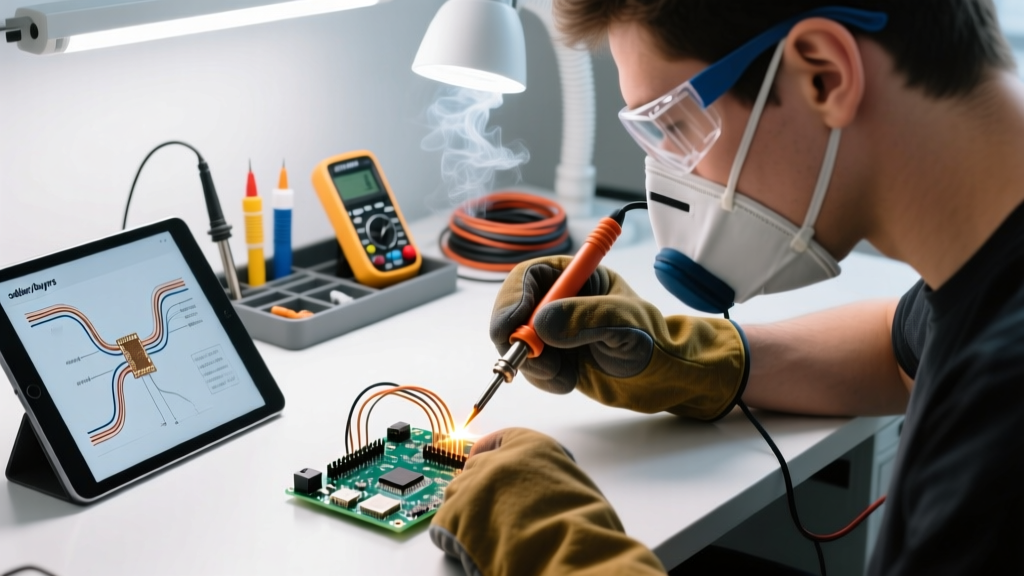
| Electronics Soldering | UV/Blue light from halogen lamps; solder splash | Local Exhaust Ventilation (LEV); N95/P100 if unvented | Heat-resistant silicone finger cots; ESD-safe gloves |
| Plumbing/HVAC Brazing | Intense visible light; infrared radiation (Shade 4-6) | Half-mask respirator with P100/OV cartridges | Split-leather gauntlets; flame-retardant sleeves |
| Arc/TIG Welding | Severe UV/IR radiation (Shade 10-14) | PAPR (Powered Air Purifying Respirator) system | Heavy insulated leather welding gloves; leather apron |
| Thermal Cutting (Plasma/Oxy) | Extreme UV; molten slag projection | PAPR or supplied-air respirator for confined spaces | Heavy leather gauntlets with impact resistance |
Ocular Protection: Beyond Standard Safety Glasses
For electronics soldering, standard ANSI Z87.1 clear safety glasses are sufficient to block rogue solder splashes. However, when brazing with silver or copper-phosphorus alloys, the glare from the heated metal and the torch flame requires shaded lenses. OSHA Standard 1910.133 mandates that filter lenses must meet the specific shade requirements for the radiant energy produced. For brazing, a Shade 4 or 5 welding goggle is the absolute minimum to prevent retinal fatigue and infrared cataracts over time.
Fume Extraction: The Silent Respiratory Threat
The most insidious hazard for solderers and brazers is invisible. When rosin-core flux (colophony) is heated above 250°C, it vaporizes into a complex aerosol containing abietic acid and other aliphatic aldehydes. As highlighted by NIOSH guidelines on thermal joining hazards, repeated exposure to colophony fumes is a leading cause of occupational asthma and severe respiratory sensitization. Even 'lead-free' solders pose a massive fume hazard, as the higher melting points (217°C for SAC305 vs. 183°C for Sn63/Pb37) require more thermal energy, thereby generating more flux vapor, not less.
Active vs. Passive Extraction Systems
Relying on a desk fan to blow fumes away from your face is a critical safety failure; it merely dilutes the fumes and spreads them across the room. Proper safety requires Local Exhaust Ventilation (LEV) that captures the plume at the source.
- Entry-Level / Hobbyist (Passive & Small Active): The Hakko FA-400 (approx. $65) uses a small fan and an activated carbon filter. While better than nothing, carbon filters only adsorb VOCs and odors; they do not trap sub-micron particulates. For true protection, hobbyists should upgrade to units with true HEPA stages.
- Professional Bench (Active LEV): The Weller WFE 2DX (approx. $1,450 - $1,600) is the industry standard for professional electronics labs. It features a brushless turbine motor pulling up to 200 cubic meters per hour, paired with the Weller 1159 filter (approx. $85), which combines a HEPA H13 particulate filter with a massive activated carbon bed to neutralize both rosin particulates and toxic VOCs.
- Heavy Brazing / Welding: For HVAC brazing or welding, portable fume extractors like the Miller Filtaire 150 DX (approx. $1,200) utilize heavy-duty spark arrestors and primary filters to prevent combustible metal dust from igniting inside the extraction unit.
Expert Warning: Never use water-soluble fluxes without localized extraction. The vaporized glycol and amine activators in water-soluble fluxes are highly corrosive to the mucous membranes of the respiratory tract and can cause immediate coughing fits and long-term tissue damage.
Workspace Fire Mitigation & Bench Setup
A 40-watt soldering iron operates at 700°F (370°C)—well above the auto-ignition temperature of standard paper (451°F), dry wood, and many plastics. For welders and cutters, the risk scales up to molten slag that can travel up to 35 feet, as noted in OSHA Standard 1910.252 regarding fire protection in welding and cutting.
The Right Matting and Extinguishers
Your workbench surface is your first line of defense against thermal runaway. Standard ESD mats are typically made of rubber or vinyl and will melt, off-gas toxic chlorine gas, and catch fire if exposed to a soldering iron tip or a brazing torch.
- Soldering Mats: Invest in a high-temperature, fiberglass-reinforced silicone mat. Models like the Kai Sweet 500°C Silicone Mat or the Mechanic HT-818 (approx. $25-$40) can withstand direct contact with a soldering iron tip without scorching, melting, or transferring heat to the desk below.
- Welding/Brazing Blankets: For cutting and brazing, use a 16 oz Welded Glass Fiber Blanket (often rated up to 1000°F/540°C) to drape over nearby combustibles. Avoid 'carbon felt' blankets indoors, as they shed irritating carbon fibers.
Fire Extinguisher Selection: Class C is Mandatory
Electrical workspaces require a Class C rated fire extinguisher, designed for energized electrical equipment. Standard ABC dry chemical extinguishers leave a highly corrosive ammonium phosphate residue that will instantly destroy sensitive microcontrollers, PCBs, and lab equipment, even if the fire was small. Instead, invest in a Clean Agent extinguisher like the Amerex 250 (Halotron) (approx. $150 - $180). Halotron evaporates completely upon contact, leaving zero residue and causing no collateral damage to your electronics bench.
Ergonomics: The Overlooked Safety Factor
While acute injuries like burns and flash-burns get the most attention, chronic musculoskeletal disorders (MSDs) are the most common career-ending injuries for solderers and precision welders. Hunching over a PCB with a standard magnifying glass leads to severe cervical spine degradation.
Actionable Ergonomic Upgrades:
- Articulating Boom Arms: Mount your fume extraction hood and magnifying lamp to a pneumatic boom arm. This allows you to bring the work up to your eye level, maintaining a neutral 15-degree neck flexion.
- Lighting: Use high-CRI (Color Rendering Index > 90) LED ring lights. Poor lighting forces the eyes to strain and the neck to crane forward. The Daylight Company LumiTask series provides flicker-free, 6000K daylight-balanced illumination that reduces eye fatigue during extended SMD rework sessions.
- Footrests and Seating: For bench work, an ESD-safe chair with a synchronous tilt mechanism and an adjustable footring prevents lower back compression and promotes proper blood circulation during 8-hour shifts.
Frequently Asked Questions (FAQ)
Do I need a respirator if I only use lead-free solder?
Yes. The primary respiratory hazard in electronics soldering is not lead particulate (which is heavy and falls quickly), but rather the vaporized flux. Lead-free solders require higher temperatures, which vaporizes the rosin or synthetic flux more aggressively, creating higher concentrations of respiratory sensitizers. Local exhaust ventilation is mandatory regardless of the alloy.
Can I use a standard shop-vac to extract soldering fumes?
Absolutely not. Standard shop-vacs do not have HEPA filtration capable of trapping sub-micron flux particulates, nor do they have activated carbon beds to neutralize toxic VOCs. Furthermore, the static electricity generated by plastic shop-vac hoses can discharge into sensitive electronic components, causing catastrophic ESD (Electrostatic Discharge) failures.
How often should I replace my fume extractor filters?
Filter lifespan depends on usage and flux type. For a professional using a Weller WFE 2DX for 6 hours a day with rosin-core solder, the HEPA/Carbon combination filter typically requires replacement every 4 to 6 months. If you notice a sweet, pine-like odor escaping the exhaust, the carbon bed is saturated and the filter must be replaced immediately.