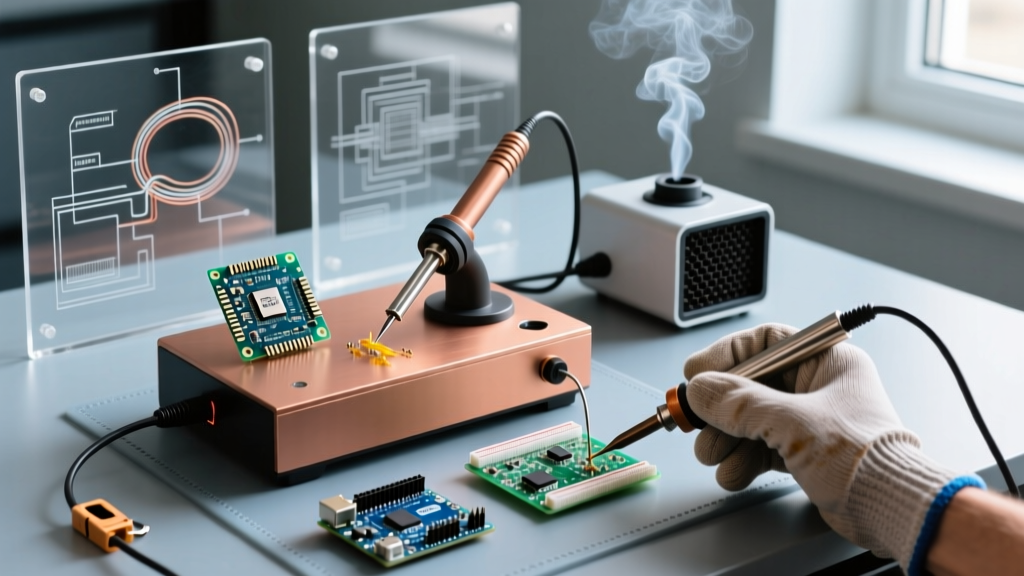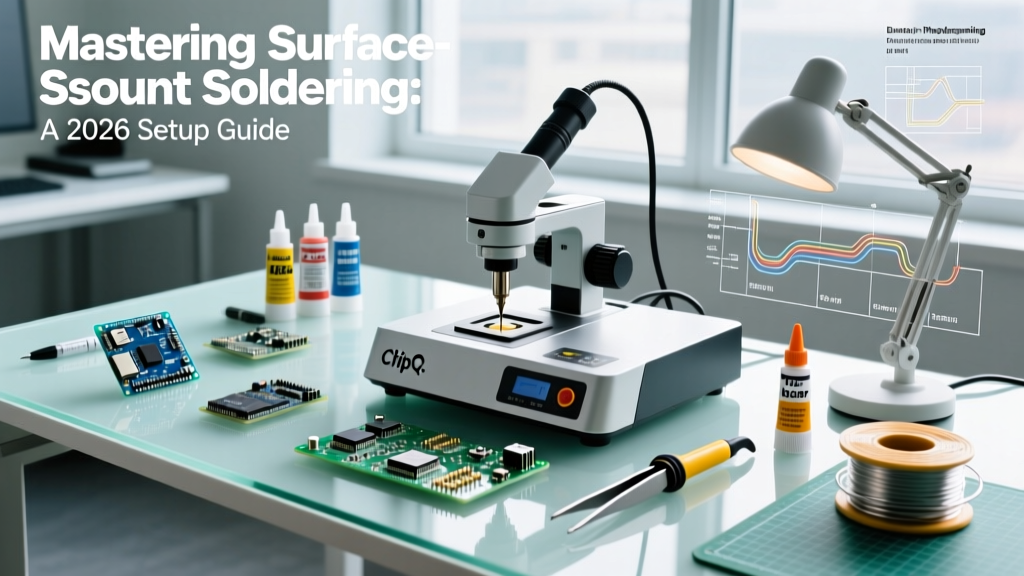

The Evolution of the Modern SMT Workbench
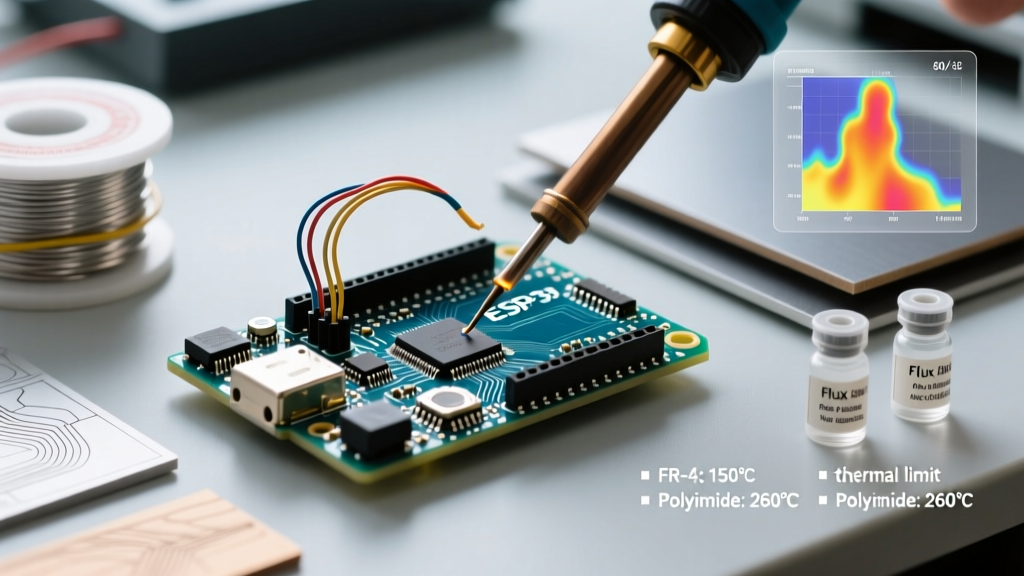
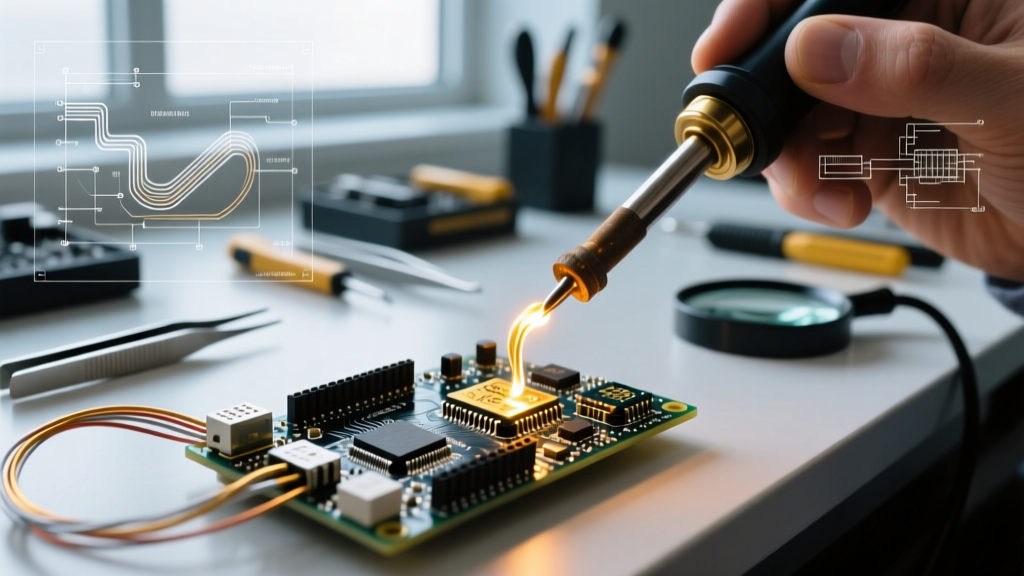
As component densities increase and form factors shrink, surface-mount soldering has transitioned from a specialized manufacturing process to a mandatory skill for advanced DIYers, prototyping labs, and repair technicians. In 2026, working with 0402 (metric 0201) and even 01005 components requires more than just a steady hand; it demands precise thermal management, optimized flux chemistry, and high-resolution optics. Whether you are transitioning from through-hole technology (THT) or upgrading an existing SMT lab, understanding the metallurgy and equipment nuances of surface-mount soldering is critical for achieving IPC-compliant joints.
This comprehensive guide breaks down the essential hardware, solder paste classifications, reflow profiling, and defect troubleshooting required to master modern SMT assembly.
2026 SMT Equipment Buyer Matrix
Choosing the right thermal tools is the foundation of reliable surface-mount soldering. Cheap stations struggle with thermal recovery when soldering to heavy ground planes, leading to cold joints or prolonged heat exposure that damages sensitive silicon. Below is a comparison of industry-standard equipment tiers for 2026.
| Equipment Category | Prosumer / Lab Standard | Enterprise / High-Volume | Key Specification to Verify |
|---|---|---|---|
| Soldering Station | Hakko FX-951 ($280) | JBC CD-2BQE ($750) | Active tip sensing & <2 sec thermal recovery |
| Hot Air Rework | Quick 861DW ($380) | Weller WXD2 ($1,200) | Brushless fan, closed-loop temp control |
| Stereo Microscope | AmScope SM-4TP ($280) | Leica A60 ($3,800) | Trinocular head, 0.5x objective for working distance |
| Reflow Hotplate | Generic PID Induction ($90) | NeoDen4 / Desktop Reflow ($2,500+) | Programmable thermal ramp/soak curves |
Expert Tip: When hand-soldering micro-components, the tip geometry matters more than the station brand. For 0402 and 0201 passives, invest in JBC C115-112 (nano-blade) or Hakko T12-D12 tips. These concentrate thermal mass exactly where needed without bridging adjacent pads.
Solder Paste Metallurgy and Stencil Engineering
For batch surface-mount soldering using stencils and reflow, the selection of solder paste and stencil aperture design dictates your yield rate. According to technical data from Indium Corporation, the industry standard for lead-free assembly remains SAC305 (Sn96.5/Ag3.0/Cu0.5), though alternatives like SN100C (Tin-Copper-Nickel) are gaining traction for high-reliability automotive and aerospace boards due to superior drop-shock resistance.
Powder Size Classifications (IPC J-STD-005)
- Type 3 (25-45 µm): Best for standard pitch components (0805, 0603, SOIC, QFP with 0.5mm pitch).
- Type 4 (20-38 µm): Mandatory for 0402 passives and 0.4mm pitch fine-line QFNs.
- Type 5 (15-25 µm): Reserved for micro-BGA, 0201 passives, and ultra-fine pitch CSPs.
Stencil Aperture Reduction
A 1:1 stencil aperture ratio often leads to solder bridging on fine-pitch ICs. For 0.4mm pitch QFNs and QFPs, apply a 10% to 20% aperture reduction (area ratio) to prevent excess paste deposition. Furthermore, electropolished stainless steel stencils (typically 4 mil / 0.1mm thickness for fine pitch) ensure clean paste release compared to laser-cut alternatives.
Thermal Profiling: Ramp-to-Spike vs. Soak-Spike
Successful reflow surface-mount soldering relies on strictly controlled thermal profiles. Applying heat too quickly causes solvent spatter (solder balling), while insufficient soak times result in tombstoning.
The 4-Stage Reflow Profile (Lead-Free SAC305)
- Preheat (Ramp): 25°C to 150°C at a controlled rate of 1.5°C to 2.5°C per second. This prevents thermal shock to ceramic capacitors.
- Soak (Thermal Equilibrium): 150°C to 200°C held for 60-90 seconds. This activates the flux, allowing it to strip metal oxides from the pads and component leads before the alloy melts.
- Reflow (Spike): Peak temperature of 245°C - 250°C. Time above liquidus (TAL, 217°C for SAC305) must be strictly maintained between 40 and 70 seconds to ensure proper intermetallic compound (IMC) formation without burning the flux.
- Cooling: Rapid but controlled cooling (3°C to 4°C/sec) to form a fine-grain, mechanically strong solder joint.
For detailed flux activation parameters and chemical classifications, resources from AIM Solder provide excellent baseline profiles for ROL0 (Rosin, Low-activity, Zero-halide) no-clean fluxes, which dominate modern SMT assembly.
Diagnosing Common SMT Defects
Even with premium equipment, surface-mount soldering is prone to specific failure modes. Familiarity with the latest IPC-A-610 acceptability standards is crucial for quality control. Below are the most common defects and their root causes.
1. Tombstoning (Drawbridging)
Symptom: A two-terminal passive component stands vertically on one end.
Root Cause: Uneven heating across the component pads. If one pad reaches the solder paste liquidus temperature before the other, the wetting force of the molten solder pulls the component upright.
Solution: Ensure symmetrical trace routing to ground planes to balance thermal mass. Use a longer soak time in your reflow profile to allow the entire PCB to reach thermal equilibrium before spiking to reflow temperature.
2. Solder Bridging (Shorts)
Symptom: Excess solder connects adjacent pins on fine-pitch ICs.
Root Cause: Over-deposition of solder paste, squeegee pressure set too high during stencil printing, or misaligned stencil apertures.
Solution: Reduce stencil thickness from 5 mil to 4 mil. Implement a 15% home-plate aperture reduction for QFN thermal pads to prevent outgassing and solder expulsion onto signal pins.
3. Head-in-Pillow (HiP)
Symptom: The solder ball on a BGA component melts but fails to coalesce with the paste on the PCB pad, resting on top like a head on a pillow.
Root Cause: Oxidation on the BGA sphere or insufficient flux activity to break down heavy oxides during the soak phase.
Solution: Switch to a more active flux (e.g., ROM1) or utilize a nitrogen-inerted reflow environment to prevent oxidation at peak temperatures.
Flux Chemistry: No-Clean vs. Water-Soluble
Flux is the unsung hero of surface-mount soldering. For manual rework using hot air, applying an external tacky flux is non-negotiable. Amtech NC-559-V2-TF and Chip Quik SMD291AX are industry favorites for their high-tack viscosity, which holds components in place before reflow.
According to the IPC standards body, flux residues must be evaluated based on their corrosivity and electrical resistance. No-clean (ROL0) fluxes are designed to be left on the board, provided they are fully activated by heat. However, in high-impedance analog circuits or RF applications, even no-clean residues can cause parasitic capacitance or leakage currents, necessitating an ultrasonic cleaning process with specialized saponifiers.
Expert FAQ: Surface-Mount Soldering
Can I use a standard kitchen hotplate for SMT reflow?
While a generic hotplate can melt solder, it lacks the thermal mass control required for a proper soak profile, often leading to scorched boards and damaged components. If budget constraints prohibit a dedicated reflow oven, use an induction cooktop paired with an external PID controller and a K-type thermocouple taped to a dummy board. This closed-loop system allows you to program exact ramp and soak curves.
What is the shelf life of Type 4 Solder Paste?
Unopened jars of SAC305 Type 4 paste typically have a 6-month shelf life when refrigerated (0°C to 10°C). Once opened and exposed to ambient humidity, the flux solvents begin to evaporate, and oxidation increases. Always allow the jar to acclimate to room temperature for at least 2 hours before opening to prevent condensation from contaminating the paste.
How do I prevent blowing away 0201 components with hot air?
When performing manual surface-mount soldering on micro-components, use a localized micro-nozzle (2mm - 3mm) and keep the airflow volume below 30 L/min. Apply a generous amount of tacky flux to the pads first; the flux's viscosity will act as an adhesive, anchoring the component in place until the solder melts and surface tension takes over.