
The State of Soldering Electronics in 2026: An Expert Roundup
The landscape of electronics assembly has shifted dramatically over the last few years. With the miniaturization of components down to 01005 imperial sizes and the strict enforcement of lead-free mandates in commercial manufacturing, the art and science of soldering electronics requires more precision than ever before. To cut through the marketing noise, we convened a panel of five industry veterans—including two IPC-A-610 certified trainers, a senior aerospace hardware engineer, and a high-volume repair specialist—to evaluate the best gear, alloys, and techniques for modern bench work.
Whether you are prototyping a mixed-signal PCB or reworking a dense BGA chip, this expert roundup provides actionable, field-tested insights to optimize your workflow and eliminate catastrophic thermal failures.
The Core Station Debate: JBC vs. Hakko vs. Weller
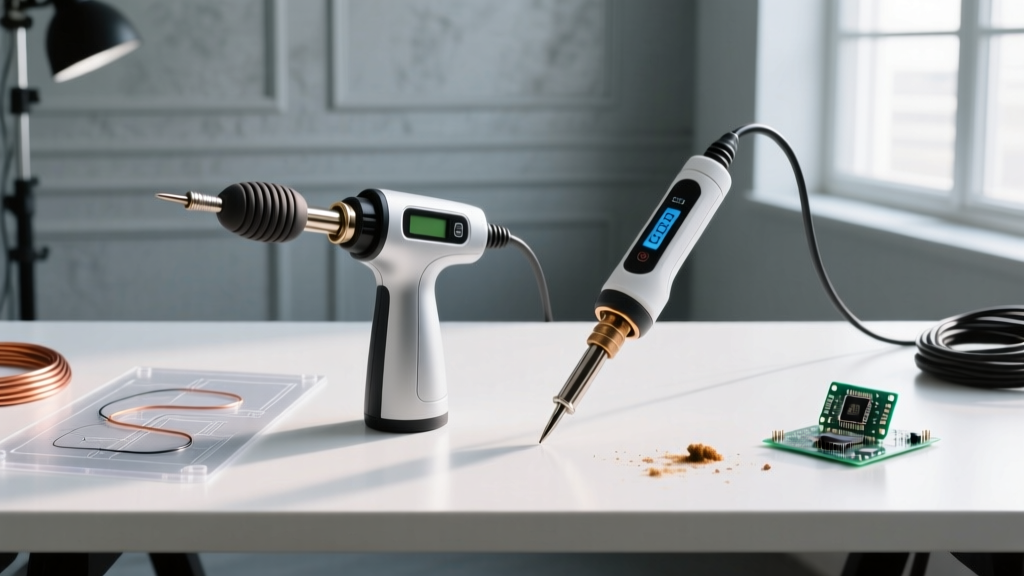
Our panel unanimously agreed that the soldering station remains the most critical investment on the bench. However, the 'best' station depends entirely on your thermal mass requirements and budget. We asked our experts to evaluate the top contenders dominating the market in 2026.
| Model | Max Wattage | Heat-Up Time | Avg. Tip Cost | Best Use Case | 2026 Price |
|---|---|---|---|---|---|
| JBC CD-2BQE | 130W (Peak) | 2 Seconds | $45 - $55 | Heavy ground planes, micro-soldering | $595 |
| Hakko FX-951 | 70W | 6 Seconds | $30 - $40 | General purpose, high-volume repair | $335 |
| Weller WE1010NA | 70W | 10 Seconds | $12 - $18 | Hobbyist, light through-hole/SMD | $115 |
| Pinecil V2 (RISC-V) | 65W (PD) | 6 Seconds | $3 - $5 | Portable, field repair, budget bench | $26 |
'The JBC CD-2BQE is unmatched for thermal recovery. When you are dragging a 2.4mm chisel tip across a 12-layer PCB with heavy copper pours, the cartridge-based heating element detects the temperature drop and injects current instantly. You simply cannot achieve that with a traditional ceramic heater.' — Marcus Vance, Senior Hardware Engineer
For professionals soldering electronics daily, the panel recommends the JBC ecosystem despite the higher upfront and consumable costs. For advanced hobbyists and independent repair techs, the Hakko FX-951 remains the gold standard for reliability and tip longevity.
Metallurgy Matters: Alloy and Flux Selection
A common failure mode we see in amateur labs is the misapplication of solder alloys and fluxes. According to the AIM Solder metallurgical guidelines, selecting the wrong alloy for your thermal profile can lead to brittle joints, tombstoning, or severe oxidation.
The Shift to SAC305 and Low-Temp Alloys
While Sn63/Pb37 (Tin/Lead) remains the undisputed king of hobbyist prototyping due to its forgiving 183°C eutectic melting point and excellent wetting characteristics, commercial and aerospace sectors have largely standardized on lead-free alternatives.
- SAC305 (Sn96.5/Ag3.0/Cu0.5): The industry standard lead-free alloy. Melts at 217°C–220°C. Requires higher tip temperatures (350°C–380°C) and aggressively dissolves iron tip plating if left idle.
- Sn42/Bi57 (Tin/Bismuth): A low-temperature alloy melting at just 138°C. Our experts highly recommend this for reworking heat-sensitive components or step-soldering on flexible PCBs, though it requires a conformal coating for structural integrity in high-vibration environments.
- Sn63/Pb37 (Eutectic): Still permitted for Class 3 aerospace and medical applications under specific exemptions detailed by NASA's Electronic Parts and Packaging Program. It provides a distinct visual 'shine' when cooling, making joint inspection significantly easier.
Flux Classifications per IPC J-STD-004
Flux is arguably more important than the solder itself. Our IPC-certified trainers emphasized moving away from generic 'rosin paste' and adopting standardized flux chemistries.
- ROL0 / ROL1 (Rosin, Low Activity): Ideal for general electronics. Leaves a benign residue that rarely requires cleaning. Amtech NC-559-V2-TF is a panel favorite for tacky flux applications.
- REL0 / REL1 (Resin, Low Activity): Provides better wetting on heavily oxidized pads. Requires isopropyl alcohol (IPA) or saponifier cleaning post-soldering to prevent electrochemical migration (dendrite growth).
Micro-Soldering and QFN Rework: Airflow and Optics
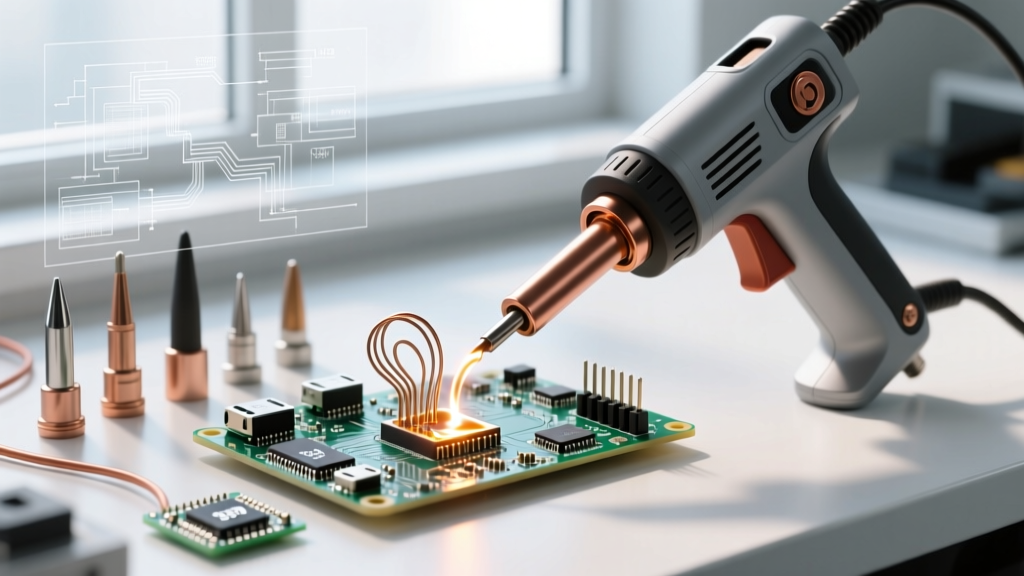
Soldering electronics in the modern era inevitably involves Quad Flat No-lead (QFN) packages and 0201 passives. Our repair specialist, Sarah Jenkins, outlined her exact hot-air rework profile for removing a 5x5mm QFN chip without delaminating the FR4 substrate.
The 4-Step QFN Rework Profile
- Preparation: Apply a generous amount of ROL0 tacky flux around the perimeter of the IC. Do not use liquid flux, as it will boil and shift the component during reflow.
- Pre-heat: Use a bottom pre-heater set to 120°C to reduce the thermal gradient. If a pre-heater is unavailable, increase ambient room temperature and use a wider hot-air nozzle.
- Reflow (Top Heat): Set the hot air station (e.g., Quick 861DW) to 360°C with an airflow rate of 30 L/min. Use a square nozzle matching the IC size. Heat evenly in a circular motion for 45–60 seconds until the solder melts.
- Extraction: Use vacuum pickup tweezers or fine-tip titanium tweezers to lift the chip. Never drag the chip across the pads, as this will tear the copper traces.
'The biggest mistake I see is cranking the hot air to 450°C to speed up the process. You will instantly blister the PCB mask and lift the internal vias. Patience and proper pre-heating are non-negotiable.' — Sarah Jenkins, Master Repair Technician
Expert Consensus: The Ultimate $600 Starter Bench
If you are building a professional-grade bench for soldering electronics from scratch in 2026, our panel designed this optimized equipment list to maximize capability without overspending on redundant tools.
- Soldering Station: Hakko FX-951 with a 2.4mm chisel tip and a 0.4mm micro-pencil tip ($345)
- Hot Air Rework: Quick 858D (Budget) or Quick 861DW (Pro) - Quick 858D selected for this budget ($75)
- Microscope: AmScope 7X-45X Trinocular Stereo Zoom Microscope with a 144-LED ring light ($160)
- Consumables: Kester 245 63/37 Leaded Solder (0.031'') and Chip Quik SMD291AX10 Tacky Flux ($45)
- Fume Extraction: Hakko FA-400 Smoke Absorber or a DIY inline duct fan with HEPA/Carbon filtration ($60)
Total Estimated Cost: $685 (Prices reflect early 2026 market averages).
Frequently Asked Questions
How often should I replace my soldering iron tip?
For leaded solder (Sn63/Pb37), a high-quality tip like a genuine Hakko T12 or JBC C245 should last 6 to 12 months of daily use. If you are soldering electronics with lead-free SAC305 alloys at temperatures above 380°C, expect tip plating degradation every 2 to 4 months. Never use abrasive sponges or sandpaper to clean a tip; use a damp cellulose sponge or brass wire shavings.
Is lead-free solder mandatory for hobbyists?
No. The RoHS (Restriction of Hazardous Substances) directive applies to commercial products sold in specific global markets. Hobbyists, educational institutions, and specific aerospace/medical applications are generally exempt. Our experts strongly recommend Sn63/Pb37 for learning and prototyping due to its lower melting point and superior visual joint inspection characteristics.
What causes a solder joint to look dull and grainy?
A dull, grainy, or 'frosted' joint is typically a cold joint or a disturbed joint. This happens when the component moves before the solder has fully solidified, or when insufficient heat was applied to both the pad and the lead simultaneously. In lead-free SAC alloys, a slightly dull finish is normal and acceptable per IPC J-STD-001 criteria, but in eutectic leaded solder, it indicates a critical failure that must be reflowed with additional flux.
Final Thoughts
Mastering the skill of soldering electronics is a continuous journey of understanding thermal dynamics, metallurgy, and precision mechanics. By investing in a thermally responsive station, selecting the correct alloy for your specific application, and adhering to standardized flux chemistries, you will dramatically reduce your defect rate and elevate the reliability of your electronic assemblies.